In a world that often confuses power with position and heritage with capability, the true essence of leadership stands as a timeless truth: it is not inherited — it is earned. While titles can be passed down and privileges can be bestowed, authentic leadership is forged through wisdom, service, and a sense of purpose.
Leadership by Wisdom
Wisdom isn’t confined to academic excellence or intellectual prowess. It is about discernment — the ability to see clearly, decide fairly, and act responsibly. True leaders are lifelong learners. They listen more than they speak. They understand that real influence comes from understanding people, situations, and the consequences of their decisions.
Take Chanakya, the ancient Indian strategist. He was never born into power but became one of the most influential minds in Indian history. Through sheer wisdom and vision, he guided Chandragupta Maurya to the throne and laid the foundations of the Mauryan Empire. His treatise, the Arthashastra, remains relevant even today.
Leadership through Service
Great leaders lead by serving others. They put the mission above ego and people above position. Dr. B.R. Ambedkar is a remarkable example. Despite facing deep-rooted social discrimination, he rose through education, resilience, and an unwavering commitment to justice. He didn’t demand leadership — he earned it through tireless service, ultimately becoming the chief architect of the Indian Constitution.
Service in leadership builds trust. It shows empathy. It reminds people that leadership is about lifting others, not standing above them.
Leadership with Purpose
Purpose is the soul of leadership. Without it, authority becomes mechanical, and decisions lose direction. A leader driven by purpose inspires others to believe, to act, and to grow.
Abraham Lincoln, born in poverty, became one of the most revered presidents in American history — not because he was born into power, but because he led with a clear sense of moral and national purpose. His vision to preserve the Union and abolish slavery redefined the meaning of freedom and leadership in a fractured nation.
Leadership Beyond Facilities
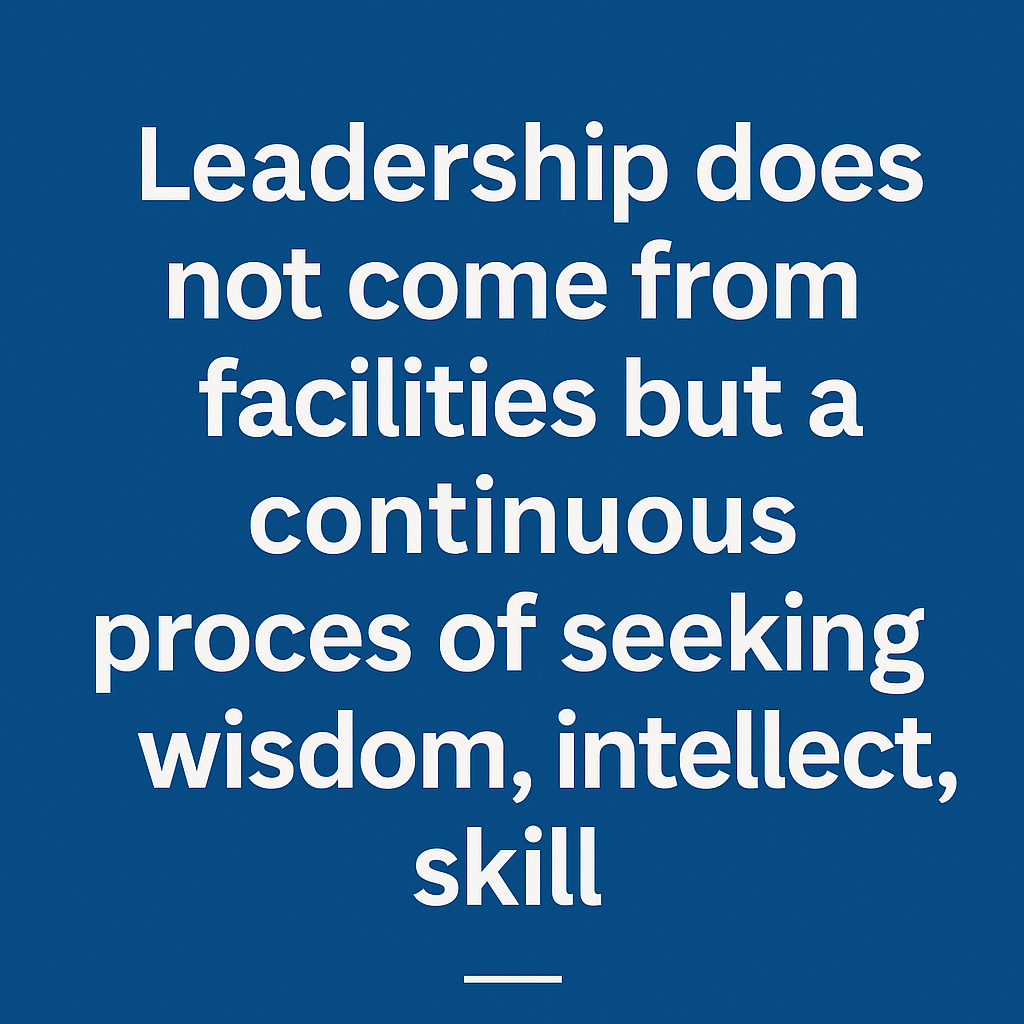
Leadership does not emerge from facilities or comfort. It is the outcome of a continuous process of seeking wisdom, honing intellect, and building skill. Those who lead by entitlement or inheritance often falter when faced with adversity, but those who have walked the path of growth, learning, and struggle carry the resilience needed to inspire real change.
We see this today as well. In a system where reservations exist to uplift the underprivileged, we continue to see individuals from unreserved backgrounds topping merit lists, proving that hard work and determination still shine.
Narendra Modi, coming from humble beginnings, represents the spirit of earned leadership. In contrast, Rahul Gandhi, born into a political dynasty, reminds us that legacy alone does not guarantee effective leadership. While one earned his place through years of ground-level work and a deep connection with the people, the other continues to search for acceptance beyond his surname.
Conclusion
In every age and every culture, real leaders are remembered not for what they inherited, but for what they contributed. They earn their place through insight, selflessness, and unshakable conviction. So, when we speak of leadership, let us not look at lineage or legacy. Let us look at wisdom, service, and purpose — for that is where true leadership lives.
 Unmukt
Leave a comment