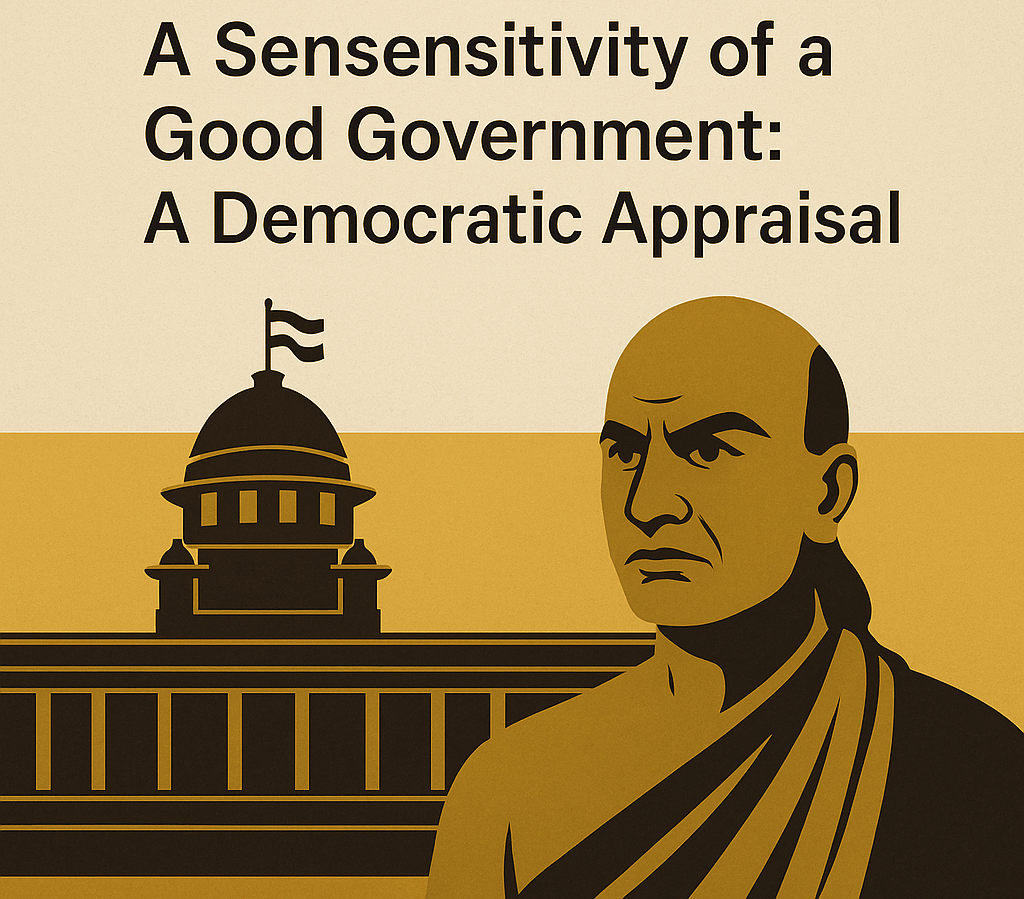
The success of any democracy hinges not just on the power it wields but on how sensitively that power is exercised. A truly good government is not only strong against external threats but also just, inclusive, responsive, and tolerant of dissent within.
Lets evaluates government sensitivity from two perspectives: the timeless principles of Chanakya, the ancient Indian political strategist, and the expectations of a modern democratic society. This article reflect on whether India’s current government aligns with these benchmarks, especially in light of recent debates.
1. Sensitivity to National Security
A government’s foremost duty is to protect its citizens and territorial integrity. In this regard, the current Indian government has shown decisive action—be it in the form of surgical strikes post-Uri, the Balakot airstrike, or its firm stand during the Doklam and Galwan standoffs with China.
- Chanakya believed in preemptive strength and strategic deterrence. The government’s proactive stance reflects this principle, treating security not as reaction but as preparation.
Verdict: The government has shown high sensitivity and effectiveness in national security.
2. Responsiveness to Dissent and Criticism
Chanakya advised rulers to avoid arrogance and listen to advisors. In a modern democracy, this wisdom translates to respecting dissent, ensuring press freedom, and protecting institutional checks.
While some actions (e.g., raids on certain media houses, NGOs, and arrests under stringent laws) have triggered criticism, it is also true that state action is justified when foreign-funded actors violate national interest, as seen in the NewsClick case with reported Chinese links.
- The key question is: Are patriotic critics also facing suppression, or only those with dubious agendas? Sensitivity lies in distinguishing the two.
Verdict: National security must be upheld, but sensitivity to fair criticism and transparency in action is vital to maintain democratic credibility.
3. Inclusiveness Toward All Communities
A sensitive government fosters harmony. Critics of the Citizenship Amendment Act (CAA) claimed it discriminated based on religion. The government clarified that CAA targets only persecuted minorities in Pakistan, Afghanistan, and Bangladesh, and does not affect Indian Muslims.
However, protests and violent reactions created confusion and unrest.
- Chanakya emphasized just rule over all subjects, ensuring that no group feels alienated.
Verdict: The intention of the law may be just, but the government’s communication and engagement could have been more inclusive to prevent polarisation.
4. Institutional Independence
A Chanakyan state requires strong and independent institutions. Modern critics raise concerns over the independence of the judiciary, Election Commission, and investigative agencies.
Yet, it’s also true that:
- Judges in India are appointed through a collegium system, not by the government.
- The new law for appointing the Election Commission includes representation from opposition, which didn’t exist before.
Still, public trust depends on the perception of independence—not just the procedure.
Verdict: The government must strengthen transparency and public confidence in autonomous institutions.
5. Transparency and Accountability
A sensitive government must allow scrutiny. RTI amendments, electoral bond secrecy, and reduced media questioning have led to concerns of reduced transparency.
The electoral bonds system aimed to curb black money in politics, but without public disclosure, it became opaque to voters.
- Chanakya warned against rulers becoming unaccountable and detached from their subjects.
Verdict: Intent may be reform-driven, but greater openness and citizen access to political funding data are essential hallmarks of sensitivity.
Conclusion: Is the Current Government Sensitive?
If measured against national interest and strength, the government has been decisive and strategic. From defense modernization to diplomacy, digital outreach to welfare delivery, the state has shown competence.
However, sensitivity also demands:
- Respect for dissent that is within the law
- More transparent governance
- Active efforts to keep every citizen—irrespective of background—feeling heard
In Chanakya’s terms, a king (or elected ruler) must uphold Dharma (just conduct), listen to truth even when unpleasant, and act with foresight.
A sensitive government is not one that avoids using power—but one that uses it judiciously, proportionally, and accountably.
 Unmukt
Leave a comment