Unmukt

Blog

  • Women-Led Development: The Key to India’s $35 Trillion Future – Amitabh Kant

    In a compelling and forward-looking address, Mr. Amitabh Kant, former Chairman of NITI Aayog, emphasized that India’s growth story must be written by its women. Speaking at Women Achiever Award 2025, a ceremony organized by the Aalekh Foundation, Mr. Kant called for a radical societal shift that empowers women not just as participants in development, but as leaders of it.

    If India is to become a $35+ trillion economy by 2047, women must be at the forefront of this transformation,” he said.”

    Mr. Kant praised the progress made over the past decade, highlighting key government initiatives aimed at including women in the formal economy. Since 2015, over 550 million bank accounts have been opened, raising women’s access from 18% to over 91%. He also pointed out that the government has:

    Built 40 million homes, electrified 35 million households, and provided piped water to over 253 million households. Supplied 120 million gas connections, significantly improving the quality of life for rural women.

    Importantly, these resources were registered in women’s names, marking a deliberate shift toward women-led development.

    Mr. Kant acknowledged, however, that infrastructure and access are only part of the solution. A deeper cultural transformation is necessary — particularly among men. He noted that without men actively supporting and pushing women into leadership roles, progress would stall.

    Indian men need to change their mindset,” he said candidly. “They must step back and let women lead.”

    In a noteworthy appeal to the Aalekh Foundation, he suggested that awards should not only go to women achievers but also to men who uplift and empower women in their lives — those who support their daughters, wives, colleagues, and peers to pursue their ambitions.

    Mr. Kant referenced a World Economic Forum report stating that gender parity may take 134 years to achieve at the current pace. He firmly rejected that timeline, stating, “None of us have 134 years. We must do it in a decade.”

    He spotlighted stories of female entrepreneurs and innovators as examples of change already underway:

    Aayushi Mishra, founder of Dona Maps, who is using cutting-edge mapping technology for social impact. Ms. Manjunath, founder of Nimai AI, who is improving breast cancer detection using artificial intelligence. Two young graduates from Lady Shri Ram College, who built a tech platform that has sold over 3 million cattle by digitizing a largely informal sector.

    Kant emphasized that India’s leap into the future — one defined by AI, machine learning, robotics, and digital transformation — cannot happen without women being digitally literate and empowered. Yet currently, only 37% of Indian women are digitally savvy compared to 53% globally.

    He stressed the need for greater digital adoption among women to unlock their full potential and drive India’s productivity and growth.

    Concluding his speech, Amitabh Kant highlighted India’s global advocacy for “women-led development” during its G20 presidency. Despite opposition from countries like Saudi Arabia, Turkey, Russia, and China, India succeeded in establishing this term as a global developmental priority — replacing the more passive concept of gender parity.

    “India didn’t just talk about equality,” he said. “We demanded leadership — by women, for a better future.”

    With a vision rooted in inclusion, innovation, and equality, Amitabh Kant’s address was not only a roadmap for national growth but a clarion call for men and women to walk this journey together — with women leading the way.
  • Operation Sindoor: Facts, Fiction, and the Fight for Narrative Control

    In the age of digital disinformation, wars are no longer fought just on the battlefield — they’re fought on WhatsApp, Twitter, and newsrooms. Operation Sindoor, India’s swift and precise military response to a Pakistan-backed terror attack, became not only a story of strategic success but also a case study in how facts are often buried beneath layers of political spin, foreign commentary, and media speculation.

    What Triggered Operation Sindoor?

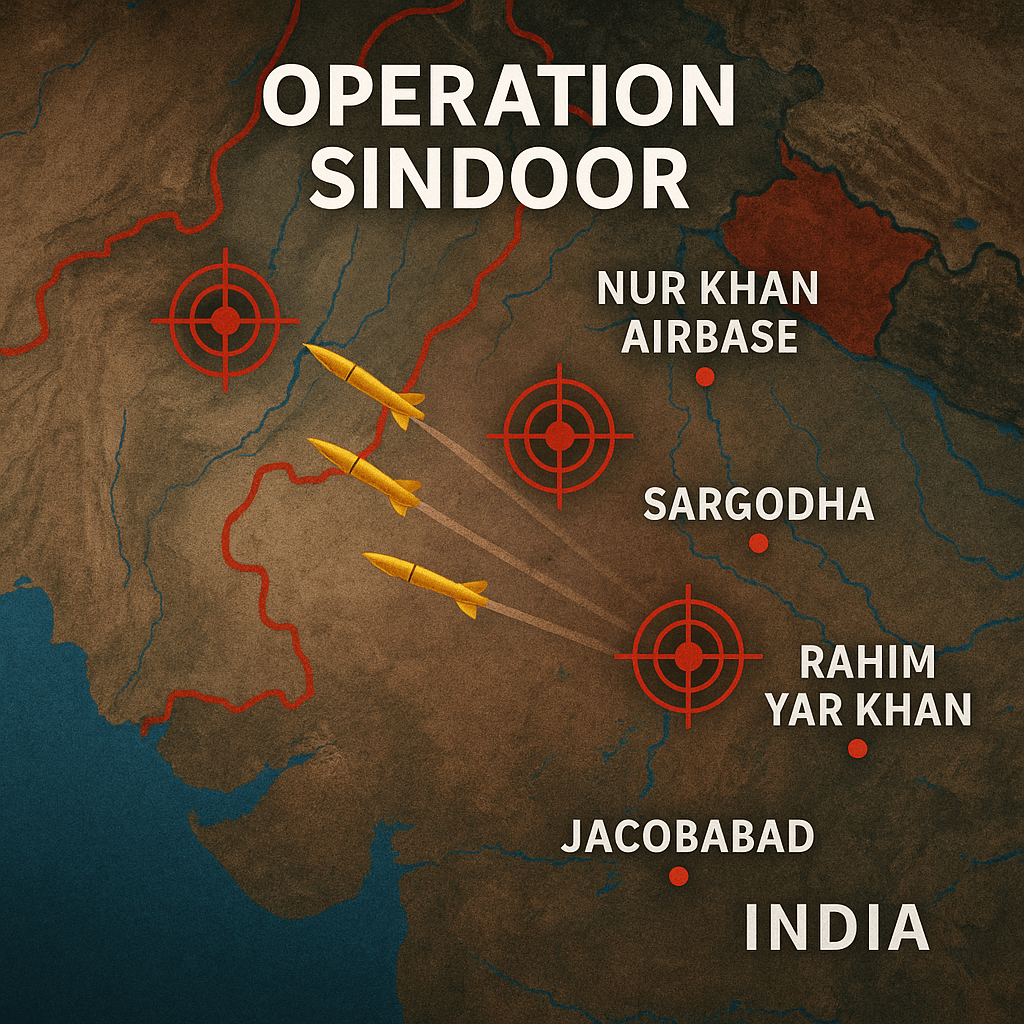
    On April 22, 2025, a brutal terror attack in Pahalgam, Jammu & Kashmir, claimed the lives of 26 civilians, including pilgrims. Intelligence traced the plot to Pakistan-based terrorist groups, prompting India to launch Operation Sindoor — a 23-minute air and missile operation that began at 4:03 AM on May 7, 2025.

    Targets of the Operation Included:

    • Nur Khan Airbase (Rawalpindi)
    • Mushaf Base (Sargodha)
    • Rahim Yar Khan airbase
    • Shahbaz Airbase (Jacobabad)
    • Radar sites in Pasrur and Lahore

    Satellite images later confirmed damage to runways, bunkers, and radar systems. The strikes were precise, time-bound, and aimed at disabling Pakistan’s offensive capabilities while avoiding civilian casualties.

    Ceasefire: No Mediation, Just a Phone Call

    Contrary to various media reports and speculative comments, especially from former U.S. President Donald Trump, the ceasefire was not the result of international mediation.

    On May 10, 2025, Pakistan’s Director General of Military Operations (DGMO) made a direct hotline call to his Indian counterpart, requesting a halt to hostilities. India’s DGMO and the Ministry of External Affairs (MEA) confirmed that the ceasefire was arranged bilaterally.

    MEA Statement:

    There was no international mediation. The ceasefire was arranged solely via military channels.”
    — Vikram Misri, Foreign Secretary, Government of India

    Then why didn’t Prime Minister Modi publicly respond to Trump’s claim? Because diplomacy is about clarity, not volume. When the Ministry of Defence and MEA have issued a formal position, repeating it from the Prime Minister’s podium only adds fuel to unfounded rumors.

    Rafale Jet Shot Down? Absolutely False

    Following Operation Sindoor, Pakistani media and some fringe outlets claimed that a Rafale jet was shot down during the operation.

    The Reality:

    • India’s Defence Secretary R. K. Singh confirmed that no Indian aircraft, including Rafale, was lost in combat.
    • Dassault Aviation, the Rafale manufacturer, also denied any loss.
    • India’s Press Information Bureau (PIB) flagged the Pakistani claim as “completely false.”

    The truth? One Rafale returned early due to a minor sensor malfunction. It was back in the skies within three days. There was no shoot-down, no crash, and no damage. Just a lie wrapped in clickbait.

    The “3 Jets Down” at Shangri-La? Misinterpretation

    At the Shangri-La Dialogue in Singapore, India’s Chief of Defence Staff, General Anil Chauhan, mentioned that three aircraft were grounded for checks during the operation.

    This was twisted by some commentators into claims that “three Indian jets were downed.” In reality, these aircraft were not hit by enemy fire — they were temporarily grounded as a safety measure and were operational again within 48 hours.

    What the CDS Actually Said:

    “We studied a tactical mistake that temporarily grounded three jets. But within 48 hours, they were back in action.”

    There is a big difference between a strategic review and a battlefield loss. The former makes you stronger. The latter didn’t happen.

    Who Saved Indian Skies? Not Just S-400s

    Another myth that made the rounds was that India’s Russian-made S-400 missile defence system saved the country from Pakistan’s drone and missile strikes.

    While the S-400 was deployed to cover high-altitude sectors, the real heroes were India’s indigenous air defence systems:

    • Akash SAMs
    • MR-SAMs (jointly with Israel)
    • L/70 Anti-Aircraft Guns
    • Akashteer Command & Control Network

    These systems intercepted over 90% of incoming drones and missiles, particularly low-cost swarms launched by Pakistan. The indigenous network played the lead role, not the imported ones.

    Strategic Outcome: India Won the Fight and the Message

    CategoryOutcome
    Military ResponseIndia disabled 4 airbases, 2 radar sites, and multiple launch pads.
    DiplomacyNo mediation accepted. Ceasefire on India’s terms via DGMO hotline.
    DisinformationRafale claims, Trump mediation, and aircraft losses debunked.
    Defence SystemsIndigenous systems proved highly effective — a win for Atmanirbhar Bharat.

    Operation Sindoor showcased India’s technological edge, military precision, and diplomatic maturity. But it also revealed how easily misinformation can dilute real victories.

    In today’s world, where narratives move faster than missiles, citizens must learn to verify before they amplify.

    So next time someone says, “Trump stopped the war” or “Pakistan shot down a Rafale,” ask them for evidence — and show them this article.

  • Selective Outrage Is Not Justice: A Critical Look at Naseeruddin Shah and His Legacy

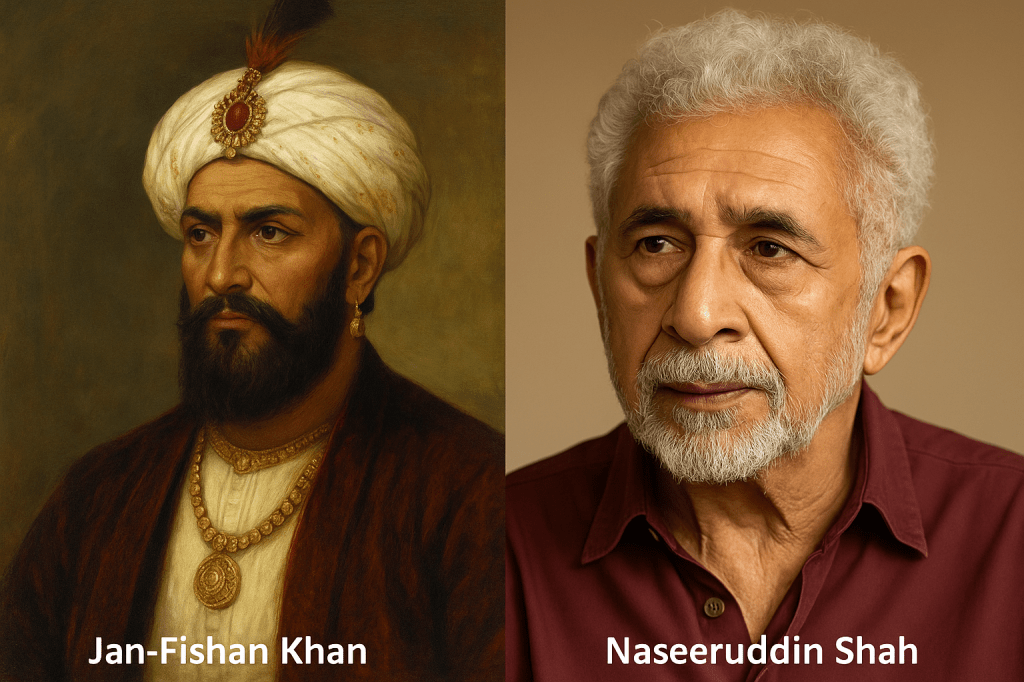
    In the era of information and ideological warfare, words shape narratives and narratives shape society. When public intellectuals speak, their influence can be powerful—but when that voice becomes selective, partisan, and blind to the pain of others, it is not justice; it is propaganda. One such voice that demands scrutiny is that of Naseeruddin Shah—a celebrated actor and descendent of Jan-Fishan Khan, a 19th-century Afghan noble who allied with the British during the First Anglo-Afghan War.

    Today, as India wrestles with real issues of communalism, cultural identity, and historical pain, it is time to ask: Whose side is Naseeruddin Shah really on—and why is his compassion so one-sided?

    When Morality Becomes Selective: Shah’s Silence on Hindu Victims

    In his recent article in The Indian Express, Shah laments the “rising intolerance” in India and references mob killings of Muslims allegedly over cow slaughter or theft. While mob justice in any form is unacceptable in a civilized society, what stands out is Shah’s continued and deliberate silence on several brutal killings of Hindus—both in India and abroad.

    Where was his voice when:

    • Kashmiri Pandits were driven out of their homeland and murdered in cold blood?
    • A Hindu father and son were lynched in Murshidabad, West Bengal, allegedly by a mob led by a TMC leader—dragged from their home and hacked to death?
    • Hindus were massacred in Bangladesh, temples desecrated, and women raped in the name of religion?
    • Hindus in Pakistan continue to be second-class citizens, with abductions and forced conversions occurring regularly?

    Why does his pen only bleed when the victim fits a particular identity?

    This is not justice—it is selective outrage, rooted not in empathy but in ideological opportunism.

    History Repeats: From Jan-Fishan Khan to Naseeruddin Shah

    To understand this mindset, we must go back to Shah’s roots. His great-great-grandfather, Jan-Fishan Khan, was a nobleman in 19th-century Afghanistan who chose to support the British colonialists over his fellow Afghans during the First Anglo-Afghan War. In return, he was rewarded with land and titles in India—a princely estate in Sardhana.

    His decision was not based on loyalty to a homeland or principles, but on opportunism and survival. He fought not for independence or unity, but to align with foreign rulers who would later dominate the subcontinent for over a century.

    Today, his descendant Naseeruddin Shah continues that legacy—not by swords, but with words. By constantly speaking only against one section of society, while ignoring the injustices faced by Hindus, he furthers a neo-colonial narrative that paints Hindus as the only oppressors, and others as permanent victims.

    Just like Jan-Fishan Khan turned away from his own people for foreign patronage, Shah today turns his back on Hindu suffering to maintain relevance among ideological elites.

    What True Justice Looks Like

    At Unmukt, we believe in a society where:

    • Every victim matters, regardless of their religion.
    • Mob violence is condemned whether the victim is Muslim, Hindu, or of any faith.
    • Historical truth is acknowledged, not whitewashed.
    • Public voices must stand for balance, courage, and honesty—not political convenience.

    Justice is not a tool to gain applause from one side. It is a sacred duty to speak the truth for all people, even when it is uncomfortable.

    Our Message to the Intellectual Class

    If you truly care about India, you must speak for Kashmiri Pandits, Murshidabad Hindus, Bangladeshi Hindus, Dalits, Muslims, and everyone else who suffers—without filters.

    To highlight the murder of a Muslim by a mob while remaining silent about a Hindu being butchered by a mob in Murshidabad, is not compassion—it is communal selectivity.

    If you can’t see the pain of a Hindu victim, you are not a humanitarian.
    You are an ideological actor in disguise.

    India does not need another Mir Jafar or Jan-Fishan Khan or Naseeruddin Shah. Instead, India needs truthful voices, who will rise not for reward, but for Dharma—the path of balance, truth, and responsibility. It’s time to call out selective morality.

    It’s time to say:
    “Either speak for all victims — or don’t claim the moral high ground at all.”

  • Varna vs. Caste: Reclaiming the Dharma of Merit

    Varna Was Never About Birth

    In the Bhagavad Gita, Lord Krishna says:

    चातुर् वर्ण्यं मया सृष्टं गुणकर्मविभागशः।
    तस्य कर्तारमपि मां विद्ध्यकर्तारमव्ययम्॥

    भगवद्गीता ४.१३

    “Chaturvarnyam maya srishtam guna-karma-vibhagashah”
    (I created the fourfold varna system based on qualities and actions.) — BG 4.13

    This single verse debunks the modern myth that one’s birth determines one’s role or worth. Varna, in its true Vedic sense, was a system designed to align individuals with their natural disposition (guna) and skillset (karma).

    • A person full of curiosity, discipline, and spiritual insight was a Brahmana — regardless of birth.
    • One with courage, leadership, and responsibility was a Kshatriya.
    • The trade-minded, wealth-creators were Vaishyas.
    • And those who specialized in support services and craftsmanship were Shudras.

    This was not a hierarchy, but a division of responsibility for the harmonious functioning of society just as a body functions with head, arms, stomach, and legs, each with dignity.

    Caste (Jati) Was a Later Distortion

    Over centuries, the fluid varna system slowly hardened into birth-based jatis — thousands of local sub-castes. This was not divine; it was a social evolution influenced by politics, orthodoxy, and later, colonial bureaucracy.

    The British census of 1901 classified Indians by rigid caste categories, freezing what was once dynamic. The colonial state weaponized caste to divide and control, labeling people in ways even the Vedas never did.

    Sant Ravidas: The Soul That Rose Beyond Birth

    You don’t need reservation or privilege to rise — Sant Ravidas proved that.

    Born into a humble cobbler family considered “untouchable,” he became one of the greatest saints of the Bhakti movement. His verses are immortalized in the Guru Granth Sahib, and he became a spiritual guide even to royal figures like Mira Bai.

    So where did his merit come from?

    • Not from a quota.
    • Not from a school.
    • But from inner awakening, sadhana, and divine insight.

    Just like Ved Vyasa, the compiler of the Mahabharata, born to a fisherwoman.
    Just like Valmiki, the hunter-turned-sage who wrote the Ramayana.

    They did not rise because of their caste they rose because of their karma and tapasya.

    Modern India: Merit Still Shines Without Quotas

    Today, despite not having reservation:

    • Students from upper cast continue to top IIT-JEE, UPSC, NEET, and other elite exams.
    • Many from upper castes still perform with excellence in fields of science, technology, law, literature, and civil service.

    How?

    Because their power comes from:

    • Discipline
    • Respect for knowledge
    • Family traditions of learning
    • No entitlement—only effort

    This proves one thing: real merit doesn’t need shortcuts.

    This Is Not About Brahmin or upper cast Superiority

    Let’s be clear. This is not a call for caste pride or supremacy.

    Every community has heroes. Every community deserves dignity.

    But today, when Brahmins or upper castes are blamed for every problem, or when ancient Hindu systems are wrongly labeled as inherently oppressive, it becomes important to defend the truth.

    Dharma is not oppression.
    Learning is not privilege.
    Sanatan culture is not discrimination.

    A Call for Civilizational Clarity

    If we want to build Ek Bharat Shreshtha Bharat, we must:

    • Uphold the original spirit of varna — qualities and actions, not birth.
    • End caste-based hatred, from any side.
    • Respect merit and effort, regardless of category.
    • And most importantly, revive the dharma of unity — not the politics of blame.

    Let every child in India rise not by caste or certificate, but by knowledge, character, and courage.
    Let us rebuild a Bharat where Ravidas, Valmiki, and Vyasa still inspire us to see beyond birth — and live by truth.

  • Birth, Life, and Karma – A Journey Shaped by Others

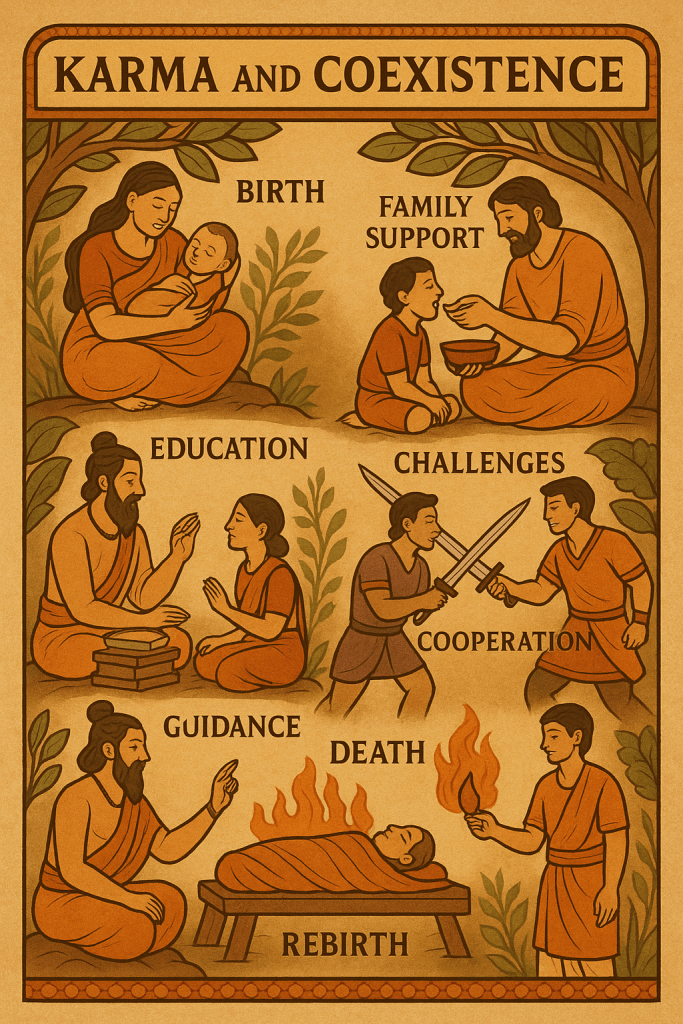
    Let us reflect on the full arc of human life and how deeply interconnected it is:

    • We are born through the sacred womb of a mother, not by our own will, but as a result of previous karma and divine arrangement. The very entry into this world is not in our hands.
    • We are nurtured and raised by parents or caregivers who feed us, clothe us, and protect us — often sacrificing their own comfort for our survival.
    • We are educated by teachers and guided by mentors, who shape our thoughts, character, and understanding of the world. It is they who help us recognize the dharma (righteous duty) aligned with our karma.
    • We grow within a community and society that gives us language, law, order, infrastructure, and opportunity. Without the farmer, we have no food; without the artisan, no shelter; without the doctor, no healing. Every act of karma is carried out using resources and structures created by others.
    • We are tested by life, including through difficult people — competitors, critics, and even enemies. Strangely, even they play a role in shaping our destiny by triggering our strength, resilience, and moral evolution.
    • And when we die, it is our children, family, or society that cremates us, performs the last rites, and prays for our onward journey. Even at the end, we depend on others to fulfill what we cannot.


    The Cycle of Karma and Rebirth

    Hindu philosophy explains that until our karma is fully exhausted or perfected, we take birth again and again, each time to fulfill our soul’s unfinished duties or to learn deeper lessons. Whether we ascend to Vaikuntha (liberation) or return to Earth, it is karma that decides — and karma is only possible through relationships.

    Even moksha (liberation) is not achieved through action alone, but through self-realization, surrender, and grace — all of which are cultivated in the presence of a Guru, community, or divine association.

    Why Realizing Interdependence Matters

    Understanding the collective nature of karma teaches us a profound truth:

    “We are never truly independent — we are interdependent.”

    This realization changes how we live:

    It aligns us with the truth that individual progress is impossible without collective well-being.

    It cultivates humility, breaking the ego that says “I alone achieved this.”

    It fosters gratitude toward parents, teachers, co-workers, strangers — even adversaries.

    It reminds us to honor and protect the ecosystem of life, for without it, we cannot even breathe.

    It creates a sense of social dharma — a responsibility to give back, support others, and perform seva (selfless service).


    From Individual Karma to Collective Harmony

    In Bhagavad Gita (3.16), Lord Krishna says:

     “एवं प्रवर्तितं चक्रं नानुवर्तयतीह यः । अघायुरिन्द्रियारामो मोघं पार्थ स जीवति ॥”

    (Evam pravartitam chakram nānuvartayati iha yah,

    aghāyur indriyārāmo mogham pārtha sa jīvati.”)

    He who does not follow the cycle of duty and mutual cooperation lives in vain — a life of selfish indulgence.

    This timeless verse reminds us that karma is not just personal action — it is our participation in the cosmic wheel of coexistence. Even a tree bears fruit not for itself, but for others. So too, we must perform our karma not in isolation, but in harmony with the world around us.

    You Are Never Alone in Your Karma

    While it is true that only your karma follows you beyond death, it is also true that you cannot perform your karma without others. Every breath, every step, every success — rests upon the shoulders of countless visible and invisible contributors.

    This is the spiritual wisdom of sahabhāva (coexistence) and sahakāra (cooperation). To realize this is to walk the path of dharma — not with pride, but with gratitude; not with separation, but with unity.

    “The soul performs its karma, but the world holds its hand while it does so.”


  • The 1971 War: India’s Strategic Triumph, Missed Opportunities, and Lasting Challenges

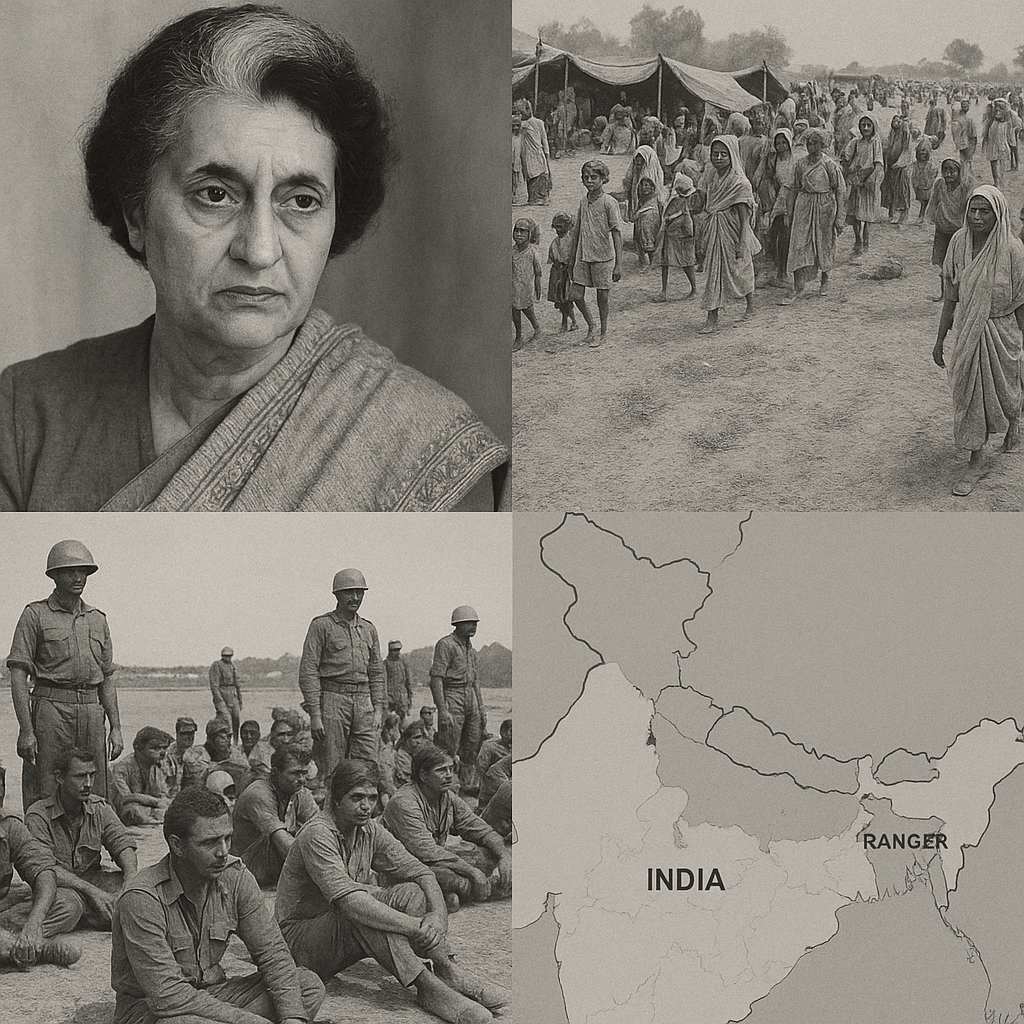
    Today, as India reflects on its historical milestones, the 1971 India-Pakistan War remains a defining moment in the nation’s geopolitical journey. Led by Smt. Indira Gandhi, India’s decisive intervention resulted in the creation of Bangladesh, a humanitarian triumph that reshaped South Asia. However, debates persist over whether India could have secured greater strategic gains, such as annexing the Rangpur area to widen the Siliguri Corridor—transforming the “Chicken’s Neck” into a “Chicken’s Chest”—and ensuring the return of its soldiers still missing in Pakistan. This article examines the war’s outcomes, evaluates the decision to forego territorial annexation, and explores the unresolved issue of Indian POWs, assessing the long-term implications for India.

    The 1971 War and Bangladesh Liberation

    In 1971, East Pakistan (now Bangladesh) faced brutal repression after the Awami League’s electoral victory was denied by West Pakistan’s military regime. The ensuing crackdown, which killed an estimated 300,000 to 3 million people, triggered a humanitarian crisis, with 10 million refugees fleeing into India, primarily West Bengal, Assam, and Tripura. Smt. Indira Gandhi, recognizing both the humanitarian imperative and strategic opportunity, supported the Mukti Bahini (Bangladesh liberation forces) with military training, arms, and diplomatic backing. Following months of preparation, India intervened militarily in December 1971, leading to a 13-day war that ended with Pakistan’s surrender on December 16, 1971. The war resulted in the creation of Bangladesh and the capture of 93,000 Pakistani soldiers as prisoners of war (POWs)—one of the largest military surrenders in modern history.

    Humanitarian and Strategic Triumph

    • Refugee Crisis Resolution: The war alleviated the burden of 10 million refugees on India, with over 90% returning to Bangladesh by 1973, reducing economic and social strain.
    • Weakening Pakistan: The division of Pakistan into two nations diminished its military threat, eliminating its two-front strategy against India.
    • Global Recognition: India’s intervention earned international praise for halting a genocide, enhancing its soft power. The Indo-Soviet Treaty of 1971 ensured Soviet support, countering US and Chinese opposition.
    • Regional Influence: The 1972 India-Bangladesh Treaty of Friendship initially solidified Bangladesh as a friendly neighbor, giving India a strategic buffer against Pakistan.

    The Chicken’s Neck Dilemma: Should India Have Taken Rangpur?

    The Siliguri Corridor, a narrow strip (20–40 km wide) connecting India’s mainland to its northeastern states, is a strategic vulnerability known as the “Chicken’s Neck.” Bordered by Nepal, Bhutan, and Bangladesh, it is susceptible to being severed in a conflict, particularly by China via the Chumbi Valley, 130 km away. Some strategists argue that India, at the peak of its post-1971 influence, could have annexed the Rangpur area in northern Bangladesh to widen this corridor into a “Chicken’s Chest,” enhancing security and connectivity.

    Potential Benefits of Annexation

    • Strategic Depth: Widening the corridor would have reduced the risk of the Northeast being isolated in a conflict. In 2025, with China’s military buildup in the Chumbi Valley and border tensions (e.g., post-2020 Galwan clash), this vulnerability remains a concern. A broader corridor would have improved military logistics, crucial for addressing insurgencies like the ongoing Naga peace talks.
    • Economic Integration: Enhanced connectivity would have boosted trade and infrastructure in the Northeast, a region lagging economically. The 2025 Economic Survey notes the Northeast’s GDP growth at 5.2%, below the national average of 6.8%, partly due to connectivity bottlenecks.
    • Geopolitical Leverage: With 93,000 Pakistani POWs in custody and Bangladesh’s gratitude under Sheikh Mujibur Rahman, India could have negotiated territorial adjustments as a mutual security arrangement, offering economic or diplomatic concessions in return.

    Challenges and Risks

    • Diplomatic Fallout: Annexing Rangpur would have contradicted India’s humanitarian narrative, risking its global image as a defender of self-determination. It would have violated the 1972 India-Bangladesh Treaty of Friendship, potentially turning Bangladesh into a resentful neighbor.
    • International Backlash: The US and China, already hostile during the Cold War, could have rallied global opposition, isolating India. The USSR, India’s ally, might have opposed such a move as a violation of sovereignty norms.
    • Regional Instability: Annexation could have destabilized Bangladesh’s fragile post-independence government, fueling anti-India sentiment. In India’s Northeast, where separatist movements like the Mizo National Front (1966–1986) were active, it might have escalated ethnic tensions.
    • Long-Term Costs: By 2025, India-Bangladesh relations are strained over water sharing, migration, and Bangladesh’s ties with China (e.g., the $1.2 billion Padma Bridge project). Annexation in 1971 would likely have made Bangladesh a hostile neighbor, aligning it with China or Pakistan, undermining India’s regional influence.

    Verdict on Rangpur

    Indira Gandhi’s decision to forego annexing Rangpur was strategically prudent. While widening the Chicken’s Neck offered clear benefits, the diplomatic, ethical, and practical costs—international condemnation, regional instability, and long-term hostility—outweighed the gains. A hostile Bangladesh could have provided China with a foothold closer to the Siliguri Corridor, negating any strategic advantage. However, India might have explored diplomatic negotiations for a mutual security arrangement, such as joint control or transit rights, to address the corridor’s vulnerability without territorial annexation.

    The Unresolved POW Issue: A Lingering Grievance

    Despite India’s release of 93,000 Pakistani POWs by 1974 under the Shimla Agreement, the fate of Indian soldiers believed to be held in Pakistan remains unresolved. Known as the “Missing 54″—30 Army and 24 Air Force personnel—these soldiers were captured primarily on the Western Front. India claims a total of 83 personnel are missing, with some families believing they are still alive in Pakistani jails, facing harsh conditions. Pakistan has consistently denied holding them, with its latest statement in 2025 reiterating this position, though earlier contradictions fuel India’s suspicions.

    • Missed Leverage: Public sentiment on X in 2025 reflects frustration that India did not use the 93,000 Pakistani POWs as leverage to secure the return of its soldiers or other concessions, such as addressing the Chicken’s Neck vulnerability. Some argue this was a diplomatic oversight, prioritizing goodwill over strategic gains.
    • Emotional Toll: Families of the Missing 54 have waited over five decades for closure. Advocacy groups, as noted in recent articles by CAPS India, highlight the emotional toll, with daughters of these soldiers continuing their fight for justice.
    • Diplomatic Stalemate: India’s repeated demands, including the latest exchange of lists in July 2024, have yielded no progress. The recent Operation Sindoor (May 2025) and ongoing tensions with Pakistan further complicate resolution, with Pakistan’s allies like China and Turkey reducing international pressure on this issue.

    Long-Term Implications for India

    Strategic Lessons

    The 1971 war was a tactical triumph but highlighted missed strategic opportunities. While India weakened Pakistan and gained regional influence, the failure to secure its POWs or address vulnerabilities like the Chicken’s Neck underscores the need for a balanced approach in geopolitics. The Shimla Agreement prioritized short-term stability over long-term gains, a decision debated in strategic circles in 2025.

    India-Bangladesh Relations

    By 2025, India-Bangladesh relations are strained, with Bangladesh’s growing ties with China and unresolved issues like migration (e.g., the 2019 NRC in Assam identifying 1.9 million potential illegal immigrants) fueling tensions. Annexing Rangpur would likely have worsened this dynamic, potentially creating a hostile neighbor aligned with India’s adversaries.

    Geopolitical Vulnerabilities

    The Siliguri Corridor remains a strategic concern, with China’s presence in the Chumbi Valley and Bangladesh posing risks. The 2025 Economic Survey emphasizes the need for infrastructure development in the Northeast, suggesting that India must address this vulnerability through diplomatic and economic means rather than territorial adjustments.

    Conclusion

    The 1971 India-Pakistan War, under Indira Gandhi’s leadership, was a defining moment that showcased India’s military prowess and humanitarian resolve, leading to the creation of Bangladesh. However, strategic decisions made in its aftermath have left lasting challenges. Not annexing Rangpur to widen the Siliguri Corridor was likely the right choice, avoiding diplomatic fallout and regional instability, though India could have pursued non-territorial solutions to address this vulnerability. The failure to secure the return of its POWs, however, remains a significant oversight, with the “Missing 54” symbolizing a lingering grievance as of today. The war’s legacy underscores the complexities of balancing humanitarian ideals with strategic interests, a lesson India must heed as it navigates contemporary geopolitical challenges with Pakistan, China, and Bangladesh.

  • 1969 में बैंकों का राष्ट्रीयकरण: वित्तीय नियंत्रण, समावेश और शासन की चुनौतियां

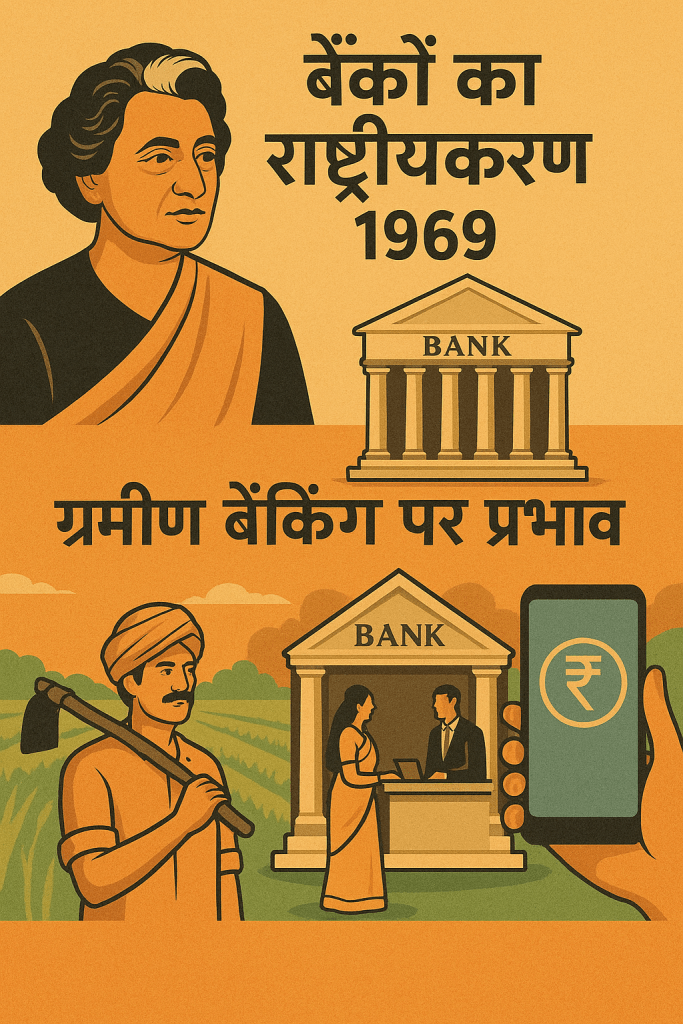
    15 मई 2025 को, जब हम भारत की आर्थिक नीतियों पर विचार करते हैं, तो 1969 में श्रीमती इंदिरा गांधी द्वारा 14 प्रमुख बैंकों के राष्ट्रीयकरण का निर्णय एक ऐतिहासिक कदम था। इसका उद्देश्य ग्रामीण भारत में बैंकिंग पहुंच बढ़ाना और कृषि जैसे क्षेत्रों को प्राथमिकता देना था। लेकिन क्या यह नीति केवल वित्तीय समावेश के लिए थी, या यह नागरिकों पर वित्तीय नियंत्रण का साधन भी बनी? यह लेख अर्थशास्त्रियों के दृष्टिकोण, ग्रामीण भारत पर प्रभाव, और 2014 में शुरू हुई जन धन योजना की आवश्यकता का विश्लेषण करता है, साथ ही एक सरकारी कंपनी में कंपनी सेक्रेटरी की भूमिका पर प्रकाश डालता है।

    राष्ट्रीयकरण का उद्देश्य और ग्रामीण भारत पर प्रभाव

    1969 में बैंकों का राष्ट्रीयकरण सामाजिक समानता को बढ़ावा देने का एक प्रयास था। उस समय, केवल 17% बैंक शाखाएं ग्रामीण क्षेत्रों में थीं। राष्ट्रीयकरण के बाद, 1980 तक यह संख्या 15,000 से अधिक हो गई। ग्रामीण जमा का हिस्सा 1969 में 3% से बढ़कर 1985 तक 15% हो गया, और कृषि को ऋण 2% से 10% तक पहुंचा। इससे किसानों को साहूकारों से मुक्ति मिली और हरित क्रांति को समर्थन मिला।

    हालांकि, इस नीति की कमियां भी थीं। ग्रामीण शाखाएं अक्सर लाभहीन रहीं, और राजनीतिक हस्तक्षेप ने ऋण वितरण को प्रभावित किया। कई बार, ऋण उन लोगों को मिले जो सत्ताधारी पार्टी के करीबी थे, जिससे वास्तविक जरूरतमंद प्रभावित हुए। वित्तीय साक्षरता की कमी के कारण कई खाते निष्क्रिय रहे, जिसने नीति के प्रभाव को सीमित किया।

    अर्थशास्त्रियों का दृष्टिकोण: वित्तीय नियंत्रण का साधन?

    कई अर्थशास्त्री मानते हैं कि राष्ट्रीयकरण ने सरकार को वित्तीय नियंत्रण का एक साधन दिया। नोबेल पुरस्कार विजेता अमर्त्य सेन ने आर्थिक स्वतंत्रता पर जोर देते हुए कहा कि ऐसी नीतियां व्यक्तिगत स्वायत्तता को सीमित कर सकती हैं। जगदीश भगवती ने इसे “लाइसेंस-परमिट राज” का हिस्सा बताया, जहां बैंक राजनीतिक संरक्षण के साधन बन गए। 1975-77 के आपातकाल के दौरान, सरकार ने बैंकों का उपयोग विरोधियों के खातों को फ्रीज करने के लिए किया, जो नियंत्रण का स्पष्ट उदाहरण है।

    पूर्व आरबीआई गवर्नर रघुराम राजन ने नोट किया कि राज्य-नियंत्रित बैंक लेनदेन की निगरानी को सक्षम बनाते हैं। 2025 तक, डिजिटल बैंकिंग और KYC नियमों के साथ, यह निगरानी बढ़ गई है, जिसने गोपनीयता पर सवाल खड़े किए हैं। दूसरी ओर, कौशिक बसु जैसे अर्थशास्त्री मानते हैं कि राष्ट्रीयकरण का मुख्य लक्ष्य समावेश था, और ग्रामीण भारत में बैंकिंग को लोकतांत्रिक बनाने में यह सफल रहा।

    जन धन योजना की आवश्यकता

    यदि राष्ट्रीयकरण इतना प्रभावी था, तो 2014 में मोदी सरकार को जन धन योजना (PMJDY) क्यों लानी पड़ी? 2011 की जनगणना के अनुसार, केवल 54.4% ग्रामीण परिवारों के पास बैंकिंग पहुंच थी। राष्ट्रीयकरण के बाद खुले कई खाते निष्क्रिय थे, क्योंकि वित्तीय साक्षरता और पहुंच सीमित थी। PMJDY ने डिजिटल तकनीक का उपयोग कर इस कमी को दूर किया। 2025 तक, इसने 53 करोड़ से अधिक खाते खोले, जिनमें से 67% ग्रामीण/अर्ध-शहरी क्षेत्रों में हैं, और ₹2.3 लाख करोड़ से अधिक जमा हुए। जीरो-बैलेंस खातों, RuPay कार्ड, और ओवरड्राफ्ट सुविधा ने समावेश को गहरा किया, जो 1969 में संभव नहीं था।

    शासन की चुनौतियां: कंपनी सेक्रेटरी की भूमिका

    राष्ट्रीयकरण की तरह, सरकारी कंपनियां भी राज्य के नियंत्रण और समावेश के बीच संतुलन बनाती हैं। एक 100% सरकारी स्वामित्व वाली कंपनी में, जो भूमि मुद्रीकरण में संलग्न है, कंपनी सेक्रेटरी को कॉर्पोरेट गवर्नेंस, कानूनी अनुपालन, और हितधारकों के बीच समन्वय की जिम्मेदारी होती है। ऐसी कंपनियों में सरकार की नीतियां, जैसे वित्तीय समावेश को बढ़ावा देना, अक्सर प्राथमिकता होती हैं। लेकिन राजनीतिक हस्तक्षेप और नौकरशाही दबाव अनुपालन को जटिल बना सकते हैं। उदाहरण के लिए, बोर्ड की मंजूरी के बिना नियुक्तियों को संभालना या वित्तीय पारदर्शिता सुनिश्चित करना चुनौतीपूर्ण हो सकता है, जैसा कि राष्ट्रीयकृत बैंकों के अनुभव से देखा गया।

    निष्कर्ष

    1969 में बैंकों का राष्ट्रीयकरण ग्रामीण भारत में वित्तीय समावेश की नींव रखने में सफल रहा, लेकिन इसने सरकार को नागरिकों पर वित्तीय नियंत्रण का एक साधन भी दिया। अर्थशास्त्रियों के विचार बंटे हुए हैं—कुछ इसे समावेश का कदम मानते हैं, तो कुछ इसे नियंत्रण का उपकरण। PMJDY ने राष्ट्रीयकरण की कमियों को दूर करने का प्रयास किया, जो आधुनिक तकनीक के साथ समावेश को बढ़ाने में सफल रहा। लेकिन 2025 में भी, सार्वजनिक क्षेत्र के बैंकों का प्रभुत्व और सरकारी कंपनियों में शासन की चुनौतियां हमें वित्तीय स्वतंत्रता और राज्य की भूमिका पर विचार करने के लिए प्रेरित करती हैं।

  • 1969 Bank Nationalization: Financial Control, Inclusion, and Governance Challenges

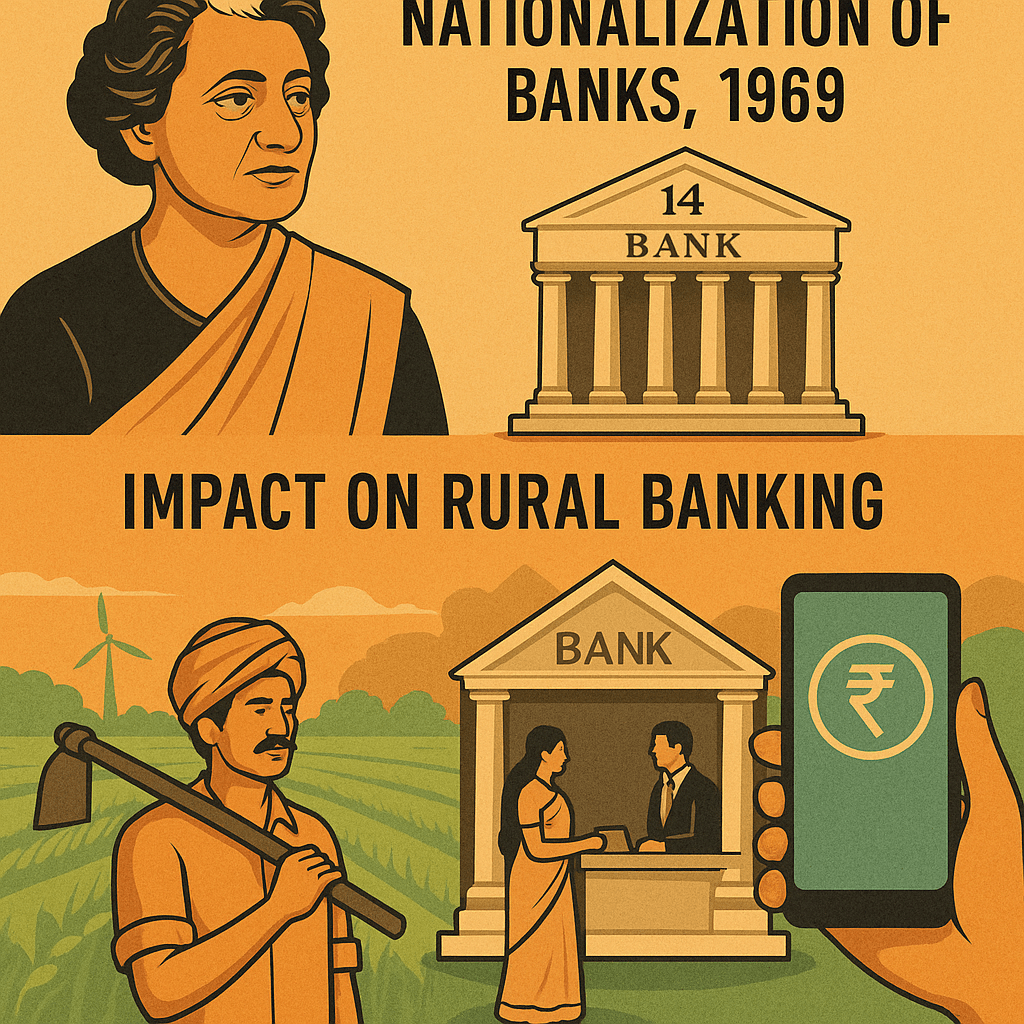
    As of May 15, 2025, reflecting on India’s economic history, the 1969 nationalization of 14 major commercial banks by Smt. Indira Gandhi stands as a pivotal moment. Aimed at expanding banking access to rural areas and prioritizing sectors like agriculture, the policy was heralded as a step toward social equity. However, economists debate whether it also served as a mechanism for financial control over citizens. This article examines the policy’s impact on rural India, the need for subsequent initiatives like the Pradhan Mantri Jan Dhan Yojana (PMJDY), and the governance challenges faced by Company Secretaries in government-owned entities navigating similar state-driven mandates.

    Objectives and Impact on Rural India

    The 1969 bank nationalization sought to democratize finance in a country where banking was largely urban-centric. In 1969, only 17% of bank branches were in rural areas, but by 1980, this number surged to over 15,000. The share of rural deposits grew from 3% in 1969 to 15% by 1985, and agricultural credit rose from 2% to 10% of total advances by 1975, per RBI data. This empowered rural farmers by reducing reliance on exploitative moneylenders and supported the Green Revolution’s agricultural boom.

    However, the policy had significant flaws. Many rural branches were unprofitable, leading to inefficiencies. Political interference skewed loan disbursal, often favoring politically connected individuals over the deserving. A lack of financial literacy left many accounts dormant, limiting the policy’s transformative potential. While it laid the foundation for financial inclusion, its implementation fell short of fully integrating rural India into the formal banking system.

    Economists’ Perspectives: A Tool for Financial Control?

    1. State Dominance Over Economic Activity

    Nobel laureate Amartya Sen, in Development as Freedom (1999), emphasizes economic freedom as a pillar of development. He argues that excessive state control over financial systems can curtail individual agency. While acknowledging nationalization’s intent to promote inclusion, Sen cautions that it enabled the state to influence citizens’ economic choices, such as directing credit to favored sectors or individuals. Historical records from the 1970s reveal instances where loans were disbursed based on political affiliations, indicating a form of financial control.

    2. Political Patronage and Bureaucratic Overreach

    Economist Jagdish Bhagwati, in India: Economic Reform and Growth (1993), critiques nationalization as part of the “license-permit raj.” He argues that it turned banks into tools of political patronage, allowing the government to control access to financial resources. In rural India, farmers often faced bureaucratic hurdles or needed political connections to secure loans, limiting their economic opportunities. Bhagwati contends this was not just about inclusion but about consolidating state power over citizens’ financial lives.

    3. Surveillance and Monetary Policy

    Former RBI Governor Raghuram Rajan, in The Third Pillar (2019), highlights how state-controlled banking systems enable financial surveillance. Nationalization gave the government unprecedented insight into citizens’ transactions. During the 1975–77 Emergency, the state used banks to freeze accounts of political opponents, a clear instance of financial control. By 2025, with digital banking and KYC norms, this surveillance has expanded, raising concerns about privacy and financial autonomy.

    4. Counterview: Focus on Financial Inclusion

    Economist Kaushik Basu, in a 2016 lecture, argues that nationalization’s primary goal was financial inclusion, not control. He credits the policy for bringing banking to rural India, reducing dependence on informal credit. The growth in rural deposits and agricultural lending supports this view, suggesting that political interference was an implementation failure rather than the policy’s intent.

    5. Mixed Outcomes

    Arvind Panagariya, in India: The Emerging Giant (2008), offers a balanced perspective. He acknowledges that nationalization empowered rural India but also created opportunities for state control. The Emergency and later events like demonetization in 2016, where public banks were instrumental in enforcing government policy, demonstrate how nationalization provided a mechanism for financial oversight, often at the expense of citizens’ autonomy.

    The Need for Jan Dhan Yojana

    If nationalization was so impactful, why did the Modi government launch the Pradhan Mantri Jan Dhan Yojana (PMJDY) in 2014? Despite the growth in rural banking post-1969, the 2011 Census revealed that only 54.4% of rural households had banking access. Many accounts remained dormant due to limited financial literacy and accessibility. PMJDY addressed these gaps by leveraging digital technology, opening over 53 crore accounts by 2025, with 67% in rural/semi-urban areas and deposits exceeding ₹2.3 lakh crore. Features like zero-balance accounts, RuPay cards, and overdraft facilities, combined with financial literacy campaigns, ensured greater usage, with over 80% of accounts active—a marked improvement over the nationalization era.

    Governance Challenges: The Role of a Company Secretary

    Similar to the dynamics of nationalization, government-owned companies often operate at the intersection of state control and public welfare. A Company Secretary in a 100% government-owned CPSE involved in land monetization faces unique challenges. They are responsible for ensuring corporate governance, legal compliance, and stakeholder coordination while navigating government mandates, such as those seen in asset monetization policies. For instance, the National Land Monetization Corporation (NLMC) can only acquire assets from CPSEs under strategic disinvestment at book value, as noted in prior correspondence. This limits flexibility, and political interference—akin to that seen in nationalized banks—can complicate compliance. A Company Secretary must balance transparency, manage board dynamics, and ensure financial accountability, often under bureaucratic pressure, mirroring the governance challenges of the nationalization era.

    Conclusion

    The 1969 bank nationalization was a landmark policy that expanded financial access in rural India, but it also served as a tool for state control, as debated by economists. While it empowered many, political interference and surveillance potential highlighted its dual nature. PMJDY built on this foundation, using modern technology to deepen inclusion. Yet, the legacy of nationalization persists in 2025, with public sector banks dominating the financial sector, raising ongoing questions about financial freedom versus state oversight. For Company Secretaries in government entities, these tensions underscore the need for robust governance to balance state objectives with public welfare, ensuring that policies serve citizens without compromising their autonomy.

  • क्या डार्विन का “सर्वाइवल ऑफ द फिटेस्ट” सिद्धांत भारत के पारिवारिक व्यवसायों पर लागू होता है?

    डार्विन का ‘सर्वाइवल ऑफ द फिटेस्ट’ (सबसे योग्य का जीवित रहना) सिद्धांत प्राकृतिक चयन की बात करता है – यानी जो पर्यावरण के अनुसार खुद को ढाल लेता है, वही जीवित रहता है। जब इस विचार को भारत के पारंपरिक पारिवारिक व्यवसायों पर लागू किया जाए, तो यह स्पष्ट हो जाता है कि इन व्यवसायों ने समय के साथ खुद को लगातार ढाला, नवाचार किया और सांस्कृतिक व पारिवारिक मूल्यों के सहारे लंबा सफर तय किया है।

    आइए समझते हैं कि भारत के पारिवारिक व्यवसाय कैसे डार्विन के इस सिद्धांत पर खरे उतरते हैं और कैसे आज भी वे फल-फूल रहे हैं।

    1. परिवर्तन के अनुसार ढलने की क्षमता (Adaptability)

    भारत के प्रमुख पारिवारिक व्यवसायों जैसे टाटा, बिड़ला, अंबानी आदि ने समय के अनुसार अपने व्यापार का रूप बदला है।

    • टाटा समूह (1868 में स्थापित) ने ट्रेडिंग से शुरुआत की और धीरे-धीरे स्टील, ऑटोमोबाइल (Tata Motors), और फिर आईटी सेवाओं (TCS) तक का सफर तय किया।
    • इस तरह का परिवर्तन दर्शाता है कि व्यवसाय बदलते समय और बाजार के अनुसार खुद को ढालना जानते हैं।

    2. सांस्कृतिक और पारिवारिक ताकत से लचीलापन (Resilience)

    भारतीय परिवारों में पारिवारिक रिश्ते और सामाजिक नेटवर्क मजबूत होते हैं।

    • मुरुगप्पा समूह (1900 में स्थापित) ने कई पीढ़ियों तक पारिवारिक एकता बनाए रखी और कृषि, वित्त और इंजीनियरिंग जैसे क्षेत्रों में विविधीकरण किया।
    • यह पारिवारिक विश्वास व्यवसाय को संकट के समय भी संभालने में मदद करता है।

    3. नवाचार और तकनीकी अपनापन (Innovation & Modernization)

    सिर्फ परंपरा पर नहीं, आधुनिक तकनीक को अपनाना भी “फिटनेस” की निशानी है।

    • रिलायंस समूह, जो 1960 के दशक में टेक्सटाइल से शुरू हुआ था, आज Jio के ज़रिए डिजिटल और 5G तकनीक में अग्रणी बन चुका है।
    • यह दर्शाता है कि पारिवारिक व्यवसाय तकनीक के साथ कदम से कदम मिला रहे हैं।

    4. विशेषीकृत बाजार पर पकड़ (Niche Market Mastery)

    छोटे पारिवारिक व्यवसायों ने पारंपरिक वस्त्र, आभूषण, मसाले जैसे क्षेत्रों में विशेषज्ञता हासिल कर बड़े प्रतिस्पर्धियों को भी पीछे छोड़ा है।

    • जैसे गिटांजलि ज्वेलर्स ने पारंपरिक कारीगरी को वैश्विक ब्रांडिंग के साथ जोड़कर बाज़ार में विशेष जगह बनाई।

    5. लंबी सोच और विरासत (Long-term Vision)

    कॉर्पोरेट कंपनियों की तरह तिमाही लाभ की बजाय, पारिवारिक व्यवसाय पीढ़ियों तक टिकने की सोच के साथ चलते हैं।

    • आदित्य बिड़ला समूह (1857) जैसे समूहों ने एल्यूमिनियम, सीमेंट जैसे क्षेत्रों में निवेश कर दीर्घकालीन सफलता पाई है।

    6. विश्वास और सामाजिक पूंजी (Trust and Reputation)

    भारत में भरोसेमंद ब्रांड बनने में समय लगता है और पारिवारिक व्यवसाय यह भरोसा वर्षों में अर्जित करते हैं।

    • वाडिया समूह (1736 में स्थापित) जैसे ब्रांड, जिनके उत्पाद जैसे ब्रिटानिया, आज भी लोगों के भरोसे पर खरे उतरते हैं।

    7. नीतिगत समर्थन (Government Support)

    1991 के उदारीकरण के बाद पारिवारिक व्यवसायों को वैश्विक बाज़ार में अवसर मिले।

    • “मेक इन इंडिया”, MSME योजनाएं और निर्यात प्रोत्साहन जैसी सरकारी नीतियों से पारिवारिक व्यवसायों को बड़ा लाभ मिला है।
    • उदाहरण के तौर पर सूरत के टेक्सटाइल क्लस्टर में अधिकांश व्यवसाय पारिवारिक हैं, जो आज निर्यात में अग्रणी हैं।

    8. उत्तराधिकार की योजना और संस्कृति से मेल (Succession Planning & Culture)

    गॉदरेज समूह (1897 में स्थापित) ने उत्तराधिकार की स्पष्ट योजना और आधुनिक दृष्टिकोण के साथ हर पीढ़ी में नवाचार और सततता पर जोर दिया है।

    चुनौतियाँ जो अब भी मौजूद हैं (Darwinian Pressures)

    • पारिवारिक विवाद – जैसे सिंघानिया परिवार (रेमंड) में।
    • वैश्विक प्रतिस्पर्धा – छोटे व्यवसायों को Amazon, Apple, आदि जैसी कंपनियों से खतरा।
    • डिजिटलीकरण में पीछे रह जाना – कई पारंपरिक व्यवसाय डिजिटल युग के साथ तालमेल नहीं बिठा पा रहे।

    निष्कर्ष

    भारतीय पारिवारिक व्यवसाय डार्विन के “सबसे योग्य जीवित रहेगा” सिद्धांत के अनुसार ही सफल हुए हैं। वे समय के अनुसार बदले, संस्कृति और आधुनिकता का संतुलन बनाया, और आंतरिक ताकत के सहारे संकटों का सामना किया। मई 2025 तक, टाटा, रिलायंस जैसे समूह न केवल जीवित हैं, बल्कि नई ऊंचाइयों को छू रहे हैं।

    परंतु, यदि वे अपनी आंतरिक कमजोरियों को नहीं सुधारते, और डिजिटल, वैश्विक व सतत विकास के बदलावों के साथ नहीं चलते, तो भविष्य में उनका अस्तित्व खतरे में पड़ सकता है। डार्विन का सिद्धांत आज भी उतना ही प्रासंगिक है — चाहे वह जंगल हो या बाज़ार।