Unmukt

Tag: caste

  • Varna vs. Caste: Reclaiming the Dharma of Merit

    Varna Was Never About Birth

    In the Bhagavad Gita, Lord Krishna says:

    चातुर् वर्ण्यं मया सृष्टं गुणकर्मविभागशः।
    तस्य कर्तारमपि मां विद्ध्यकर्तारमव्ययम्॥

    भगवद्गीता ४.१३

    “Chaturvarnyam maya srishtam guna-karma-vibhagashah”
    (I created the fourfold varna system based on qualities and actions.) — BG 4.13

    This single verse debunks the modern myth that one’s birth determines one’s role or worth. Varna, in its true Vedic sense, was a system designed to align individuals with their natural disposition (guna) and skillset (karma).

    • A person full of curiosity, discipline, and spiritual insight was a Brahmana — regardless of birth.
    • One with courage, leadership, and responsibility was a Kshatriya.
    • The trade-minded, wealth-creators were Vaishyas.
    • And those who specialized in support services and craftsmanship were Shudras.

    This was not a hierarchy, but a division of responsibility for the harmonious functioning of society just as a body functions with head, arms, stomach, and legs, each with dignity.

    Caste (Jati) Was a Later Distortion

    Over centuries, the fluid varna system slowly hardened into birth-based jatis — thousands of local sub-castes. This was not divine; it was a social evolution influenced by politics, orthodoxy, and later, colonial bureaucracy.

    The British census of 1901 classified Indians by rigid caste categories, freezing what was once dynamic. The colonial state weaponized caste to divide and control, labeling people in ways even the Vedas never did.

    Sant Ravidas: The Soul That Rose Beyond Birth

    You don’t need reservation or privilege to rise — Sant Ravidas proved that.

    Born into a humble cobbler family considered “untouchable,” he became one of the greatest saints of the Bhakti movement. His verses are immortalized in the Guru Granth Sahib, and he became a spiritual guide even to royal figures like Mira Bai.

    So where did his merit come from?

    • Not from a quota.
    • Not from a school.
    • But from inner awakening, sadhana, and divine insight.

    Just like Ved Vyasa, the compiler of the Mahabharata, born to a fisherwoman.
    Just like Valmiki, the hunter-turned-sage who wrote the Ramayana.

    They did not rise because of their caste they rose because of their karma and tapasya.

    Modern India: Merit Still Shines Without Quotas

    Today, despite not having reservation:

    • Students from upper cast continue to top IIT-JEE, UPSC, NEET, and other elite exams.
    • Many from upper castes still perform with excellence in fields of science, technology, law, literature, and civil service.

    How?

    Because their power comes from:

    • Discipline
    • Respect for knowledge
    • Family traditions of learning
    • No entitlement—only effort

    This proves one thing: real merit doesn’t need shortcuts.

    This Is Not About Brahmin or upper cast Superiority

    Let’s be clear. This is not a call for caste pride or supremacy.

    Every community has heroes. Every community deserves dignity.

    But today, when Brahmins or upper castes are blamed for every problem, or when ancient Hindu systems are wrongly labeled as inherently oppressive, it becomes important to defend the truth.

    Dharma is not oppression.
    Learning is not privilege.
    Sanatan culture is not discrimination.

    A Call for Civilizational Clarity

    If we want to build Ek Bharat Shreshtha Bharat, we must:

    • Uphold the original spirit of varna — qualities and actions, not birth.
    • End caste-based hatred, from any side.
    • Respect merit and effort, regardless of category.
    • And most importantly, revive the dharma of unity — not the politics of blame.

    Let every child in India rise not by caste or certificate, but by knowledge, character, and courage.
    Let us rebuild a Bharat where Ravidas, Valmiki, and Vyasa still inspire us to see beyond birth — and live by truth.
  • Rising Above Casteism: A New Vision for Equality and Opportunity

    India’s Present Social Context and the Impact of Casteism

    India today stands at a juncture where our Constitution, which enshrines the values of equality, liberty, and justice, forms the foundation of our democratic society. Under the Constitution, all citizens are guaranteed equal rights, and no one is to be discriminated against based on caste, class, or gender.

    But even now, is the system of caste-based reservation and caste identity in practice not conflicting with the very principles of unity and equality? Can we not look back to the time when caste-based hierarchies restricted people purely based on birth?

    Today, as we uphold the constitutional promise of equal rights, are we not ironically dividing society once again through caste-based advantages? India’s foundation, which speaks of equality and justice, is it still being affected by the remnants of casteist systems? Are we forgetting that the original objective of reservation was to expand opportunity and equality—not to reinforce caste divisions?

    Caste in India: History, Current Realities, and Steps Toward Equality

    India has a deep and complex history of caste. In ancient times, there existed a varna system which classified society into four primary groups — Brahmins, Kshatriyas, Vaishyas, and Shudras. This system was originally based on function, not birth. Brahmins were responsible for knowledge, teaching, and religious duties; Kshatriyas for protection and governance; Vaishyas for trade and agriculture; and Shudras for service-related roles.

    However, over time, this functional classification gradually turned into a rigid, birth-based caste hierarchy, dividing society into higher and lower classes based on lineage rather than merit. This transformation led to severe inequality and discrimination that marginalized large sections of the population.

    While we now live under a Constitution that promises equal rights for all, we must ask — have we truly eliminated the outdated caste mindset from our society? Are we, as a nation, fully implementing the principles of equality and justice, or are we still bound by old prejudices?

    Social Change and Real-Life Examples

    Despite the caste-based structure of ancient society, history provides many examples of individuals who rose to prominence based on their merit, courage, and intellect. One such example is Chandragupta Maurya, who came from a Shudra background but went on to rule the Indian subcontinent and establish the Mauryan Empire. His rise symbolizes that ability and leadership are not determined by caste.

    Chandragupta’s mentor, the Brahmin Chanakya (Kautilya), played a pivotal role in his journey. Chanakya not only educated him in statecraft and governance but also taught that social standing should not limit one’s destiny. His mentorship proves that success and greatness are founded not on caste, but on knowledge, wisdom, and determination.

    Similarly, Dr. B.R. Ambedkar, born into the Mahar caste — considered a lower caste in Indian society — faced extreme discrimination and hardship throughout his life. However, a turning point came when he was guided by Brahmin teachers who encouraged him to pursue higher education. Their support helped him realize that education could break the chains of caste.

    Dr. Ambedkar used his education as a tool to fight for social justice and equality. He went on to draft the Indian Constitution — a document that stands firmly against caste discrimination. His life proves that birth does not define destiny and that knowledge and hard work can overcome even the most deeply rooted barriers.

    Casteism and Reservation in Contemporary India

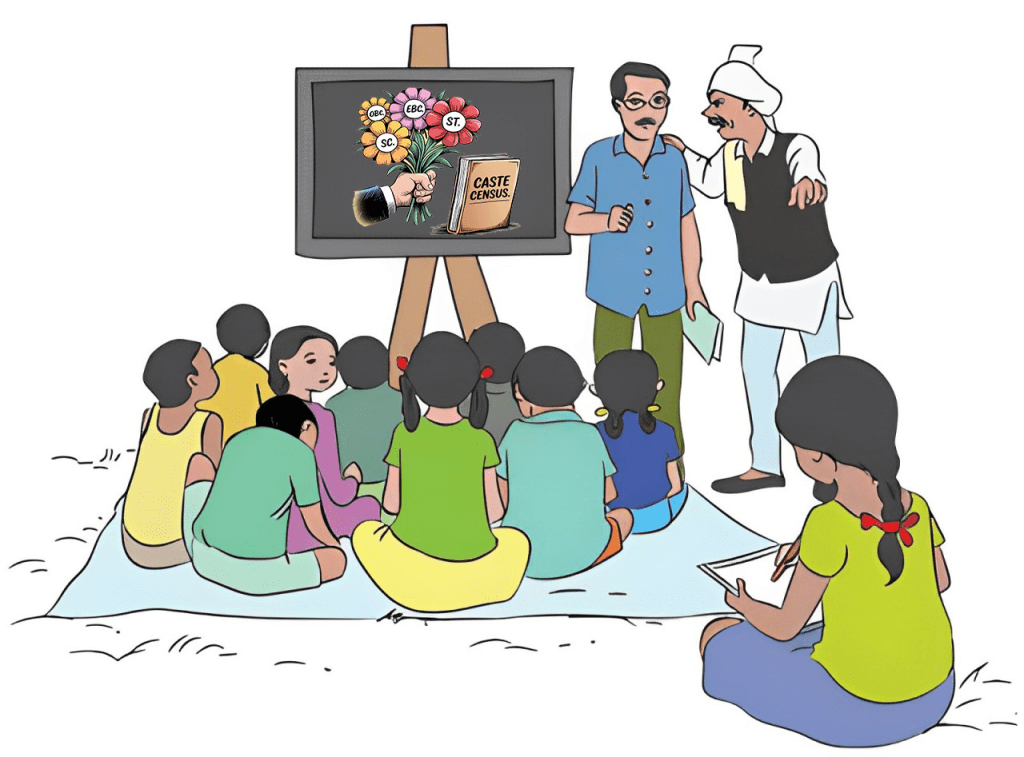
    Today, while the Indian Constitution emphasizes equality, liberty, and justice, caste-based reservation policies still persist in our system. Originally intended to uplift historically oppressed communities, reservations aim to ensure fair access to education, employment, and socio-economic participation.

    However, this policy is now the subject of widespread debate. Many believe that reservation has strayed from its purpose and is creating new inequalities in the name of correcting old ones. The fundamental question arises: should caste still be the basis of reservation, or should economic and social conditions take precedence?

    In this modern era, does promoting caste-based reservation in the name of social justice not contradict the principle of equality? Has the system truly served its purpose, or has it begun to create new divisions among people?

    Moving Toward Equal Opportunities

    We must now realize that an individual’s ability and merit should never be judged on the basis of caste or social background. We must build a society where everyone is given equal opportunity — free from the influence of casteism, discrimination, or oppression.

    The right to equality is enshrined in our Constitution, and now is the time to truly implement it. We must work to eliminate caste-based discrimination and ensure equal access to education, employment, and social opportunities for all.

    The fight against casteism should not remain limited to legal frameworks — it should be embraced in our values, social systems, and collective mindset. Only with sincere and collective effort can we remove inequality and build a society where every citizen is assessed by their merit, not their caste.

    Conclusion

    Casteism has deep roots in Indian history, but we now have the opportunity to eradicate it and move toward a society that is equal, inclusive, and just. We can achieve true equality only when we eliminate caste-based thinking from all aspects of our lives and guarantee equal opportunities to all, regardless of their background. Let us rise above caste. Let us choose equality.

    By Nilesh Ranjan