Unmukt

Tag: economy

  • Trump’s India Gamble: Undoing 25 Years of U.S. Diplomacy

    For decades, American foreign policy has been criticized as short-term and opportunistic. Yet, when it comes to India, Washington displayed rare consistency. From the Clinton years onward, Democratic and Republican administrations alike invested in a careful, bipartisan project: drawing India closer to the United States as a strategic counterweight to China.

    That patient diplomacy—built brick by brick over 25 years—now stands on shaky ground. President Donald Trump’s renewed hostility toward India risks unraveling the most significant U.S. strategic realignment since the Cold War.

    The Long Arc of U.S.–India Engagement

    When President Bill Clinton visited India in 2000, he signaled a dramatic shift from decades of suspicion to cautious partnership. The Bush administration deepened this approach, recognizing that a rising China posed a challenge to the global order and that India, the world’s second-most populous nation, was the natural counterbalance.

    George W. Bush took the boldest step: offering India a historic civil nuclear deal. By treating India as a responsible nuclear power rather than an outlier, Washington effectively ended India’s global isolation on the nuclear issue. This was a turning point—expertly managed on the Indian side by Prime Minister Manmohan Singh—and it transformed bilateral relations.

    The Obama years took cooperation further. India was positioned as a cornerstone of Washington’s “pivot to Asia.” Trade surged, and the U.S. formally supported India’s aspirations for a permanent seat on the U.N. Security Council.

    Trump’s first term, despite its unpredictability, gave political heft to the “Quad”—a grouping of the U.S., India, Japan, and Australia—and projected a personal rapport between Trump and Prime Minister Modi. Biden inherited this trajectory and expanded it, pushing for joint manufacturing in defense and technology, from fighter jets to semiconductor chips.

    By 2025, India was exporting more smartphones to the U.S. than China—a symbolic victory in supply-chain realignment.

    Trump 2.0: A Sudden Reversal

    All of this makes Trump’s current shift even more startling. Without warning, his administration has moved India into its most restrictive category of partner countries—lumping it with pariah states such as Syria and Myanmar—while simultaneously extending overtures to Pakistan.

    Reports of private meetings with Pakistan’s army chief and alleged business ties between Trump-linked firms and Pakistani institutions have fueled speculation of backroom deals. More dramatically, Trump publicly mocked India’s economy, dismissing it as “dead.”

    The irony is striking. India has been the fastest-growing major economy for several years, is now the fourth largest in the world, and is projected to surpass Germany by 2028 to become the third-largest, after only the U.S. and China. It is the world’s second-largest arms importer and a vital hub for digital technology and consumer markets. Far from “dead,” India is central to the 21st-century global economy.

    The Risk of Strategic Miscalculation

    India is not an easy partner. Its history of colonization, Cold War ties with Moscow, and a deeply independent foreign policy tradition have made it cautious. Prime Minister Modi’s strategy of “multi-alignment” allowed India to keep ties with Washington, Moscow, and even Beijing simultaneously.

    Yet, persistent U.S. diplomacy—combined with anxiety over China’s rise—was steadily nudging India into a closer embrace with Washington. That slow but crucial alignment may now be undone.

    Trump’s hostility has united India’s political spectrum in outrage. A country that was moving past its ambivalence toward America is once again asking whether Washington can ever be trusted. The result may be a stronger tilt back toward Russia—and perhaps even a thaw with China.

    America’s Reliability Question

    For years, American diplomats argued that the U.S.–India relationship was destined to be one of the great strategic partnerships of the century: the world’s oldest democracy working hand in hand with its largest. That vision now looks deeply uncertain.

    Even if Trump reverses course again—as he often does—the damage may be irreversible. India has seen a glimpse of American unpredictability at its harshest. For a nation obsessed with strategic autonomy, the lesson is clear: never put all your bets on Washington.

    Trump may believe he is playing a tactical game with India. But in reality, he risks undoing 25 years of hard-won trust, and with it, America’s most promising counterweight to China. History may remember this as the moment when the U.S. lost India.
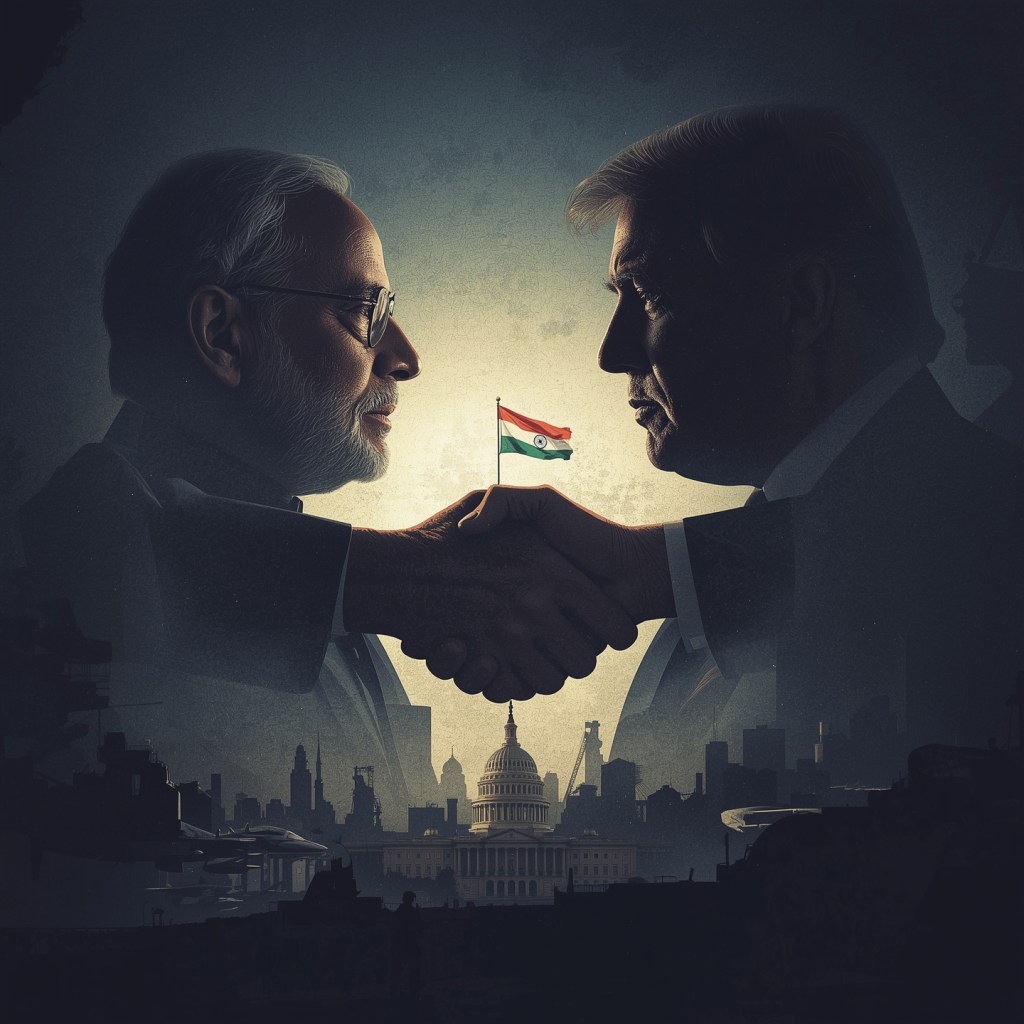
  • Public Fights, Private Handshakes: The Real Story Behind the Indo–U.S. “Tariff War”

    By the time you read this, a top-level U.S. defence delegation will either be packing their bags for New Delhi or already in meetings with India’s strategic leadership. On paper, this shouldn’t be happening. Not after President Donald Trump slapped two layers of tariffs on Indian goods — 25% on most imports from 1 August, plus another 25% announced on 7 August over India’s purchase of Russian oil. Together, they threatened to take the trade friction to a painful 50%.

    Yet, in classic Washington style, the drama on the surface hides a very different current beneath. While the tariff headlines dominate, the Indo–U.S. relationship is quietly moving forward on nearly every other front.

    The Defence and Security Front

    The upcoming visit of the U.S. defence ministry’s high-level team is not routine — it is a deliberate signal. Washington wants India to know that defence cooperation remains a priority. This is reinforced by the fact that the 21st edition of the joint Indo–U.S. military exercise will go ahead in Alaska this month.

    And here’s the geopolitical theatre twist: that’s the very location where Trump is scheduled to meet Russian President Vladimir Putin. On one side, Trump will be shaking hands with Putin; on the other, Indian and American soldiers will be training side by side.

    Diplomatic Continuity: The 2+2 Dialogue

    Preparations for the annual “2+2” ministerial dialogue — involving the defence and foreign ministers from both countries — are well underway. It’s one of the highest forms of institutional dialogue between the two nations, and it signals long-term commitment, not short-term posturing.

    Trade Talks Against the Grain

    Despite the tariff tensions, the American trade negotiation team is still coming to India on 25 August. There’s even optimism about concluding a barter-style trade agreement by October. India has drawn its “red lines” clearly — agriculture, livestock, and fisheries are off the table. Washington, at least for now, seems willing to proceed under those terms.

    Why the Mixed Signals?

    The answer lies in the difference between political theatre and strategic planning.

    • Trump’s tariff moves play well to his domestic base, particularly ahead of the midterm elections.
    • But U.S. institutions — the Pentagon, State Department, and trade machinery — know the cost of letting 25 years of carefully built Indo–U.S. cooperation unravel.
    • There’s also the possibility that Trump is quietly preparing to roll back the extra 25% tariff if the Putin talks produce the right optics.

    The Unmukt Take

    The “tariff war” may be more performance than policy. The reality is that India and the U.S. are not on the verge of a rupture; they are, in fact, deepening cooperation in defence, diplomacy, and trade — even as they spar in public.

    This is a story not of collapsing ties, but of dual narratives: one for the cameras, another for the confidential briefing rooms. And in international politics, it’s often the private handshake that writes the real history.

  • India–China Relations 2025: How Trump’s Tariffs Sparked an Unlikely Economic Realignment

    Six months ago, few analysts would have predicted India and China moving even slightly closer in their diplomatic and economic ties. The two Asian giants have spent decades locked in strategic rivalry — from border disputes in Ladakh to competition for influence across Asia. But in 2025, a surprising factor has nudged them toward limited cooperation: Donald Trump’s aggressive U.S. tariffs on both countries.

    The Unintended Consequence of Trump’s Tariffs

    When President Trump reintroduced steep tariffs on Chinese goods — and extended them to Indian exports — his goal was clear: pressure Beijing over trade practices and punish New Delhi for continuing business with Russia.

    However, instead of isolating them, the tariffs have created a shared economic challenge. Both India and China are now dealing with:

    • Reduced access to the lucrative U.S. market
    • Risks of economic slowdown
    • The need to secure alternative investment and trade routes

    In geopolitics, shared problems often lead to tactical cooperation, even between rivals.

    Key Developments in the India–China Thaw

    1. Resumption of Direct Flights and Visas: India has restarted tourist visas for Chinese nationals and is preparing to resume direct flights through carriers like Air India and IndiGo. This was a long-standing demand from Beijing since the COVID-19 suspension.
    2. Boost in Fertilizer Trade: China has eased restrictions on urea exports to India, vital for India’s agriculture sector. With domestic fertilizer production insufficient to meet demand, this move directly supports Indian farmers and food security.
    3. Reopening of Kailash Mansarovar Yatra: For the first time in five years, Indian pilgrims will be able to travel to Mount Kailash and Lake Mansarovar — a symbolic step in cultural diplomacy.
    4. Diplomatic Backing Against U.S. Tariffs: The Chinese ambassador to India publicly criticized Trump’s tariffs and voiced support for India’s economic sovereignty.

    Why India and China Are Finding Common Ground

    While political trust remains low, there are clear overlapping interests in 2025:

    • Economic Growth: Both want to avoid slowdown amid global uncertainty.
    • Attracting FDI: Global investors are cautious; both economies seek to secure capital inflows.
    • Energy Security: Access to affordable crude oil is crucial for both.
    • Balancing U.S. Pressure: Reducing vulnerability to unpredictable U.S. trade policy is a shared goal.

    The Limits of Cooperation

    This is not a strategic alliance — border tensions remain unresolved and military posturing continues along the Line of Actual Control (LAC). India still views China’s ties with Pakistan with suspicion, especially after Beijing’s support for Islamabad’s military capabilities.

    For India, the challenge is maintaining a careful balance: engaging China economically while strengthening security partnerships with the U.S., Japan, and Australia through forums like the Quad.

    Looking Ahead: Geopolitics in the Second Half of the Decade

    If current trends hold, 2025 could mark the start of a functional but fragile India–China economic partnership, born out of necessity rather than goodwill. Whether this tactical realignment lasts will depend on:

    • U.S. trade policy in the coming year
    • Developments on the India–China border
    • Global commodity prices and energy security concerns

    One thing is clear: in global politics, there are no permanent friends or enemies — only permanent interests.

  • Trump Calls India a Dead Economy. Rahul Gandhi Nods. Facts Say Otherwise

    In a recent statement, former U.S. President Donald Trump described India as a “dead economy.” Shockingly, Indian political leader Rahul Gandhi echoed this sentiment, using it to attack the current government. What both these men fail to grasp — or deliberately ignore — is the reality of India’s economic and geopolitical strength.

    Let’s start with the facts:

    • 🇮🇳 India’s GDP growth in FY 2024-25: 7%
    • 🇺🇸 U.S. GDP growth in H1 2025: 1.25%
    • 🇷🇺 Russia’s GDP growth in 2024: -4.1%

    India is, by far, the fastest-growing major economy in the world — driven by manufacturing, services, exports, infrastructure, and a digitally empowered population.

    Meanwhile, the U.S. is barely growing, and Russia is shrinking. So who is the “dead economy” here?

    The Hypocrisy of Trump

    Donald Trump calls China America’s biggest threat, yet his policies end up helping China.
    How?

    He imposes tariffs on Apple and other U.S. multinational products manufactured in India — a democratic ally. These punitive actions discourage American companies from diversifying away from China.

    Instead of supporting India as a reliable partner, Trump treats it as a threat. This isn’t strategy — this is short-sighted populism that benefits Beijing, not Washington.

    Rahul Gandhi’s Echo Chamber Politics

    What’s worse than Trump’s ignorance? An Indian leader endorsing it.

    Rahul Gandhi, who constantly speaks of “saving democracy,” found himself aligning with a man known for undermining democratic values — simply because he saw an opportunity to score political points.

    When a national leader amplifies a foreign voice that demeans India’s rise, it’s not dissent — it’s disgrace.

    India needs an opposition that holds the government accountable while standing for the nation, not one that joins hands with foreign critics just to attack political rivals.

    India Is Not the Problem. India Is the Solution.

    India is not an expansionist power. It doesn’t threaten global stability — it strengthens it. As the world faces rising authoritarianism and economic stagnation, India offers something rare:

    • A democratic system that works
    • A young population ready to innovate and build
    • A geopolitical balance that offers stability to both the East and the West
    • A thriving market that welcomes global investment and fair competition

    If anything, a strong and self-confident India solves problems for the West — by offering a counterweight to China, a partner in tech and defence, and a responsible voice in global affairs.

    India has many challenges. But calling it a “dead economy” is not just inaccurate — it’s insulting. And when Indian leaders echo these falsehoods, they undermine the very nation they claim to serve.

    At Unmukt, we believe in Dharma-based politics — rooted in truth, strength, and national pride. India doesn’t need validation from foreign leaders. But it does need its own citizens, especially its leaders, to stand with her — not against her.

    Let critics speak. Let the facts roar louder.

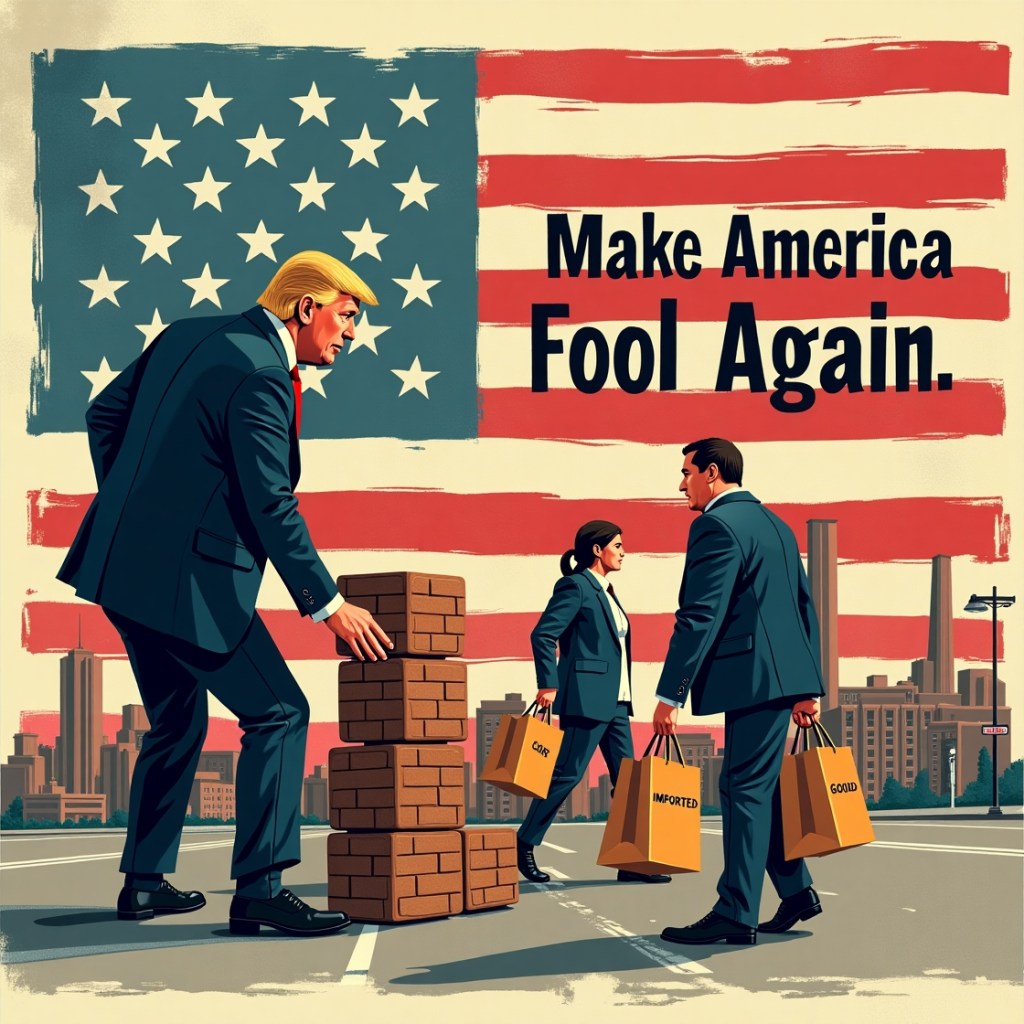
  • Make America Fool Again: The Self-Inflicted Cost of Trump’s Tariff Nationalism

    In the age of performative patriotism and economic brinkmanship, Donald Trump’s favorite rallying cry—“Make America Great Again”—may need a reboot: “Make America Fool Again.” At the heart of this irony lies a simple but devastating reality—tariffs. While marketed as weapons of economic warfare against foreign “cheaters,” these tariffs have become boomerangs, hitting American consumers harder than anyone else.

    The Illusion of Economic Toughness

    Trump’s tariff-heavy strategy is pitched as bold nationalism: taxing foreign imports to promote American-made goods and force foreign governments to yield to U.S. demands. On paper, it sounds tough. In practice, it’s economically self-defeating in a nation where most consumer goods—from iPhones to bananas—are sourced globally.

    The U.S. consumer economy is import-dependent by design. Over 70% of retail goods involve foreign components or are directly imported. In this environment, tariffs function not as pressure on foreign manufacturers—but as an invisible tax on American families.

    Who Really Pays?

    Let’s cut through the rhetoric: Americans pay these tariffs. Corporations simply pass the added costs to the customer. In 2025 alone, U.S. households are expected to pay $1,270 to $2,400 more per year, solely due to tariff-related inflation. Prices for groceries, clothing, furniture, electronics, and cars have jumped—without corresponding wage increases.

    Even basic foods are not spared. Bananas, coffee, and wine—items not grown at scale in the U.S.—have no domestic alternative. The tariff on them isn’t protective; it’s punitive to consumers.

    Case Study: Autos, Goods, and Stock Shocks

    Tariffs on imported autos have driven vehicle prices up by 11%. At the same time, American car manufacturers suffer too—many rely on imported parts. The result? No winners.

    Consumer goods giants like Procter & Gamble and Nestlé have announced price hikes across product lines. Even the stock market responds negatively, with dips in shares of consumer-oriented companies whenever new tariffs are announced.

    A Strategy Without Substitutes

    While Trump’s team insists tariffs will push the U.S. to “de-risk” from China, the reality is that alternatives (like Vietnam or Mexico) often rely on Chinese supply chains themselves. Meanwhile, U.S. manufacturing lacks the scale, workforce, or cost advantage to replace imports meaningfully. The result is disruption without a solution.

    Nationalism at Whose Cost?

    This is where the slogan flips: “America First” has become America Pays First. These tariffs act as regressive taxes, hurting middle- and lower-income Americans most. They dampen consumer spending, slow economic growth, and hollow out household budgets—all under the banner of economic patriotism.

    Trump presents himself as the dealmaker, the protector of American interests. But in the arena of global trade, he’s wielding a sledgehammer where surgical tools are needed.

    As political theater, tariffs may look decisive. But behind the scenes, they erode the very fabric of the U.S. consumer economy. What began as a campaign promise to restore greatness has, in effect, triggered the largest stealth tax hike on American households in three decades.

    The irony is stark. In trying to punish others, America punishes itself.

    So, the new slogan practically writes itself:

    “Make America Fool Again.”

  • India’s Defence Exports Hit ₹23,622 Crore in 2024–25: A Quiet Revolution in Strategic Self-Reliance

    By Unmukts Editorial Team
    Published: July 30, 2025

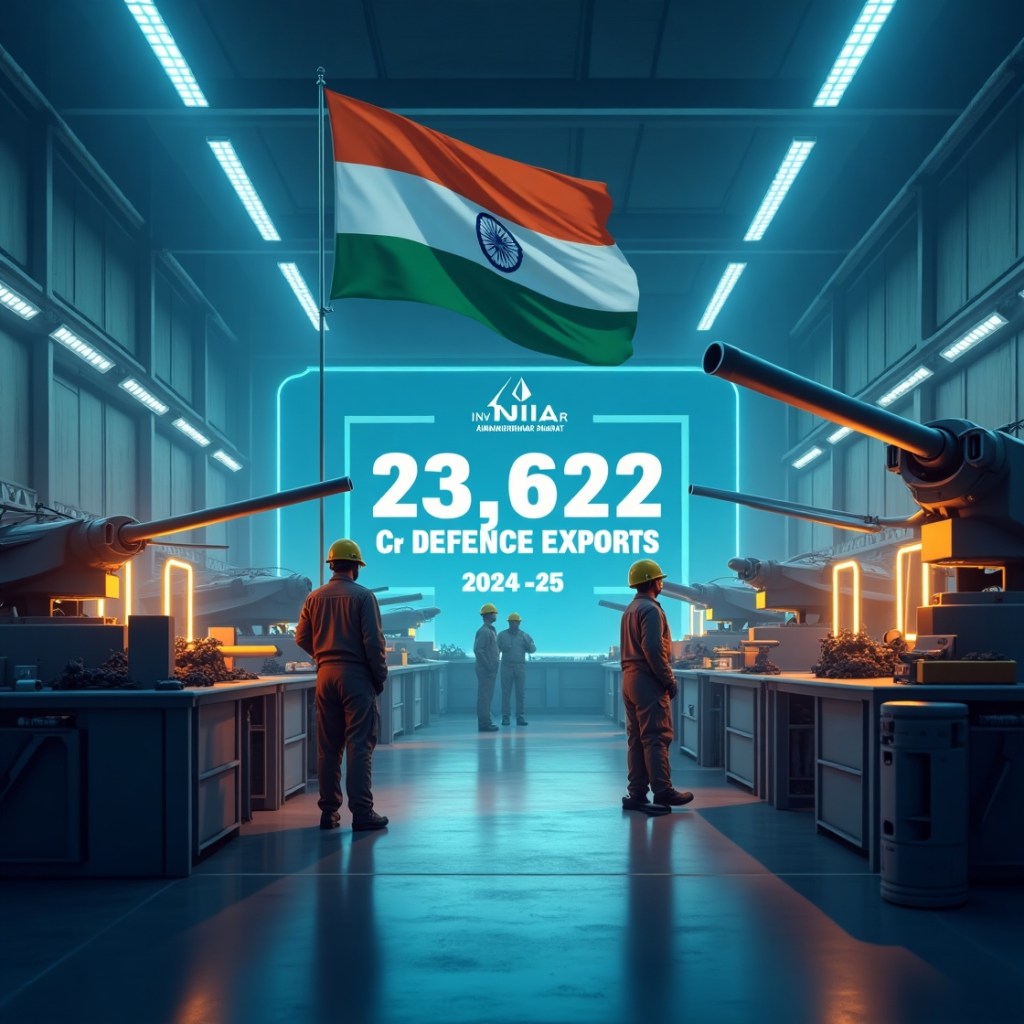
    When Defence Minister Rajnath Singh recently announced that India’s defence exports for 2024–25 touched a historic high of ₹23,622 crore, many nodded in agreement—but few grasped the full magnitude of what this number represents.

    This is not just a figure.
    It’s a 34-fold leap from 2013–14 levels, when exports stood at a mere ₹686 crore.
    It is also a testament to India’s silent transformation from a buyer to a builder—from importing submarines and jets to exporting cutting-edge defence technologies to nearly 80 countries.

    The Numbers That Tell a Story

    YearExport Value (₹ Crore)Growth from 2013–14
    2013–14686Base year
    2023–2421,08331x
    2024–2523,62234x

    This staggering increase of over 3,362% in just over a decade would be unthinkable without focused reforms and an attitudinal shift in how India perceives its defence sector—not as a cost centre, but as a core driver of self-reliance, innovation, and diplomacy.

    From “Buyer” to “Exporter”: What Changed?

    1. Policy Shifts and Strategic Vision

    Two major national missions have underpinned this growth:

    • Make in India: Launched in 2014, this initiative opened up India’s defence sector to private players and foreign investments.
    • Atmanirbhar Bharat: Championed after 2020, it redefined India’s military-industrial goals with self-reliance as a central pillar.

    The defence production ecosystem has since been backed by simplified export procedures, incentives for manufacturers, and an expanded Defence Acquisition Procedure (DAP) that prioritizes domestic sourcing.

    2. Opening the Gates for Private Sector Innovation

    In a sector historically dominated by Defence Public Sector Undertakings (DPSUs), the role of private companies has become increasingly dominant.

    In FY 2024–25:

    • Private players contributed ₹15,233 crore (approx. 64% of total exports)
    • DPSUs accounted for ₹8,389 crore, with a robust 42.85% year-on-year growth

    Startups and MSMEs, particularly in UAVs, radar systems, and niche weapons systems, have emerged as vital contributors.

    What Is India Exporting? And To Whom?

    India’s defence exports now cover a wide spectrum:

    • Light helicopters (e.g., Dhruv)
    • Coastal surveillance systems
    • Indigenous artillery systems
    • Ammunition, explosives, night vision equipment
    • Naval platforms, radars, communication systems

    These products are being sold to countries in Asia, Africa, Latin America, and even Europe—marking India’s growing credibility as a defence manufacturing hub.

    Beyond Exports: The Rise of Strategic Autonomy

    This export surge isn’t just about rupees and crores—it’s about a strategic shift. Defence exports amplify India’s soft power, strengthen bilateral ties, and position India as a responsible regional security provider.

    As India sets its next target of ₹50,000 crore in exports by 2029, this becomes not just a manufacturing challenge, but a strategic statement.

    What Can We Learn from This?

    For young Indians, startups, policy thinkers, and Unmukt readers who believe in a self-reliant, confident Bharat, this success is a blueprint:

    • Ambitious national goals matter.
    • Public-private collaboration works.
    • Global markets value Indian innovation—when backed by state policy and delivery capability.

    India’s record-breaking defence exports in 2024–25 are not just numbers. They are symbols of transformation—from dependence to determination, from a buyer mindset to an exporter’s confidence.

    In the world of geopolitics, economic strength, military resilience, and diplomatic assertiveness go hand in hand.

    As Unmukt, we believe this is just the beginning. Bharat is not just aiming to be the world’s factory—it is reclaiming its rightful place as a knowledge, defence, and innovation leader.

  • 1969 Bank Nationalization: Financial Control, Inclusion, and Governance Challenges

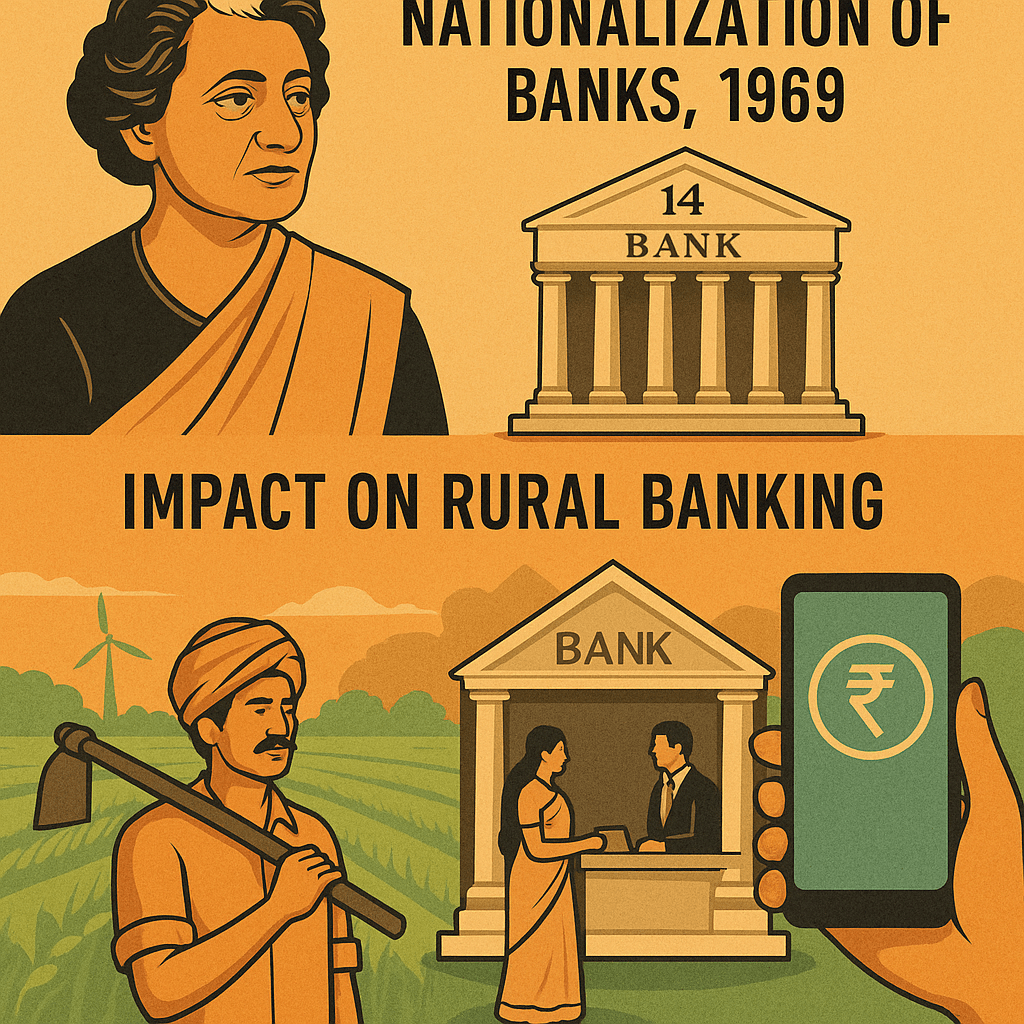
    As of May 15, 2025, reflecting on India’s economic history, the 1969 nationalization of 14 major commercial banks by Smt. Indira Gandhi stands as a pivotal moment. Aimed at expanding banking access to rural areas and prioritizing sectors like agriculture, the policy was heralded as a step toward social equity. However, economists debate whether it also served as a mechanism for financial control over citizens. This article examines the policy’s impact on rural India, the need for subsequent initiatives like the Pradhan Mantri Jan Dhan Yojana (PMJDY), and the governance challenges faced by Company Secretaries in government-owned entities navigating similar state-driven mandates.

    Objectives and Impact on Rural India

    The 1969 bank nationalization sought to democratize finance in a country where banking was largely urban-centric. In 1969, only 17% of bank branches were in rural areas, but by 1980, this number surged to over 15,000. The share of rural deposits grew from 3% in 1969 to 15% by 1985, and agricultural credit rose from 2% to 10% of total advances by 1975, per RBI data. This empowered rural farmers by reducing reliance on exploitative moneylenders and supported the Green Revolution’s agricultural boom.

    However, the policy had significant flaws. Many rural branches were unprofitable, leading to inefficiencies. Political interference skewed loan disbursal, often favoring politically connected individuals over the deserving. A lack of financial literacy left many accounts dormant, limiting the policy’s transformative potential. While it laid the foundation for financial inclusion, its implementation fell short of fully integrating rural India into the formal banking system.

    Economists’ Perspectives: A Tool for Financial Control?

    1. State Dominance Over Economic Activity

    Nobel laureate Amartya Sen, in Development as Freedom (1999), emphasizes economic freedom as a pillar of development. He argues that excessive state control over financial systems can curtail individual agency. While acknowledging nationalization’s intent to promote inclusion, Sen cautions that it enabled the state to influence citizens’ economic choices, such as directing credit to favored sectors or individuals. Historical records from the 1970s reveal instances where loans were disbursed based on political affiliations, indicating a form of financial control.

    2. Political Patronage and Bureaucratic Overreach

    Economist Jagdish Bhagwati, in India: Economic Reform and Growth (1993), critiques nationalization as part of the “license-permit raj.” He argues that it turned banks into tools of political patronage, allowing the government to control access to financial resources. In rural India, farmers often faced bureaucratic hurdles or needed political connections to secure loans, limiting their economic opportunities. Bhagwati contends this was not just about inclusion but about consolidating state power over citizens’ financial lives.

    3. Surveillance and Monetary Policy

    Former RBI Governor Raghuram Rajan, in The Third Pillar (2019), highlights how state-controlled banking systems enable financial surveillance. Nationalization gave the government unprecedented insight into citizens’ transactions. During the 1975–77 Emergency, the state used banks to freeze accounts of political opponents, a clear instance of financial control. By 2025, with digital banking and KYC norms, this surveillance has expanded, raising concerns about privacy and financial autonomy.

    4. Counterview: Focus on Financial Inclusion

    Economist Kaushik Basu, in a 2016 lecture, argues that nationalization’s primary goal was financial inclusion, not control. He credits the policy for bringing banking to rural India, reducing dependence on informal credit. The growth in rural deposits and agricultural lending supports this view, suggesting that political interference was an implementation failure rather than the policy’s intent.

    5. Mixed Outcomes

    Arvind Panagariya, in India: The Emerging Giant (2008), offers a balanced perspective. He acknowledges that nationalization empowered rural India but also created opportunities for state control. The Emergency and later events like demonetization in 2016, where public banks were instrumental in enforcing government policy, demonstrate how nationalization provided a mechanism for financial oversight, often at the expense of citizens’ autonomy.

    The Need for Jan Dhan Yojana

    If nationalization was so impactful, why did the Modi government launch the Pradhan Mantri Jan Dhan Yojana (PMJDY) in 2014? Despite the growth in rural banking post-1969, the 2011 Census revealed that only 54.4% of rural households had banking access. Many accounts remained dormant due to limited financial literacy and accessibility. PMJDY addressed these gaps by leveraging digital technology, opening over 53 crore accounts by 2025, with 67% in rural/semi-urban areas and deposits exceeding ₹2.3 lakh crore. Features like zero-balance accounts, RuPay cards, and overdraft facilities, combined with financial literacy campaigns, ensured greater usage, with over 80% of accounts active—a marked improvement over the nationalization era.

    Governance Challenges: The Role of a Company Secretary

    Similar to the dynamics of nationalization, government-owned companies often operate at the intersection of state control and public welfare. A Company Secretary in a 100% government-owned CPSE involved in land monetization faces unique challenges. They are responsible for ensuring corporate governance, legal compliance, and stakeholder coordination while navigating government mandates, such as those seen in asset monetization policies. For instance, the National Land Monetization Corporation (NLMC) can only acquire assets from CPSEs under strategic disinvestment at book value, as noted in prior correspondence. This limits flexibility, and political interference—akin to that seen in nationalized banks—can complicate compliance. A Company Secretary must balance transparency, manage board dynamics, and ensure financial accountability, often under bureaucratic pressure, mirroring the governance challenges of the nationalization era.

    Conclusion

    The 1969 bank nationalization was a landmark policy that expanded financial access in rural India, but it also served as a tool for state control, as debated by economists. While it empowered many, political interference and surveillance potential highlighted its dual nature. PMJDY built on this foundation, using modern technology to deepen inclusion. Yet, the legacy of nationalization persists in 2025, with public sector banks dominating the financial sector, raising ongoing questions about financial freedom versus state oversight. For Company Secretaries in government entities, these tensions underscore the need for robust governance to balance state objectives with public welfare, ensuring that policies serve citizens without compromising their autonomy.

  • Beyond the Battlefield: How Operation Sindoor Unlocks a $9 Billion Boom for India’s Defense Industry

    Introduction

    Operation Sindoor, executed on May 7–8, 2025, was not just a military success—it was an economic catalyst. With India’s air defense systems delivering flawless performance, the operation is expected to generate domestic and export revenues of up to ₹74,460 crore ($8.9 billion) over the next five years.

    Domestic Defense Renaissance

    India’s performance has triggered rapid procurement momentum:

    • QRSAM: A ₹30,000 crore Army order is expected after its precision during the drone assault.
    • Akash: Expansion to seven regiments with an added ₹12,240 crore spend.
    • VSHORADS: Fast-tracked production of 500 launchers and 3,000 missiles worth ₹5,500 crore.
    • Akashteer and BMD: Integration and automation systems receive increased funding.

    Indigenous development not only cuts reliance on imports but also delivers massive savings. For instance, SEOS targeting systems cost ₹2 crore domestically versus ₹12 crore from abroad, saving over ₹1,500 crore across future procurement.

    Export Windfall: Turning Trust into Trade

    With Chinese systems faltering in Pakistan, global eyes are turning to India. Nations such as Vietnam, the Philippines, and Kenya are likely buyers of Akash, QRSAM, and VSHORADS. SIDM and DRDO anticipate:

    • Akash Exports: ₹6,000–₹10,000 crore from 4–5 countries.
    • QRSAM/VSHORADS Deals: ₹1,500–₹3,500 crore expected in the next 3 years.
    • Chinese Market Disruption: India may capture 8–12% of China’s export losses, adding ₹750–₹1,500 crore.

    Indirect Gains and R&D Acceleration

    Operation Sindoor also boosts:

    • DRDO’s R&D Funding: Project Kusha and BMD Phase-II development gain momentum.
    • Global Trust: Western and Asian defense partnerships deepen, with potential co-development deals and tech-sharing initiatives.

    Challenges Ahead

    India must scale production through Bharat Electronics, BDL, and private players to meet surging demand. Competitive pricing and joint-venture diplomacy will be key to displacing Chinese systems in global markets.

    Conclusion

    Operation Sindoor has done more than secure Indian skies—it has unlocked an economic boom. With trust in India’s defense systems soaring, this moment could mark the transition from “Make in India” to “Export from India” in global defense markets.