Unmukt

Tag: education

  • Women-Led Development: The Key to India’s $35 Trillion Future – Amitabh Kant

    In a compelling and forward-looking address, Mr. Amitabh Kant, former Chairman of NITI Aayog, emphasized that India’s growth story must be written by its women. Speaking at Women Achiever Award 2025, a ceremony organized by the Aalekh Foundation, Mr. Kant called for a radical societal shift that empowers women not just as participants in development, but as leaders of it.

    If India is to become a $35+ trillion economy by 2047, women must be at the forefront of this transformation,” he said.”

    Mr. Kant praised the progress made over the past decade, highlighting key government initiatives aimed at including women in the formal economy. Since 2015, over 550 million bank accounts have been opened, raising women’s access from 18% to over 91%. He also pointed out that the government has:

    Built 40 million homes, electrified 35 million households, and provided piped water to over 253 million households. Supplied 120 million gas connections, significantly improving the quality of life for rural women.

    Importantly, these resources were registered in women’s names, marking a deliberate shift toward women-led development.

    Mr. Kant acknowledged, however, that infrastructure and access are only part of the solution. A deeper cultural transformation is necessary — particularly among men. He noted that without men actively supporting and pushing women into leadership roles, progress would stall.

    Indian men need to change their mindset,” he said candidly. “They must step back and let women lead.”

    In a noteworthy appeal to the Aalekh Foundation, he suggested that awards should not only go to women achievers but also to men who uplift and empower women in their lives — those who support their daughters, wives, colleagues, and peers to pursue their ambitions.

    Mr. Kant referenced a World Economic Forum report stating that gender parity may take 134 years to achieve at the current pace. He firmly rejected that timeline, stating, “None of us have 134 years. We must do it in a decade.”

    He spotlighted stories of female entrepreneurs and innovators as examples of change already underway:

    Aayushi Mishra, founder of Dona Maps, who is using cutting-edge mapping technology for social impact. Ms. Manjunath, founder of Nimai AI, who is improving breast cancer detection using artificial intelligence. Two young graduates from Lady Shri Ram College, who built a tech platform that has sold over 3 million cattle by digitizing a largely informal sector.

    Kant emphasized that India’s leap into the future — one defined by AI, machine learning, robotics, and digital transformation — cannot happen without women being digitally literate and empowered. Yet currently, only 37% of Indian women are digitally savvy compared to 53% globally.

    He stressed the need for greater digital adoption among women to unlock their full potential and drive India’s productivity and growth.

    Concluding his speech, Amitabh Kant highlighted India’s global advocacy for “women-led development” during its G20 presidency. Despite opposition from countries like Saudi Arabia, Turkey, Russia, and China, India succeeded in establishing this term as a global developmental priority — replacing the more passive concept of gender parity.

    “India didn’t just talk about equality,” he said. “We demanded leadership — by women, for a better future.”

    With a vision rooted in inclusion, innovation, and equality, Amitabh Kant’s address was not only a roadmap for national growth but a clarion call for men and women to walk this journey together — with women leading the way.
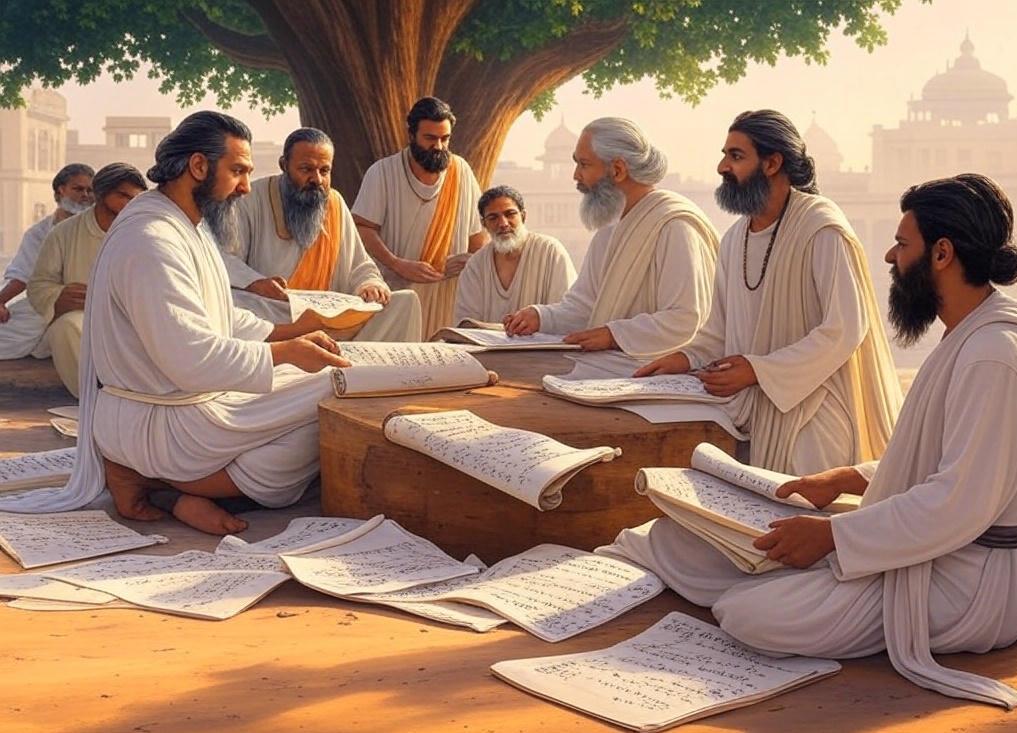
  • Forward Class Of India: A Legacy of Knowledge, Wisdom, and Nation Building

    In the grand narrative of India’s civilizational journey, the role of knowledge and wisdom has been paramount. Among various sections of society, the Forward class has historically drawn strength not from privilege, but from the relentless pursuit of learning, discipline, and responsibility toward society.

    It is important to recognize that in ancient India, the classification known as varna was not originally based on birth but on duties and qualities. The group identified as the Forward class emerged predominantly through their commitment to scholarship, administration, religious guidance, and teaching. Their contributions helped shape the philosophical, scientific, and cultural foundations of the subcontinent. The strength of the Forward class was their wisdom — not wealth, not political power — but the ability to lead society through thought, discipline, and guidance.

    From composing the Vedas and Upanishads to developing profound concepts in mathematics, astronomy, and logic, the Forward class invested generations in building India’s intellectual capital. They were the teachers, counselors, and reformers — providing direction not just to rulers, but also to generations of learners, regardless of social standing.

    Take for example the historical relationship between mentors and their students: Acharya Chanakya, a brilliant strategist and philosopher from the Forward class, recognized the potential in Chandragupta Maurya, who came from a modest background. Through education and rigorous guidance, Chanakya helped him rise to become one of India’s greatest emperors. This is a clear reminder that knowledge, when shared with integrity, has the power to uplift individuals and transform nations.

    Centuries later, Dr. B.R. Ambedkar, another great reformer who rose above social discrimination, was guided and mentored by several scholars, many of whom came from the Forward class. These mentors helped shape Ambedkar’s academic journey, encouraging his potential in law, economics, and political philosophy — which he eventually used to draft the Constitution of India. The hallmark of these Forward-class mentors was not their social status but their commitment to nurturing talent wherever it existed.

    Knowledge Must Remain Our Guiding Force

    In today’s democratic and constitutional India, where every citizen enjoys equal rights, the path to national unity must once again be guided by knowledge, merit, and mutual respect. The Forward class continues to contribute meaningfully in fields such as science, education, judiciary, technology, and governance — not as a matter of entitlement, but as a duty they have historically upheld.

    However, it’s essential that society moves beyond identity-based divisions and embraces a meritocratic culture. True equality is not just about equal rights but about creating a system where ability, integrity, and effort determine success — values that the Forward class has long stood for.

    Forward, Not Divided

    Using labels like “upper” or “lower” serves no constructive purpose. Instead, let us recognize and respect the term Forward class for what it represents — a legacy of thinkers, reformers, educators, and nation-builders. Their forwardness is not about status but about their unwavering belief in the power of ideas, discipline, and social progress.

    It is time to rise above inherited divisions and embrace inherited values — and if there is one inheritance that can unify this country, it is the heritage of wisdom and learning. Let knowledge be our strength, and forward-thinking be our common ground.