Unmukt

Tag: geopolitics

  • Trump’s Game of Leverage: Media Victories, Strategic Losses – and How India & Russia Respond

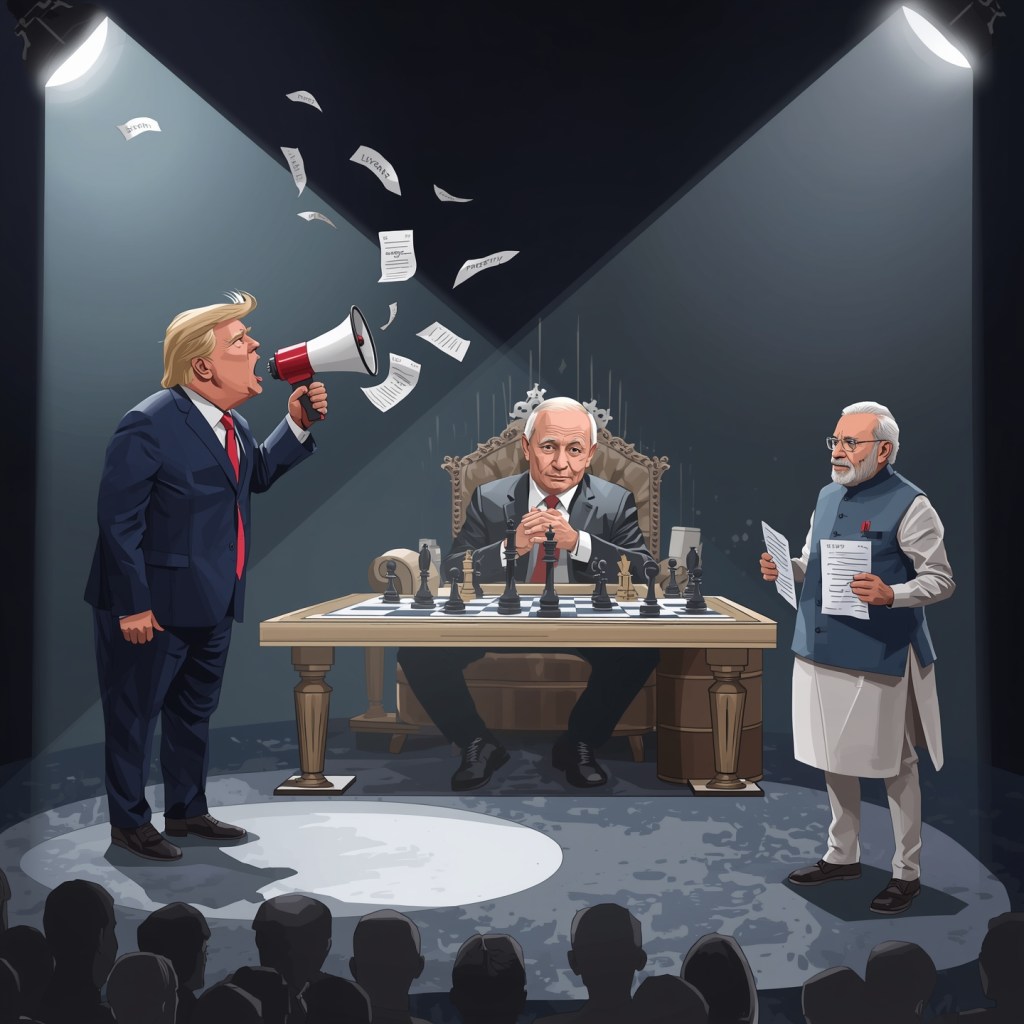
    In the theater of global politics, Donald Trump’s method is disarmingly simple: create leverage, amplify it for media consumption, and then abandon it once the spotlight shifts. It is a style that may win headlines, but it rarely produces sustainable results.

    The Leverage-Dump Cycle

    Trump’s foreign policy, if it can be called that, revolves around momentary victories that fuel his domestic narrative. He brands himself as the master negotiator, but his “art of the deal” is often little more than tactical theater.

    • First, he identifies a pressure point – be it sanctions, tariffs, or rhetorical threats.
    • Then, he proclaims that his leverage is forcing change.
    • Finally, once the immediate headlines are secured, he abandons the issue or flips sides, leaving allies and adversaries confused and often alienated.

    The problem is that leverage only works if it is backed by consistent strategy. Trump’s version is self-referential: he creates leverage in his own mind, celebrates it, and then discards it. In the short run, it excites his political base and dominates media cycles. In the long run, it erodes trust, weakens alliances, and strengthens adversaries.

    India: Not a Pawn in Trump’s Game

    Trump’s latest attempt to pull India into his narrative is a classic example. By claiming that he had “sanctioned” India to pressure Russia, he sought to project himself as a global power broker. The reality? India’s oil trade with Russia has doubled, not diminished.

    New Delhi is not a pliable pawn in Trump’s improvisational chessboard. India’s foreign policy under Prime Minister Narendra Modi is defined by strategic autonomy. Whether it is purchasing Russian oil, strengthening ties with the United States, or engaging Europe and Africa, India pursues a multi-vector approach. It will not sacrifice its national interest to fuel an American politician’s election narrative.

    This reality has eluded Trump. For him, India is often reduced to a talking point – a convenient prop in his domestic political theater. For India, however, Trump is one of many players in a world where multipolarity is the new normal.

    Russia: The Patient Player

    If Trump’s game is short-term theater, Vladimir Putin’s is long-term chess. While Trump performs for the cameras, Putin builds narratives grounded in history and sustained by military and economic realities.

    In his meetings, Putin often subjects interlocutors to history lessons stretching back decades. Trump, famously allergic to detail, cannot sit through such sessions without distraction. The asymmetry is obvious: one plays to CNN and Fox News soundbites, the other plays to centuries of Russian statecraft.

    During recent encounters, Putin allowed Trump his moments of triumph. He even threw him a “lollipop” by suggesting that had Trump been president, the Ukraine war might not have happened. It cost Putin nothing to say it, but it gave Trump a headline. Meanwhile, Russia’s fundamental objectives remain unchanged: Ukraine will not join NATO, and Moscow will not cede the territories it controls.

    The Media Mirage

    Trump’s approach resonates with his political base – the MAGA faithful who see him as a champion against elites. For them, the illusion is enough. But outside America, the cracks are visible. The American media, both left and right, has lambasted his foreign policy blunders. Analysts have called his maneuvers “the greatest foreign policy mistake” and “the undoing of decades of bipartisan effort.”

    The world is not fooled. India sees through the noise, continuing to expand trade with Russia. Putin indulges Trump’s theatrics, but on his own terms. Europe remains skeptical. Even America’s traditional allies worry that another Trump presidency would mean volatility rather than strategy.

    The Bottom Line

    Donald Trump is not playing a grand game of geopolitics. He is playing a grand game of media – one where perception outweighs policy, and short-term drama eclipses long-term stability.

    India and Russia, in their own ways, have adapted. India ignores the noise and quietly pursues its national interest. Russia humors Trump, using him when convenient, but remains anchored in its strategic objectives.

    The world must understand: Trump’s greatest victories are not on the battlefield of diplomacy but in the arena of headlines. For allies and adversaries alike, the challenge is the same – to distinguish between the spectacle of leverage and the reality of strategy.
  • Public Fights, Private Handshakes: The Real Story Behind the Indo–U.S. “Tariff War”

    By the time you read this, a top-level U.S. defence delegation will either be packing their bags for New Delhi or already in meetings with India’s strategic leadership. On paper, this shouldn’t be happening. Not after President Donald Trump slapped two layers of tariffs on Indian goods — 25% on most imports from 1 August, plus another 25% announced on 7 August over India’s purchase of Russian oil. Together, they threatened to take the trade friction to a painful 50%.

    Yet, in classic Washington style, the drama on the surface hides a very different current beneath. While the tariff headlines dominate, the Indo–U.S. relationship is quietly moving forward on nearly every other front.

    The Defence and Security Front

    The upcoming visit of the U.S. defence ministry’s high-level team is not routine — it is a deliberate signal. Washington wants India to know that defence cooperation remains a priority. This is reinforced by the fact that the 21st edition of the joint Indo–U.S. military exercise will go ahead in Alaska this month.

    And here’s the geopolitical theatre twist: that’s the very location where Trump is scheduled to meet Russian President Vladimir Putin. On one side, Trump will be shaking hands with Putin; on the other, Indian and American soldiers will be training side by side.

    Diplomatic Continuity: The 2+2 Dialogue

    Preparations for the annual “2+2” ministerial dialogue — involving the defence and foreign ministers from both countries — are well underway. It’s one of the highest forms of institutional dialogue between the two nations, and it signals long-term commitment, not short-term posturing.

    Trade Talks Against the Grain

    Despite the tariff tensions, the American trade negotiation team is still coming to India on 25 August. There’s even optimism about concluding a barter-style trade agreement by October. India has drawn its “red lines” clearly — agriculture, livestock, and fisheries are off the table. Washington, at least for now, seems willing to proceed under those terms.

    Why the Mixed Signals?

    The answer lies in the difference between political theatre and strategic planning.

    • Trump’s tariff moves play well to his domestic base, particularly ahead of the midterm elections.
    • But U.S. institutions — the Pentagon, State Department, and trade machinery — know the cost of letting 25 years of carefully built Indo–U.S. cooperation unravel.
    • There’s also the possibility that Trump is quietly preparing to roll back the extra 25% tariff if the Putin talks produce the right optics.

    The Unmukt Take

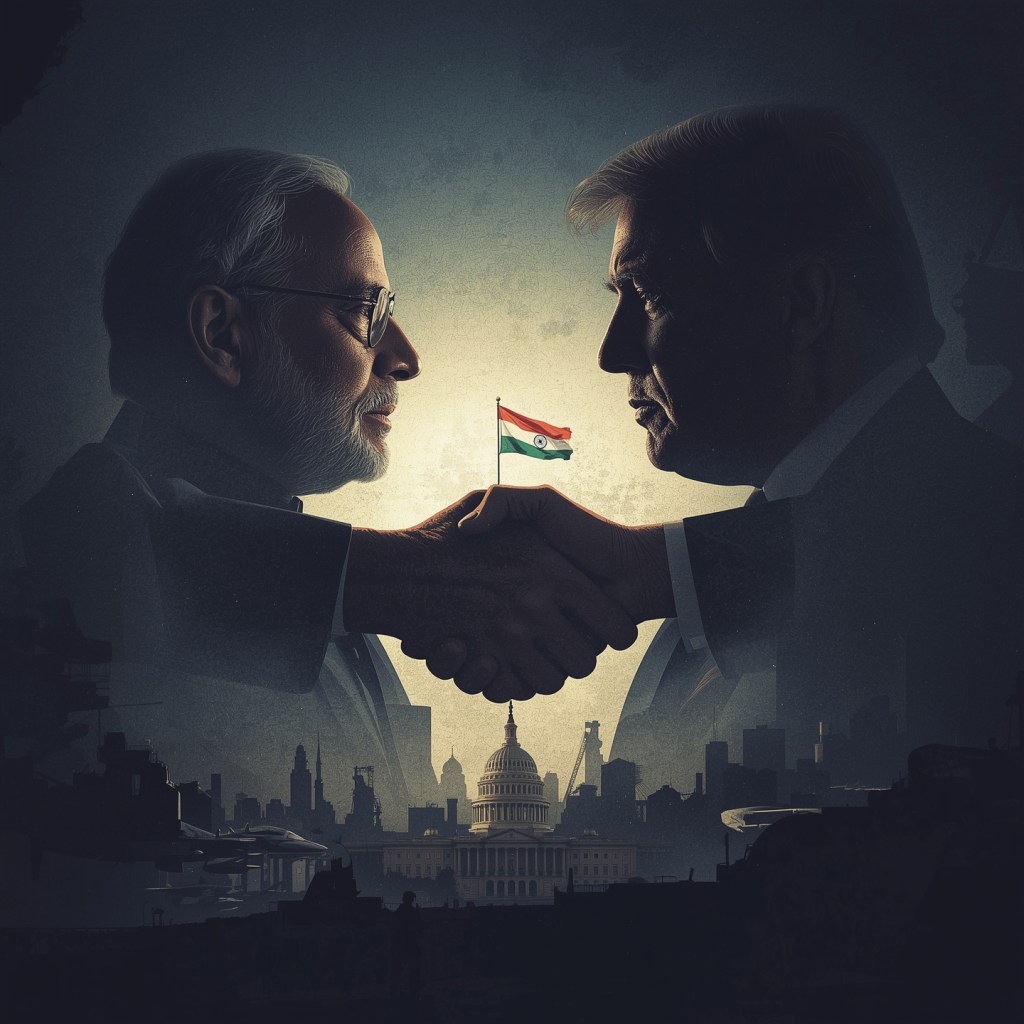
    The “tariff war” may be more performance than policy. The reality is that India and the U.S. are not on the verge of a rupture; they are, in fact, deepening cooperation in defence, diplomacy, and trade — even as they spar in public.

    This is a story not of collapsing ties, but of dual narratives: one for the cameras, another for the confidential briefing rooms. And in international politics, it’s often the private handshake that writes the real history.

  • Make America Fool Again: The Self-Inflicted Cost of Trump’s Tariff Nationalism

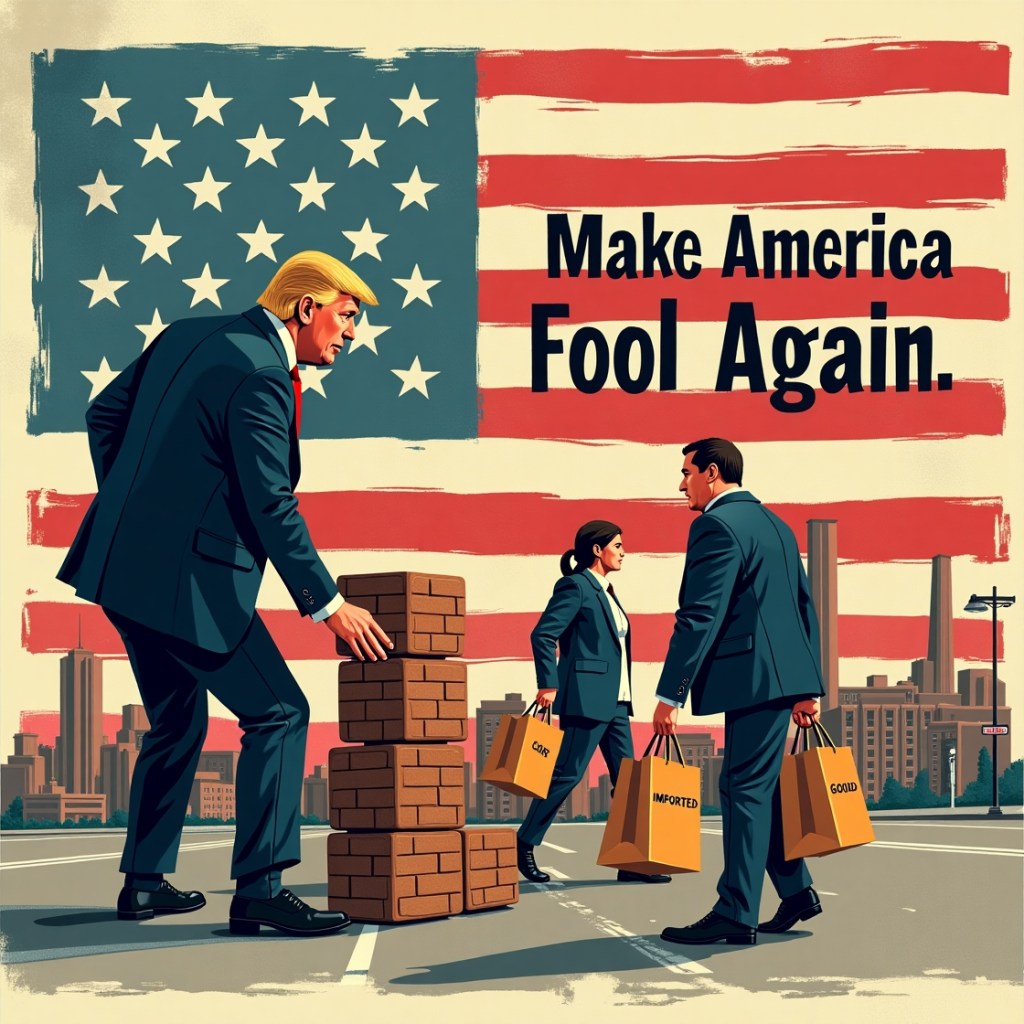
    In the age of performative patriotism and economic brinkmanship, Donald Trump’s favorite rallying cry—“Make America Great Again”—may need a reboot: “Make America Fool Again.” At the heart of this irony lies a simple but devastating reality—tariffs. While marketed as weapons of economic warfare against foreign “cheaters,” these tariffs have become boomerangs, hitting American consumers harder than anyone else.

    The Illusion of Economic Toughness

    Trump’s tariff-heavy strategy is pitched as bold nationalism: taxing foreign imports to promote American-made goods and force foreign governments to yield to U.S. demands. On paper, it sounds tough. In practice, it’s economically self-defeating in a nation where most consumer goods—from iPhones to bananas—are sourced globally.

    The U.S. consumer economy is import-dependent by design. Over 70% of retail goods involve foreign components or are directly imported. In this environment, tariffs function not as pressure on foreign manufacturers—but as an invisible tax on American families.

    Who Really Pays?

    Let’s cut through the rhetoric: Americans pay these tariffs. Corporations simply pass the added costs to the customer. In 2025 alone, U.S. households are expected to pay $1,270 to $2,400 more per year, solely due to tariff-related inflation. Prices for groceries, clothing, furniture, electronics, and cars have jumped—without corresponding wage increases.

    Even basic foods are not spared. Bananas, coffee, and wine—items not grown at scale in the U.S.—have no domestic alternative. The tariff on them isn’t protective; it’s punitive to consumers.

    Case Study: Autos, Goods, and Stock Shocks

    Tariffs on imported autos have driven vehicle prices up by 11%. At the same time, American car manufacturers suffer too—many rely on imported parts. The result? No winners.

    Consumer goods giants like Procter & Gamble and Nestlé have announced price hikes across product lines. Even the stock market responds negatively, with dips in shares of consumer-oriented companies whenever new tariffs are announced.

    A Strategy Without Substitutes

    While Trump’s team insists tariffs will push the U.S. to “de-risk” from China, the reality is that alternatives (like Vietnam or Mexico) often rely on Chinese supply chains themselves. Meanwhile, U.S. manufacturing lacks the scale, workforce, or cost advantage to replace imports meaningfully. The result is disruption without a solution.

    Nationalism at Whose Cost?

    This is where the slogan flips: “America First” has become America Pays First. These tariffs act as regressive taxes, hurting middle- and lower-income Americans most. They dampen consumer spending, slow economic growth, and hollow out household budgets—all under the banner of economic patriotism.

    Trump presents himself as the dealmaker, the protector of American interests. But in the arena of global trade, he’s wielding a sledgehammer where surgical tools are needed.

    As political theater, tariffs may look decisive. But behind the scenes, they erode the very fabric of the U.S. consumer economy. What began as a campaign promise to restore greatness has, in effect, triggered the largest stealth tax hike on American households in three decades.

    The irony is stark. In trying to punish others, America punishes itself.

    So, the new slogan practically writes itself:

    “Make America Fool Again.”