When Arun Jaitley once described Rahul Gandhi as “a repeat liar, a silent apologist in court, and a loud threat to democracy”, many thought it was just political rhetoric. But the latest falsehood being peddled by the Congress leader, the so-called “Vote Chori” narrative, reveals just how dangerous this political gamble really is.
The Manufactured Crisis
In recent weeks, Rahul Gandhi has amplified allegations that India’s 2024 general elections were manipulated, with voter rolls inflated by unverified names. The claim is rooted in a so-called “report” circulated by an NGO linked to senior advocate Prashant Bhushan, a self-proclaimed Marxist voice whose history is filled with legal activism aimed at discrediting elected governments.
This NGO’s agenda aligns with a disturbing pattern targeting India’s political credibility on the global stage while emboldening foreign interests, particularly the United States, to question India’s democratic framework.
The Bangladesh Parallel
Observers of South Asian politics will recall the events in Bangladesh earlier this decade. Opposition forces, unable to mount a strong electoral challenge, created a narrative that the ruling government was “blocking free elections” and “silencing dissent.” This claim — heavily amplified by international NGOs and Western media — resulted in months of unrest, economic instability, and eventual diplomatic isolation.
The tragic irony? While they claimed to be “saving democracy,” the opposition’s tactics effectively paralyzed the democratic process. In some cases, violence replaced ballots, and foreign meddling became normalized.
Today, Rahul Gandhi’s “vote chori” rhetoric dangerously echoes the same destabilization strategy.
Foreign Hand, Familiar Faces
Prashant Bhushan’s NGO is no stranger to controversial activism. Over the years, its funding sources and advocacy align with Marxist intellectual circles and certain Western think tanks. The formula is consistent:
Stage 1: Question the legitimacy of elections without hard evidence.
Stage 2: Seek international “solidarity” and coverage to pressure the government.
Stage 3: Push for systemic changes that weaken the state’s ability to act independently of Western influence.
Rahul Gandhi’s willingness to become the political amplifier of such tactics is alarming, especially when India is experiencing record GDP growth, a stronger global presence, and a more assertive foreign policy.
The Real Threat
Critics argue that Rahul Gandhi is less interested in winning elections through people’s mandate and more interested in delegitimizing them to create chaos. This narrative directly benefits:
Foreign powers seeking to weaken India’s global standing.
Economic competitors who fear India’s rise as a manufacturing and geopolitical hub.
Marxist lobbies inside and outside the country who oppose India’s market-driven growth model.
From Bangladesh to Bharat
The comparison is chilling. In Bangladesh, this narrative eroded public trust, empowered extremist elements, and paved the way for deeper foreign interference. If Rahul Gandhi and his allies succeed in normalizing this rhetoric in India, the consequences could be far-reaching:
Investor confidence could plummet.
Social divisions could deepen.
India’s image as the world’s largest democracy could be tarnished.
Conclusion: Democracy Is Not a Toy
India’s democratic framework is strong, but it is not immune to coordinated attacks from within. Political disagreements are healthy, but weaponising falsehoods to undermine electoral legitimacy is a direct assault on the very foundation of the republic.
As Arun Jaitley warned, Rahul Gandhi’s blend of courtroom meekness and public recklessness is not harmless political theatre. It is a dangerous game that India cannot afford to ignore.
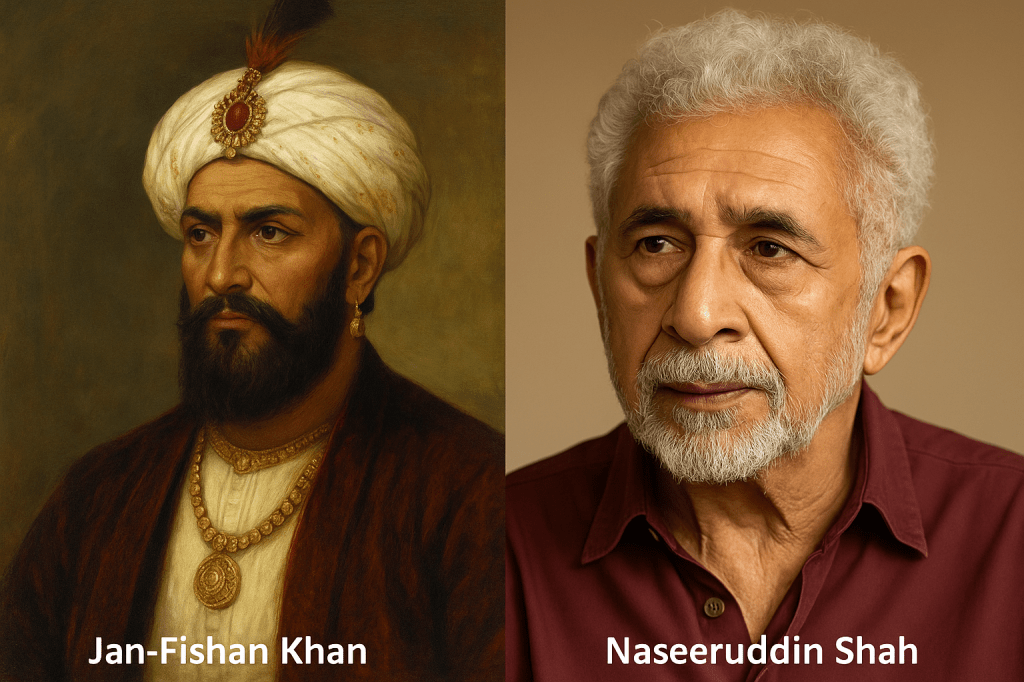
In the era of information and ideological warfare, words shape narratives and narratives shape society. When public intellectuals speak, their influence can be powerful—but when that voice becomes selective, partisan, and blind to the pain of others, it is not justice; it is propaganda. One such voice that demands scrutiny is that of Naseeruddin Shah—a celebrated actor and descendent of Jan-Fishan Khan, a 19th-century Afghan noble who allied with the British during the First Anglo-Afghan War.
Today, as India wrestles with real issues of communalism, cultural identity, and historical pain, it is time to ask: Whose side is Naseeruddin Shah really on—and why is his compassion so one-sided?
When Morality Becomes Selective: Shah’s Silence on Hindu Victims
In his recent article in The Indian Express, Shah laments the “rising intolerance” in India and references mob killings of Muslims allegedly over cow slaughter or theft. While mob justice in any form is unacceptable in a civilized society, what stands out is Shah’s continued and deliberate silence on several brutal killings of Hindus—both in India and abroad.
Where was his voice when:
Kashmiri Pandits were driven out of their homeland and murdered in cold blood?
A Hindu father and son were lynched in Murshidabad, West Bengal, allegedly by a mob led by a TMC leader—dragged from their home and hacked to death?
Hindus were massacred in Bangladesh, temples desecrated, and women raped in the name of religion?
Hindus in Pakistan continue to be second-class citizens, with abductions and forced conversions occurring regularly?
Why does his pen only bleed when the victim fits a particular identity?
This is not justice—it is selective outrage, rooted not in empathy but in ideological opportunism.
History Repeats: From Jan-Fishan Khan to Naseeruddin Shah
To understand this mindset, we must go back to Shah’s roots. His great-great-grandfather, Jan-Fishan Khan, was a nobleman in 19th-century Afghanistan who chose to support the British colonialists over his fellow Afghans during the First Anglo-Afghan War. In return, he was rewarded with land and titles in India—a princely estate in Sardhana.
His decision was not based on loyalty to a homeland or principles, but on opportunism and survival. He fought not for independence or unity, but to align with foreign rulers who would later dominate the subcontinent for over a century.
Today, his descendant Naseeruddin Shah continues that legacy—not by swords, but with words. By constantly speaking only against one section of society, while ignoring the injustices faced by Hindus, he furthers a neo-colonial narrative that paints Hindus as the only oppressors, and others as permanent victims.
Just like Jan-Fishan Khan turned away from his own people for foreign patronage, Shah today turns his back on Hindu suffering to maintain relevance among ideological elites.
What True Justice Looks Like
At Unmukt, we believe in a society where:
Every victim matters, regardless of their religion.
Mob violence is condemned whether the victim is Muslim, Hindu, or of any faith.
Historical truth is acknowledged, not whitewashed.
Public voices must stand for balance, courage, and honesty—not political convenience.
Justice is not a tool to gain applause from one side. It is a sacred duty to speak the truth for all people, even when it is uncomfortable.
Our Message to the Intellectual Class
If you truly care about India, you must speak for Kashmiri Pandits, Murshidabad Hindus, Bangladeshi Hindus, Dalits, Muslims, and everyone else who suffers—without filters.
To highlight the murder of a Muslim by a mob while remaining silent about a Hindu being butchered by a mob in Murshidabad, is not compassion—it is communal selectivity.
If you can’t see the pain of a Hindu victim, you are not a humanitarian. You are an ideological actor in disguise.
India does not need another Mir Jafar or Jan-Fishan Khan or Naseeruddin Shah. Instead, India needs truthful voices, who will rise not for reward, but for Dharma—the path of balance, truth, and responsibility. It’s time to call out selective morality.
It’s time to say: “Either speak for all victims — or don’t claim the moral high ground at all.”
“Chaturvarnyam maya srishtam guna-karma-vibhagashah” (I created the fourfold varna system based on qualities and actions.) — BG 4.13
This single verse debunks the modern myth that one’s birth determines one’s role or worth. Varna, in its true Vedic sense, was a system designed to align individuals with their natural disposition (guna) and skillset (karma).
A person full of curiosity, discipline, and spiritual insight was a Brahmana — regardless of birth.
One with courage, leadership, and responsibility was a Kshatriya.
The trade-minded, wealth-creators were Vaishyas.
And those who specialized in support services and craftsmanship were Shudras.
This was not a hierarchy, but a division of responsibility for the harmonious functioning of society just as a body functions with head, arms, stomach, and legs, each with dignity.
Caste (Jati) Was a Later Distortion
Over centuries, the fluid varna system slowly hardened into birth-based jatis — thousands of local sub-castes. This was not divine; it was a social evolution influenced by politics, orthodoxy, and later, colonial bureaucracy.
The British census of 1901 classified Indians by rigid caste categories, freezing what was once dynamic. The colonial state weaponized caste to divide and control, labeling people in ways even the Vedas never did.
Sant Ravidas: The Soul That Rose Beyond Birth
You don’t need reservation or privilege to rise — Sant Ravidas proved that.
Born into a humble cobbler family considered “untouchable,” he became one of the greatest saints of the Bhakti movement. His verses are immortalized in the Guru Granth Sahib, and he became a spiritual guide even to royal figures like Mira Bai.
So where did his merit come from?
Not from a quota.
Not from a school.
But from inner awakening, sadhana, and divine insight.
Just like Ved Vyasa, the compiler of the Mahabharata, born to a fisherwoman. Just like Valmiki, the hunter-turned-sage who wrote the Ramayana.
They did not rise because of their caste they rose because of their karma and tapasya.
Modern India: Merit Still Shines Without Quotas
Today, despite not having reservation:
Students from upper cast continue to top IIT-JEE, UPSC, NEET, and other elite exams.
Many from upper castes still perform with excellence in fields of science, technology, law, literature, and civil service.
How?
Because their power comes from:
Discipline
Respect for knowledge
Family traditions of learning
No entitlement—only effort
This proves one thing: real merit doesn’t need shortcuts.
This Is Not About Brahmin or upper cast Superiority
Let’s be clear. This is not a call for caste pride or supremacy.
Every community has heroes. Every community deserves dignity.
But today, when Brahmins or upper castes are blamed for every problem, or when ancient Hindu systems are wrongly labeled as inherently oppressive, it becomes important to defend the truth.
Dharma is not oppression. Learning is not privilege. Sanatan culture is not discrimination.
A Call for Civilizational Clarity
If we want to build Ek Bharat Shreshtha Bharat, we must:
Uphold the original spirit of varna — qualities and actions, not birth.
End caste-based hatred, from any side.
Respect merit and effort, regardless of category.
And most importantly, revive the dharma of unity — not the politics of blame.
Let every child in India rise not by caste or certificate, but by knowledge, character, and courage. Let us rebuild a Bharat where Ravidas, Valmiki, and Vyasa still inspire us to see beyond birth — and live by truth.
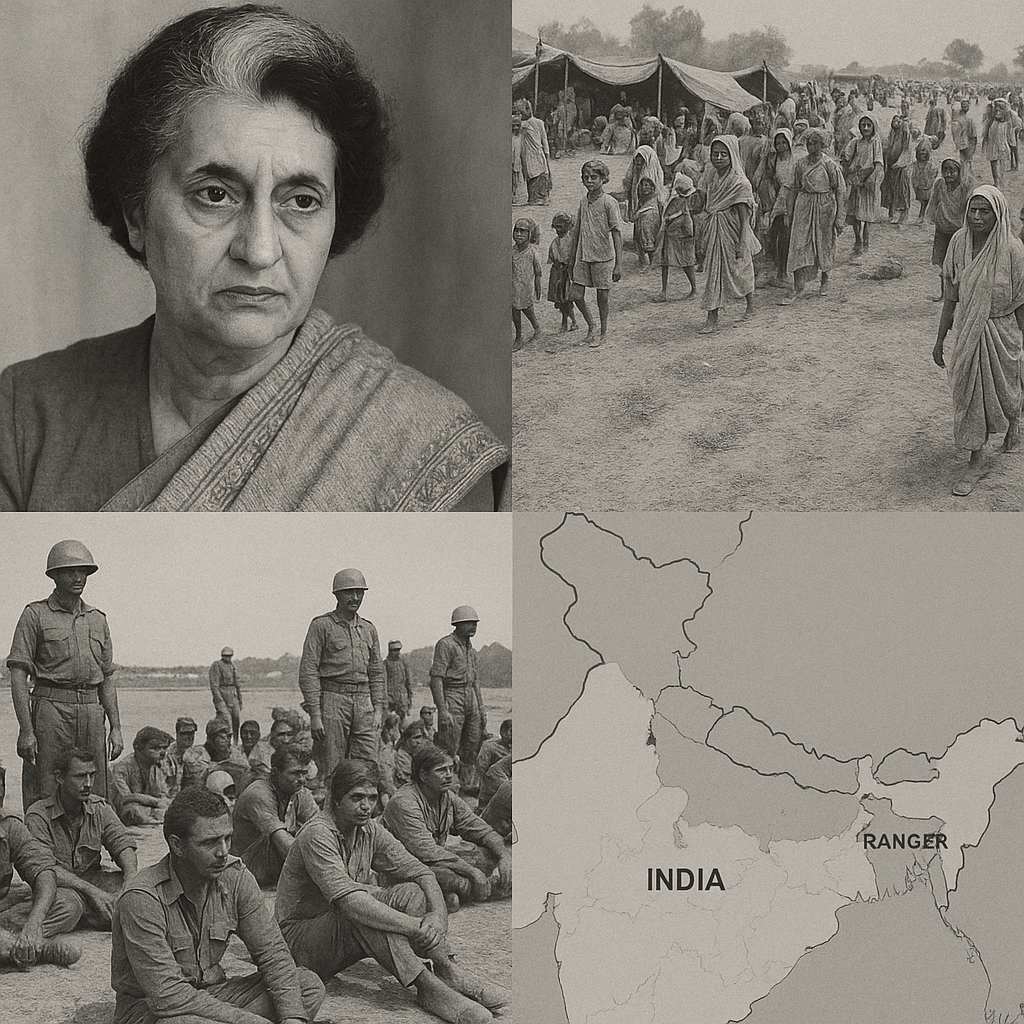
Today, as India reflects on its historical milestones, the 1971 India-Pakistan War remains a defining moment in the nation’s geopolitical journey. Led by Smt. Indira Gandhi, India’s decisive intervention resulted in the creation of Bangladesh, a humanitarian triumph that reshaped South Asia. However, debates persist over whether India could have secured greater strategic gains, such as annexing the Rangpur area to widen the Siliguri Corridor—transforming the “Chicken’s Neck” into a “Chicken’s Chest”—and ensuring the return of its soldiers still missing in Pakistan. This article examines the war’s outcomes, evaluates the decision to forego territorial annexation, and explores the unresolved issue of Indian POWs, assessing the long-term implications for India.
The 1971 War and Bangladesh Liberation
In 1971, East Pakistan (now Bangladesh) faced brutal repression after the Awami League’s electoral victory was denied by West Pakistan’s military regime. The ensuing crackdown, which killed an estimated 300,000 to 3 million people, triggered a humanitarian crisis, with 10 million refugees fleeing into India, primarily West Bengal, Assam, and Tripura. Smt. Indira Gandhi, recognizing both the humanitarian imperative and strategic opportunity, supported the Mukti Bahini (Bangladesh liberation forces) with military training, arms, and diplomatic backing. Following months of preparation, India intervened militarily in December 1971, leading to a 13-day war that ended with Pakistan’s surrender on December 16, 1971. The war resulted in the creation of Bangladesh and the capture of 93,000 Pakistani soldiers as prisoners of war (POWs)—one of the largest military surrenders in modern history.
Humanitarian and Strategic Triumph
Refugee Crisis Resolution: The war alleviated the burden of 10 million refugees on India, with over 90% returning to Bangladesh by 1973, reducing economic and social strain.
Weakening Pakistan: The division of Pakistan into two nations diminished its military threat, eliminating its two-front strategy against India.
Global Recognition: India’s intervention earned international praise for halting a genocide, enhancing its soft power. The Indo-Soviet Treaty of 1971 ensured Soviet support, countering US and Chinese opposition.
Regional Influence: The 1972 India-Bangladesh Treaty of Friendship initially solidified Bangladesh as a friendly neighbor, giving India a strategic buffer against Pakistan.
The Chicken’s Neck Dilemma: Should India Have Taken Rangpur?
The Siliguri Corridor, a narrow strip (20–40 km wide) connecting India’s mainland to its northeastern states, is a strategic vulnerability known as the “Chicken’s Neck.” Bordered by Nepal, Bhutan, and Bangladesh, it is susceptible to being severed in a conflict, particularly by China via the Chumbi Valley, 130 km away. Some strategists argue that India, at the peak of its post-1971 influence, could have annexed the Rangpur area in northern Bangladesh to widen this corridor into a “Chicken’s Chest,” enhancing security and connectivity.
Potential Benefits of Annexation
Strategic Depth: Widening the corridor would have reduced the risk of the Northeast being isolated in a conflict. In 2025, with China’s military buildup in the Chumbi Valley and border tensions (e.g., post-2020 Galwan clash), this vulnerability remains a concern. A broader corridor would have improved military logistics, crucial for addressing insurgencies like the ongoing Naga peace talks.
Economic Integration: Enhanced connectivity would have boosted trade and infrastructure in the Northeast, a region lagging economically. The 2025 Economic Survey notes the Northeast’s GDP growth at 5.2%, below the national average of 6.8%, partly due to connectivity bottlenecks.
Geopolitical Leverage: With 93,000 Pakistani POWs in custody and Bangladesh’s gratitude under Sheikh Mujibur Rahman, India could have negotiated territorial adjustments as a mutual security arrangement, offering economic or diplomatic concessions in return.
Challenges and Risks
Diplomatic Fallout: Annexing Rangpur would have contradicted India’s humanitarian narrative, risking its global image as a defender of self-determination. It would have violated the 1972 India-Bangladesh Treaty of Friendship, potentially turning Bangladesh into a resentful neighbor.
International Backlash: The US and China, already hostile during the Cold War, could have rallied global opposition, isolating India. The USSR, India’s ally, might have opposed such a move as a violation of sovereignty norms.
Regional Instability: Annexation could have destabilized Bangladesh’s fragile post-independence government, fueling anti-India sentiment. In India’s Northeast, where separatist movements like the Mizo National Front (1966–1986) were active, it might have escalated ethnic tensions.
Long-Term Costs: By 2025, India-Bangladesh relations are strained over water sharing, migration, and Bangladesh’s ties with China (e.g., the $1.2 billion Padma Bridge project). Annexation in 1971 would likely have made Bangladesh a hostile neighbor, aligning it with China or Pakistan, undermining India’s regional influence.
Verdict on Rangpur
Indira Gandhi’s decision to forego annexing Rangpur was strategically prudent. While widening the Chicken’s Neck offered clear benefits, the diplomatic, ethical, and practical costs—international condemnation, regional instability, and long-term hostility—outweighed the gains. A hostile Bangladesh could have provided China with a foothold closer to the Siliguri Corridor, negating any strategic advantage. However, India might have explored diplomatic negotiations for a mutual security arrangement, such as joint control or transit rights, to address the corridor’s vulnerability without territorial annexation.
The Unresolved POW Issue: A Lingering Grievance
Despite India’s release of 93,000 Pakistani POWs by 1974 under the Shimla Agreement, the fate of Indian soldiers believed to be held in Pakistan remains unresolved. Known as the “Missing 54″—30 Army and 24 Air Force personnel—these soldiers were captured primarily on the Western Front. India claims a total of 83 personnel are missing, with some families believing they are still alive in Pakistani jails, facing harsh conditions. Pakistan has consistently denied holding them, with its latest statement in 2025 reiterating this position, though earlier contradictions fuel India’s suspicions.
Missed Leverage: Public sentiment on X in 2025 reflects frustration that India did not use the 93,000 Pakistani POWs as leverage to secure the return of its soldiers or other concessions, such as addressing the Chicken’s Neck vulnerability. Some argue this was a diplomatic oversight, prioritizing goodwill over strategic gains.
Emotional Toll: Families of the Missing 54 have waited over five decades for closure. Advocacy groups, as noted in recent articles by CAPS India, highlight the emotional toll, with daughters of these soldiers continuing their fight for justice.
Diplomatic Stalemate: India’s repeated demands, including the latest exchange of lists in July 2024, have yielded no progress. The recent Operation Sindoor (May 2025) and ongoing tensions with Pakistan further complicate resolution, with Pakistan’s allies like China and Turkey reducing international pressure on this issue.
Long-Term Implications for India
Strategic Lessons
The 1971 war was a tactical triumph but highlighted missed strategic opportunities. While India weakened Pakistan and gained regional influence, the failure to secure its POWs or address vulnerabilities like the Chicken’s Neck underscores the need for a balanced approach in geopolitics. The Shimla Agreement prioritized short-term stability over long-term gains, a decision debated in strategic circles in 2025.
India-Bangladesh Relations
By 2025, India-Bangladesh relations are strained, with Bangladesh’s growing ties with China and unresolved issues like migration (e.g., the 2019 NRC in Assam identifying 1.9 million potential illegal immigrants) fueling tensions. Annexing Rangpur would likely have worsened this dynamic, potentially creating a hostile neighbor aligned with India’s adversaries.
Geopolitical Vulnerabilities
The Siliguri Corridor remains a strategic concern, with China’s presence in the Chumbi Valley and Bangladesh posing risks. The 2025 Economic Survey emphasizes the need for infrastructure development in the Northeast, suggesting that India must address this vulnerability through diplomatic and economic means rather than territorial adjustments.
Conclusion
The 1971 India-Pakistan War, under Indira Gandhi’s leadership, was a defining moment that showcased India’s military prowess and humanitarian resolve, leading to the creation of Bangladesh. However, strategic decisions made in its aftermath have left lasting challenges. Not annexing Rangpur to widen the Siliguri Corridor was likely the right choice, avoiding diplomatic fallout and regional instability, though India could have pursued non-territorial solutions to address this vulnerability. The failure to secure the return of its POWs, however, remains a significant oversight, with the “Missing 54” symbolizing a lingering grievance as of today. The war’s legacy underscores the complexities of balancing humanitarian ideals with strategic interests, a lesson India must heed as it navigates contemporary geopolitical challenges with Pakistan, China, and Bangladesh.
Darwin’s theory of “survival of the fittest” emphasizes adaptability and resilience in changing environments, originally framed in the context of natural selection. When extended to the realm of business—particularly Indian family businesses—this theory finds a compelling real-world parallel. These enterprises, some of which have thrived for over a century, exemplify evolutionary fitness not through brute force, but through innovation, cultural rootedness, and strategic foresight.
As of today, Indian family businesses remain a vital engine of the economy, continuing to grow in the face of global competition, technological disruption, and internal challenges. Let’s explore how they mirror Darwinian survival principles and why their longevity defies conventional business logic.
How Indian Family Businesses Embody “Survival of the Fittest”
1. Adaptability to Changing Environments
India’s oldest family businesses have evolved across colonial rule, independence, liberalization, and globalization. The Tata Group, founded in 1868, began as a trading firm and expanded into steel, automobiles, and IT. Its transformation from industrial-era manufacturing to digital-era innovation (e.g., TCS) is a textbook example of Darwinian adaptation.
In contrast, many traditional textile firms that failed to modernize during British rule were eventually wiped out—showing that inability to evolve leads to extinction, in nature and in business.
2. Resilience Through Cultural and Social Ties
Family businesses in India are often embedded in joint family systems, which extend to business relationships. Trust, loyalty, and informal governance allow them to endure through crises. The Murugappa Group, established in 1900, diversified into agriculture, engineering, and financial services, maintaining internal cohesion while responding to external change.
These cultural moorings act as stabilizing mechanisms, enabling long-term survival even during political or economic turbulence.
3. Innovation and Modernization
Survival in modern markets demands innovation. Reliance Industries, which began as a textile trading firm in the 1960s, disrupted India’s telecom industry in 2016 with Jio. By 2025, Jio leads India’s 5G revolution and digital ecosystem, a testament to how family businesses must continually reinvent themselves to stay fit in Darwinian terms.
4. Niche Market Mastery
Smaller family-run firms often dominate niche sectors—jewelry, spices, textiles—where heritage and expertise provide a durable edge. The Gitanjali Group globalized traditional Indian jewelry through modern branding and retail, showing how specialization is a form of adaptive fitness.
Why They Thrive Despite Intense Competition
1. Long-Term Vision Over Short-Term Gains
Unlike other businesses, which chase quarterly profits, family firms often prioritize intergenerational wealth and legacy. The Aditya Birla Group, dating back to 1857, continues to invest in sustainable industries like cement, metals, and renewable energy—opting for long-term survival over short-term spikes.
2. Trust and Reputation as Capital
Brands like Britannia (part of the Wadia Group, founded in 1736) thrive on legacy, not just marketing. Indian consumers often trust family-run brands more due to perceived authenticity and continuity, which creates a moat against newer entrants.
3. Policy Tailwinds
Post-1991 liberalization opened global markets. Initiatives like Make in India and MSME incentives have empowered family businesses, especially in cities like Surat, where textile exports are dominated by generational firms. These businesses are not just surviving—they are scaling.
4. Cultural Alignment and Succession Planning
In India, businesses are often an extension of the family’s identity. Succession, when managed well, ensures continuity. The Godrej Group (est. 1897) has seen multiple generational transitions while investing in green products and sustainability—ensuring continued relevance.
Challenges and Darwinian Pressures
Despite their advantages, Indian family businesses are not immune to natural selection:
Internal Conflicts: Feuds within the Singhania family (Raymond Group) have weakened the brand and distracted from business strategy.
Global Disruption: Multinational tech and consumer giants pose existential threats to slower-moving firms.
Digital Lag: Traditional mindsets sometimes resist digital transformation, risking obsolescence in a data-driven economy.
Conclusion:
Evolution, Not Inheritance, Ensures Survival
Indian family businesses are not relics of the past—they are living organisms in an economic ecosystem. Their longevity proves that fitness is not about being the strongest or richest, but about being the most adaptive.
By balancing tradition with transformation, culture with competitiveness, they remain relevant in 2025 and beyond. Darwin would likely agree: in both nature and business, those who evolve with their environment endure the test of time.
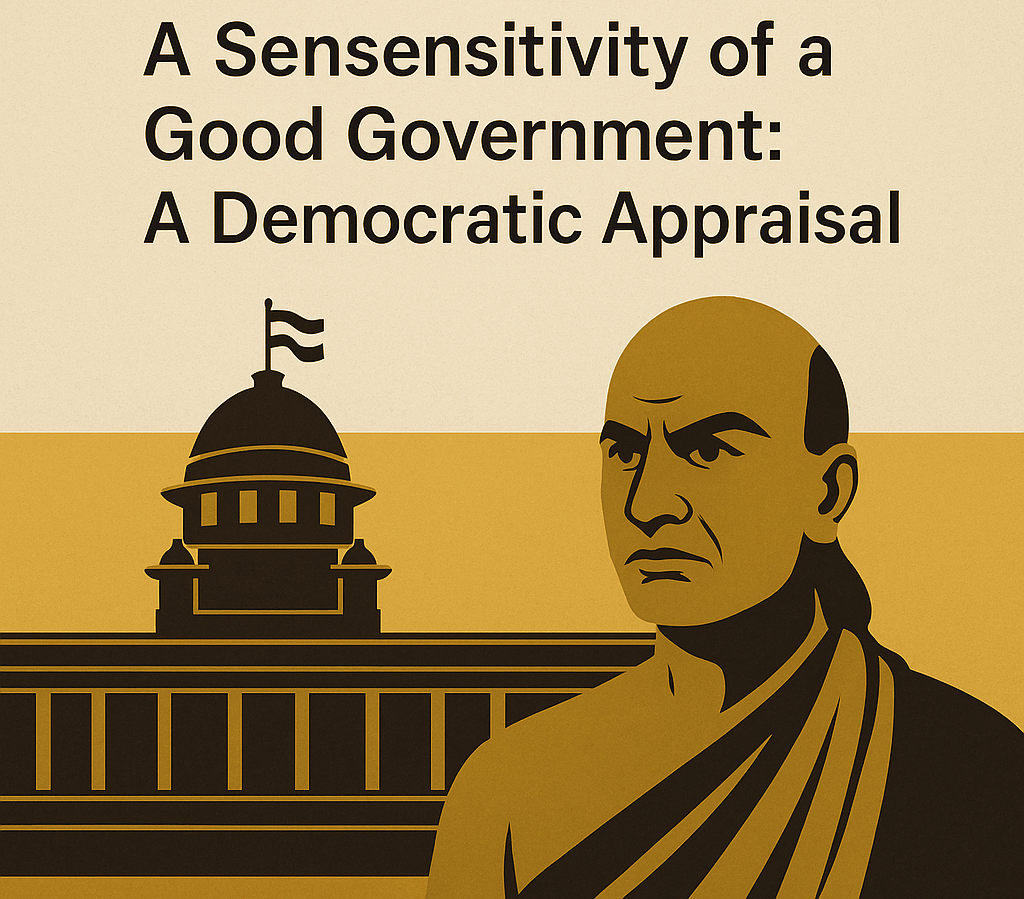
The success of any democracy hinges not just on the power it wields but on how sensitively that power is exercised. A truly good government is not only strong against external threats but also just, inclusive, responsive, and tolerant of dissent within.
Lets evaluates government sensitivity from two perspectives: the timeless principles of Chanakya, the ancient Indian political strategist, and the expectations of a modern democratic society. This article reflect on whether India’s current government aligns with these benchmarks, especially in light of recent debates.
1. Sensitivity to National Security
A government’s foremost duty is to protect its citizens and territorial integrity. In this regard, the current Indian government has shown decisive action—be it in the form of surgical strikes post-Uri, the Balakot airstrike, or its firm stand during the Doklam and Galwan standoffs with China.
Chanakya believed in preemptive strength and strategic deterrence. The government’s proactive stance reflects this principle, treating security not as reaction but as preparation.
Verdict: The government has shown high sensitivity and effectiveness in national security.
2. Responsiveness to Dissent and Criticism
Chanakya advised rulers to avoid arrogance and listen to advisors. In a modern democracy, this wisdom translates to respecting dissent, ensuring press freedom, and protecting institutional checks.
While some actions (e.g., raids on certain media houses, NGOs, and arrests under stringent laws) have triggered criticism, it is also true that state action is justified when foreign-funded actors violate national interest, as seen in the NewsClick case with reported Chinese links.
The key question is: Are patriotic critics also facing suppression, or only those with dubious agendas? Sensitivity lies in distinguishing the two.
Verdict: National security must be upheld, but sensitivity to fair criticism and transparency in action is vital to maintain democratic credibility.
3. Inclusiveness Toward All Communities
A sensitive government fosters harmony. Critics of the Citizenship Amendment Act (CAA) claimed it discriminated based on religion. The government clarified that CAA targets only persecuted minorities in Pakistan, Afghanistan, and Bangladesh, and does not affect Indian Muslims.
However, protests and violent reactions created confusion and unrest.
Chanakya emphasized just rule over all subjects, ensuring that no group feels alienated.
Verdict: The intention of the law may be just, but the government’s communication and engagement could have been more inclusive to prevent polarisation.
4. Institutional Independence
A Chanakyan state requires strong and independent institutions. Modern critics raise concerns over the independence of the judiciary, Election Commission, and investigative agencies.
Yet, it’s also true that:
Judges in India are appointed through a collegium system, not by the government.
The new law for appointing the Election Commission includes representation from opposition, which didn’t exist before.
Still, public trust depends on the perception of independence—not just the procedure.
Verdict: The government must strengthen transparency and public confidence in autonomous institutions.
5. Transparency and Accountability
A sensitive government must allow scrutiny. RTI amendments, electoral bond secrecy, and reduced media questioning have led to concerns of reduced transparency.
The electoral bonds system aimed to curb black money in politics, but without public disclosure, it became opaque to voters.
Chanakya warned against rulers becoming unaccountable and detached from their subjects.
Verdict: Intent may be reform-driven, but greater openness and citizen access to political funding data are essential hallmarks of sensitivity.
Conclusion: Is the Current Government Sensitive?
If measured against national interest and strength, the government has been decisive and strategic. From defense modernization to diplomacy, digital outreach to welfare delivery, the state has shown competence.
However, sensitivity also demands:
Respect for dissent that is within the law
More transparent governance
Active efforts to keep every citizen—irrespective of background—feeling heard
In Chanakya’s terms, a king (or elected ruler) must uphold Dharma (just conduct), listen to truth even when unpleasant, and act with foresight.
A sensitive government is not one that avoids using power—but one that uses it judiciously, proportionally, and accountably.
In the tapestry of Indian political thought, few figures loom as large as Chanakya (Kautilya), the ancient strategist and author of the Arthashastra. His philosophy of statecraft balances ruthlessness with responsibility, nationalism with ethics, and power with restraint. In today’s context, examining whether the current Indian government embodies Chanakya’s principles offers a compelling lens into the nature of governance and democratic sensitivity.
Chanakya’s Vision of Ideal Governance
Chanakya envisioned a ruler who:
Prioritized national security above all.
Encouraged economic self-sufficiency.
Practiced diplomacy with strength.
Valued institutional autonomy.
Exercised compassion and justice toward all citizens.
Listened to advisors and allowed dissent to prevent arrogance.
Governance, according to Chanakya, was not merely about ruling effectively but ruling wisely and justly.
Critical Analysis of Current Government
1. National Security and Strategic Assertiveness
Chanakya emphasized defending the kingdom through preparedness and strong alliances. The present government has shown:
Military assertiveness (e.g., Balakot strikes, Galwan response).
Strategic alliances like the Quad, reflecting a proactive Indo-Pacific strategy.
Intelligence modernization and internal security measures.
These initiatives echo Chanakya’s realpolitik, where strength ensures sovereignty.
2. Economic Self-Reliance
Chanakya advised kings to develop internal economic strength to avoid foreign dependency. Today, India’s:
Atmanirbhar Bharat campaign.
Emphasis on Make in India.
Tech-driven reforms and startup ecosystem.
Focus on infrastructure and digital public goods.
…all resonate with his call for economic autonomy.
3. Handling of External Threats and Internal Subversion
Chanakya proposed strict action against internal threats and foreign-backed conspiracies. The government’s action against organizations allegedly funded by adversarial nations (e.g., NewsClick) and anti-terror operations aligns with this Chanakyan principle.
Concern should be given:
1. Tolerance for Dissent and Democratic Institutions
Chanakya warned against rulers ignoring criticism or becoming arrogant. Some critics argue:
Media freedoms and civil society space have narrowed.
Investigative agencies may appear to disproportionately target dissenting voices.
Public dissent is sometimes labeled as anti-national.
Even if well-intentioned, this creates fear among democratic institutions, potentially stifling legitimate discourse.
2. Institutional Autonomy and Accountability
While India’s judiciary and Election Commission are constitutionally independent, concerns arise:
Over perceived executive influence.
Over use of investigative agencies during political cycles.
Chanakya upheld justice as the cornerstone of governance. Visible autonomy ensures public trust.
3. Equity and Inclusiveness
Chanakya advocated for just treatment of all communities. While government schemes like Ujjwala, Ayushman Bharat, and Jan Dhan Yojana are inclusive by design, perceptions of alienation persist:
Around policies like the Citizenship Amendment Act (CAA).
During certain state-level crackdowns.
These perceptions, even if not rooted in reality, call for sensitive outreach and clear communication to maintain national cohesion.
4. Transparency and Electoral Reforms
Transparency is a pillar of trust. Critics highlight:
Electoral bond opacity.
Amendments to RTI that reduce oversight.
Limited media questioning in formal press settings.
Chanakya believed in clear communication and visible justice. Modern democracy demands visible transparency to uphold this ideal.
Final Assessment: Chanakyan Governance in a Democratic Era
The current Indian government reflects many core Chanakyan ideals:
Strategic foresight.
Economic revival.
National pride and internal discipline.
But Chanakya also stressed humility, responsiveness to criticism, and visible justice. A sensitive government not only punishes the guilty but also protects the innocent from undue fear.
In essence:
Strong governance grounded in Chanakya’s vision is effective when paired with democratic empathy.
India today needs both: strategic muscle and moral grace.
Conclusion
The current government mirrors Chanakya’s pragmatism and vision in many areas. Yet, to fully embody the spirit of sensitive and just governance, it must ensure:
Institutions remain visibly autonomous.
Criticism is heard, not crushed.
Justice is both done and seen to be done.
Chanakya’s legacy lies in building a powerful yet benevolent state. A government that embodies this will not only command authority but also earn enduring respect.
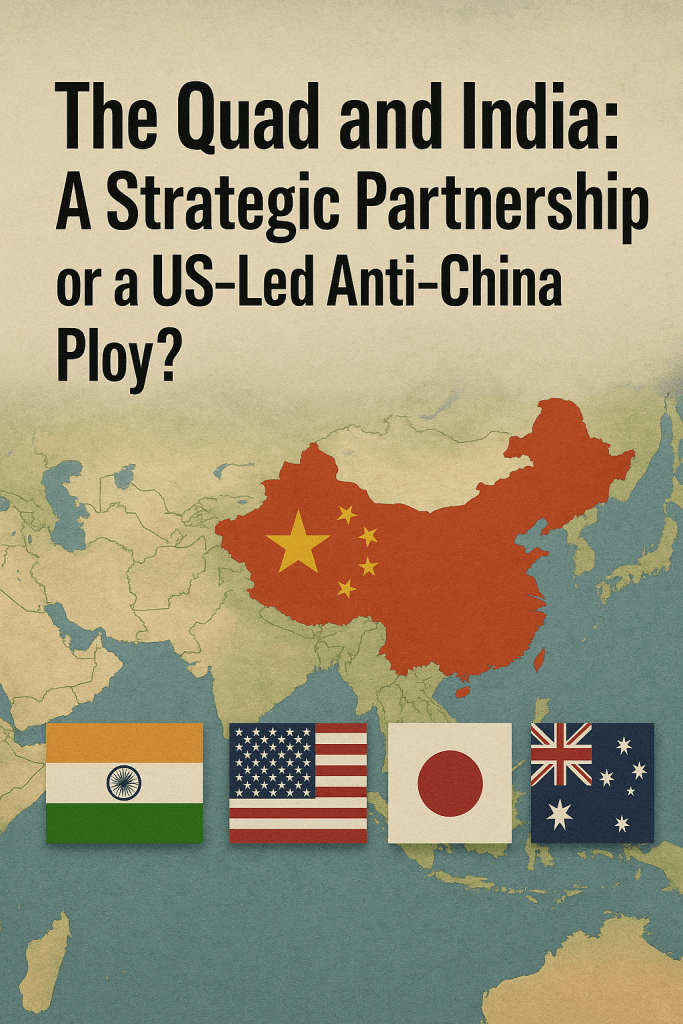
In the turbulent waters of the Indo-Pacific, the Quadrilateral Security Dialogue (Quad)—uniting India, United States, Japan, and Australia—stands as a beacon of strategic alignment. Revived in 2017 to promote a “free, open, and prosperous Indo-Pacific,” the Quad’s unspoken mission is to counter China’s maritime ambitions and regional dominance. For India, a rising power grappling with China’s border provocations and Pakistan’s terrorism, the Quad promises enhanced security, economic growth, and global influence. Yet, skepticism persists: Is India a linchpin in a transformative partnership, or merely a pawn in a US-led strategy to contain China? As the recent India-Pakistan escalation (May 2025) underscores the Quad’s limitations, this article explores its true value for India, India’s indispensability to the group, and whether New Delhi could achieve its ambitions alone.
The Quad’s Strategic Lifeline for India
India’s integration into the Quad, cemented after China’s assertive moves (e.g., 2017 Doklam standoff, 2020 Galwan clash), aligns with its goal of countering Beijing’s influence while advancing broader interests. Far from being a passive partner, India leverages the Quad to amplify its strategic, economic, and diplomatic clout.
1. Fortifying Against China The Quad bolsters India’s capacity to counter China’s “String of Pearls” network—ports like Gwadar (Pakistan) and Hambantota (Sri Lanka)—and its naval expansion in the Indian Ocean Region (IOR). The Malabar naval exercises, involving all Quad members, enhance India’s interoperability with world-class navies, securing sea lanes critical for 90% of its trade by volume. Bilateral agreements, such as COMCASA and BECA with the US, provide advanced technologies (e.g., P-8I aircraft, geospatial intelligence), strengthening India’s maritime and border defenses. The Quad’s strategic pressure on China indirectly limits Beijing’s support for Pakistan, as seen in its restrained response during the India-Pakistan escalation, where reported missile supplies to Pakistan were not escalated further.
2. Economic and Technological Leap The Quad’s Blue Dot Network offers sustainable infrastructure alternatives to China’s Belt and Road Initiative (BRI), aligning with India’s Act East policy to deepen ties with ASEAN. Initiatives in supply chain resilience—focusing on semiconductors and critical minerals—reduce India’s reliance on Chinese imports, fueling Make in India. Investments from Quad partners, such as Japan’s $35 billion in India’s Northeast and Australia’s critical minerals cooperation, drive economic growth, cementing India’s status as the world’s 4th largest economy (2025). Collaboration in emerging technologies (AI, 5G, cybersecurity, space) positions India to compete with China’s technological edge, critical for both economic and defense advancements.
3. Diplomatic Ascendancy The Quad elevates India as a leading Indo-Pacific power, amplifying its voice in global forums like the UN and G20. During the Pahalgam terror attack (April 2025) and India’s retaliatory Operation Sindoor, Quad members condemned terrorism without criticizing India’s strikes, unlike China and Turkey, reflecting India’s diplomatic clout. The Quad’s non-binding structure preserves India’s strategic autonomy, allowing unilateral actions (e.g., against Pakistan) while benefiting from collective support. By countering the China-Pakistan Economic Corridor (CPEC) and China’s regional influence, the Quad enhances India’s leverage in South Asia and beyond.
4. Leadership in Non-Traditional Security The Quad’s focus on climate change (renewable energy), health security (vaccine diplomacy), and humanitarian assistance and disaster relief (HADR) enhances India’s soft power. Building on the 2004 Tsunami Core Group, the Quad strengthens India’s role as a regional first responder. Its Women, Peace, and Security agenda aligns with India’s gender-inclusive peacekeeping efforts, bolstering its global image as a responsible power.
The India-Pakistan Escalation: Testing the Quad’s Limits
The Pahalgam terror attack (April 22, 2025) and India’s Operation Sindoor (May 7, 2025), targeting terror camps in Pakistan and PoK, highlighted the Quad’s constrained role in bilateral disputes. India’s precision strikes, executed with indigenous systems (Akash, S-400) and bilateral intelligence (e.g., US-derived), showcased its self-reliance. Quad members condemned the attack but urged restraint, offering no direct support, prompting X users to label the Quad “ineffective” or a “US ploy” that fails India in South Asian crises.
Yet, the Quad’s indirect contributions were significant. Its diplomatic weight ensured global focus on condemning terrorism, not India’s response, with Quad partners avoiding the critical tone of China and Turkey. The group’s strategic pressure on China likely limited Beijing’s escalation of support for Pakistan (e.g., beyond reported missile supplies), preserving regional stability. While the Quad’s China-centric, maritime focus doesn’t address Pakistan directly, its role in countering the China-Pakistan axis supports India’s broader security calculus.
Can India Stand Alone?
India’s skeptics argue it doesn’t need the Quad. With the world’s 4th largest defense budget (~$80 billion), a modernizing navy (INS Vikrant, nuclear submarines), and nuclear capabilities, India executed Operation Sindoor independently. Its economy drives self-reliance (Atmanirbhar Bharat), attracting investments from non-Quad nations (e.g., UAE, Singapore). Diplomatically, India’s non-alignment and ties with Russia, ASEAN, and the Global South ensure global influence, as seen in widespread condemnation of the Pahalgam attack. India counters China unilaterally—banning apps, restricting investments, and fortifying the LAC—while leading in climate (International Solar Alliance) and HADR.
However, going solo has limits. China’s $300 billion defense budget, largest navy, and economic dominance outmatch India’s resources. Developing advanced tech (e.g., 5G, AI) and infrastructure independently is cost-intensive, and facing China’s global influence (e.g., UNSC vetoes) alone risks isolation. The Quad’s collective strength—US superpower status, Japan’s tech leadership, Australia’s Pacific reach—reduces India’s burden, accelerates progress, and counters the China-Pakistan axis more effectively. Without the Quad, India could face a bolder Beijing, potentially escalating support for Pakistan, as hinted in May 2025.
Is India Being Used Against China?
The notion that the Quad is a US-orchestrated effort to leverage India against China resonates in public discourse. X users describe India as a “frontline state” in a US-led “anti-China axis,” noting that the US, Japan, and Australia rely on India’s IOR dominance and rivalry with China (e.g., LAC tensions) to counter Beijing’s BRI and naval expansion. India’s strategic location and military weight make it a natural partner, but critics argue it bears disproportionate risks—provoking China’s ire while Quad partners gain strategic benefits with less exposure.
This view oversimplifies India’s role. New Delhi actively shapes the Quad, emphasizing non-traditional security (climate, health) to avoid a militarized anti-China stance. India’s non-aligned stance and ASEAN ties ensure the Quad isn’t a Western bloc, broadening its appeal. The tangible benefits—tech transfers, investments, diplomatic leverage—align with India’s goals, proving mutual dependence. The Quad’s neutrality in the India-Pakistan escalation fueled frustration, with X posts questioning its reciprocity, but India’s strategic autonomy ensures it’s no mere tool, extracting value while maintaining independence.
A Quad Without India: Viable or Hollow?
Could the Quad survive without India? Technically, yes—it existed briefly in 2007 with limited Indian commitment but collapsed under Chinese pressure. Today, India’s IOR presence, naval power, and democratic weight are irreplaceable. Without India:
• IOR Influence Wanes: China’s BRI ports and Djibouti base face less opposition, as Japan and Australia focus on the Pacific.
• Maritime Strength Fades: Malabar exercises lose relevance, and sea lane security falters.
• Diplomatic Credibility Suffers: The Quad risks becoming a US-led alliance, alienating ASEAN and the Global South.
• Economic and Tech Gaps: India’s market and IT sector drive supply chain and tech initiatives; its absence slows progress.
A US-Japan-Australia triad could pivot to AUKUS or Pacific alliances, but these lack India’s regional heft. X users emphasize India’s indispensable role, though some see a Pacific-focused alternative. Without India, the Quad would be a diminished, Pacific-centric shell, unable to counter China’s Indo-Pacific ambitions effectively.
Conclusion: A Strategic Symbiosis
The Quad is a strategic lifeline for India, amplifying its ability to counter China, secure maritime routes, modernize its economy, and lead globally, while preserving autonomy. Its limitations in bilateral conflicts like the India-Pakistan escalation underscore India’s need for self-reliance, but its indirect benefits—diplomatic cover, pressure on China—prove its worth. India’s robust capabilities enable independent action, but the Quad’s collective strength addresses challenges (China’s superiority, resource constraints) that New Delhi cannot fully overcome alone.
Is the Quad a US gambit to use India against China? Partially, but India’s agency transforms it into a symbiotic partnership. By shaping the Quad’s inclusive agenda, India maximizes benefits while mitigating risks. The Quad’s viability hinges on India’s participation; without it, the group loses strategic and diplomatic weight. For India, the Quad is a pragmatic multiplier, not a necessity, enabling it to navigate a complex geopolitical landscape with unmatched finesse.
India’s role as a global humanitarian leader shone brightly during the COVID-19 pandemic, when its “Vaccine Maitri” initiative supplied free vaccines to numerous countries, reinforcing its image as the “pharmacy of the world.” Similarly, India’s swift disaster relief efforts, from Nepal’s 2015 earthquake to Turkey’s 2023 quake, have saved countless lives. Yet, the 2025 India-Pakistan conflict, triggered by the horrific Pahalgam terror attack on April 22, 2025, which killed 26 civilians, reveals a troubling paradox: many nations India selflessly aided are either supporting Pakistan or remaining neutral, despite India’s Operation Sindoor targeting alleged terrorist infrastructure. This article examines the countries that received India’s free COVID-19 vaccines, their stances in the current conflict, the reasons behind their positions, and the contentious notion of labeling those supporting Pakistan as “traitors.” It argues that India must navigate this diplomatic challenge with strategic pragmatism rather than emotional rhetoric.
India’s Humanitarian Legacy
India’s humanitarian efforts are guided by the principle of “Vasudhaiva Kutumbakam” (the world is one family). During the COVID-19 pandemic, India launched the Vaccine Maitri initiative on January 20, 2021, supplying free vaccines to 98 countries, totaling 14.3 million doses by February 2022 (Vaccine Maitri – Wikipedia). Beyond vaccines, India provided disaster relief as a first responder in crises such as:
Nepal (2015 Earthquake): Operation Maitri delivered 520 tonnes of supplies (India’s Role in Disaster Relief).
Turkey (2023 Earthquake): Operation Dost sent medical teams and supplies.
Maldives (2004 Tsunami): Operation Rainbow provided a $5 crore aid package.
These acts of generosity, often without expectation of reciprocity, underscore India’s commitment to global solidarity.
The 2025 India-Pakistan Conflict
On April 22, 2025, a terrorist attack in Pahalgam, Jammu and Kashmir, killed 26 civilians, mostly Hindu tourists, after attackers reportedly targeted victims based on religion (2025 India-Pakistan Standoff). The Resistance Front, linked to Pakistan-based Lashkar-e-Taiba, initially claimed responsibility but later retracted. India accused Pakistan of sponsoring the attack and launched Operation Sindoor on May 7, striking alleged terrorist infrastructure, killing at least 31 people, per Pakistan’s claims (India Strikes Pakistan). Pakistan denied involvement, called for an international investigation, and vowed retaliation, escalating tensions between the nuclear-armed neighbors.
Countries Receiving Free COVID-19 Vaccines from India
India’s Vaccine Maitri initiative gifted 14.3 million doses of Covishield and Covaxin to 98 countries, with a focus on South Asia, the Indian Ocean region, and the Caribbean. Below is a list of key recipient countries, based on available data from 2021, and their stances in the 2025 conflict (India Sends 22.9 mn Doses, Vaccine Maitri – Wikipedia):
Country
Free Vaccine Doses (2021)
Stance in 2025 Conflict
Supporting Pakistan?
Bangladesh
2,000,000
Neutral
No
Myanmar
1,700,000
Neutral
No
Nepal
1,000,000
Neutral
No
Sri Lanka
500,000
Neutral
No
Afghanistan
500,000
Supports India
No
Maldives
100,000
Neutral
No
Mauritius
100,000
Neutral
No
Seychelles
50,000
Neutral
No
Bahrain
100,000
Neutral
No
Oman
100,000
Neutral
No
Barbados
100,000
Neutral
No
Dominica
70,000
Neutral
No
Bhutan
150,000
Neutral
No
Notes on the List:
Data Limitations: The full list of 98 recipient countries is not explicitly detailed in sources, but the above includes major recipients cited in 2021 reports. Additional countries (e.g., Caribbean and African nations) received vaccines, but their 2025 stances are largely undocumented due to their limited geopolitical involvement.
Pakistan’s Inclusion: Pakistan received 45 million India-made doses via the COVAX initiative, not as a direct grant from India, and thus is not listed as a recipient of free vaccines (Pakistan to Receive 45 Million Doses).
Stance Assessment: Countries are classified as “Supporting Pakistan,” “Supporting India,” or “Neutral” based on diplomatic statements, military actions, or silence in the 2025 conflict.
Countries Not Supporting India
Among the countries that received free vaccines, the following are not supporting India in the 2025 conflict (i.e., they are neutral or support Pakistan):
Supporting Pakistan: None of the listed vaccine recipients explicitly support Pakistan, as Turkey, China, Malaysia, Azerbaijan, and Iran were not direct recipients of free vaccine grants in 2021. However, Malaysia received commercial or COVAX supplies, and its support for Pakistan’s call for an investigation aligns with Pakistan Juliet (India-Pakistan Tensions.
Why Are They Not Supporting India?
The lack of support from these countries stems from:
Geopolitical Neutrality: Nations like Nepal, Bangladesh, and Sri Lanka balance ties with both India and Pakistan to avoid entanglement in a nuclear standoff.
Domestic Priorities: Smaller nations (e.g., Seychelles, Dominica) focus on internal issues and lack the geopolitical weight to take sides.
Economic Ties: Countries like Bahrain and Oman maintain strong trade relations with both India and Pakistan, prioritizing stability.
Non-Alignment: Many developing nations adhere to non-aligned policies, avoiding involvement in great power rivalries.
The “Traitor” Label: A Dangerous Oversimplification
Labeling countries that support Pakistan or remain neutral as “traitors” is both inflammatory and counterproductive. For instance:
Turkey, China, Malaysia, Azerbaijan, Iran: These countries support Pakistan due to historical alliances, religious ties, or strategic interests (e.g., China’s CPEC, Turkey’s Kashmir stance). Only Malaysia received indirect vaccine supplies via COVAX, not direct grants, so their stance is not a betrayal of India’s aid.
Neutral Countries: Nations like Nepal and Bangladesh, despite receiving free vaccines, have deep cultural and economic ties with India but also engage with Pakistan. Their neutrality reflects a pragmatic approach to regional stability, not disloyalty.
Calling these nations “traitors” risks alienating potential partners and escalating diplomatic tensions. It also ignores the reality that international relations are driven by self-interest, not gratitude for past aid.
Implications for India
The 2025 conflict highlights several challenges for India:
Limits of Vaccine Diplomacy: India’s generous aid has not guaranteed loyalty, suggesting a need to align future aid with strategic goals.
Diplomatic Isolation: With only the US, Afghanistan, and possibly Israel explicitly supporting India, New Delhi must counter Pakistan’s narrative more effectively.
Regional Dynamics: Neutral stances from South Asian neighbors underscore India’s challenge in rallying regional support against Pakistan-based terrorism.
Recommendations
India should adopt a strategic approach:
Engage Diplomatically: Avoid inflammatory rhetoric and engage neutral countries to build a coalition against terrorism.
Strengthen Alliances: Deepen ties with supportive nations like the US, Israel, and Quad members (Japan, Australia) to counter Pakistan’s backers.
Refine Aid Strategy: Prioritize aid to nations that align with India’s security and geopolitical interests, ensuring mutual benefits.
Counter Narrative: Amplify evidence of Pakistan’s terrorism links globally to shift neutral stances.
Conclusion
India’s Vaccine Maitri initiative showcased its humanitarian leadership, gifting free COVID-19 vaccines to countries like Bangladesh, Nepal, and the Maldives. Yet, in the 2025 India-Pakistan conflict, most of these nations remain neutral, prioritizing regional stability or domestic concerns over supporting India’s anti-terrorism efforts. Countries like Turkey and China, which back Pakistan, act out of longstanding alliances, not betrayal of India’s limited aid to them. Labeling them “traitors” oversimplifies complex geopolitics and risks further isolation. Instead, India must leverage diplomacy, strengthen strategic alliances, and refine its aid strategy to navigate this crisis and secure its interests in a volatile region.
In a recent statement, India’s Defence Minister Rajnath Singh emphasized the essence of “Brand India” in the context of the nation’s burgeoning defence industry: “If an Indian company makes a promise, it will be fulfilled. If a product is designed to perform within a certain range or at a specific temperature, it will do so without exception. There should be no compromise on quality.” This bold assertion, made at the National Quality Conclave in Delhi, underscores India’s ambition to position itself as a trusted global supplier of defence products, particularly ammunition. The slogan “Don’t go for doubt, go for India” encapsulates this vision, aiming to instill confidence in international buyers. However, the statement also carries a subtle geopolitical undertone, seemingly promoting Indian ammunition as superior while positioning it as a counter to competitors like China and even Pakistan. This article explores India’s push for quality assurance in its ammunition industry, its strategic positioning against regional rivals, and the challenges and opportunities in becoming a trusted global supplier.
The Rise of India’s Ammunition Industry
India’s defence sector has undergone a significant transformation in recent years, driven by the government’s “Atmanirbhar Bharat” (Self-reliant India) initiative. Historically one of the world’s largest arms importers, India is now focusing on indigenous production to reduce dependency on foreign suppliers. The ammunition sector is a key pillar of this strategy. According to a 2024 report, India aims to halt ammunition imports by 2025-26, with local sources already supplying nearly 150 of the 175 ammunition types used by the Indian Army. This shift is supported by substantial investments, with 27.67% of the defence budget allocated to modernizing and expanding ammunition production facilities.
Private players like Adani Defence and Aerospace and SMPP, alongside state-owned entities like Munitions India, are scaling up production of critical ammunition, such as 155 mm artillery shells, which are significantly cheaper than their Western counterparts ($300-$400 per unit compared to $3,000 for European equivalents). Additionally, advancements like the 155 mm smart ammunition demonstrate India’s commitment to technological innovation. These developments not only bolster national security but also position India to capture a share of the global ammunition market, projected to grow at a CAGR of 3.5% through 2033.
Quality Assurance: The Cornerstone of Brand India
The Defence Minister’s emphasis on uncompromising quality reflects a strategic effort to build “Brand India” as a symbol of reliability. Past challenges, such as defective ammunition incidents reported in 2010 and 2016, highlighted quality control issues within the Ordnance Factory Board (OFB). These incidents, including a 2016 explosion that killed 19 soldiers, underscored the need for robust quality assurance mechanisms. The government’s response has been to streamline the OFB into seven Public Sector Defense Undertakings and foster private-sector participation to enhance efficiency and accountability.
Today, initiatives like the e-module launched by the Odisha Police in August 2024 for ammunition inventory management signal a move toward digitalization and precision in quality control. Companies are also adopting international standards, with platforms like India Index verifying suppliers for compliance, financial stability, and transparency to assure global buyers of consistent quality. Rajnath Singh’s assertion that Indian products will meet promised specifications—whether range, temperature resilience, or lethality—aims to erase doubts about reliability, positioning India as a dependable alternative to traditional suppliers like Russia and emerging competitors like China.
Strategic Positioning Against Pakistan and China
The Defence Minister’s remarks carry a geopolitical subtext, subtly promoting Indian ammunition as superior in the context of regional rivalries with Pakistan and China. India’s defence strategy is shaped by the dual threat posed by these nuclear-armed neighbors, with past conflicts and ongoing tensions driving modernization efforts. The Indian Army’s push to stockpile ammunition for a 15-day intense war, up from a previous 10-day reserve, reflects preparations for a potential two-front conflict.
Against Pakistan, India’s ammunition capabilities are implicitly showcased through its ability to produce cost-effective, high-quality munitions. For instance, India’s 155 mm artillery shells are not only cheaper but also tailored to meet modern warfare demands, unlike Pakistan’s reliance on Chinese imports, which account for 81% of its arms imports. The 2022 accidental misfire of a BrahMos missile into Pakistani territory, while embarrassing, highlighted India’s advanced missile capabilities, even if inadvertently.
China, a major arms exporter with 5.9% of the global market, poses a more complex challenge. Chinese ammunition and equipment, often sold at below-cost prices to countries like Pakistan, Bangladesh, and Myanmar, leverage Beijing’s Belt and Road Initiative for political influence. However, international buyers remain wary of Chinese products due to concerns about quality and political strings attached. India is capitalizing on this hesitation by offering reliable, competitively priced alternatives. For example, India’s $375 million deal to supply BrahMos missiles to the Philippines demonstrates its ability to secure high-value contracts in China’s backyard.
By emphasizing quality assurance, India is not only countering China’s market dominance but also positioning its ammunition as a strategic tool to strengthen ties with nations wary of Chinese influence. The slogan “Don’t go for doubt, go for India” subtly contrasts India’s reliability with perceived uncertainties surrounding Chinese products, appealing to international buyers seeking dependable suppliers.
Challenges in Becoming a Trusted Global Supplier
Despite its progress, India faces significant hurdles in establishing itself as a trusted global supplier. First, its defence export sector remains modest, accounting for only 0.2% of the global arms market as of 2015-19. While exports reached $2.5 billion in FY 2023-24, India dropped out of the top 25 arms exporters in FY 2022-23, indicating challenges in sustaining momentum. Key markets like Myanmar and Sri Lanka also procure from China, creating stiff competition.
Quality assurance remains a work in progress. Incidents like the 2020-2023 crashes of Advanced Light Helicopters (ALHs) and the rejection of the naval version of the LCA Tejas by the Indian Navy raise concerns about reliability among potential buyers. Additionally, India’s private sector, while growing, is hampered by bureaucratic ties to public-sector firms, which can stifle innovation and efficiency.
Financing is another bottleneck. Unlike China, France, or Turkey, which offer credit guarantees to buyers, Indian banks are reluctant to finance arms exports to countries with high credit or political risks. The government is addressing this through the Export-Import Bank (EXIM), which is expanding low-cost, long-term loans to attract buyers. However, scaling this initiative to compete with global players requires significant resources and diplomatic outreach.
Finally, India’s diversification of arms imports—from Russia to Western suppliers like France and the US—has created a trust deficit with some partners, potentially limiting technology transfers critical for indigenization. Balancing strategic autonomy with the need for advanced technology remains a delicate task.
Opportunities and the Path Forward
India’s ammunition industry is poised for growth, driven by increasing defence budgets, technological advancements, and a global demand for cost-effective solutions. The government’s focus on indigenization, with 75% of the capital procurement budget earmarked for domestic industries in FY 2023-24, is fostering innovation. Major platforms like the Pinaka rocket launcher, BrahMos missile, and Akash SAM are gaining traction in markets like Armenia, the Philippines, and Vietnam.
To realize the “Don’t go for doubt, go for India” vision, India must prioritize several strategies:
Strengthen Quality Assurance: Invest in advanced testing facilities, international certifications, and digital inventory management to ensure consistent quality. Collaborations with NATO countries, as seen with Reliance Defence, can enhance credibility.
Expand Financing Options: Scale up EXIM’s loan portfolio and explore government-backed credit guarantees to compete with China and Western suppliers.
Target Emerging Markets: Focus on countries in Africa, Southeast Asia, and Latin America, where China’s influence is growing but quality concerns persist. Diplomatic efforts, as suggested by the Stimson Center, can help identify trusted buyers.
Leverage Strategic Partnerships: Deepen ties with Western allies like the US and France for technology transfers while maintaining relations with Russia to ensure spare parts for existing systems.
Promote Brand India Globally: Use platforms like the National Quality Conclave to showcase success stories, such as the BrahMos deal, and counter negative perceptions from past incidents.
Conclusion
India’s ambition to become a trusted global supplier of ammunition is rooted in its commitment to quality assurance and the “Brand India” philosophy. By emphasizing reliability, as articulated by Rajnath Singh, India is positioning itself as a counterweight to China’s market dominance and a strategic partner to nations seeking dependable defence solutions. While challenges like quality control, financing, and competition persist, India’s cost-effective production, technological advancements, and diplomatic outreach offer significant opportunities. The slogan “Don’t go for doubt, go for India” is more than a marketing pitch—it’s a call to action for India to deliver on its promises and reshape the global defence landscape. As the nation continues to modernize its ammunition industry, it is not only preparing to defend its borders but also aiming to win the trust of international buyers, one reliable product at a time.






 Unmukt