Unmukt

Tag: indiafirst

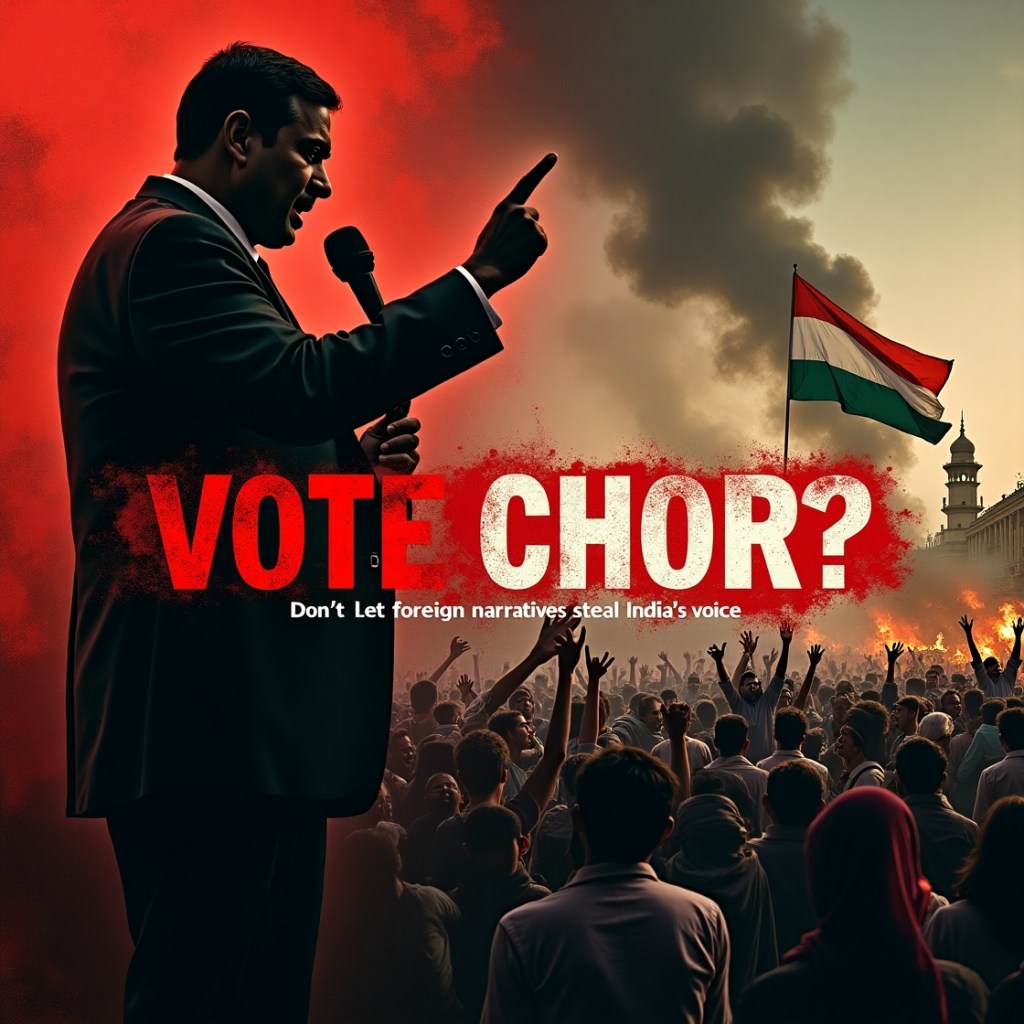
  • The “Vote Chori” Lie: How Rahul Gandhi’s Dangerous Narrative Mirrors Bangladesh’s Playbook

    When Arun Jaitley once described Rahul Gandhi as “a repeat liar, a silent apologist in court, and a loud threat to democracy”, many thought it was just political rhetoric. But the latest falsehood being peddled by the Congress leader, the so-called “Vote Chori” narrative, reveals just how dangerous this political gamble really is.

    The Manufactured Crisis

    In recent weeks, Rahul Gandhi has amplified allegations that India’s 2024 general elections were manipulated, with voter rolls inflated by unverified names. The claim is rooted in a so-called “report” circulated by an NGO linked to senior advocate Prashant Bhushan, a self-proclaimed Marxist voice whose history is filled with legal activism aimed at discrediting elected governments.

    This NGO’s agenda aligns with a disturbing pattern targeting India’s political credibility on the global stage while emboldening foreign interests, particularly the United States, to question India’s democratic framework.

    The Bangladesh Parallel

    Observers of South Asian politics will recall the events in Bangladesh earlier this decade. Opposition forces, unable to mount a strong electoral challenge, created a narrative that the ruling government was “blocking free elections” and “silencing dissent.” This claim — heavily amplified by international NGOs and Western media — resulted in months of unrest, economic instability, and eventual diplomatic isolation.

    The tragic irony? While they claimed to be “saving democracy,” the opposition’s tactics effectively paralyzed the democratic process. In some cases, violence replaced ballots, and foreign meddling became normalized.

    Today, Rahul Gandhi’s “vote chori” rhetoric dangerously echoes the same destabilization strategy.

    Foreign Hand, Familiar Faces

    Prashant Bhushan’s NGO is no stranger to controversial activism. Over the years, its funding sources and advocacy align with Marxist intellectual circles and certain Western think tanks. The formula is consistent:

    • Stage 1: Question the legitimacy of elections without hard evidence.
    • Stage 2: Seek international “solidarity” and coverage to pressure the government.
    • Stage 3: Push for systemic changes that weaken the state’s ability to act independently of Western influence.

    Rahul Gandhi’s willingness to become the political amplifier of such tactics is alarming, especially when India is experiencing record GDP growth, a stronger global presence, and a more assertive foreign policy.

    The Real Threat

    Critics argue that Rahul Gandhi is less interested in winning elections through people’s mandate and more interested in delegitimizing them to create chaos. This narrative directly benefits:

    • Foreign powers seeking to weaken India’s global standing.
    • Economic competitors who fear India’s rise as a manufacturing and geopolitical hub.
    • Marxist lobbies inside and outside the country who oppose India’s market-driven growth model.

    From Bangladesh to Bharat

    The comparison is chilling. In Bangladesh, this narrative eroded public trust, empowered extremist elements, and paved the way for deeper foreign interference.
    If Rahul Gandhi and his allies succeed in normalizing this rhetoric in India, the consequences could be far-reaching:

    • Investor confidence could plummet.
    • Social divisions could deepen.
    • India’s image as the world’s largest democracy could be tarnished.

    Conclusion: Democracy Is Not a Toy

    India’s democratic framework is strong, but it is not immune to coordinated attacks from within. Political disagreements are healthy, but weaponising falsehoods to undermine electoral legitimacy is a direct assault on the very foundation of the republic.

    As Arun Jaitley warned, Rahul Gandhi’s blend of courtroom meekness and public recklessness is not harmless political theatre. It is a dangerous game that India cannot afford to ignore.
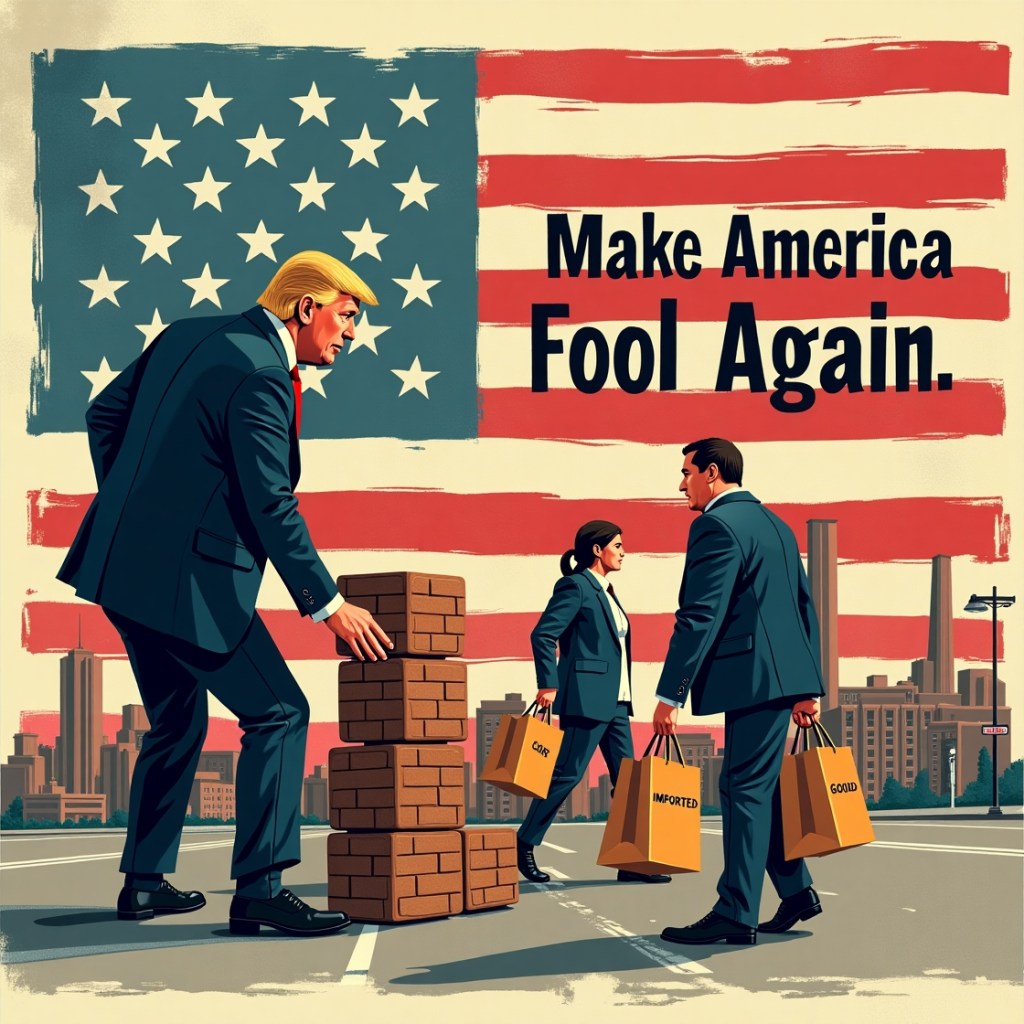
  • Make America Fool Again: The Self-Inflicted Cost of Trump’s Tariff Nationalism

    In the age of performative patriotism and economic brinkmanship, Donald Trump’s favorite rallying cry—“Make America Great Again”—may need a reboot: “Make America Fool Again.” At the heart of this irony lies a simple but devastating reality—tariffs. While marketed as weapons of economic warfare against foreign “cheaters,” these tariffs have become boomerangs, hitting American consumers harder than anyone else.

    The Illusion of Economic Toughness

    Trump’s tariff-heavy strategy is pitched as bold nationalism: taxing foreign imports to promote American-made goods and force foreign governments to yield to U.S. demands. On paper, it sounds tough. In practice, it’s economically self-defeating in a nation where most consumer goods—from iPhones to bananas—are sourced globally.

    The U.S. consumer economy is import-dependent by design. Over 70% of retail goods involve foreign components or are directly imported. In this environment, tariffs function not as pressure on foreign manufacturers—but as an invisible tax on American families.

    Who Really Pays?

    Let’s cut through the rhetoric: Americans pay these tariffs. Corporations simply pass the added costs to the customer. In 2025 alone, U.S. households are expected to pay $1,270 to $2,400 more per year, solely due to tariff-related inflation. Prices for groceries, clothing, furniture, electronics, and cars have jumped—without corresponding wage increases.

    Even basic foods are not spared. Bananas, coffee, and wine—items not grown at scale in the U.S.—have no domestic alternative. The tariff on them isn’t protective; it’s punitive to consumers.

    Case Study: Autos, Goods, and Stock Shocks

    Tariffs on imported autos have driven vehicle prices up by 11%. At the same time, American car manufacturers suffer too—many rely on imported parts. The result? No winners.

    Consumer goods giants like Procter & Gamble and Nestlé have announced price hikes across product lines. Even the stock market responds negatively, with dips in shares of consumer-oriented companies whenever new tariffs are announced.

    A Strategy Without Substitutes

    While Trump’s team insists tariffs will push the U.S. to “de-risk” from China, the reality is that alternatives (like Vietnam or Mexico) often rely on Chinese supply chains themselves. Meanwhile, U.S. manufacturing lacks the scale, workforce, or cost advantage to replace imports meaningfully. The result is disruption without a solution.

    Nationalism at Whose Cost?

    This is where the slogan flips: “America First” has become America Pays First. These tariffs act as regressive taxes, hurting middle- and lower-income Americans most. They dampen consumer spending, slow economic growth, and hollow out household budgets—all under the banner of economic patriotism.

    Trump presents himself as the dealmaker, the protector of American interests. But in the arena of global trade, he’s wielding a sledgehammer where surgical tools are needed.

    As political theater, tariffs may look decisive. But behind the scenes, they erode the very fabric of the U.S. consumer economy. What began as a campaign promise to restore greatness has, in effect, triggered the largest stealth tax hike on American households in three decades.

    The irony is stark. In trying to punish others, America punishes itself.

    So, the new slogan practically writes itself:

    “Make America Fool Again.”

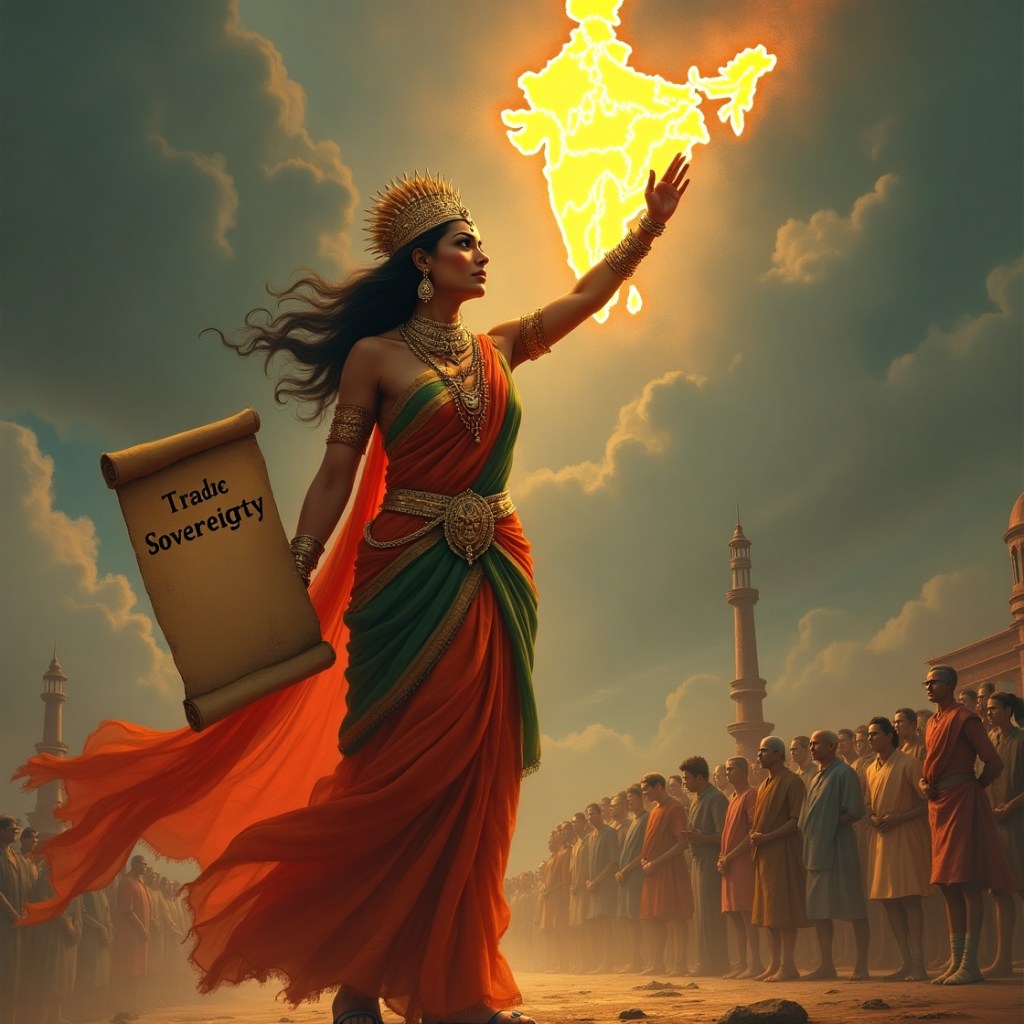
  • Modi Didn’t Blink: How India Protected Its Trade Sovereignty from Trump’s 25% Tariff Threat

    “They expected India to bow. Instead, India built a backbone.”

    In an age where many nations retreat under U.S. pressure, India stood tall. When Donald Trump returned to the White House in 2025 and announced sweeping 25% tariffs on Indian exports, many global observers braced for panic in New Delhi.

    But that panic never came.

    Instead, they saw a familiar face—Narendra Modi, calm, calculated, and completely unshaken.

    No Panic. No Compromise. No Deal Under Duress.

    The Modi government could have taken the easy route:
    Make a few trade concessions, appease Trump’s ego, beg for tariff exemptions—and spin it as diplomacy.

    But this time, India chose something far more powerful: Dignity.

    Despite looming tariffs, there was:

    • No sudden outreach from Indian envoys.
    • No last-minute offers on agriculture, dairy, or digital trade.
    • No weakening of India’s strategic relationship with Russia, which lies at the center of this trade conflict.

    Instead, India waited. Watched. And sent a clear message to Washington:

    We don’t trade our sovereignty—not for discounts, not for praise, not for fear.

    Modi in Parliament: A Defining Moment

    Just day before yesterday, in a charged Parliament session, PM Modi delivered a masterstroke without raising his voice:

    “No foreign leader has ever asked me to stop any internal operation in India.”

    This one line, subtle but piercing, was a direct counter to Trump’s old claims that he “mediated” between India and Pakistan—a lie that had embarrassed Indian diplomacy in the past.

    By affirming that no leader has dared question India’s internal affairs, Modi wasn’t just defending Kashmir or Manipur or economic autonomy—he was drawing a red line for the world.

    A line that says:
    This is New India. Strong, sovereign, and unafraid.

    The India of 2025 Is Not the India of 1991

    In the past, India bent.

    • In the ’90s, India opened markets under IMF pressure.
    • In the 2000s, India hesitated on nuclear autonomy until George Bush stepped in.
    • Even during the first Trump term, India showed restraint, trying to “keep the relationship warm.”

    But today, the tone has changed.

    Modi understands that India’s market of 1.4 billion, its tech and manufacturing potential, and its civilizational strength can’t be treated like a pawn in someone else’s game.

    Why Modi’s Boldness Matters

    Let’s be clear: Trump’s tariffs are real. They will hurt sectors like textiles, jewelry, and some pharma exports. But short-term pain is sometimes necessary for long-term independence.

    Because if India caved now, it would set a dangerous precedent:

    • That Washington can dictate Indian trade partners.
    • That a tariff threat can reverse our Russia strategy.
    • That India must “ask permission” before doing business with the world.

    But thanks to Modi, that precedent will never be set.

    What the World Needs to Learn from India

    China never compromises its red lines. Iran survives with zero Western sympathy. Even tiny Cuba resists American bullying.

    So why should India, a rising global power, act like a junior partner?

    By refusing to blink, Modi has elevated India’s position globally—from “strategic ally” to sovereign equal.

    The U.S. now knows:

    • India won’t trade policy for praise.
    • It won’t choose between friends because someone shouted louder.
    • And it won’t let elections in Washington decide its trade map.

    You can debate Modi’s domestic record. You can critique his style. But on the global stage, one fact is undeniable:

    He is the first Indian Prime Minister who doesn’t flinch , not before China, not before Pakistan, and now, not even before America.

    As Trump throws tariffs like tantrums, India responds not with fear but with strategic silence backed by steel nerves.

    That’s leadership.
    That’s sovereignty.
    That’s Modi.

  • Operation Sindoor: Facts, Fiction, and the Fight for Narrative Control

    In the age of digital disinformation, wars are no longer fought just on the battlefield — they’re fought on WhatsApp, Twitter, and newsrooms. Operation Sindoor, India’s swift and precise military response to a Pakistan-backed terror attack, became not only a story of strategic success but also a case study in how facts are often buried beneath layers of political spin, foreign commentary, and media speculation.

    What Triggered Operation Sindoor?

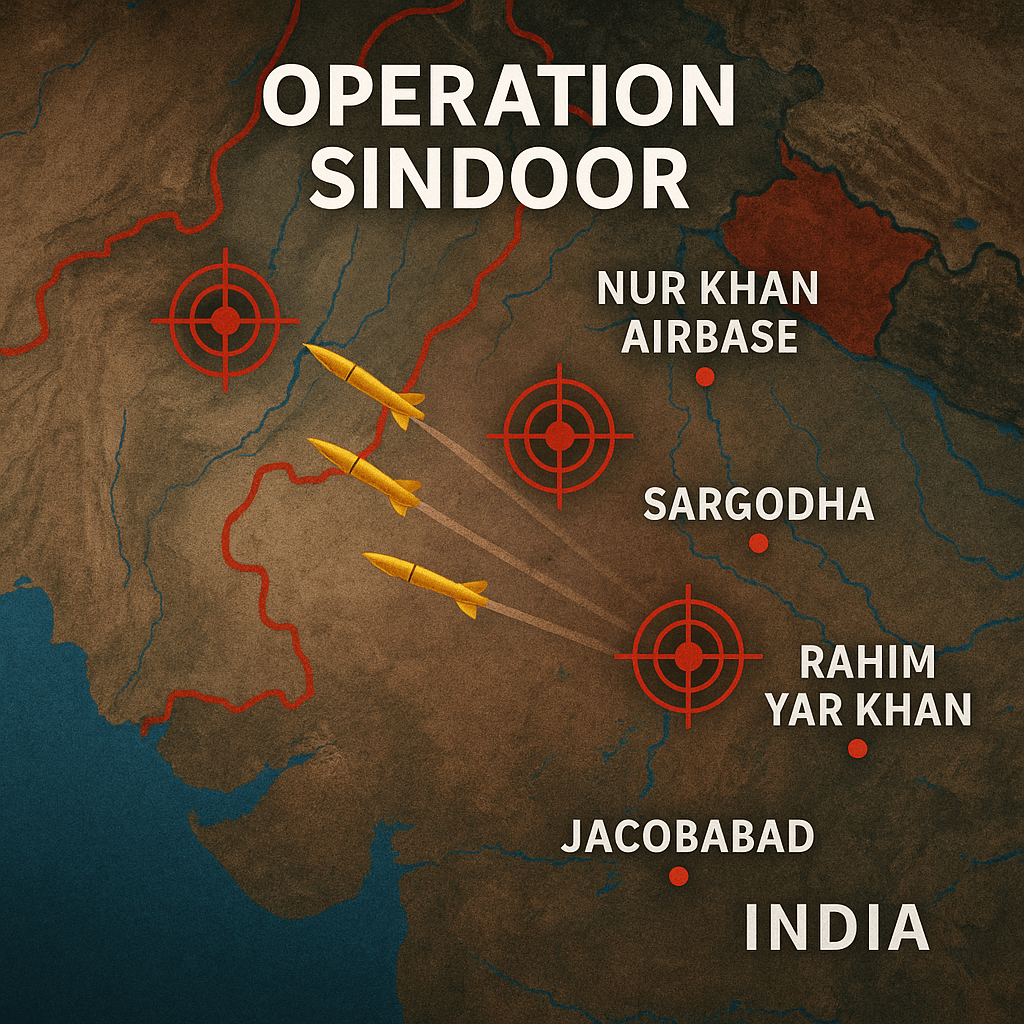
    On April 22, 2025, a brutal terror attack in Pahalgam, Jammu & Kashmir, claimed the lives of 26 civilians, including pilgrims. Intelligence traced the plot to Pakistan-based terrorist groups, prompting India to launch Operation Sindoor — a 23-minute air and missile operation that began at 4:03 AM on May 7, 2025.

    Targets of the Operation Included:

    • Nur Khan Airbase (Rawalpindi)
    • Mushaf Base (Sargodha)
    • Rahim Yar Khan airbase
    • Shahbaz Airbase (Jacobabad)
    • Radar sites in Pasrur and Lahore

    Satellite images later confirmed damage to runways, bunkers, and radar systems. The strikes were precise, time-bound, and aimed at disabling Pakistan’s offensive capabilities while avoiding civilian casualties.

    Ceasefire: No Mediation, Just a Phone Call

    Contrary to various media reports and speculative comments, especially from former U.S. President Donald Trump, the ceasefire was not the result of international mediation.

    On May 10, 2025, Pakistan’s Director General of Military Operations (DGMO) made a direct hotline call to his Indian counterpart, requesting a halt to hostilities. India’s DGMO and the Ministry of External Affairs (MEA) confirmed that the ceasefire was arranged bilaterally.

    MEA Statement:

    There was no international mediation. The ceasefire was arranged solely via military channels.”
    — Vikram Misri, Foreign Secretary, Government of India

    Then why didn’t Prime Minister Modi publicly respond to Trump’s claim? Because diplomacy is about clarity, not volume. When the Ministry of Defence and MEA have issued a formal position, repeating it from the Prime Minister’s podium only adds fuel to unfounded rumors.

    Rafale Jet Shot Down? Absolutely False

    Following Operation Sindoor, Pakistani media and some fringe outlets claimed that a Rafale jet was shot down during the operation.

    The Reality:

    • India’s Defence Secretary R. K. Singh confirmed that no Indian aircraft, including Rafale, was lost in combat.
    • Dassault Aviation, the Rafale manufacturer, also denied any loss.
    • India’s Press Information Bureau (PIB) flagged the Pakistani claim as “completely false.”

    The truth? One Rafale returned early due to a minor sensor malfunction. It was back in the skies within three days. There was no shoot-down, no crash, and no damage. Just a lie wrapped in clickbait.

    The “3 Jets Down” at Shangri-La? Misinterpretation

    At the Shangri-La Dialogue in Singapore, India’s Chief of Defence Staff, General Anil Chauhan, mentioned that three aircraft were grounded for checks during the operation.

    This was twisted by some commentators into claims that “three Indian jets were downed.” In reality, these aircraft were not hit by enemy fire — they were temporarily grounded as a safety measure and were operational again within 48 hours.

    What the CDS Actually Said:

    “We studied a tactical mistake that temporarily grounded three jets. But within 48 hours, they were back in action.”

    There is a big difference between a strategic review and a battlefield loss. The former makes you stronger. The latter didn’t happen.

    Who Saved Indian Skies? Not Just S-400s

    Another myth that made the rounds was that India’s Russian-made S-400 missile defence system saved the country from Pakistan’s drone and missile strikes.

    While the S-400 was deployed to cover high-altitude sectors, the real heroes were India’s indigenous air defence systems:

    • Akash SAMs
    • MR-SAMs (jointly with Israel)
    • L/70 Anti-Aircraft Guns
    • Akashteer Command & Control Network

    These systems intercepted over 90% of incoming drones and missiles, particularly low-cost swarms launched by Pakistan. The indigenous network played the lead role, not the imported ones.

    Strategic Outcome: India Won the Fight and the Message

    CategoryOutcome
    Military ResponseIndia disabled 4 airbases, 2 radar sites, and multiple launch pads.
    DiplomacyNo mediation accepted. Ceasefire on India’s terms via DGMO hotline.
    DisinformationRafale claims, Trump mediation, and aircraft losses debunked.
    Defence SystemsIndigenous systems proved highly effective — a win for Atmanirbhar Bharat.

    Operation Sindoor showcased India’s technological edge, military precision, and diplomatic maturity. But it also revealed how easily misinformation can dilute real victories.

    In today’s world, where narratives move faster than missiles, citizens must learn to verify before they amplify.

    So next time someone says, “Trump stopped the war” or “Pakistan shot down a Rafale,” ask them for evidence — and show them this article.

  • Selective Outrage Is Not Justice: A Critical Look at Naseeruddin Shah and His Legacy

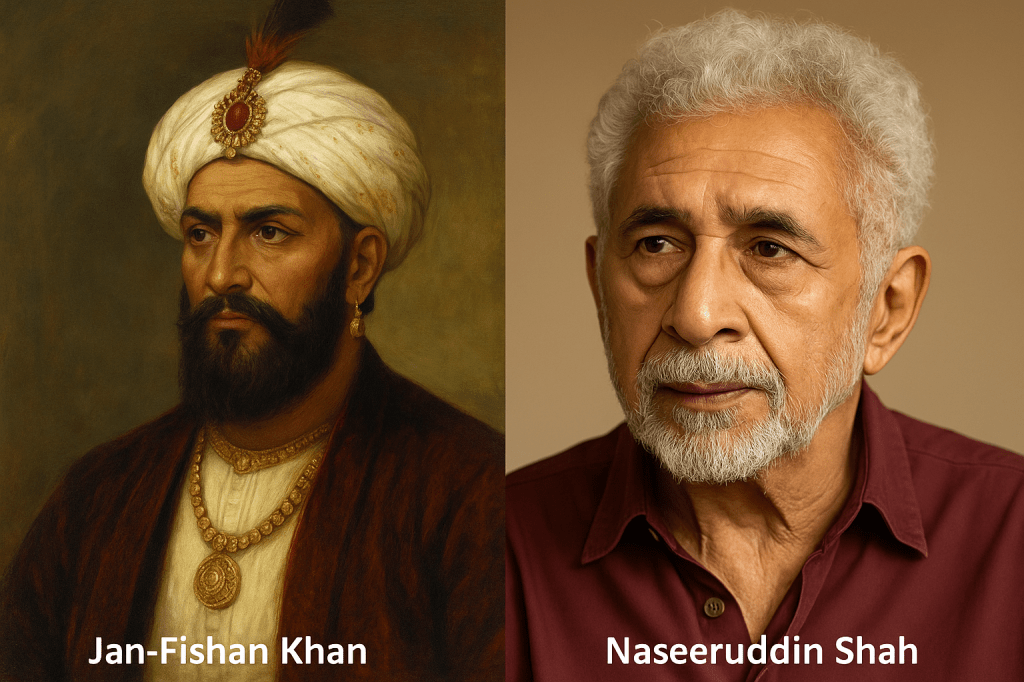
    In the era of information and ideological warfare, words shape narratives and narratives shape society. When public intellectuals speak, their influence can be powerful—but when that voice becomes selective, partisan, and blind to the pain of others, it is not justice; it is propaganda. One such voice that demands scrutiny is that of Naseeruddin Shah—a celebrated actor and descendent of Jan-Fishan Khan, a 19th-century Afghan noble who allied with the British during the First Anglo-Afghan War.

    Today, as India wrestles with real issues of communalism, cultural identity, and historical pain, it is time to ask: Whose side is Naseeruddin Shah really on—and why is his compassion so one-sided?

    When Morality Becomes Selective: Shah’s Silence on Hindu Victims

    In his recent article in The Indian Express, Shah laments the “rising intolerance” in India and references mob killings of Muslims allegedly over cow slaughter or theft. While mob justice in any form is unacceptable in a civilized society, what stands out is Shah’s continued and deliberate silence on several brutal killings of Hindus—both in India and abroad.

    Where was his voice when:

    • Kashmiri Pandits were driven out of their homeland and murdered in cold blood?
    • A Hindu father and son were lynched in Murshidabad, West Bengal, allegedly by a mob led by a TMC leader—dragged from their home and hacked to death?
    • Hindus were massacred in Bangladesh, temples desecrated, and women raped in the name of religion?
    • Hindus in Pakistan continue to be second-class citizens, with abductions and forced conversions occurring regularly?

    Why does his pen only bleed when the victim fits a particular identity?

    This is not justice—it is selective outrage, rooted not in empathy but in ideological opportunism.

    History Repeats: From Jan-Fishan Khan to Naseeruddin Shah

    To understand this mindset, we must go back to Shah’s roots. His great-great-grandfather, Jan-Fishan Khan, was a nobleman in 19th-century Afghanistan who chose to support the British colonialists over his fellow Afghans during the First Anglo-Afghan War. In return, he was rewarded with land and titles in India—a princely estate in Sardhana.

    His decision was not based on loyalty to a homeland or principles, but on opportunism and survival. He fought not for independence or unity, but to align with foreign rulers who would later dominate the subcontinent for over a century.

    Today, his descendant Naseeruddin Shah continues that legacy—not by swords, but with words. By constantly speaking only against one section of society, while ignoring the injustices faced by Hindus, he furthers a neo-colonial narrative that paints Hindus as the only oppressors, and others as permanent victims.

    Just like Jan-Fishan Khan turned away from his own people for foreign patronage, Shah today turns his back on Hindu suffering to maintain relevance among ideological elites.

    What True Justice Looks Like

    At Unmukt, we believe in a society where:

    • Every victim matters, regardless of their religion.
    • Mob violence is condemned whether the victim is Muslim, Hindu, or of any faith.
    • Historical truth is acknowledged, not whitewashed.
    • Public voices must stand for balance, courage, and honesty—not political convenience.

    Justice is not a tool to gain applause from one side. It is a sacred duty to speak the truth for all people, even when it is uncomfortable.

    Our Message to the Intellectual Class

    If you truly care about India, you must speak for Kashmiri Pandits, Murshidabad Hindus, Bangladeshi Hindus, Dalits, Muslims, and everyone else who suffers—without filters.

    To highlight the murder of a Muslim by a mob while remaining silent about a Hindu being butchered by a mob in Murshidabad, is not compassion—it is communal selectivity.

    If you can’t see the pain of a Hindu victim, you are not a humanitarian.
    You are an ideological actor in disguise.

    India does not need another Mir Jafar or Jan-Fishan Khan or Naseeruddin Shah. Instead, India needs truthful voices, who will rise not for reward, but for Dharma—the path of balance, truth, and responsibility. It’s time to call out selective morality.

    It’s time to say:
    “Either speak for all victims — or don’t claim the moral high ground at all.”