Unmukt

Tag: mental-health

  • What Are You Curious About?

    Daily writing prompt
    What are you curious about?


    We live in a world that celebrates knowing — the degrees, the titles, the answers. But I believe life is not about what you know. It’s about what you long to understand, what makes you pause, question, and feel deeply.

    I’m Curious About Humanity — Not Just in Crowds, But in Individuals

    Not the kind of humanity we post on banners during international days. I mean the quiet humanity of the mother who wakes up before dawn to boil water because clean water is still a luxury. Of the boy who teaches his younger sister with chalk and patience under a broken streetlight. Of the old man who sits by a closed factory, watching it like a memory.

    I am curious: How do they still smile? How do they still believe?

    I’m Curious About Love — Especially the Kind That Doesn’t End in Togetherness

    Love that doesn’t need a stage. Love that survives in silence.

    I’ve known love that was never mine to hold — and yet, it shaped me. I’ve seen people carry memories like sacred fire: not burning, but glowing. I’ve realized love isn’t always about presence. Sometimes, it’s about persistence. It lives on in blessings unspoken, in letters never sent, in lives rebuilt without bitterness.

    I am curious: How can the heart remain so generous even when it breaks?

    I’m Curious About Compassion — The Kind That Isn’t Loud

    The kind that sits beside a grieving friend and doesn’t try to fix the grief. The kind that sees a stranger struggling and helps without taking credit. The compassion of those who fight for justice not to be seen as heroes, but because they can’t look away.

    In a world where outrage is often mistaken for care, I’m drawn to those who act with kindness when no one is watching.

    I am curious: What does it take to choose empathy over ego, again and again?

    I’m Curious About Integrity — Especially When No One Is Looking

    True integrity isn’t in public declarations. It’s in the choices made in solitude. In the refusal to cut corners when no one would know. In speaking the truth, even when it costs you applause. In saying no when yes would be easier.

    I’ve seen people rise with power and lose their soul. I’ve also seen people stand firm in storms, choosing honesty over advantage.

    I am curious: What gives some people the strength to stay rooted while the world trades virtue for validation?

    I’m Curious About Wisdom — Not Just Intelligence

    Intelligence can win debates. Wisdom listens first.

    I don’t want just data; I want discernment. Not just answers; but meaning. I’m fascinated by the kind of wisdom that comes from life — from failure, from silence, from service. From people who’ve lost everything and yet say, “I’m still grateful.”

    I am curious: How can we grow wiser without growing bitter?

    So… What Am I Really Curious About?

    I’m curious about what makes us human — and keeps us human.

    In an age of artificial intelligence and synthetic emotions, I want to stay real. To remain soft without being weak. To hold fast to dignity without needing validation. To walk with my mind sharp and my heart open.

    Because curiosity — real curiosity — isn’t about chasing trends. It’s about pursuing truth with compassion, love with integrity, and wisdom with humility.

    What are you curious about?

    Not just in books, or jobs, or markets — but in people? In pain? In beauty? In your own story?

    Ask yourself. The answers may not come easily. But the journey itself — that sacred, stumbling search — is the most human thing there is.


  • A Love That Asked for Nothing

    Daily writing prompt
    Write about a random act of kindness you’ve done for someone.

    There was a time when I loved a woman so deeply that I thought destiny itself had written our story. She wasn’t just someone I admired; she was the kind of person whose presence quietly changed your world. Her laughter had a rhythm, her dreams carried fire, and her soul… it was the kind you don’t meet twice.

    But she loved someone else.

    I never resented that. I never tried to win her over, never stepped beyond the boundary of her happiness. I wanted her to be happy, even if it wasn’t with me. That’s what real love does. It gives, even when it doesn’t receive.

    But life, cruel in its own ways, brought her pain. The man she trusted, the one she chose, broke her heart. Betrayal is a quiet kind of death, and I saw her slowly disappear into her own shadows.

    By then, I was married. Not out of compromise, but out of genuine love. My wife is everything a man could ask for—understanding, strong, and kind. She knows about my past, about her. And yet, she never once questioned my loyalty. Because she knows I love her fully, with everything I have. My heart never left my marriage—not for a moment. But that other part of me, the one that once loved truly and selflessly, still remembers.

    When she—the first girl—was struggling to rebuild her life, I stood by her again. Not as a lover, not as a hopeful man, but as a friend who cared. I helped her heal, supported her family’s wish to see her settled again, even helped her find a good man who saw her worth. I guided her when she needed a hand with her career, gave her the confidence to rise again.

    And no—never once did I ask for anything in return. I did it not because I expected love back. I did it because I had loved her. Deeply. And real love never demands.

    Sometimes, when we talk—rare as it is—she asks me,
    “Why did you love me so much? What did you gain out of it?”
    And my answer is always the same:
    “Even today, I love you. Not at the cost of anyone else. Not against my wife. Not in conflict. But in spirit. Quietly.”

    She doesn’t understand it fully. Maybe she never will. But that’s okay. Not all truths need to be understood—some are just meant to be felt.

    Our conversations now aren’t frequent, but when they happen, they’re honest, warm, and full of respect. We don’t talk like exes. We talk like two people who once touched the essence of something pure—and chose not to ruin it by expectation or ego.

    Others may cut off from their past, afraid of stirring memories. I didn’t. Because my past never became a burden. It became a quiet prayer I carry—one of love, kindness, and strength.

    This love—this act of kindness—I never used it as a tool. Never as leverage. Never as a secret. I gave it freely, and it freed me.

    Because sometimes, loving someone isn’t about having them.
    Sometimes, it’s about standing beside them when the world falls apart, and walking away once they’re strong enough to stand on their own again.

    And when I look back, I gain peace in knowing—
    I loved.
    I helped.
    I never harmed.

    And maybe that’s what real love is:
    A kind act that asks for nothing
    And leaves behind everything good.

  • A Tragic Wake-Up Call: The Life and Loss of Misha Agarwal, and What It Reveals About Our Digital Age

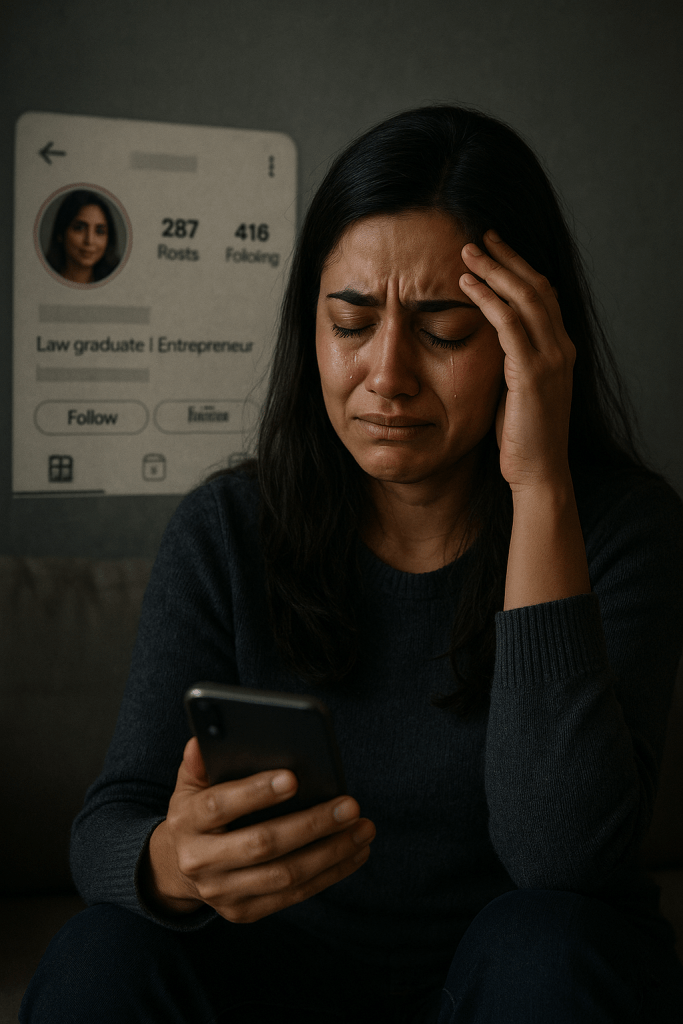
    In an era where social media increasingly defines self-worth and success, the heartbreaking death of Misha Agarwal—a 25-year-old Instagram influencer, entrepreneur, and law graduate—has sent shockwaves through the online community and beyond. With over 358,000 followers, her own cosmetic brand, and aspirations to become a judge through the Provincial Civil Services-Judicial (PCSJ) examination, Misha was the embodiment of a modern, driven young woman.

    Yet behind the carefully curated posts and smiling selfies was a young soul battling an invisible storm. When her follower count began to decline, Misha spiraled into deep depression. Her brother-in-law recounts how she would cry in his arms, asking, “Jijja, what will I do if my followers decrease? My career will be over.” Despite her family’s efforts to remind her of her real-life achievements and limitless potential, the grip of digital validation proved too powerful. In April 2025, Misha took her own life.

    Her tragic death is more than a personal loss—it is a mirror held up to our society. It compels us to ask: What have we made of success, self-worth, and mental health in the age of social media?

    The Digital Mirage

    Social media platforms were once meant to connect and inspire. Today, they have become landscapes of comparison, competition, and constant validation-seeking. For Misha, Instagram was not just an app; it was the world she built—her brand, her audience, her sense of purpose. Like many influencers, she worked tirelessly to engage with followers and grow her digital identity.

    But digital fame is fragile. Algorithms shift, audiences change, and metrics fluctuate. And when those numbers dipped, so did Misha’s confidence. She could not detach her self-worth from her follower count. What she couldn’t see—despite her education, talent, and family’s love—was that her value extended far beyond the screen.

    A Stark Contrast

    What makes this loss even more haunting is the contrast. There are people in the world who do little, who even cause harm or disturbance, and yet go on living without reflection. Meanwhile, Misha—a woman who had already achieved so much, who gave so much—was brought down by a numeric drop on a social platform.

    This contrast begs the question: Where is our generation heading when the decline in online popularity can eclipse real-life success and lead to irreversible consequences?

    What We Must Learn

    Misha’s story must not become just another headline or statistic. It must serve as a loud and lasting reminder. Here are critical lessons we all must carry forward:

    1. Self-Worth Is Not Digital: Your value isn’t based on likes or followers. It’s built through character, contribution, and real-life impact.
    2. Mental Health Is a Priority, Not a Taboo: Depression, anxiety, and burnout must be acknowledged early. Talking about mental health should be as normal as talking about physical health.
    3. Success Is Not a Number: Real success lies in fulfillment, peace, and growth—not in going viral.
    4. Look Beyond the Filter: Influencer life often masks personal struggles. Don’t assume a perfect feed means a perfect life.
    5. Family and Friends Must Stay Close: Pay attention to behavioral shifts. Sometimes a small conversation, a kind word, or timely encouragement can change someone’s path.

    Preventing More Mishas

    To stop more such tragedies, society must shift gears:

    • In Education: Schools and colleges must teach digital literacy and emotional resilience. Young minds must learn to handle the highs and lows of online life.
    • On Social Media Platforms: Instagram and other platforms must take responsibility—reduce emphasis on vanity metrics, offer mental health resources, and promote healthier engagement.
    • At Home: Families need to foster open dialogues. Celebrate real-world success. Normalize therapy and emotional expression.
    • With Policy and Awareness: National campaigns should focus on mental health awareness, especially in the influencer and creator community where the risk is high but the support is low.

    A Call for Change

    Misha Agarwal was more than an influencer. She was a student of law, a founder, a future judge, a loving daughter and sister. Her death is not just a loss to her family but to a society that failed to protect her from the dark side of digital culture.

    We must honor her memory by building a world that recognizes and uplifts individuals beyond their digital personas. A world where no one feels that their identity depends on an app. A world where success is measured by joy, contribution, and growth—not by followers.

    If you or someone you know is struggling, please speak up. In India, helplines like Unmukt Society  Foundation (8178059124) offer free, confidential support. Your life matters—beyond every number, post, or screen. Let us not allow Misha’s story to fade away. Let it be the start of reflection, responsibility, and reform.