Unmukt

Tag: narendra-modi

  • Trump’s India Gamble: Undoing 25 Years of U.S. Diplomacy

    For decades, American foreign policy has been criticized as short-term and opportunistic. Yet, when it comes to India, Washington displayed rare consistency. From the Clinton years onward, Democratic and Republican administrations alike invested in a careful, bipartisan project: drawing India closer to the United States as a strategic counterweight to China.

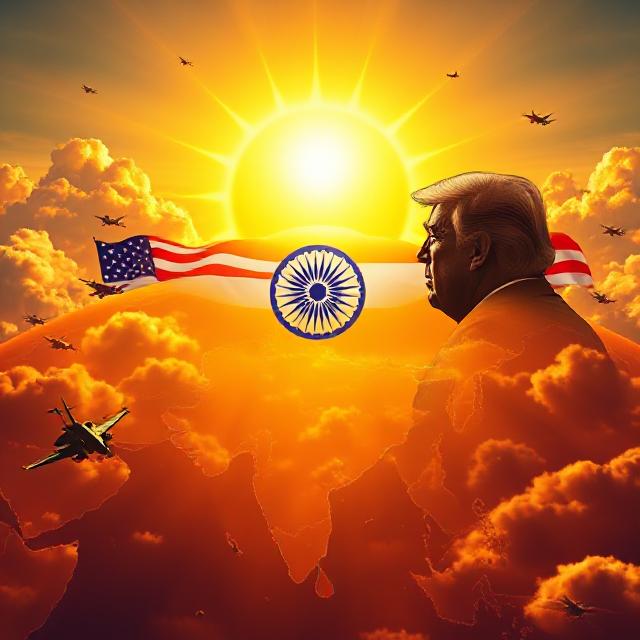
    That patient diplomacy—built brick by brick over 25 years—now stands on shaky ground. President Donald Trump’s renewed hostility toward India risks unraveling the most significant U.S. strategic realignment since the Cold War.

    The Long Arc of U.S.–India Engagement

    When President Bill Clinton visited India in 2000, he signaled a dramatic shift from decades of suspicion to cautious partnership. The Bush administration deepened this approach, recognizing that a rising China posed a challenge to the global order and that India, the world’s second-most populous nation, was the natural counterbalance.

    George W. Bush took the boldest step: offering India a historic civil nuclear deal. By treating India as a responsible nuclear power rather than an outlier, Washington effectively ended India’s global isolation on the nuclear issue. This was a turning point—expertly managed on the Indian side by Prime Minister Manmohan Singh—and it transformed bilateral relations.

    The Obama years took cooperation further. India was positioned as a cornerstone of Washington’s “pivot to Asia.” Trade surged, and the U.S. formally supported India’s aspirations for a permanent seat on the U.N. Security Council.

    Trump’s first term, despite its unpredictability, gave political heft to the “Quad”—a grouping of the U.S., India, Japan, and Australia—and projected a personal rapport between Trump and Prime Minister Modi. Biden inherited this trajectory and expanded it, pushing for joint manufacturing in defense and technology, from fighter jets to semiconductor chips.

    By 2025, India was exporting more smartphones to the U.S. than China—a symbolic victory in supply-chain realignment.

    Trump 2.0: A Sudden Reversal

    All of this makes Trump’s current shift even more startling. Without warning, his administration has moved India into its most restrictive category of partner countries—lumping it with pariah states such as Syria and Myanmar—while simultaneously extending overtures to Pakistan.

    Reports of private meetings with Pakistan’s army chief and alleged business ties between Trump-linked firms and Pakistani institutions have fueled speculation of backroom deals. More dramatically, Trump publicly mocked India’s economy, dismissing it as “dead.”

    The irony is striking. India has been the fastest-growing major economy for several years, is now the fourth largest in the world, and is projected to surpass Germany by 2028 to become the third-largest, after only the U.S. and China. It is the world’s second-largest arms importer and a vital hub for digital technology and consumer markets. Far from “dead,” India is central to the 21st-century global economy.

    The Risk of Strategic Miscalculation

    India is not an easy partner. Its history of colonization, Cold War ties with Moscow, and a deeply independent foreign policy tradition have made it cautious. Prime Minister Modi’s strategy of “multi-alignment” allowed India to keep ties with Washington, Moscow, and even Beijing simultaneously.

    Yet, persistent U.S. diplomacy—combined with anxiety over China’s rise—was steadily nudging India into a closer embrace with Washington. That slow but crucial alignment may now be undone.

    Trump’s hostility has united India’s political spectrum in outrage. A country that was moving past its ambivalence toward America is once again asking whether Washington can ever be trusted. The result may be a stronger tilt back toward Russia—and perhaps even a thaw with China.

    America’s Reliability Question

    For years, American diplomats argued that the U.S.–India relationship was destined to be one of the great strategic partnerships of the century: the world’s oldest democracy working hand in hand with its largest. That vision now looks deeply uncertain.

    Even if Trump reverses course again—as he often does—the damage may be irreversible. India has seen a glimpse of American unpredictability at its harshest. For a nation obsessed with strategic autonomy, the lesson is clear: never put all your bets on Washington.

    Trump may believe he is playing a tactical game with India. But in reality, he risks undoing 25 years of hard-won trust, and with it, America’s most promising counterweight to China. History may remember this as the moment when the U.S. lost India.

  • Putin, Trump, and Modi: The Global Stage Is a Theater, But India Refuses to Play by the Script

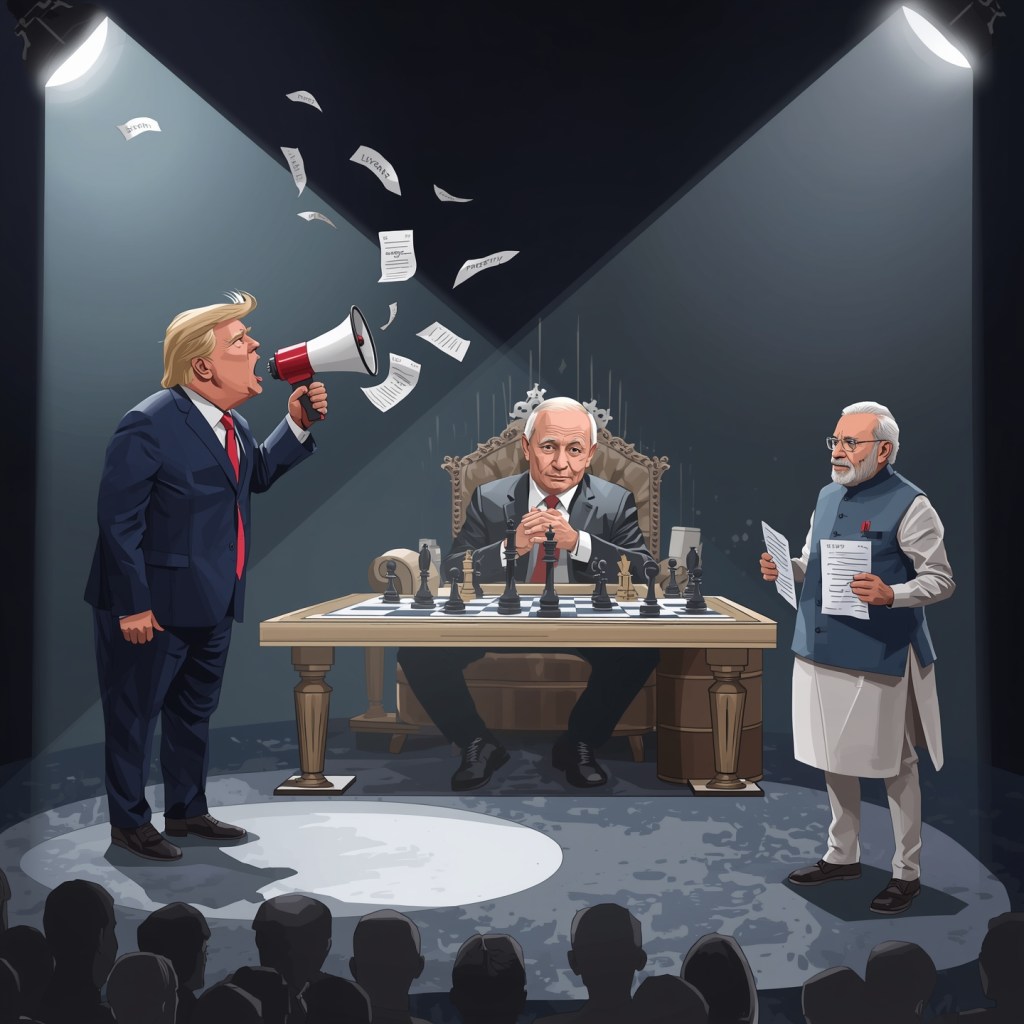
    When Vladimir Putin extended a hand to Donald Trump, inviting him to Moscow, the headlines screamed of shockwaves in global diplomacy. Yet beneath the spectacle lies a simpler truth: nothing fundamental has changed. Putin remains anchored to his original objectives in Ukraine, Trump is playing a public relations game ahead of U.S. elections, and India has quietly shifted from being a pawn in this geopolitical theater to becoming an independent actor with its own playbook.

    Putin’s Subtle Messaging

    Putin’s remarks carried a calculated blend of conciliation and firmness. He acknowledged Ukraine’s independence — a line nobody expected him to utter — but swiftly reaffirmed his non-negotiables: Russia will not concede land, and Kyiv will never join NATO. For all the noise, his red lines remain intact.

    The real surprise was his open invitation to Trump. By doing so, Putin forced Trump into an awkward corner — either reject the gesture and look weak, or accept it and appear cozy with the Kremlin. In either case, Putin gains narrative control.

    Trump’s Media Alchemy

    For Trump, however, the optics are the victory. He will spin this as proof of his influence: “I sanctioned India, I brought Putin to the table, I can stop the war.” In the Trumpian playbook, perception always outweighs policy.

    Expect him to trumpet upcoming summits with Narendra Modi and Xi Jinping as further evidence that global leaders come knocking on his door. This is less about negotiation and more about stagecraft: the image of Trump as the indispensable power broker.

    India: From Target to Challenger

    But here lies the unexpected twist: India refused to follow the script. Washington’s tariff escalation — from 25% to an eye-watering 2500% on certain goods — was meant to corner New Delhi. Instead, India doubled down on diversification.

    Within weeks, it identified 50 new trading partners, allocated ₹2000 crore for global trade fairs, and leaned heavily into Africa and the Global South. At the Red Fort, Prime Minister Modi’s message was unmistakable: “Dependence is not independence.”

    This wasn’t defiance for its own sake — it was a declaration of strategic sovereignty. The era when Washington could dictate India’s economic choices is over.

    What Comes Next

    Trump will likely pivot toward Pakistan, applying pressure there and then presenting himself as India’s friend. It is a familiar pattern: create a problem, offer a partial solution, claim credit. But this time, Modi’s government appears less susceptible to the theatrics.

    The game, then, is temporal. Trump’s maneuvers may resonate in the American media cycle, but globally their shelf life is short. At best, his narrative can survive until the U.S. mid-term elections. Beyond that, the limits of spin will collide with the stubborn realities of geopolitics.

    The Bigger Picture

    What unfolded was not diplomacy, but theater. Putin reiterated old positions. Trump sought to inflate his image. Yet India — often underestimated — quietly demonstrated that it is no longer a reactive power. It is crafting its own narrative, its own networks, and its own alliances.

    The true story is not that Putin invited Trump to Moscow. The true story is that the global stage has new rules — and India has refused to be anyone’s supporting actor.

  • Trump’s Game of Leverage: Media Victories, Strategic Losses – and How India & Russia Respond

    In the theater of global politics, Donald Trump’s method is disarmingly simple: create leverage, amplify it for media consumption, and then abandon it once the spotlight shifts. It is a style that may win headlines, but it rarely produces sustainable results.

    The Leverage-Dump Cycle

    Trump’s foreign policy, if it can be called that, revolves around momentary victories that fuel his domestic narrative. He brands himself as the master negotiator, but his “art of the deal” is often little more than tactical theater.

    • First, he identifies a pressure point – be it sanctions, tariffs, or rhetorical threats.
    • Then, he proclaims that his leverage is forcing change.
    • Finally, once the immediate headlines are secured, he abandons the issue or flips sides, leaving allies and adversaries confused and often alienated.

    The problem is that leverage only works if it is backed by consistent strategy. Trump’s version is self-referential: he creates leverage in his own mind, celebrates it, and then discards it. In the short run, it excites his political base and dominates media cycles. In the long run, it erodes trust, weakens alliances, and strengthens adversaries.

    India: Not a Pawn in Trump’s Game

    Trump’s latest attempt to pull India into his narrative is a classic example. By claiming that he had “sanctioned” India to pressure Russia, he sought to project himself as a global power broker. The reality? India’s oil trade with Russia has doubled, not diminished.

    New Delhi is not a pliable pawn in Trump’s improvisational chessboard. India’s foreign policy under Prime Minister Narendra Modi is defined by strategic autonomy. Whether it is purchasing Russian oil, strengthening ties with the United States, or engaging Europe and Africa, India pursues a multi-vector approach. It will not sacrifice its national interest to fuel an American politician’s election narrative.

    This reality has eluded Trump. For him, India is often reduced to a talking point – a convenient prop in his domestic political theater. For India, however, Trump is one of many players in a world where multipolarity is the new normal.

    Russia: The Patient Player

    If Trump’s game is short-term theater, Vladimir Putin’s is long-term chess. While Trump performs for the cameras, Putin builds narratives grounded in history and sustained by military and economic realities.

    In his meetings, Putin often subjects interlocutors to history lessons stretching back decades. Trump, famously allergic to detail, cannot sit through such sessions without distraction. The asymmetry is obvious: one plays to CNN and Fox News soundbites, the other plays to centuries of Russian statecraft.

    During recent encounters, Putin allowed Trump his moments of triumph. He even threw him a “lollipop” by suggesting that had Trump been president, the Ukraine war might not have happened. It cost Putin nothing to say it, but it gave Trump a headline. Meanwhile, Russia’s fundamental objectives remain unchanged: Ukraine will not join NATO, and Moscow will not cede the territories it controls.

    The Media Mirage

    Trump’s approach resonates with his political base – the MAGA faithful who see him as a champion against elites. For them, the illusion is enough. But outside America, the cracks are visible. The American media, both left and right, has lambasted his foreign policy blunders. Analysts have called his maneuvers “the greatest foreign policy mistake” and “the undoing of decades of bipartisan effort.”

    The world is not fooled. India sees through the noise, continuing to expand trade with Russia. Putin indulges Trump’s theatrics, but on his own terms. Europe remains skeptical. Even America’s traditional allies worry that another Trump presidency would mean volatility rather than strategy.

    The Bottom Line

    Donald Trump is not playing a grand game of geopolitics. He is playing a grand game of media – one where perception outweighs policy, and short-term drama eclipses long-term stability.

    India and Russia, in their own ways, have adapted. India ignores the noise and quietly pursues its national interest. Russia humors Trump, using him when convenient, but remains anchored in its strategic objectives.

    The world must understand: Trump’s greatest victories are not on the battlefield of diplomacy but in the arena of headlines. For allies and adversaries alike, the challenge is the same – to distinguish between the spectacle of leverage and the reality of strategy.

  • True Leadership Is Not Inherited — It Is Earned Through Wisdom, Service, and Purpose

    In a world that often confuses power with position and heritage with capability, the true essence of leadership stands as a timeless truth: it is not inherited — it is earned. While titles can be passed down and privileges can be bestowed, authentic leadership is forged through wisdom, service, and a sense of purpose.

    Leadership by Wisdom

    Wisdom isn’t confined to academic excellence or intellectual prowess. It is about discernment — the ability to see clearly, decide fairly, and act responsibly. True leaders are lifelong learners. They listen more than they speak. They understand that real influence comes from understanding people, situations, and the consequences of their decisions.

    Take Chanakya, the ancient Indian strategist. He was never born into power but became one of the most influential minds in Indian history. Through sheer wisdom and vision, he guided Chandragupta Maurya to the throne and laid the foundations of the Mauryan Empire. His treatise, the Arthashastra, remains relevant even today.

    Leadership through Service

    Great leaders lead by serving others. They put the mission above ego and people above position. Dr. B.R. Ambedkar is a remarkable example. Despite facing deep-rooted social discrimination, he rose through education, resilience, and an unwavering commitment to justice. He didn’t demand leadership — he earned it through tireless service, ultimately becoming the chief architect of the Indian Constitution.

    Service in leadership builds trust. It shows empathy. It reminds people that leadership is about lifting others, not standing above them.

    Leadership with Purpose

    Purpose is the soul of leadership. Without it, authority becomes mechanical, and decisions lose direction. A leader driven by purpose inspires others to believe, to act, and to grow.

    Abraham Lincoln, born in poverty, became one of the most revered presidents in American history — not because he was born into power, but because he led with a clear sense of moral and national purpose. His vision to preserve the Union and abolish slavery redefined the meaning of freedom and leadership in a fractured nation.

    Leadership Beyond Facilities

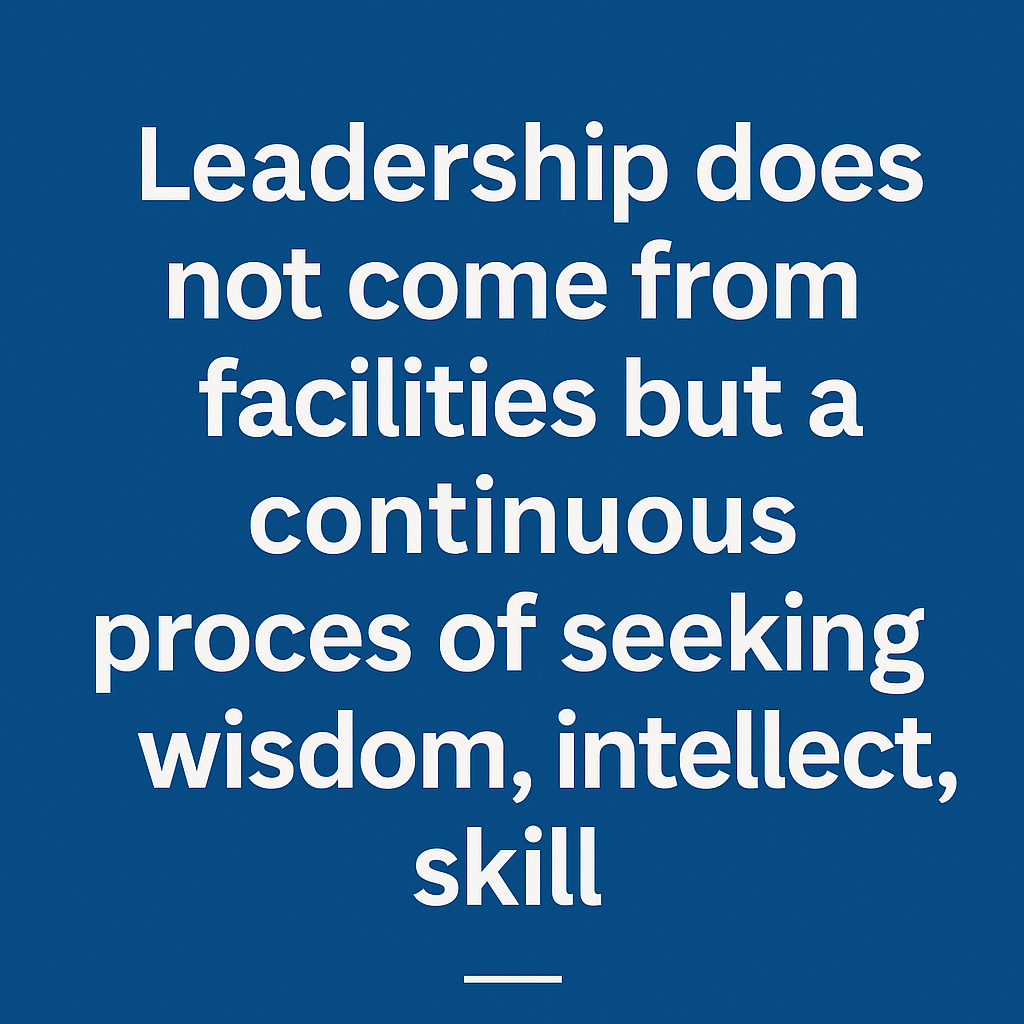
    Leadership does not emerge from facilities or comfort. It is the outcome of a continuous process of seeking wisdom, honing intellect, and building skill. Those who lead by entitlement or inheritance often falter when faced with adversity, but those who have walked the path of growth, learning, and struggle carry the resilience needed to inspire real change.

    We see this today as well. In a system where reservations exist to uplift the underprivileged, we continue to see individuals from unreserved backgrounds topping merit lists, proving that hard work and determination still shine.

    Narendra Modi, coming from humble beginnings, represents the spirit of earned leadership. In contrast, Rahul Gandhi, born into a political dynasty, reminds us that legacy alone does not guarantee effective leadership. While one earned his place through years of ground-level work and a deep connection with the people, the other continues to search for acceptance beyond his surname.

    Conclusion

    In every age and every culture, real leaders are remembered not for what they inherited, but for what they contributed. They earn their place through insight, selflessness, and unshakable conviction. So, when we speak of leadership, let us not look at lineage or legacy. Let us look at wisdom, service, and purpose — for that is where true leadership lives.