Unmukt

Tag: news

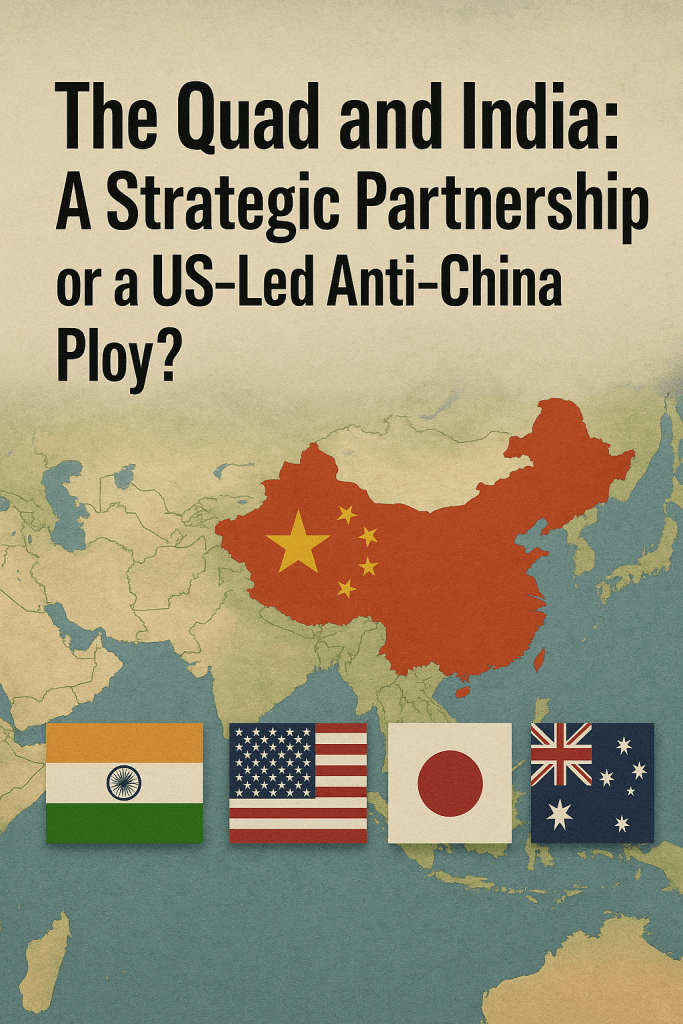
  • India and the Quad: Strategic Synergy or a US Gambit to Counter China?

    In the turbulent waters of the Indo-Pacific, the Quadrilateral Security Dialogue (Quad)—uniting India, United States, Japan, and Australia—stands as a beacon of strategic alignment. Revived in 2017 to promote a “free, open, and prosperous Indo-Pacific,” the Quad’s unspoken mission is to counter China’s maritime ambitions and regional dominance. For India, a rising power grappling with China’s border provocations and Pakistan’s terrorism, the Quad promises enhanced security, economic growth, and global influence. Yet, skepticism persists: Is India a linchpin in a transformative partnership, or merely a pawn in a US-led strategy to contain China? As the recent India-Pakistan escalation (May 2025) underscores the Quad’s limitations, this article explores its true value for India, India’s indispensability to the group, and whether New Delhi could achieve its ambitions alone.

    The Quad’s Strategic Lifeline for India

    India’s integration into the Quad, cemented after China’s assertive moves (e.g., 2017 Doklam standoff, 2020 Galwan clash), aligns with its goal of countering Beijing’s influence while advancing broader interests. Far from being a passive partner, India leverages the Quad to amplify its strategic, economic, and diplomatic clout.

    1.  Fortifying Against China
    The Quad bolsters India’s capacity to counter China’s “String of Pearls” network—ports like Gwadar (Pakistan) and Hambantota (Sri Lanka)—and its naval expansion in the Indian Ocean Region (IOR). The Malabar naval exercises, involving all Quad members, enhance India’s interoperability with world-class navies, securing sea lanes critical for 90% of its trade by volume. Bilateral agreements, such as COMCASA and BECA with the US, provide advanced technologies (e.g., P-8I aircraft, geospatial intelligence), strengthening India’s maritime and border defenses. The Quad’s strategic pressure on China indirectly limits Beijing’s support for Pakistan, as seen in its restrained response during the India-Pakistan escalation, where reported missile supplies to Pakistan were not escalated further.

    2.  Economic and Technological Leap
    The Quad’s Blue Dot Network offers sustainable infrastructure alternatives to China’s Belt and Road Initiative (BRI), aligning with India’s Act East policy to deepen ties with ASEAN. Initiatives in supply chain resilience—focusing on semiconductors and critical minerals—reduce India’s reliance on Chinese imports, fueling Make in India. Investments from Quad partners, such as Japan’s $35 billion in India’s Northeast and Australia’s critical minerals cooperation, drive economic growth, cementing India’s status as the world’s 4th largest economy (2025). Collaboration in emerging technologies (AI, 5G, cybersecurity, space) positions India to compete with China’s technological edge, critical for both economic and defense advancements.

    3.  Diplomatic Ascendancy
    The Quad elevates India as a leading Indo-Pacific power, amplifying its voice in global forums like the UN and G20. During the Pahalgam terror attack (April 2025) and India’s retaliatory Operation Sindoor, Quad members condemned terrorism without criticizing India’s strikes, unlike China and Turkey, reflecting India’s diplomatic clout. The Quad’s non-binding structure preserves India’s strategic autonomy, allowing unilateral actions (e.g., against Pakistan) while benefiting from collective support. By countering the China-Pakistan Economic Corridor (CPEC) and China’s regional influence, the Quad enhances India’s leverage in South Asia and beyond.

    4.  Leadership in Non-Traditional Security
    The Quad’s focus on climate change (renewable energy), health security (vaccine diplomacy), and humanitarian assistance and disaster relief (HADR) enhances India’s soft power. Building on the 2004 Tsunami Core Group, the Quad strengthens India’s role as a regional first responder. Its Women, Peace, and Security agenda aligns with India’s gender-inclusive peacekeeping efforts, bolstering its global image as a responsible power.

    The India-Pakistan Escalation: Testing the Quad’s Limits

    The Pahalgam terror attack (April 22, 2025) and India’s Operation Sindoor (May 7, 2025), targeting terror camps in Pakistan and PoK, highlighted the Quad’s constrained role in bilateral disputes. India’s precision strikes, executed with indigenous systems (Akash, S-400) and bilateral intelligence (e.g., US-derived), showcased its self-reliance. Quad members condemned the attack but urged restraint, offering no direct support, prompting X users to label the Quad “ineffective” or a “US ploy” that fails India in South Asian crises.

    Yet, the Quad’s indirect contributions were significant. Its diplomatic weight ensured global focus on condemning terrorism, not India’s response, with Quad partners avoiding the critical tone of China and Turkey. The group’s strategic pressure on China likely limited Beijing’s escalation of support for Pakistan (e.g., beyond reported missile supplies), preserving regional stability. While the Quad’s China-centric, maritime focus doesn’t address Pakistan directly, its role in countering the China-Pakistan axis supports India’s broader security calculus.

    Can India Stand Alone?

    India’s skeptics argue it doesn’t need the Quad. With the world’s 4th largest defense budget (~$80 billion), a modernizing navy (INS Vikrant, nuclear submarines), and nuclear capabilities, India executed Operation Sindoor independently. Its economy drives self-reliance (Atmanirbhar Bharat), attracting investments from non-Quad nations (e.g., UAE, Singapore). Diplomatically, India’s non-alignment and ties with Russia, ASEAN, and the Global South ensure global influence, as seen in widespread condemnation of the Pahalgam attack. India counters China unilaterally—banning apps, restricting investments, and fortifying the LAC—while leading in climate (International Solar Alliance) and HADR.

    However, going solo has limits. China’s $300 billion defense budget, largest navy, and economic dominance outmatch India’s resources. Developing advanced tech (e.g., 5G, AI) and infrastructure independently is cost-intensive, and facing China’s global influence (e.g., UNSC vetoes) alone risks isolation. The Quad’s collective strength—US superpower status, Japan’s tech leadership, Australia’s Pacific reach—reduces India’s burden, accelerates progress, and counters the China-Pakistan axis more effectively. Without the Quad, India could face a bolder Beijing, potentially escalating support for Pakistan, as hinted in May 2025.

    Is India Being Used Against China?

    The notion that the Quad is a US-orchestrated effort to leverage India against China resonates in public discourse. X users describe India as a “frontline state” in a US-led “anti-China axis,” noting that the US, Japan, and Australia rely on India’s IOR dominance and rivalry with China (e.g., LAC tensions) to counter Beijing’s BRI and naval expansion. India’s strategic location and military weight make it a natural partner, but critics argue it bears disproportionate risks—provoking China’s ire while Quad partners gain strategic benefits with less exposure.

    This view oversimplifies India’s role. New Delhi actively shapes the Quad, emphasizing non-traditional security (climate, health) to avoid a militarized anti-China stance. India’s non-aligned stance and ASEAN ties ensure the Quad isn’t a Western bloc, broadening its appeal. The tangible benefits—tech transfers, investments, diplomatic leverage—align with India’s goals, proving mutual dependence. The Quad’s neutrality in the India-Pakistan escalation fueled frustration, with X posts questioning its reciprocity, but India’s strategic autonomy ensures it’s no mere tool, extracting value while maintaining independence.

    A Quad Without India: Viable or Hollow?

    Could the Quad survive without India? Technically, yes—it existed briefly in 2007 with limited Indian commitment but collapsed under Chinese pressure. Today, India’s IOR presence, naval power, and democratic weight are irreplaceable. Without India:

    •  IOR Influence Wanes: China’s BRI ports and Djibouti base face less opposition, as Japan and Australia focus on the Pacific.

    •  Maritime Strength Fades: Malabar exercises lose relevance, and sea lane security falters.

    •  Diplomatic Credibility Suffers: The Quad risks becoming a US-led alliance, alienating ASEAN and the Global South.

    •  Economic and Tech Gaps: India’s market and IT sector drive supply chain and tech initiatives; its absence slows progress.

    A US-Japan-Australia triad could pivot to AUKUS or Pacific alliances, but these lack India’s regional heft. X users emphasize India’s indispensable role, though some see a Pacific-focused alternative. Without India, the Quad would be a diminished, Pacific-centric shell, unable to counter China’s Indo-Pacific ambitions effectively.

    Conclusion: A Strategic Symbiosis

    The Quad is a strategic lifeline for India, amplifying its ability to counter China, secure maritime routes, modernize its economy, and lead globally, while preserving autonomy. Its limitations in bilateral conflicts like the India-Pakistan escalation underscore India’s need for self-reliance, but its indirect benefits—diplomatic cover, pressure on China—prove its worth. India’s robust capabilities enable independent action, but the Quad’s collective strength addresses challenges (China’s superiority, resource constraints) that New Delhi cannot fully overcome alone.

    Is the Quad a US gambit to use India against China? Partially, but India’s agency transforms it into a symbiotic partnership. By shaping the Quad’s inclusive agenda, India maximizes benefits while mitigating risks. The Quad’s viability hinges on India’s participation; without it, the group loses strategic and diplomatic weight. For India, the Quad is a pragmatic multiplier, not a necessity, enabling it to navigate a complex geopolitical landscape with unmatched finesse.

  • A Critical Analysis: India’s Vaccine Aid and the Paradox of International Support in the 2025 India-Pakistan Conflict

    India’s role as a global humanitarian leader shone brightly during the COVID-19 pandemic, when its “Vaccine Maitri” initiative supplied free vaccines to numerous countries, reinforcing its image as the “pharmacy of the world.” Similarly, India’s swift disaster relief efforts, from Nepal’s 2015 earthquake to Turkey’s 2023 quake, have saved countless lives. Yet, the 2025 India-Pakistan conflict, triggered by the horrific Pahalgam terror attack on April 22, 2025, which killed 26 civilians, reveals a troubling paradox: many nations India selflessly aided are either supporting Pakistan or remaining neutral, despite India’s Operation Sindoor targeting alleged terrorist infrastructure. This article examines the countries that received India’s free COVID-19 vaccines, their stances in the current conflict, the reasons behind their positions, and the contentious notion of labeling those supporting Pakistan as “traitors.” It argues that India must navigate this diplomatic challenge with strategic pragmatism rather than emotional rhetoric.

    India’s Humanitarian Legacy

    India’s humanitarian efforts are guided by the principle of “Vasudhaiva Kutumbakam” (the world is one family). During the COVID-19 pandemic, India launched the Vaccine Maitri initiative on January 20, 2021, supplying free vaccines to 98 countries, totaling 14.3 million doses by February 2022 (Vaccine Maitri – Wikipedia). Beyond vaccines, India provided disaster relief as a first responder in crises such as:

    • Nepal (2015 Earthquake): Operation Maitri delivered 520 tonnes of supplies (India’s Role in Disaster Relief).
    • Turkey (2023 Earthquake): Operation Dost sent medical teams and supplies.
    • Maldives (2004 Tsunami): Operation Rainbow provided a $5 crore aid package.

    These acts of generosity, often without expectation of reciprocity, underscore India’s commitment to global solidarity.

    The 2025 India-Pakistan Conflict

    On April 22, 2025, a terrorist attack in Pahalgam, Jammu and Kashmir, killed 26 civilians, mostly Hindu tourists, after attackers reportedly targeted victims based on religion (2025 India-Pakistan Standoff). The Resistance Front, linked to Pakistan-based Lashkar-e-Taiba, initially claimed responsibility but later retracted. India accused Pakistan of sponsoring the attack and launched Operation Sindoor on May 7, striking alleged terrorist infrastructure, killing at least 31 people, per Pakistan’s claims (India Strikes Pakistan). Pakistan denied involvement, called for an international investigation, and vowed retaliation, escalating tensions between the nuclear-armed neighbors.

    Countries Receiving Free COVID-19 Vaccines from India

    India’s Vaccine Maitri initiative gifted 14.3 million doses of Covishield and Covaxin to 98 countries, with a focus on South Asia, the Indian Ocean region, and the Caribbean. Below is a list of key recipient countries, based on available data from 2021, and their stances in the 2025 conflict (India Sends 22.9 mn Doses, Vaccine Maitri – Wikipedia):

    CountryFree Vaccine Doses (2021)Stance in 2025 ConflictSupporting Pakistan?
    Bangladesh2,000,000NeutralNo
    Myanmar1,700,000NeutralNo
    Nepal1,000,000NeutralNo
    Sri Lanka500,000NeutralNo
    Afghanistan500,000Supports IndiaNo
    Maldives100,000NeutralNo
    Mauritius100,000NeutralNo
    Seychelles50,000NeutralNo
    Bahrain100,000NeutralNo
    Oman100,000NeutralNo
    Barbados100,000NeutralNo
    Dominica70,000NeutralNo
    Bhutan150,000NeutralNo

    Notes on the List:

    • Data Limitations: The full list of 98 recipient countries is not explicitly detailed in sources, but the above includes major recipients cited in 2021 reports. Additional countries (e.g., Caribbean and African nations) received vaccines, but their 2025 stances are largely undocumented due to their limited geopolitical involvement.
    • Pakistan’s Inclusion: Pakistan received 45 million India-made doses via the COVAX initiative, not as a direct grant from India, and thus is not listed as a recipient of free vaccines (Pakistan to Receive 45 Million Doses).
    • Stance Assessment: Countries are classified as “Supporting Pakistan,” “Supporting India,” or “Neutral” based on diplomatic statements, military actions, or silence in the 2025 conflict.

    Countries Not Supporting India

    Among the countries that received free vaccines, the following are not supporting India in the 2025 conflict (i.e., they are neutral or support Pakistan):

    • Neutral: Bangladesh, Myanmar, Nepal, Sri Lanka, Maldives, Mauritius, Seychelles, Bahrain, Oman, Barbados, Dominica, Bhutan.
    • Supporting Pakistan: None of the listed vaccine recipients explicitly support Pakistan, as Turkey, China, Malaysia, Azerbaijan, and Iran were not direct recipients of free vaccine grants in 2021. However, Malaysia received commercial or COVAX supplies, and its support for Pakistan’s call for an investigation aligns with Pakistan Juliet (India-Pakistan Tensions.

    Why Are They Not Supporting India?

    The lack of support from these countries stems from:

    • Geopolitical Neutrality: Nations like Nepal, Bangladesh, and Sri Lanka balance ties with both India and Pakistan to avoid entanglement in a nuclear standoff.
    • Domestic Priorities: Smaller nations (e.g., Seychelles, Dominica) focus on internal issues and lack the geopolitical weight to take sides.
    • Economic Ties: Countries like Bahrain and Oman maintain strong trade relations with both India and Pakistan, prioritizing stability.
    • Non-Alignment: Many developing nations adhere to non-aligned policies, avoiding involvement in great power rivalries.

    The “Traitor” Label: A Dangerous Oversimplification

    Labeling countries that support Pakistan or remain neutral as “traitors” is both inflammatory and counterproductive. For instance:

    • Turkey, China, Malaysia, Azerbaijan, Iran: These countries support Pakistan due to historical alliances, religious ties, or strategic interests (e.g., China’s CPEC, Turkey’s Kashmir stance). Only Malaysia received indirect vaccine supplies via COVAX, not direct grants, so their stance is not a betrayal of India’s aid.
    • Neutral Countries: Nations like Nepal and Bangladesh, despite receiving free vaccines, have deep cultural and economic ties with India but also engage with Pakistan. Their neutrality reflects a pragmatic approach to regional stability, not disloyalty.

    Calling these nations “traitors” risks alienating potential partners and escalating diplomatic tensions. It also ignores the reality that international relations are driven by self-interest, not gratitude for past aid.

    Implications for India

    The 2025 conflict highlights several challenges for India:

    • Limits of Vaccine Diplomacy: India’s generous aid has not guaranteed loyalty, suggesting a need to align future aid with strategic goals.
    • Diplomatic Isolation: With only the US, Afghanistan, and possibly Israel explicitly supporting India, New Delhi must counter Pakistan’s narrative more effectively.
    • Regional Dynamics: Neutral stances from South Asian neighbors underscore India’s challenge in rallying regional support against Pakistan-based terrorism.

    Recommendations

    India should adopt a strategic approach:

    • Engage Diplomatically: Avoid inflammatory rhetoric and engage neutral countries to build a coalition against terrorism.
    • Strengthen Alliances: Deepen ties with supportive nations like the US, Israel, and Quad members (Japan, Australia) to counter Pakistan’s backers.
    • Refine Aid Strategy: Prioritize aid to nations that align with India’s security and geopolitical interests, ensuring mutual benefits.
    • Counter Narrative: Amplify evidence of Pakistan’s terrorism links globally to shift neutral stances.

    Conclusion

    India’s Vaccine Maitri initiative showcased its humanitarian leadership, gifting free COVID-19 vaccines to countries like Bangladesh, Nepal, and the Maldives. Yet, in the 2025 India-Pakistan conflict, most of these nations remain neutral, prioritizing regional stability or domestic concerns over supporting India’s anti-terrorism efforts. Countries like Turkey and China, which back Pakistan, act out of longstanding alliances, not betrayal of India’s limited aid to them. Labeling them “traitors” oversimplifies complex geopolitics and risks further isolation. Instead, India must leverage diplomacy, strengthen strategic alliances, and refine its aid strategy to navigate this crisis and secure its interests in a volatile region.

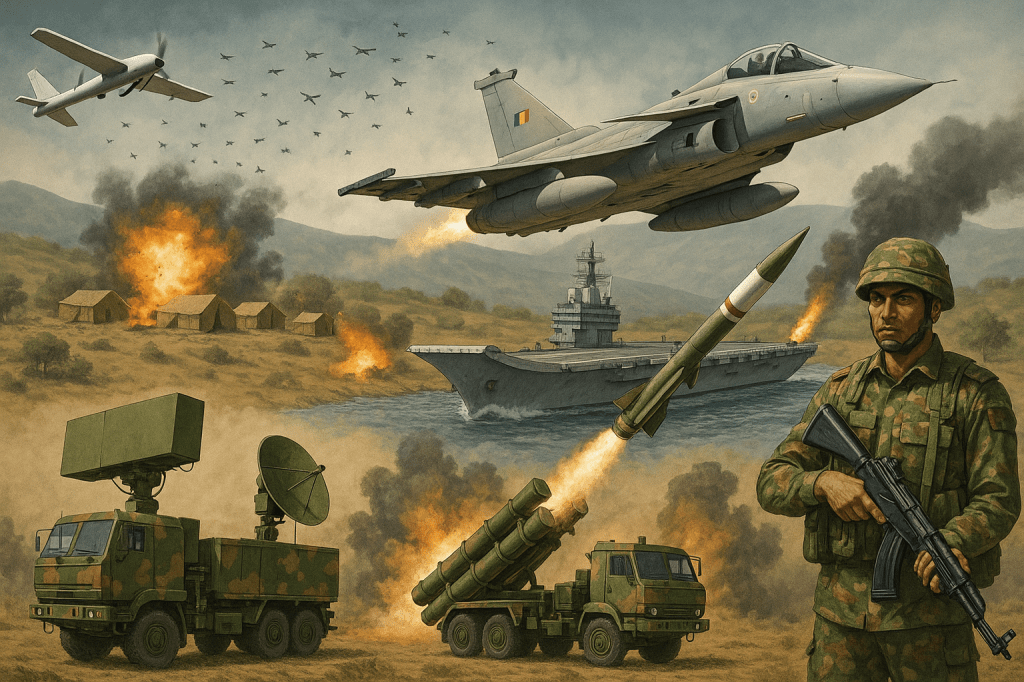
  • Operation Sindoor: A Showcase of India’s Indigenous Military Capability and Global Competitiveness

    On May 7, 2025, India launched Operation Sindoor, a coordinated tri-services strike targeting nine terrorist camps in Pakistan and Pakistan-occupied Kashmir (PoK), in response to the brutal Pahalgam terror attack of April 22. Beyond the immediate tactical success, the operation offered a revealing look into India’s indigenous defense capabilities—technologies, weapons systems, air defence mechanisms, and surveillance platforms developed under the banner of Atmanirbhar Bharat.

    Indigenous Systems Used in Operation Sindoor

    1. SkyStriker Kamikaze Drones

    Manufactured in Bengaluru via a joint venture between Alpha Design and Israel’s Elbit Systems, these loitering munitions delivered high-precision strikes on terrorist camps. With real-time video capability and two-way communication, they enabled targeted neutralization of 80–100 terrorists, demonstrating India’s growing competence in unmanned aerial warfare.

    2. DRDO’s Low-Cost Miniature Swarm Drone System (LMS)

    Indigenous, cost-effective, and precise—DRDO’s LMS drones were instrumental in hitting targets while minimizing collateral damage. Their deployment marked a significant milestone in India’s autonomous weapons development program.

    3. INS Vikrant: Indigenous Aircraft Carrier

    Though its direct role in the operation was limited to support, INS Vikrant’s strategic positioning off the western coast served as a deterrent. Constructed by Cochin Shipyard with 76% indigenous content, it is a symbol of India’s shipbuilding prowess.

    4. Advanced Electronic Warfare (EW) Systems

    DRDO’s indigenous EW capabilities, likely based on systems such as Samyukta and Shakti, were pivotal in suppressing enemy radar and communication networks, enabling Indian aircraft to penetrate deep without detection.

    Aftermath and Indigenous Responses (May 8–9, 2025)

    1. Integrated Counter-UAS Grid

    When Pakistan retaliated with drone and missile attacks on Indian military bases, India’s indigenous anti-drone systems rose to the occasion. This integrated grid, consisting of radar, jammers, and kinetic kill solutions, neutralized a coordinated 35-minute drone assault in Jammu and Kashmir.

    2. Akash Surface-to-Air Missile System

    Developed by DRDO and Bharat Electronics Limited, the Akash system was deployed in multiple zones including Rajasthan and Jammu. Officials reported a near-100% interception success rate, affirming its value in India’s multi-layered air defence framework.

    3. SEAD/DEAD Operations with EW Support

    While Rafale jets and SCALP missiles (both imported) were involved in Suppression/Destruction of Enemy Air Defences (SEAD/DEAD) over Lahore, indigenous EW systems were essential in jamming enemy radar, reportedly exposing flaws in Pakistan’s Chinese-supplied HQ-9 and HQ-16 systems.

    4. BSF Surveillance Operations

    The Border Security Force utilized Netra V-series mini-UAVs and thermal imaging systems—both indigenous—for border monitoring and successfully thwarted infiltration attempts in Samba. INSAS rifles and other indigenously manufactured small arms were also deployed.

    Effectiveness on the Battlefield

    The indigenous systems displayed notable effectiveness:

    • Precision: SkyStriker and DRDO loitering drones ensured surgical strikes with minimal civilian damage.
    • Defensive Strength: The Akash system and anti-drone grid protected key military bases during enemy retaliations.
    • Tactical EW Superiority: Indian EW systems enabled deep penetration by jamming Pakistani defences.
    • Border Vigilance: Indigenous surveillance drones empowered the BSF to maintain round-the-clock border security.

    While imported platforms like Rafale, S-400, and SCALP missiles were crucial, the core indigenous systems proved reliable, cost-effective, and capable under fire.

    Global Competitiveness of Indian Indigenous Systems

    India’s defence export value has surged to $2.5 billion in FY 2023–24, with a CAGR of over 45%. However, how do these systems stack up globally?

    Export-Ready Indigenous Systems

    • Akash Missile System

    Proven in combat, cost-effective, and weather-resistant—Akash is gaining interest in Southeast Asia and Africa. Its simplicity and affordability make it appealing compared to Western alternatives.

    • BrahMos Cruise Missile

    A joint Indo-Russian marvel with Mach 3 speed and pinpoint accuracy, BrahMos has been sold to the Philippines and is being negotiated with Indonesia and Thailand. It is arguably India’s most competitive export.

    • Pinaka Rocket Launcher

    Deployed in multiple combat zones and exported to Armenia, Pinaka offers high-rate firepower at a fraction of the cost of U.S. or Russian equivalents.

    • Tejas Light Combat Aircraft

    Despite setbacks in Malaysia due to performance concerns, Tejas remains a low-cost 4.5 generation fighter option for countries unable to afford F-16s or Eurofighters. India is working to resolve issues around its engine and radar to improve export viability.

    Challenges to Global Competitiveness

    • Partial Indigenization: Many Indian platforms still rely on imported subsystems (e.g., jet engines, radar).
    • Limited Production Capacity: Indian defence PSUs are often slow and bureaucratic in international bidding.
    • Perception Issues: Western buyers often perceive Indian systems as less reliable than U.S. or European counterparts.

    Future Outlook

    India aims to increase defence exports to $5 billion by 2025. With 75% of its 2024–25 defence procurement budget reserved for indigenous products, and investments in defence corridors (Uttar Pradesh and Tamil Nadu), India is laying the foundation for a strong, self-reliant ecosystem.

    Programs like iDEX (Innovations for Defence Excellence) and increased funding for Technology Development Fund (TDF) projects are catalysing private-sector innovation, further sharpening India’s edge in cost-effective, scalable defence solutions.

    Conclusion

    Operation Sindoor and its aftermath presented a clear demonstration of India’s maturing indigenous defence capabilities. From loitering drones and SAM systems to aircraft carriers and electronic warfare, India has shown it can design and deploy systems that meet modern battlefield demands. While global competitiveness is improving, challenges around scale, perception, and technological depth remain. With sustained reforms and strategic investments, India is well-positioned to become a global defence manufacturing and export hub in the decade ahead.

  • Beyond the Battlefield: How Operation Sindoor Unlocks a $9 Billion Boom for India’s Defense Industry

    Introduction

    Operation Sindoor, executed on May 7–8, 2025, was not just a military success—it was an economic catalyst. With India’s air defense systems delivering flawless performance, the operation is expected to generate domestic and export revenues of up to ₹74,460 crore ($8.9 billion) over the next five years.

    Domestic Defense Renaissance

    India’s performance has triggered rapid procurement momentum:

    • QRSAM: A ₹30,000 crore Army order is expected after its precision during the drone assault.
    • Akash: Expansion to seven regiments with an added ₹12,240 crore spend.
    • VSHORADS: Fast-tracked production of 500 launchers and 3,000 missiles worth ₹5,500 crore.
    • Akashteer and BMD: Integration and automation systems receive increased funding.

    Indigenous development not only cuts reliance on imports but also delivers massive savings. For instance, SEOS targeting systems cost ₹2 crore domestically versus ₹12 crore from abroad, saving over ₹1,500 crore across future procurement.

    Export Windfall: Turning Trust into Trade

    With Chinese systems faltering in Pakistan, global eyes are turning to India. Nations such as Vietnam, the Philippines, and Kenya are likely buyers of Akash, QRSAM, and VSHORADS. SIDM and DRDO anticipate:

    • Akash Exports: ₹6,000–₹10,000 crore from 4–5 countries.
    • QRSAM/VSHORADS Deals: ₹1,500–₹3,500 crore expected in the next 3 years.
    • Chinese Market Disruption: India may capture 8–12% of China’s export losses, adding ₹750–₹1,500 crore.

    Indirect Gains and R&D Acceleration

    Operation Sindoor also boosts:

    • DRDO’s R&D Funding: Project Kusha and BMD Phase-II development gain momentum.
    • Global Trust: Western and Asian defense partnerships deepen, with potential co-development deals and tech-sharing initiatives.

    Challenges Ahead

    India must scale production through Bharat Electronics, BDL, and private players to meet surging demand. Competitive pricing and joint-venture diplomacy will be key to displacing Chinese systems in global markets.

    Conclusion

    Operation Sindoor has done more than secure Indian skies—it has unlocked an economic boom. With trust in India’s defense systems soaring, this moment could mark the transition from “Make in India” to “Export from India” in global defense markets.

  • Brand India: Building Trust in Ammunition Through Quality Assurance

    In a recent statement, India’s Defence Minister Rajnath Singh emphasized the essence of “Brand India” in the context of the nation’s burgeoning defence industry: “If an Indian company makes a promise, it will be fulfilled. If a product is designed to perform within a certain range or at a specific temperature, it will do so without exception. There should be no compromise on quality.” This bold assertion, made at the National Quality Conclave in Delhi, underscores India’s ambition to position itself as a trusted global supplier of defence products, particularly ammunition. The slogan “Don’t go for doubt, go for India” encapsulates this vision, aiming to instill confidence in international buyers. However, the statement also carries a subtle geopolitical undertone, seemingly promoting Indian ammunition as superior while positioning it as a counter to competitors like China and even Pakistan. This article explores India’s push for quality assurance in its ammunition industry, its strategic positioning against regional rivals, and the challenges and opportunities in becoming a trusted global supplier.

    The Rise of India’s Ammunition Industry

    India’s defence sector has undergone a significant transformation in recent years, driven by the government’s “Atmanirbhar Bharat” (Self-reliant India) initiative. Historically one of the world’s largest arms importers, India is now focusing on indigenous production to reduce dependency on foreign suppliers. The ammunition sector is a key pillar of this strategy. According to a 2024 report, India aims to halt ammunition imports by 2025-26, with local sources already supplying nearly 150 of the 175 ammunition types used by the Indian Army. This shift is supported by substantial investments, with 27.67% of the defence budget allocated to modernizing and expanding ammunition production facilities.

    Private players like Adani Defence and Aerospace and SMPP, alongside state-owned entities like Munitions India, are scaling up production of critical ammunition, such as 155 mm artillery shells, which are significantly cheaper than their Western counterparts ($300-$400 per unit compared to $3,000 for European equivalents). Additionally, advancements like the 155 mm smart ammunition demonstrate India’s commitment to technological innovation. These developments not only bolster national security but also position India to capture a share of the global ammunition market, projected to grow at a CAGR of 3.5% through 2033.

    Quality Assurance: The Cornerstone of Brand India

    The Defence Minister’s emphasis on uncompromising quality reflects a strategic effort to build “Brand India” as a symbol of reliability. Past challenges, such as defective ammunition incidents reported in 2010 and 2016, highlighted quality control issues within the Ordnance Factory Board (OFB). These incidents, including a 2016 explosion that killed 19 soldiers, underscored the need for robust quality assurance mechanisms. The government’s response has been to streamline the OFB into seven Public Sector Defense Undertakings and foster private-sector participation to enhance efficiency and accountability.

    Today, initiatives like the e-module launched by the Odisha Police in August 2024 for ammunition inventory management signal a move toward digitalization and precision in quality control. Companies are also adopting international standards, with platforms like India Index verifying suppliers for compliance, financial stability, and transparency to assure global buyers of consistent quality. Rajnath Singh’s assertion that Indian products will meet promised specifications—whether range, temperature resilience, or lethality—aims to erase doubts about reliability, positioning India as a dependable alternative to traditional suppliers like Russia and emerging competitors like China.

    Strategic Positioning Against Pakistan and China

    The Defence Minister’s remarks carry a geopolitical subtext, subtly promoting Indian ammunition as superior in the context of regional rivalries with Pakistan and China. India’s defence strategy is shaped by the dual threat posed by these nuclear-armed neighbors, with past conflicts and ongoing tensions driving modernization efforts. The Indian Army’s push to stockpile ammunition for a 15-day intense war, up from a previous 10-day reserve, reflects preparations for a potential two-front conflict.

    Against Pakistan, India’s ammunition capabilities are implicitly showcased through its ability to produce cost-effective, high-quality munitions. For instance, India’s 155 mm artillery shells are not only cheaper but also tailored to meet modern warfare demands, unlike Pakistan’s reliance on Chinese imports, which account for 81% of its arms imports. The 2022 accidental misfire of a BrahMos missile into Pakistani territory, while embarrassing, highlighted India’s advanced missile capabilities, even if inadvertently.

    China, a major arms exporter with 5.9% of the global market, poses a more complex challenge. Chinese ammunition and equipment, often sold at below-cost prices to countries like Pakistan, Bangladesh, and Myanmar, leverage Beijing’s Belt and Road Initiative for political influence. However, international buyers remain wary of Chinese products due to concerns about quality and political strings attached. India is capitalizing on this hesitation by offering reliable, competitively priced alternatives. For example, India’s $375 million deal to supply BrahMos missiles to the Philippines demonstrates its ability to secure high-value contracts in China’s backyard.

    By emphasizing quality assurance, India is not only countering China’s market dominance but also positioning its ammunition as a strategic tool to strengthen ties with nations wary of Chinese influence. The slogan “Don’t go for doubt, go for India” subtly contrasts India’s reliability with perceived uncertainties surrounding Chinese products, appealing to international buyers seeking dependable suppliers.

    Challenges in Becoming a Trusted Global Supplier

    Despite its progress, India faces significant hurdles in establishing itself as a trusted global supplier. First, its defence export sector remains modest, accounting for only 0.2% of the global arms market as of 2015-19. While exports reached $2.5 billion in FY 2023-24, India dropped out of the top 25 arms exporters in FY 2022-23, indicating challenges in sustaining momentum. Key markets like Myanmar and Sri Lanka also procure from China, creating stiff competition.

    Quality assurance remains a work in progress. Incidents like the 2020-2023 crashes of Advanced Light Helicopters (ALHs) and the rejection of the naval version of the LCA Tejas by the Indian Navy raise concerns about reliability among potential buyers. Additionally, India’s private sector, while growing, is hampered by bureaucratic ties to public-sector firms, which can stifle innovation and efficiency.

    Financing is another bottleneck. Unlike China, France, or Turkey, which offer credit guarantees to buyers, Indian banks are reluctant to finance arms exports to countries with high credit or political risks. The government is addressing this through the Export-Import Bank (EXIM), which is expanding low-cost, long-term loans to attract buyers. However, scaling this initiative to compete with global players requires significant resources and diplomatic outreach.

    Finally, India’s diversification of arms imports—from Russia to Western suppliers like France and the US—has created a trust deficit with some partners, potentially limiting technology transfers critical for indigenization. Balancing strategic autonomy with the need for advanced technology remains a delicate task.

    Opportunities and the Path Forward

    India’s ammunition industry is poised for growth, driven by increasing defence budgets, technological advancements, and a global demand for cost-effective solutions. The government’s focus on indigenization, with 75% of the capital procurement budget earmarked for domestic industries in FY 2023-24, is fostering innovation. Major platforms like the Pinaka rocket launcher, BrahMos missile, and Akash SAM are gaining traction in markets like Armenia, the Philippines, and Vietnam.

    To realize the “Don’t go for doubt, go for India” vision, India must prioritize several strategies:

    1. Strengthen Quality Assurance: Invest in advanced testing facilities, international certifications, and digital inventory management to ensure consistent quality. Collaborations with NATO countries, as seen with Reliance Defence, can enhance credibility.
    2. Expand Financing Options: Scale up EXIM’s loan portfolio and explore government-backed credit guarantees to compete with China and Western suppliers.
    3. Target Emerging Markets: Focus on countries in Africa, Southeast Asia, and Latin America, where China’s influence is growing but quality concerns persist. Diplomatic efforts, as suggested by the Stimson Center, can help identify trusted buyers.
    4. Leverage Strategic Partnerships: Deepen ties with Western allies like the US and France for technology transfers while maintaining relations with Russia to ensure spare parts for existing systems.
    5. Promote Brand India Globally: Use platforms like the National Quality Conclave to showcase success stories, such as the BrahMos deal, and counter negative perceptions from past incidents.

    Conclusion

    India’s ambition to become a trusted global supplier of ammunition is rooted in its commitment to quality assurance and the “Brand India” philosophy. By emphasizing reliability, as articulated by Rajnath Singh, India is positioning itself as a counterweight to China’s market dominance and a strategic partner to nations seeking dependable defence solutions. While challenges like quality control, financing, and competition persist, India’s cost-effective production, technological advancements, and diplomatic outreach offer significant opportunities. The slogan “Don’t go for doubt, go for India” is more than a marketing pitch—it’s a call to action for India to deliver on its promises and reshape the global defence landscape. As the nation continues to modernize its ammunition industry, it is not only preparing to defend its borders but also aiming to win the trust of international buyers, one reliable product at a time.

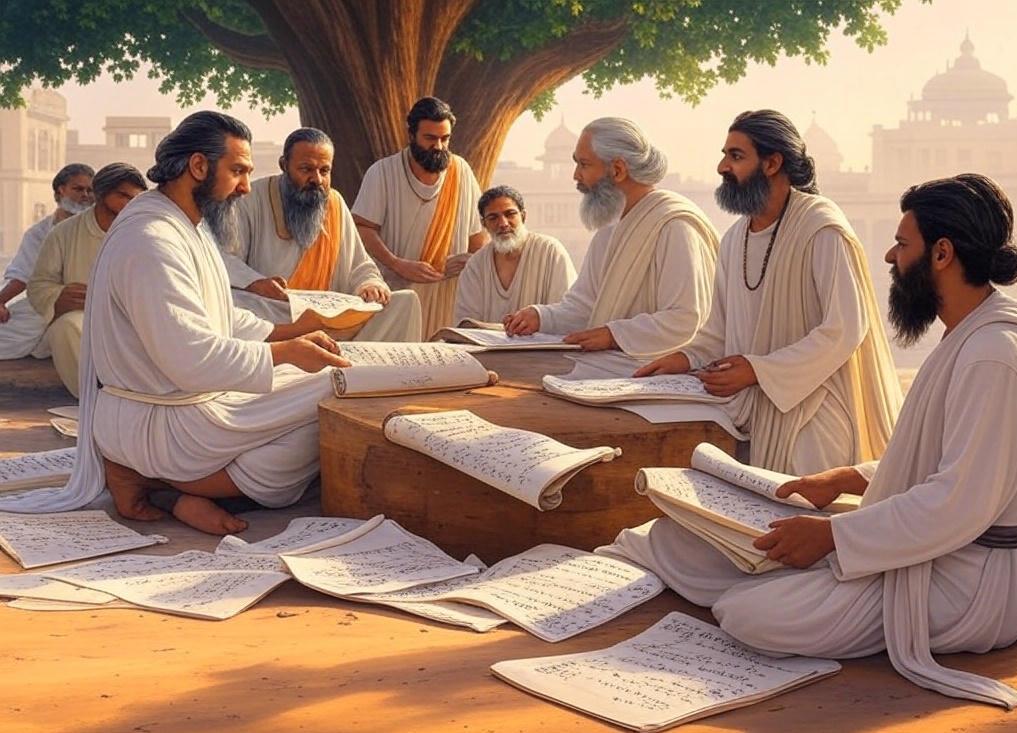
  • Forward Class Of India: A Legacy of Knowledge, Wisdom, and Nation Building

    In the grand narrative of India’s civilizational journey, the role of knowledge and wisdom has been paramount. Among various sections of society, the Forward class has historically drawn strength not from privilege, but from the relentless pursuit of learning, discipline, and responsibility toward society.

    It is important to recognize that in ancient India, the classification known as varna was not originally based on birth but on duties and qualities. The group identified as the Forward class emerged predominantly through their commitment to scholarship, administration, religious guidance, and teaching. Their contributions helped shape the philosophical, scientific, and cultural foundations of the subcontinent. The strength of the Forward class was their wisdom — not wealth, not political power — but the ability to lead society through thought, discipline, and guidance.

    From composing the Vedas and Upanishads to developing profound concepts in mathematics, astronomy, and logic, the Forward class invested generations in building India’s intellectual capital. They were the teachers, counselors, and reformers — providing direction not just to rulers, but also to generations of learners, regardless of social standing.

    Take for example the historical relationship between mentors and their students: Acharya Chanakya, a brilliant strategist and philosopher from the Forward class, recognized the potential in Chandragupta Maurya, who came from a modest background. Through education and rigorous guidance, Chanakya helped him rise to become one of India’s greatest emperors. This is a clear reminder that knowledge, when shared with integrity, has the power to uplift individuals and transform nations.

    Centuries later, Dr. B.R. Ambedkar, another great reformer who rose above social discrimination, was guided and mentored by several scholars, many of whom came from the Forward class. These mentors helped shape Ambedkar’s academic journey, encouraging his potential in law, economics, and political philosophy — which he eventually used to draft the Constitution of India. The hallmark of these Forward-class mentors was not their social status but their commitment to nurturing talent wherever it existed.

    Knowledge Must Remain Our Guiding Force

    In today’s democratic and constitutional India, where every citizen enjoys equal rights, the path to national unity must once again be guided by knowledge, merit, and mutual respect. The Forward class continues to contribute meaningfully in fields such as science, education, judiciary, technology, and governance — not as a matter of entitlement, but as a duty they have historically upheld.

    However, it’s essential that society moves beyond identity-based divisions and embraces a meritocratic culture. True equality is not just about equal rights but about creating a system where ability, integrity, and effort determine success — values that the Forward class has long stood for.

    Forward, Not Divided

    Using labels like “upper” or “lower” serves no constructive purpose. Instead, let us recognize and respect the term Forward class for what it represents — a legacy of thinkers, reformers, educators, and nation-builders. Their forwardness is not about status but about their unwavering belief in the power of ideas, discipline, and social progress.

    It is time to rise above inherited divisions and embrace inherited values — and if there is one inheritance that can unify this country, it is the heritage of wisdom and learning. Let knowledge be our strength, and forward-thinking be our common ground.

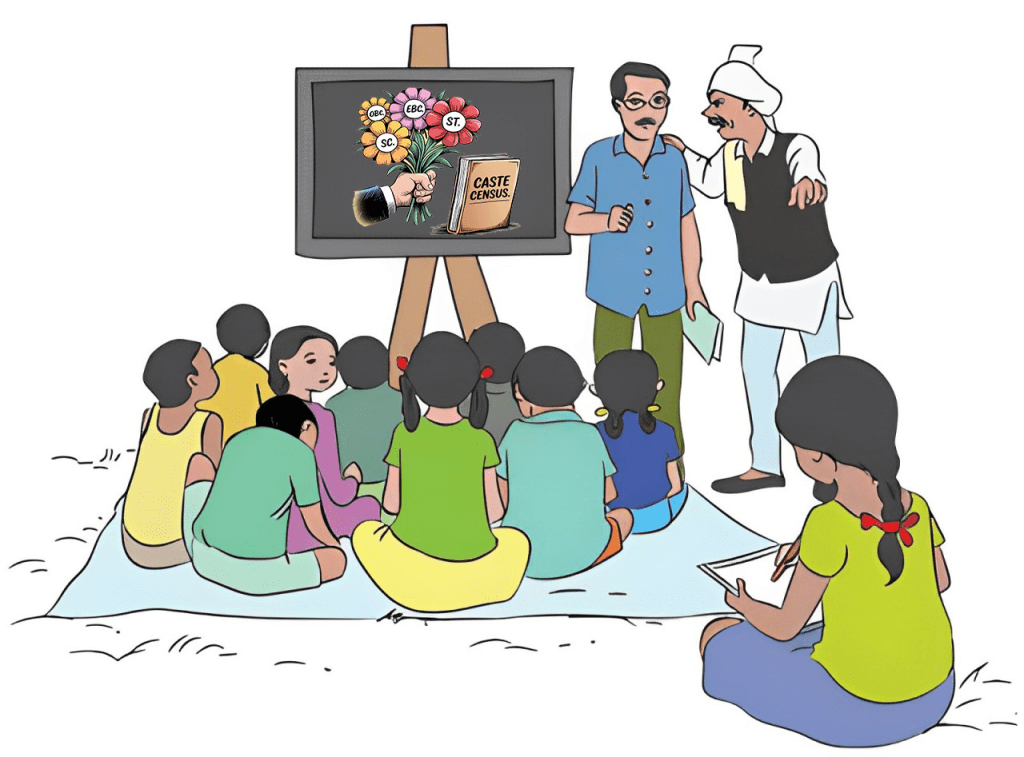
  • Rising Above Casteism: A New Vision for Equality and Opportunity

    India’s Present Social Context and the Impact of Casteism

    India today stands at a juncture where our Constitution, which enshrines the values of equality, liberty, and justice, forms the foundation of our democratic society. Under the Constitution, all citizens are guaranteed equal rights, and no one is to be discriminated against based on caste, class, or gender.

    But even now, is the system of caste-based reservation and caste identity in practice not conflicting with the very principles of unity and equality? Can we not look back to the time when caste-based hierarchies restricted people purely based on birth?

    Today, as we uphold the constitutional promise of equal rights, are we not ironically dividing society once again through caste-based advantages? India’s foundation, which speaks of equality and justice, is it still being affected by the remnants of casteist systems? Are we forgetting that the original objective of reservation was to expand opportunity and equality—not to reinforce caste divisions?

    Caste in India: History, Current Realities, and Steps Toward Equality

    India has a deep and complex history of caste. In ancient times, there existed a varna system which classified society into four primary groups — Brahmins, Kshatriyas, Vaishyas, and Shudras. This system was originally based on function, not birth. Brahmins were responsible for knowledge, teaching, and religious duties; Kshatriyas for protection and governance; Vaishyas for trade and agriculture; and Shudras for service-related roles.

    However, over time, this functional classification gradually turned into a rigid, birth-based caste hierarchy, dividing society into higher and lower classes based on lineage rather than merit. This transformation led to severe inequality and discrimination that marginalized large sections of the population.

    While we now live under a Constitution that promises equal rights for all, we must ask — have we truly eliminated the outdated caste mindset from our society? Are we, as a nation, fully implementing the principles of equality and justice, or are we still bound by old prejudices?

    Social Change and Real-Life Examples

    Despite the caste-based structure of ancient society, history provides many examples of individuals who rose to prominence based on their merit, courage, and intellect. One such example is Chandragupta Maurya, who came from a Shudra background but went on to rule the Indian subcontinent and establish the Mauryan Empire. His rise symbolizes that ability and leadership are not determined by caste.

    Chandragupta’s mentor, the Brahmin Chanakya (Kautilya), played a pivotal role in his journey. Chanakya not only educated him in statecraft and governance but also taught that social standing should not limit one’s destiny. His mentorship proves that success and greatness are founded not on caste, but on knowledge, wisdom, and determination.

    Similarly, Dr. B.R. Ambedkar, born into the Mahar caste — considered a lower caste in Indian society — faced extreme discrimination and hardship throughout his life. However, a turning point came when he was guided by Brahmin teachers who encouraged him to pursue higher education. Their support helped him realize that education could break the chains of caste.

    Dr. Ambedkar used his education as a tool to fight for social justice and equality. He went on to draft the Indian Constitution — a document that stands firmly against caste discrimination. His life proves that birth does not define destiny and that knowledge and hard work can overcome even the most deeply rooted barriers.

    Casteism and Reservation in Contemporary India

    Today, while the Indian Constitution emphasizes equality, liberty, and justice, caste-based reservation policies still persist in our system. Originally intended to uplift historically oppressed communities, reservations aim to ensure fair access to education, employment, and socio-economic participation.

    However, this policy is now the subject of widespread debate. Many believe that reservation has strayed from its purpose and is creating new inequalities in the name of correcting old ones. The fundamental question arises: should caste still be the basis of reservation, or should economic and social conditions take precedence?

    In this modern era, does promoting caste-based reservation in the name of social justice not contradict the principle of equality? Has the system truly served its purpose, or has it begun to create new divisions among people?

    Moving Toward Equal Opportunities

    We must now realize that an individual’s ability and merit should never be judged on the basis of caste or social background. We must build a society where everyone is given equal opportunity — free from the influence of casteism, discrimination, or oppression.

    The right to equality is enshrined in our Constitution, and now is the time to truly implement it. We must work to eliminate caste-based discrimination and ensure equal access to education, employment, and social opportunities for all.

    The fight against casteism should not remain limited to legal frameworks — it should be embraced in our values, social systems, and collective mindset. Only with sincere and collective effort can we remove inequality and build a society where every citizen is assessed by their merit, not their caste.

    Conclusion

    Casteism has deep roots in Indian history, but we now have the opportunity to eradicate it and move toward a society that is equal, inclusive, and just. We can achieve true equality only when we eliminate caste-based thinking from all aspects of our lives and guarantee equal opportunities to all, regardless of their background. Let us rise above caste. Let us choose equality.

    By Nilesh Ranjan

  • A Tragic Wake-Up Call: The Life and Loss of Misha Agarwal, and What It Reveals About Our Digital Age

    In an era where social media increasingly defines self-worth and success, the heartbreaking death of Misha Agarwal—a 25-year-old Instagram influencer, entrepreneur, and law graduate—has sent shockwaves through the online community and beyond. With over 358,000 followers, her own cosmetic brand, and aspirations to become a judge through the Provincial Civil Services-Judicial (PCSJ) examination, Misha was the embodiment of a modern, driven young woman.

    Yet behind the carefully curated posts and smiling selfies was a young soul battling an invisible storm. When her follower count began to decline, Misha spiraled into deep depression. Her brother-in-law recounts how she would cry in his arms, asking, “Jijja, what will I do if my followers decrease? My career will be over.” Despite her family’s efforts to remind her of her real-life achievements and limitless potential, the grip of digital validation proved too powerful. In April 2025, Misha took her own life.

    Her tragic death is more than a personal loss—it is a mirror held up to our society. It compels us to ask: What have we made of success, self-worth, and mental health in the age of social media?

    The Digital Mirage

    Social media platforms were once meant to connect and inspire. Today, they have become landscapes of comparison, competition, and constant validation-seeking. For Misha, Instagram was not just an app; it was the world she built—her brand, her audience, her sense of purpose. Like many influencers, she worked tirelessly to engage with followers and grow her digital identity.

    But digital fame is fragile. Algorithms shift, audiences change, and metrics fluctuate. And when those numbers dipped, so did Misha’s confidence. She could not detach her self-worth from her follower count. What she couldn’t see—despite her education, talent, and family’s love—was that her value extended far beyond the screen.

    A Stark Contrast

    What makes this loss even more haunting is the contrast. There are people in the world who do little, who even cause harm or disturbance, and yet go on living without reflection. Meanwhile, Misha—a woman who had already achieved so much, who gave so much—was brought down by a numeric drop on a social platform.

    This contrast begs the question: Where is our generation heading when the decline in online popularity can eclipse real-life success and lead to irreversible consequences?

    What We Must Learn

    Misha’s story must not become just another headline or statistic. It must serve as a loud and lasting reminder. Here are critical lessons we all must carry forward:

    1. Self-Worth Is Not Digital: Your value isn’t based on likes or followers. It’s built through character, contribution, and real-life impact.
    2. Mental Health Is a Priority, Not a Taboo: Depression, anxiety, and burnout must be acknowledged early. Talking about mental health should be as normal as talking about physical health.
    3. Success Is Not a Number: Real success lies in fulfillment, peace, and growth—not in going viral.
    4. Look Beyond the Filter: Influencer life often masks personal struggles. Don’t assume a perfect feed means a perfect life.
    5. Family and Friends Must Stay Close: Pay attention to behavioral shifts. Sometimes a small conversation, a kind word, or timely encouragement can change someone’s path.

    Preventing More Mishas

    To stop more such tragedies, society must shift gears:

    • In Education: Schools and colleges must teach digital literacy and emotional resilience. Young minds must learn to handle the highs and lows of online life.
    • On Social Media Platforms: Instagram and other platforms must take responsibility—reduce emphasis on vanity metrics, offer mental health resources, and promote healthier engagement.
    • At Home: Families need to foster open dialogues. Celebrate real-world success. Normalize therapy and emotional expression.
    • With Policy and Awareness: National campaigns should focus on mental health awareness, especially in the influencer and creator community where the risk is high but the support is low.

    A Call for Change

    Misha Agarwal was more than an influencer. She was a student of law, a founder, a future judge, a loving daughter and sister. Her death is not just a loss to her family but to a society that failed to protect her from the dark side of digital culture.

    We must honor her memory by building a world that recognizes and uplifts individuals beyond their digital personas. A world where no one feels that their identity depends on an app. A world where success is measured by joy, contribution, and growth—not by followers.

    If you or someone you know is struggling, please speak up. In India, helplines like Unmukt Society  Foundation (8178059124) offer free, confidential support. Your life matters—beyond every number, post, or screen. Let us not allow Misha’s story to fade away. Let it be the start of reflection, responsibility, and reform.