Unmukt

Tag: politics

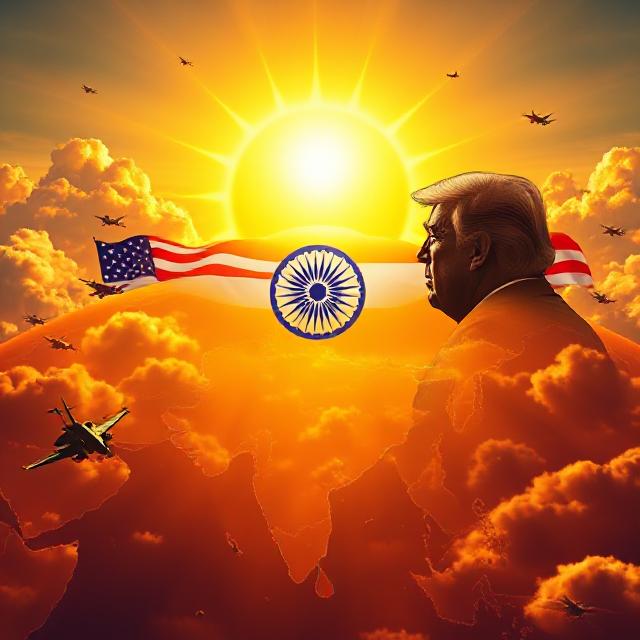
  • Trump’s India Gamble: Undoing 25 Years of U.S. Diplomacy

    For decades, American foreign policy has been criticized as short-term and opportunistic. Yet, when it comes to India, Washington displayed rare consistency. From the Clinton years onward, Democratic and Republican administrations alike invested in a careful, bipartisan project: drawing India closer to the United States as a strategic counterweight to China.

    That patient diplomacy—built brick by brick over 25 years—now stands on shaky ground. President Donald Trump’s renewed hostility toward India risks unraveling the most significant U.S. strategic realignment since the Cold War.

    The Long Arc of U.S.–India Engagement

    When President Bill Clinton visited India in 2000, he signaled a dramatic shift from decades of suspicion to cautious partnership. The Bush administration deepened this approach, recognizing that a rising China posed a challenge to the global order and that India, the world’s second-most populous nation, was the natural counterbalance.

    George W. Bush took the boldest step: offering India a historic civil nuclear deal. By treating India as a responsible nuclear power rather than an outlier, Washington effectively ended India’s global isolation on the nuclear issue. This was a turning point—expertly managed on the Indian side by Prime Minister Manmohan Singh—and it transformed bilateral relations.

    The Obama years took cooperation further. India was positioned as a cornerstone of Washington’s “pivot to Asia.” Trade surged, and the U.S. formally supported India’s aspirations for a permanent seat on the U.N. Security Council.

    Trump’s first term, despite its unpredictability, gave political heft to the “Quad”—a grouping of the U.S., India, Japan, and Australia—and projected a personal rapport between Trump and Prime Minister Modi. Biden inherited this trajectory and expanded it, pushing for joint manufacturing in defense and technology, from fighter jets to semiconductor chips.

    By 2025, India was exporting more smartphones to the U.S. than China—a symbolic victory in supply-chain realignment.

    Trump 2.0: A Sudden Reversal

    All of this makes Trump’s current shift even more startling. Without warning, his administration has moved India into its most restrictive category of partner countries—lumping it with pariah states such as Syria and Myanmar—while simultaneously extending overtures to Pakistan.

    Reports of private meetings with Pakistan’s army chief and alleged business ties between Trump-linked firms and Pakistani institutions have fueled speculation of backroom deals. More dramatically, Trump publicly mocked India’s economy, dismissing it as “dead.”

    The irony is striking. India has been the fastest-growing major economy for several years, is now the fourth largest in the world, and is projected to surpass Germany by 2028 to become the third-largest, after only the U.S. and China. It is the world’s second-largest arms importer and a vital hub for digital technology and consumer markets. Far from “dead,” India is central to the 21st-century global economy.

    The Risk of Strategic Miscalculation

    India is not an easy partner. Its history of colonization, Cold War ties with Moscow, and a deeply independent foreign policy tradition have made it cautious. Prime Minister Modi’s strategy of “multi-alignment” allowed India to keep ties with Washington, Moscow, and even Beijing simultaneously.

    Yet, persistent U.S. diplomacy—combined with anxiety over China’s rise—was steadily nudging India into a closer embrace with Washington. That slow but crucial alignment may now be undone.

    Trump’s hostility has united India’s political spectrum in outrage. A country that was moving past its ambivalence toward America is once again asking whether Washington can ever be trusted. The result may be a stronger tilt back toward Russia—and perhaps even a thaw with China.

    America’s Reliability Question

    For years, American diplomats argued that the U.S.–India relationship was destined to be one of the great strategic partnerships of the century: the world’s oldest democracy working hand in hand with its largest. That vision now looks deeply uncertain.

    Even if Trump reverses course again—as he often does—the damage may be irreversible. India has seen a glimpse of American unpredictability at its harshest. For a nation obsessed with strategic autonomy, the lesson is clear: never put all your bets on Washington.

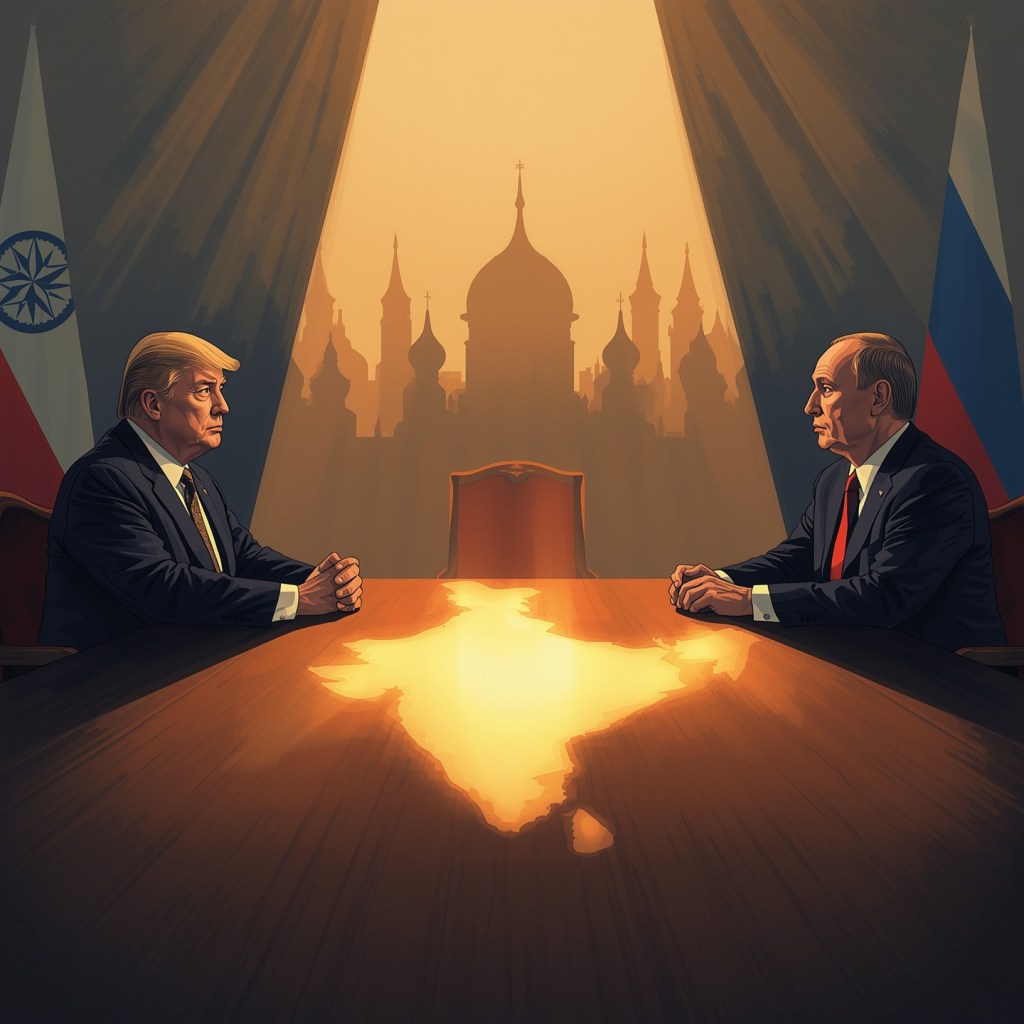
    Trump may believe he is playing a tactical game with India. But in reality, he risks undoing 25 years of hard-won trust, and with it, America’s most promising counterweight to China. History may remember this as the moment when the U.S. lost India.


  • Modi Between Trump and Putin: How India Wins in Global Power Politics Without Firing a Shot

    “Modi may not have been in the room with Trump and Putin, but India’s silent diplomacy is reshaping global power. How India turned U.S.–Russia tensions into a strategic win.”

    In global politics, power isn’t always won on the battlefield or at the negotiating table. Sometimes, the biggest victory comes quietly—without firing a shot. As Donald Trump and Vladimir Putin capture headlines with bold statements and confrontations, India’s Prime Minister Narendra Modi appears to be the real beneficiary of their rivalry.

    India’s Balancing Act in a Polarized World

    For decades, nations have been forced to choose sides between Washington and Moscow. Yet India has carved out its own lane.

    • With Russia, India shares defense ties, energy trade, and a growing partnership in Arctic exploration.
    • With the United States, India cooperates strategically in the Indo-Pacific and technology sectors.
    • With China, India maintains a tense balance, ensuring Beijing cannot ignore New Delhi’s global rise.

    This multi-directional diplomacy ensures that while others clash, India gains room to maneuver.

    Turning Sanctions into Opportunity

    When the U.S. imposed secondary sanctions on Russia, many expected India to retreat. Instead, India increased Russian oil imports by nearly 50%, securing energy at discounted rates. What was meant to isolate Russia created an economic window for India—strengthening its energy security while keeping inflation in check.

    The Polar Game: Arctic and Antarctic

    Beyond oil, India has positioned itself in a lesser-discussed arena: the poles. With research stations in both the Arctic and Antarctic, India is preparing for future battles over resources and trade routes. Russia may control territory, but lacks the capital to fully develop it. India, with its investments, is quietly securing a seat at tomorrow’s negotiating table.

    Modi’s Patience vs Trump’s Impulsiveness

    Trump is often portrayed as unpredictable and impulsive. Putin is seen as a power broker who thrives on strength. Modi, in contrast, has built his foreign policy around patience and quiet moves. Instead of loud confrontations, India leverages opportunities—whether in trade, technology, or diplomacy—while keeping its long-term interests secure.

    This “silent diplomacy” is what makes India unique. While Trump and Putin dominate news cycles, Modi is scripting gains that will last far longer.

    The Unmukt Perspective

    At Unmukt, we view this as more than just geopolitical satire. It’s a lesson in 21st-century statecraft. Victories are no longer about who speaks the loudest—they’re about who plays the longest game.

    In the triangle of U.S. sanctions, Russian energy needs, and Chinese ambitions, Modi has managed to position India as indispensable. Without firing a single shot, India emerges stronger—proof that sometimes silence is the most powerful move in global diplomacy. this silence, India has carved out its space as a power that others must take into account.

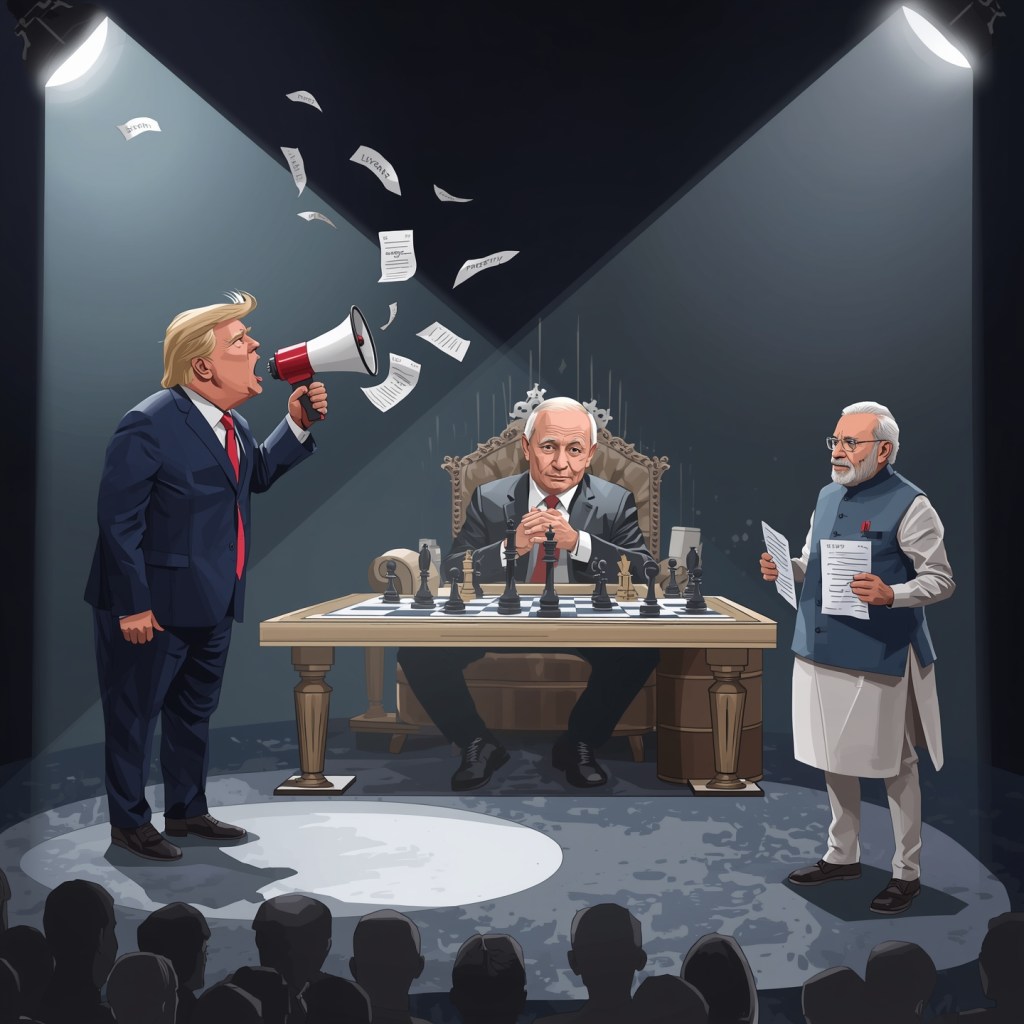
  • Putin, Trump, and Modi: The Global Stage Is a Theater, But India Refuses to Play by the Script

    When Vladimir Putin extended a hand to Donald Trump, inviting him to Moscow, the headlines screamed of shockwaves in global diplomacy. Yet beneath the spectacle lies a simpler truth: nothing fundamental has changed. Putin remains anchored to his original objectives in Ukraine, Trump is playing a public relations game ahead of U.S. elections, and India has quietly shifted from being a pawn in this geopolitical theater to becoming an independent actor with its own playbook.

    Putin’s Subtle Messaging

    Putin’s remarks carried a calculated blend of conciliation and firmness. He acknowledged Ukraine’s independence — a line nobody expected him to utter — but swiftly reaffirmed his non-negotiables: Russia will not concede land, and Kyiv will never join NATO. For all the noise, his red lines remain intact.

    The real surprise was his open invitation to Trump. By doing so, Putin forced Trump into an awkward corner — either reject the gesture and look weak, or accept it and appear cozy with the Kremlin. In either case, Putin gains narrative control.

    Trump’s Media Alchemy

    For Trump, however, the optics are the victory. He will spin this as proof of his influence: “I sanctioned India, I brought Putin to the table, I can stop the war.” In the Trumpian playbook, perception always outweighs policy.

    Expect him to trumpet upcoming summits with Narendra Modi and Xi Jinping as further evidence that global leaders come knocking on his door. This is less about negotiation and more about stagecraft: the image of Trump as the indispensable power broker.

    India: From Target to Challenger

    But here lies the unexpected twist: India refused to follow the script. Washington’s tariff escalation — from 25% to an eye-watering 2500% on certain goods — was meant to corner New Delhi. Instead, India doubled down on diversification.

    Within weeks, it identified 50 new trading partners, allocated ₹2000 crore for global trade fairs, and leaned heavily into Africa and the Global South. At the Red Fort, Prime Minister Modi’s message was unmistakable: “Dependence is not independence.”

    This wasn’t defiance for its own sake — it was a declaration of strategic sovereignty. The era when Washington could dictate India’s economic choices is over.

    What Comes Next

    Trump will likely pivot toward Pakistan, applying pressure there and then presenting himself as India’s friend. It is a familiar pattern: create a problem, offer a partial solution, claim credit. But this time, Modi’s government appears less susceptible to the theatrics.

    The game, then, is temporal. Trump’s maneuvers may resonate in the American media cycle, but globally their shelf life is short. At best, his narrative can survive until the U.S. mid-term elections. Beyond that, the limits of spin will collide with the stubborn realities of geopolitics.

    The Bigger Picture

    What unfolded was not diplomacy, but theater. Putin reiterated old positions. Trump sought to inflate his image. Yet India — often underestimated — quietly demonstrated that it is no longer a reactive power. It is crafting its own narrative, its own networks, and its own alliances.

    The true story is not that Putin invited Trump to Moscow. The true story is that the global stage has new rules — and India has refused to be anyone’s supporting actor.

  • Trump’s Game of Leverage: Media Victories, Strategic Losses – and How India & Russia Respond

    In the theater of global politics, Donald Trump’s method is disarmingly simple: create leverage, amplify it for media consumption, and then abandon it once the spotlight shifts. It is a style that may win headlines, but it rarely produces sustainable results.

    The Leverage-Dump Cycle

    Trump’s foreign policy, if it can be called that, revolves around momentary victories that fuel his domestic narrative. He brands himself as the master negotiator, but his “art of the deal” is often little more than tactical theater.

    • First, he identifies a pressure point – be it sanctions, tariffs, or rhetorical threats.
    • Then, he proclaims that his leverage is forcing change.
    • Finally, once the immediate headlines are secured, he abandons the issue or flips sides, leaving allies and adversaries confused and often alienated.

    The problem is that leverage only works if it is backed by consistent strategy. Trump’s version is self-referential: he creates leverage in his own mind, celebrates it, and then discards it. In the short run, it excites his political base and dominates media cycles. In the long run, it erodes trust, weakens alliances, and strengthens adversaries.

    India: Not a Pawn in Trump’s Game

    Trump’s latest attempt to pull India into his narrative is a classic example. By claiming that he had “sanctioned” India to pressure Russia, he sought to project himself as a global power broker. The reality? India’s oil trade with Russia has doubled, not diminished.

    New Delhi is not a pliable pawn in Trump’s improvisational chessboard. India’s foreign policy under Prime Minister Narendra Modi is defined by strategic autonomy. Whether it is purchasing Russian oil, strengthening ties with the United States, or engaging Europe and Africa, India pursues a multi-vector approach. It will not sacrifice its national interest to fuel an American politician’s election narrative.

    This reality has eluded Trump. For him, India is often reduced to a talking point – a convenient prop in his domestic political theater. For India, however, Trump is one of many players in a world where multipolarity is the new normal.

    Russia: The Patient Player

    If Trump’s game is short-term theater, Vladimir Putin’s is long-term chess. While Trump performs for the cameras, Putin builds narratives grounded in history and sustained by military and economic realities.

    In his meetings, Putin often subjects interlocutors to history lessons stretching back decades. Trump, famously allergic to detail, cannot sit through such sessions without distraction. The asymmetry is obvious: one plays to CNN and Fox News soundbites, the other plays to centuries of Russian statecraft.

    During recent encounters, Putin allowed Trump his moments of triumph. He even threw him a “lollipop” by suggesting that had Trump been president, the Ukraine war might not have happened. It cost Putin nothing to say it, but it gave Trump a headline. Meanwhile, Russia’s fundamental objectives remain unchanged: Ukraine will not join NATO, and Moscow will not cede the territories it controls.

    The Media Mirage

    Trump’s approach resonates with his political base – the MAGA faithful who see him as a champion against elites. For them, the illusion is enough. But outside America, the cracks are visible. The American media, both left and right, has lambasted his foreign policy blunders. Analysts have called his maneuvers “the greatest foreign policy mistake” and “the undoing of decades of bipartisan effort.”

    The world is not fooled. India sees through the noise, continuing to expand trade with Russia. Putin indulges Trump’s theatrics, but on his own terms. Europe remains skeptical. Even America’s traditional allies worry that another Trump presidency would mean volatility rather than strategy.

    The Bottom Line

    Donald Trump is not playing a grand game of geopolitics. He is playing a grand game of media – one where perception outweighs policy, and short-term drama eclipses long-term stability.

    India and Russia, in their own ways, have adapted. India ignores the noise and quietly pursues its national interest. Russia humors Trump, using him when convenient, but remains anchored in its strategic objectives.

    The world must understand: Trump’s greatest victories are not on the battlefield of diplomacy but in the arena of headlines. For allies and adversaries alike, the challenge is the same – to distinguish between the spectacle of leverage and the reality of strategy.

  • When a Nominator Becomes the Obstacle: Trump’s Nobel Peace Prize Bid and the Munir Factor

    Former U.S. President Donald Trump’s quest for the Nobel Peace Prize has taken an unexpected turn. What once looked like a promising campaign, backed by multiple countries, is now facing a credibility crisis — and the reason lies with one of his own nominators.

    A Rare Wave of Support

    Trump’s nomination for the Nobel Peace Prize was endorsed by five countries: Pakistan, Israel, Armenia, Azerbaijan, and Cambodia. Each cited his role in mediating conflicts or pushing for negotiations, particularly in the Armenia–Azerbaijan peace deal and in efforts surrounding the Russia–Ukraine war. Pakistan’s endorsement was particularly strong, with its Army Chief, General Asim Munir, personally crediting Trump with helping to de-escalate tensions between India and Pakistan.

    For Trump, the support seemed like a validation of his self-styled image as a global peacemaker. He often reminded audiences that his leadership had brought nuclear-armed rivals to the table and claimed credit for reducing hostilities across regions.

    The Nuclear Threat That Backfired

    But the same General Munir who once championed Trump has now become his greatest liability. Speaking in the United States, Munir issued an alarming statement: Pakistan, he warned, could “destroy half the world” with nuclear weapons if its survival were at stake.

    Such rhetoric is in direct contradiction to the values of the Nobel Peace Prize, which celebrates efforts to prevent war and build reconciliation. The Nobel Committee has reportedly taken the statement seriously. And Trump’s silence on Munir’s words has fueled speculation that he is unwilling to distance himself from the threat, lest he lose a key nominator’s backing.

    The Irony of the Obstacle

    This irony cannot be overlooked. The very figure who bolstered Trump’s claim for the Nobel Prize may now be the reason his candidacy collapses. In the eyes of the Nobel Committee, association with nuclear threats — even indirectly — risks disqualifying any candidate from consideration as a peacemaker.

    A Fragile Bid

    The Nobel decisions are expected in October. Even if Trump succeeds in advancing peace talks between Russia and Ukraine, his bid is overshadowed by Munir’s outburst. For Trump, the dream of being recognized as a global peace icon faces an obstacle he could not have predicted: the words of the man who helped nominate him.

    In the end, the episode is a reminder of how reputations in international diplomacy are fragile. One misplaced statement — even by an ally — can undo years of carefully built narratives. For Trump, the path to the Nobel Prize is no longer about his efforts alone, but about whether the world believes his cause for peace is free of the shadows of nuclear threats.

  • India at the Crossroads of Global Power: Lessons from the Trump–Putin Dialogue

    The recent meeting between former U.S. President Donald Trump and Russian President Vladimir Putin drew the world’s attention, not because it resolved the Ukraine conflict, but because of the larger signals it sent to the global community — including India.

    A Meeting Without a Breakthrough

    Despite the hype, the Trump–Putin encounter ended without any ceasefire or binding agreement. Both leaders described the discussion as “positive,” acknowledging that fundamental concerns were placed on the table. Putin reiterated Russia’s long-standing demands: recognition of Crimea, autonomy for Russian-speaking regions of Ukraine, and a guarantee that NATO will not expand into Ukraine. Trump, on his part, promised to consult NATO allies and Ukraine’s leadership before moving forward.

    While Western commentators stopped short of calling it Trump’s defeat, many conceded that Putin emerged relatively stronger. Trump’s earlier claim that he could end the war “in one day” now appears hollow after months of stalemate.

    India’s Name in the Room

    Interestingly, even though India was not directly present at the talks, it became a focal point. Trump had earlier imposed a 25% penalty tariff on Indian goods, arguing that this economic pressure would push Moscow to the negotiation table. Yet, the measure has done little to alter Russia’s stance.

    For India, however, the linkage is important. If the penalty tariff is lifted, Indian exporters believe they can absorb the standard trade duties and remain competitive in the U.S. market. American importers of Indian goods have expressed similar confidence. Thus, India’s economic resilience is indirectly shaping the diplomatic calculus.

    A Validation of India’s Position

    Prime Minister Narendra Modi has consistently emphasized that dialogue is the only sustainable path to peace. The Trump–Putin interaction, though inconclusive, demonstrates that even hardened adversaries ultimately return to the negotiating table. This underscores the credibility of India’s long-standing call for diplomacy over confrontation.

    Moreover, India’s role is not limited to economics. Zelensky has already reached out to Modi, expressing concerns that Ukraine’s fate might be decided without Kyiv’s participation — echoing fears of being sidelined, much like smaller nations during the Yalta Conference of 1945. With an invitation to meet Modi during the upcoming UN General Assembly session, India is seen as a possible bridge between conflicting powers.

    A Shifting Strategic Landscape

    Even as trade disputes simmer, defense ties between India and the U.S. are deepening. The ongoing joint military exercises in Alaska highlight India’s pragmatic balancing of relationships with both Washington and Moscow. At the same time, Trump’s tariff policy is unpopular at home, with falling approval ratings and internal dissent within his administration.

    This juxtaposition of economic pressure, military cooperation, and diplomatic maneuvering illustrates the complexity of today’s multipolar order — and India’s increasingly central place within it.

    Conclusion: India’s Moment of Responsibility

    The Trump–Putin talks may not have yielded a ceasefire, but they remind the world that the global order cannot bypass India. Whether through economic resilience, diplomatic credibility, or strategic partnerships, India today occupies a pivotal role in shaping outcomes that extend far beyond South Asia.

    As the UN General Assembly approaches, the question is no longer whether India will be part of the conversation — it is how India chooses to shape it.

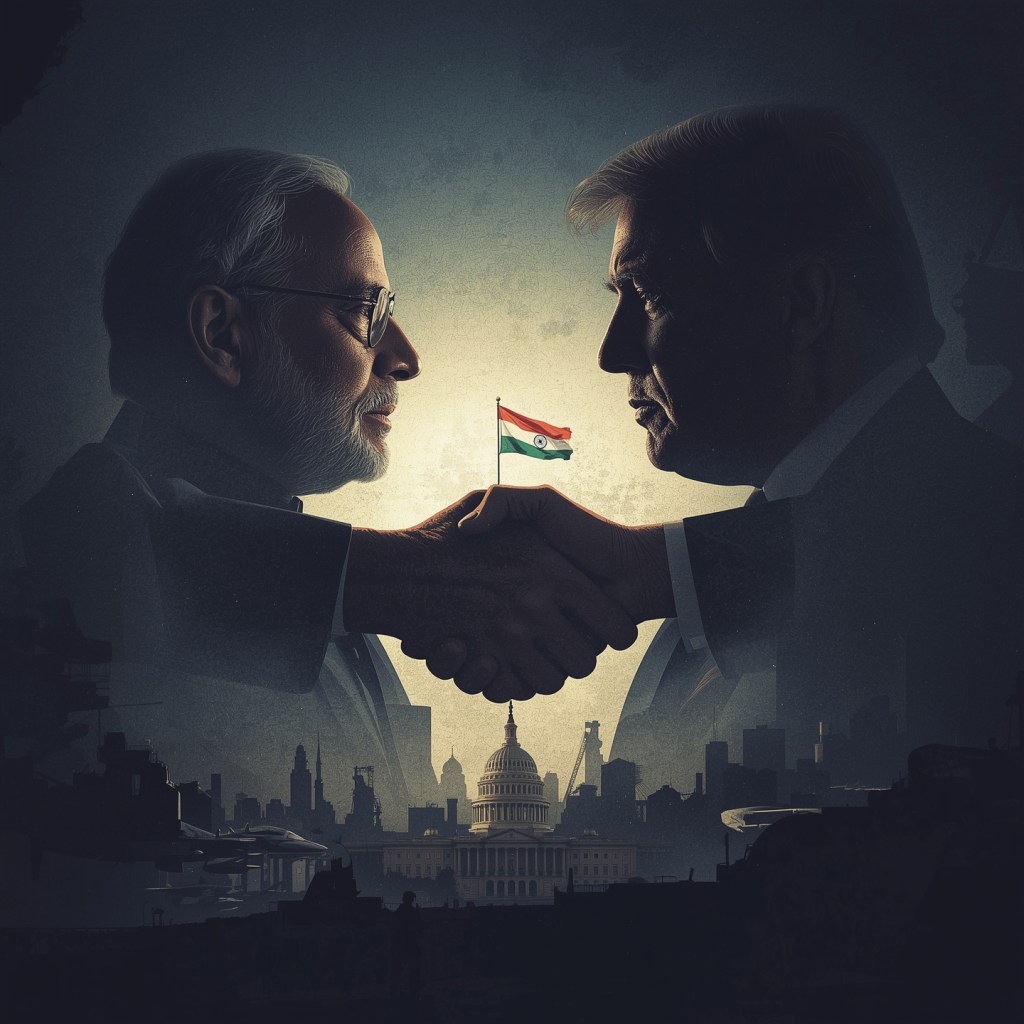
  • Public Fights, Private Handshakes: The Real Story Behind the Indo–U.S. “Tariff War”

    By the time you read this, a top-level U.S. defence delegation will either be packing their bags for New Delhi or already in meetings with India’s strategic leadership. On paper, this shouldn’t be happening. Not after President Donald Trump slapped two layers of tariffs on Indian goods — 25% on most imports from 1 August, plus another 25% announced on 7 August over India’s purchase of Russian oil. Together, they threatened to take the trade friction to a painful 50%.

    Yet, in classic Washington style, the drama on the surface hides a very different current beneath. While the tariff headlines dominate, the Indo–U.S. relationship is quietly moving forward on nearly every other front.

    The Defence and Security Front

    The upcoming visit of the U.S. defence ministry’s high-level team is not routine — it is a deliberate signal. Washington wants India to know that defence cooperation remains a priority. This is reinforced by the fact that the 21st edition of the joint Indo–U.S. military exercise will go ahead in Alaska this month.

    And here’s the geopolitical theatre twist: that’s the very location where Trump is scheduled to meet Russian President Vladimir Putin. On one side, Trump will be shaking hands with Putin; on the other, Indian and American soldiers will be training side by side.

    Diplomatic Continuity: The 2+2 Dialogue

    Preparations for the annual “2+2” ministerial dialogue — involving the defence and foreign ministers from both countries — are well underway. It’s one of the highest forms of institutional dialogue between the two nations, and it signals long-term commitment, not short-term posturing.

    Trade Talks Against the Grain

    Despite the tariff tensions, the American trade negotiation team is still coming to India on 25 August. There’s even optimism about concluding a barter-style trade agreement by October. India has drawn its “red lines” clearly — agriculture, livestock, and fisheries are off the table. Washington, at least for now, seems willing to proceed under those terms.

    Why the Mixed Signals?

    The answer lies in the difference between political theatre and strategic planning.

    • Trump’s tariff moves play well to his domestic base, particularly ahead of the midterm elections.
    • But U.S. institutions — the Pentagon, State Department, and trade machinery — know the cost of letting 25 years of carefully built Indo–U.S. cooperation unravel.
    • There’s also the possibility that Trump is quietly preparing to roll back the extra 25% tariff if the Putin talks produce the right optics.

    The Unmukt Take

    The “tariff war” may be more performance than policy. The reality is that India and the U.S. are not on the verge of a rupture; they are, in fact, deepening cooperation in defence, diplomacy, and trade — even as they spar in public.

    This is a story not of collapsing ties, but of dual narratives: one for the cameras, another for the confidential briefing rooms. And in international politics, it’s often the private handshake that writes the real history.

  • India–China Relations 2025: How Trump’s Tariffs Sparked an Unlikely Economic Realignment

    Six months ago, few analysts would have predicted India and China moving even slightly closer in their diplomatic and economic ties. The two Asian giants have spent decades locked in strategic rivalry — from border disputes in Ladakh to competition for influence across Asia. But in 2025, a surprising factor has nudged them toward limited cooperation: Donald Trump’s aggressive U.S. tariffs on both countries.

    The Unintended Consequence of Trump’s Tariffs

    When President Trump reintroduced steep tariffs on Chinese goods — and extended them to Indian exports — his goal was clear: pressure Beijing over trade practices and punish New Delhi for continuing business with Russia.

    However, instead of isolating them, the tariffs have created a shared economic challenge. Both India and China are now dealing with:

    • Reduced access to the lucrative U.S. market
    • Risks of economic slowdown
    • The need to secure alternative investment and trade routes

    In geopolitics, shared problems often lead to tactical cooperation, even between rivals.

    Key Developments in the India–China Thaw

    1. Resumption of Direct Flights and Visas: India has restarted tourist visas for Chinese nationals and is preparing to resume direct flights through carriers like Air India and IndiGo. This was a long-standing demand from Beijing since the COVID-19 suspension.
    2. Boost in Fertilizer Trade: China has eased restrictions on urea exports to India, vital for India’s agriculture sector. With domestic fertilizer production insufficient to meet demand, this move directly supports Indian farmers and food security.
    3. Reopening of Kailash Mansarovar Yatra: For the first time in five years, Indian pilgrims will be able to travel to Mount Kailash and Lake Mansarovar — a symbolic step in cultural diplomacy.
    4. Diplomatic Backing Against U.S. Tariffs: The Chinese ambassador to India publicly criticized Trump’s tariffs and voiced support for India’s economic sovereignty.

    Why India and China Are Finding Common Ground

    While political trust remains low, there are clear overlapping interests in 2025:

    • Economic Growth: Both want to avoid slowdown amid global uncertainty.
    • Attracting FDI: Global investors are cautious; both economies seek to secure capital inflows.
    • Energy Security: Access to affordable crude oil is crucial for both.
    • Balancing U.S. Pressure: Reducing vulnerability to unpredictable U.S. trade policy is a shared goal.

    The Limits of Cooperation

    This is not a strategic alliance — border tensions remain unresolved and military posturing continues along the Line of Actual Control (LAC). India still views China’s ties with Pakistan with suspicion, especially after Beijing’s support for Islamabad’s military capabilities.

    For India, the challenge is maintaining a careful balance: engaging China economically while strengthening security partnerships with the U.S., Japan, and Australia through forums like the Quad.

    Looking Ahead: Geopolitics in the Second Half of the Decade

    If current trends hold, 2025 could mark the start of a functional but fragile India–China economic partnership, born out of necessity rather than goodwill. Whether this tactical realignment lasts will depend on:

    • U.S. trade policy in the coming year
    • Developments on the India–China border
    • Global commodity prices and energy security concerns

    One thing is clear: in global politics, there are no permanent friends or enemies — only permanent interests.

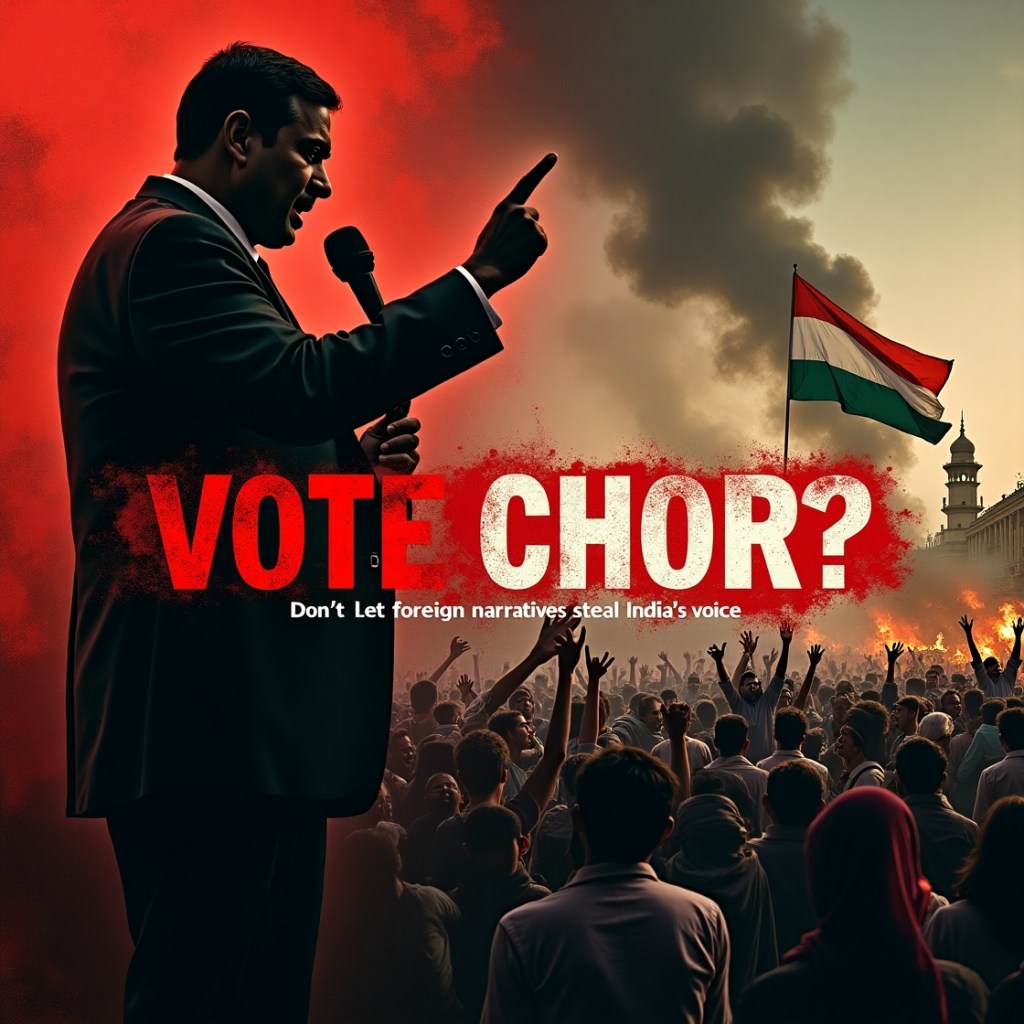
  • The “Vote Chori” Lie: How Rahul Gandhi’s Dangerous Narrative Mirrors Bangladesh’s Playbook

    When Arun Jaitley once described Rahul Gandhi as “a repeat liar, a silent apologist in court, and a loud threat to democracy”, many thought it was just political rhetoric. But the latest falsehood being peddled by the Congress leader, the so-called “Vote Chori” narrative, reveals just how dangerous this political gamble really is.

    The Manufactured Crisis

    In recent weeks, Rahul Gandhi has amplified allegations that India’s 2024 general elections were manipulated, with voter rolls inflated by unverified names. The claim is rooted in a so-called “report” circulated by an NGO linked to senior advocate Prashant Bhushan, a self-proclaimed Marxist voice whose history is filled with legal activism aimed at discrediting elected governments.

    This NGO’s agenda aligns with a disturbing pattern targeting India’s political credibility on the global stage while emboldening foreign interests, particularly the United States, to question India’s democratic framework.

    The Bangladesh Parallel

    Observers of South Asian politics will recall the events in Bangladesh earlier this decade. Opposition forces, unable to mount a strong electoral challenge, created a narrative that the ruling government was “blocking free elections” and “silencing dissent.” This claim — heavily amplified by international NGOs and Western media — resulted in months of unrest, economic instability, and eventual diplomatic isolation.

    The tragic irony? While they claimed to be “saving democracy,” the opposition’s tactics effectively paralyzed the democratic process. In some cases, violence replaced ballots, and foreign meddling became normalized.

    Today, Rahul Gandhi’s “vote chori” rhetoric dangerously echoes the same destabilization strategy.

    Foreign Hand, Familiar Faces

    Prashant Bhushan’s NGO is no stranger to controversial activism. Over the years, its funding sources and advocacy align with Marxist intellectual circles and certain Western think tanks. The formula is consistent:

    • Stage 1: Question the legitimacy of elections without hard evidence.
    • Stage 2: Seek international “solidarity” and coverage to pressure the government.
    • Stage 3: Push for systemic changes that weaken the state’s ability to act independently of Western influence.

    Rahul Gandhi’s willingness to become the political amplifier of such tactics is alarming, especially when India is experiencing record GDP growth, a stronger global presence, and a more assertive foreign policy.

    The Real Threat

    Critics argue that Rahul Gandhi is less interested in winning elections through people’s mandate and more interested in delegitimizing them to create chaos. This narrative directly benefits:

    • Foreign powers seeking to weaken India’s global standing.
    • Economic competitors who fear India’s rise as a manufacturing and geopolitical hub.
    • Marxist lobbies inside and outside the country who oppose India’s market-driven growth model.

    From Bangladesh to Bharat

    The comparison is chilling. In Bangladesh, this narrative eroded public trust, empowered extremist elements, and paved the way for deeper foreign interference.
    If Rahul Gandhi and his allies succeed in normalizing this rhetoric in India, the consequences could be far-reaching:

    • Investor confidence could plummet.
    • Social divisions could deepen.
    • India’s image as the world’s largest democracy could be tarnished.

    Conclusion: Democracy Is Not a Toy

    India’s democratic framework is strong, but it is not immune to coordinated attacks from within. Political disagreements are healthy, but weaponising falsehoods to undermine electoral legitimacy is a direct assault on the very foundation of the republic.

    As Arun Jaitley warned, Rahul Gandhi’s blend of courtroom meekness and public recklessness is not harmless political theatre. It is a dangerous game that India cannot afford to ignore.


  • Trump Calls India a Dead Economy. Rahul Gandhi Nods. Facts Say Otherwise

    In a recent statement, former U.S. President Donald Trump described India as a “dead economy.” Shockingly, Indian political leader Rahul Gandhi echoed this sentiment, using it to attack the current government. What both these men fail to grasp — or deliberately ignore — is the reality of India’s economic and geopolitical strength.

    Let’s start with the facts:

    • 🇮🇳 India’s GDP growth in FY 2024-25: 7%
    • 🇺🇸 U.S. GDP growth in H1 2025: 1.25%
    • 🇷🇺 Russia’s GDP growth in 2024: -4.1%

    India is, by far, the fastest-growing major economy in the world — driven by manufacturing, services, exports, infrastructure, and a digitally empowered population.

    Meanwhile, the U.S. is barely growing, and Russia is shrinking. So who is the “dead economy” here?

    The Hypocrisy of Trump

    Donald Trump calls China America’s biggest threat, yet his policies end up helping China.
    How?

    He imposes tariffs on Apple and other U.S. multinational products manufactured in India — a democratic ally. These punitive actions discourage American companies from diversifying away from China.

    Instead of supporting India as a reliable partner, Trump treats it as a threat. This isn’t strategy — this is short-sighted populism that benefits Beijing, not Washington.

    Rahul Gandhi’s Echo Chamber Politics

    What’s worse than Trump’s ignorance? An Indian leader endorsing it.

    Rahul Gandhi, who constantly speaks of “saving democracy,” found himself aligning with a man known for undermining democratic values — simply because he saw an opportunity to score political points.

    When a national leader amplifies a foreign voice that demeans India’s rise, it’s not dissent — it’s disgrace.

    India needs an opposition that holds the government accountable while standing for the nation, not one that joins hands with foreign critics just to attack political rivals.

    India Is Not the Problem. India Is the Solution.

    India is not an expansionist power. It doesn’t threaten global stability — it strengthens it. As the world faces rising authoritarianism and economic stagnation, India offers something rare:

    • A democratic system that works
    • A young population ready to innovate and build
    • A geopolitical balance that offers stability to both the East and the West
    • A thriving market that welcomes global investment and fair competition

    If anything, a strong and self-confident India solves problems for the West — by offering a counterweight to China, a partner in tech and defence, and a responsible voice in global affairs.

    India has many challenges. But calling it a “dead economy” is not just inaccurate — it’s insulting. And when Indian leaders echo these falsehoods, they undermine the very nation they claim to serve.

    At Unmukt, we believe in Dharma-based politics — rooted in truth, strength, and national pride. India doesn’t need validation from foreign leaders. But it does need its own citizens, especially its leaders, to stand with her — not against her.

    Let critics speak. Let the facts roar louder.