In the tapestry of Indian political thought, few figures loom as large as Chanakya (Kautilya), the ancient strategist and author of the Arthashastra. His philosophy of statecraft balances ruthlessness with responsibility, nationalism with ethics, and power with restraint. In today’s context, examining whether the current Indian government embodies Chanakya’s principles offers a compelling lens into the nature of governance and democratic sensitivity.
Chanakya’s Vision of Ideal Governance
Chanakya envisioned a ruler who:
Prioritized national security above all.
Encouraged economic self-sufficiency.
Practiced diplomacy with strength.
Valued institutional autonomy.
Exercised compassion and justice toward all citizens.
Listened to advisors and allowed dissent to prevent arrogance.
Governance, according to Chanakya, was not merely about ruling effectively but ruling wisely and justly.
Critical Analysis of Current Government
1. National Security and Strategic Assertiveness
Chanakya emphasized defending the kingdom through preparedness and strong alliances. The present government has shown:
Military assertiveness (e.g., Balakot strikes, Galwan response).
Strategic alliances like the Quad, reflecting a proactive Indo-Pacific strategy.
Intelligence modernization and internal security measures.
These initiatives echo Chanakya’s realpolitik, where strength ensures sovereignty.
2. Economic Self-Reliance
Chanakya advised kings to develop internal economic strength to avoid foreign dependency. Today, India’s:
Atmanirbhar Bharat campaign.
Emphasis on Make in India.
Tech-driven reforms and startup ecosystem.
Focus on infrastructure and digital public goods.
…all resonate with his call for economic autonomy.
3. Handling of External Threats and Internal Subversion
Chanakya proposed strict action against internal threats and foreign-backed conspiracies. The government’s action against organizations allegedly funded by adversarial nations (e.g., NewsClick) and anti-terror operations aligns with this Chanakyan principle.
Concern should be given:
1. Tolerance for Dissent and Democratic Institutions
Chanakya warned against rulers ignoring criticism or becoming arrogant. Some critics argue:
Media freedoms and civil society space have narrowed.
Investigative agencies may appear to disproportionately target dissenting voices.
Public dissent is sometimes labeled as anti-national.
Even if well-intentioned, this creates fear among democratic institutions, potentially stifling legitimate discourse.
2. Institutional Autonomy and Accountability
While India’s judiciary and Election Commission are constitutionally independent, concerns arise:
Over perceived executive influence.
Over use of investigative agencies during political cycles.
Chanakya upheld justice as the cornerstone of governance. Visible autonomy ensures public trust.
3. Equity and Inclusiveness
Chanakya advocated for just treatment of all communities. While government schemes like Ujjwala, Ayushman Bharat, and Jan Dhan Yojana are inclusive by design, perceptions of alienation persist:
Around policies like the Citizenship Amendment Act (CAA).
During certain state-level crackdowns.
These perceptions, even if not rooted in reality, call for sensitive outreach and clear communication to maintain national cohesion.
4. Transparency and Electoral Reforms
Transparency is a pillar of trust. Critics highlight:
Electoral bond opacity.
Amendments to RTI that reduce oversight.
Limited media questioning in formal press settings.
Chanakya believed in clear communication and visible justice. Modern democracy demands visible transparency to uphold this ideal.
Final Assessment: Chanakyan Governance in a Democratic Era
The current Indian government reflects many core Chanakyan ideals:
Strategic foresight.
Economic revival.
National pride and internal discipline.
But Chanakya also stressed humility, responsiveness to criticism, and visible justice. A sensitive government not only punishes the guilty but also protects the innocent from undue fear.
In essence:
Strong governance grounded in Chanakya’s vision is effective when paired with democratic empathy.
India today needs both: strategic muscle and moral grace.
Conclusion
The current government mirrors Chanakya’s pragmatism and vision in many areas. Yet, to fully embody the spirit of sensitive and just governance, it must ensure:
Institutions remain visibly autonomous.
Criticism is heard, not crushed.
Justice is both done and seen to be done.
Chanakya’s legacy lies in building a powerful yet benevolent state. A government that embodies this will not only command authority but also earn enduring respect.
In the turbulent waters of the Indo-Pacific, the Quadrilateral Security Dialogue (Quad)—uniting India, United States, Japan, and Australia—stands as a beacon of strategic alignment. Revived in 2017 to promote a “free, open, and prosperous Indo-Pacific,” the Quad’s unspoken mission is to counter China’s maritime ambitions and regional dominance. For India, a rising power grappling with China’s border provocations and Pakistan’s terrorism, the Quad promises enhanced security, economic growth, and global influence. Yet, skepticism persists: Is India a linchpin in a transformative partnership, or merely a pawn in a US-led strategy to contain China? As the recent India-Pakistan escalation (May 2025) underscores the Quad’s limitations, this article explores its true value for India, India’s indispensability to the group, and whether New Delhi could achieve its ambitions alone.
The Quad’s Strategic Lifeline for India
India’s integration into the Quad, cemented after China’s assertive moves (e.g., 2017 Doklam standoff, 2020 Galwan clash), aligns with its goal of countering Beijing’s influence while advancing broader interests. Far from being a passive partner, India leverages the Quad to amplify its strategic, economic, and diplomatic clout.
1. Fortifying Against China The Quad bolsters India’s capacity to counter China’s “String of Pearls” network—ports like Gwadar (Pakistan) and Hambantota (Sri Lanka)—and its naval expansion in the Indian Ocean Region (IOR). The Malabar naval exercises, involving all Quad members, enhance India’s interoperability with world-class navies, securing sea lanes critical for 90% of its trade by volume. Bilateral agreements, such as COMCASA and BECA with the US, provide advanced technologies (e.g., P-8I aircraft, geospatial intelligence), strengthening India’s maritime and border defenses. The Quad’s strategic pressure on China indirectly limits Beijing’s support for Pakistan, as seen in its restrained response during the India-Pakistan escalation, where reported missile supplies to Pakistan were not escalated further.
2. Economic and Technological Leap The Quad’s Blue Dot Network offers sustainable infrastructure alternatives to China’s Belt and Road Initiative (BRI), aligning with India’s Act East policy to deepen ties with ASEAN. Initiatives in supply chain resilience—focusing on semiconductors and critical minerals—reduce India’s reliance on Chinese imports, fueling Make in India. Investments from Quad partners, such as Japan’s $35 billion in India’s Northeast and Australia’s critical minerals cooperation, drive economic growth, cementing India’s status as the world’s 4th largest economy (2025). Collaboration in emerging technologies (AI, 5G, cybersecurity, space) positions India to compete with China’s technological edge, critical for both economic and defense advancements.
3. Diplomatic Ascendancy The Quad elevates India as a leading Indo-Pacific power, amplifying its voice in global forums like the UN and G20. During the Pahalgam terror attack (April 2025) and India’s retaliatory Operation Sindoor, Quad members condemned terrorism without criticizing India’s strikes, unlike China and Turkey, reflecting India’s diplomatic clout. The Quad’s non-binding structure preserves India’s strategic autonomy, allowing unilateral actions (e.g., against Pakistan) while benefiting from collective support. By countering the China-Pakistan Economic Corridor (CPEC) and China’s regional influence, the Quad enhances India’s leverage in South Asia and beyond.
4. Leadership in Non-Traditional Security The Quad’s focus on climate change (renewable energy), health security (vaccine diplomacy), and humanitarian assistance and disaster relief (HADR) enhances India’s soft power. Building on the 2004 Tsunami Core Group, the Quad strengthens India’s role as a regional first responder. Its Women, Peace, and Security agenda aligns with India’s gender-inclusive peacekeeping efforts, bolstering its global image as a responsible power.
The India-Pakistan Escalation: Testing the Quad’s Limits
The Pahalgam terror attack (April 22, 2025) and India’s Operation Sindoor (May 7, 2025), targeting terror camps in Pakistan and PoK, highlighted the Quad’s constrained role in bilateral disputes. India’s precision strikes, executed with indigenous systems (Akash, S-400) and bilateral intelligence (e.g., US-derived), showcased its self-reliance. Quad members condemned the attack but urged restraint, offering no direct support, prompting X users to label the Quad “ineffective” or a “US ploy” that fails India in South Asian crises.
Yet, the Quad’s indirect contributions were significant. Its diplomatic weight ensured global focus on condemning terrorism, not India’s response, with Quad partners avoiding the critical tone of China and Turkey. The group’s strategic pressure on China likely limited Beijing’s escalation of support for Pakistan (e.g., beyond reported missile supplies), preserving regional stability. While the Quad’s China-centric, maritime focus doesn’t address Pakistan directly, its role in countering the China-Pakistan axis supports India’s broader security calculus.
Can India Stand Alone?
India’s skeptics argue it doesn’t need the Quad. With the world’s 4th largest defense budget (~$80 billion), a modernizing navy (INS Vikrant, nuclear submarines), and nuclear capabilities, India executed Operation Sindoor independently. Its economy drives self-reliance (Atmanirbhar Bharat), attracting investments from non-Quad nations (e.g., UAE, Singapore). Diplomatically, India’s non-alignment and ties with Russia, ASEAN, and the Global South ensure global influence, as seen in widespread condemnation of the Pahalgam attack. India counters China unilaterally—banning apps, restricting investments, and fortifying the LAC—while leading in climate (International Solar Alliance) and HADR.
However, going solo has limits. China’s $300 billion defense budget, largest navy, and economic dominance outmatch India’s resources. Developing advanced tech (e.g., 5G, AI) and infrastructure independently is cost-intensive, and facing China’s global influence (e.g., UNSC vetoes) alone risks isolation. The Quad’s collective strength—US superpower status, Japan’s tech leadership, Australia’s Pacific reach—reduces India’s burden, accelerates progress, and counters the China-Pakistan axis more effectively. Without the Quad, India could face a bolder Beijing, potentially escalating support for Pakistan, as hinted in May 2025.
Is India Being Used Against China?
The notion that the Quad is a US-orchestrated effort to leverage India against China resonates in public discourse. X users describe India as a “frontline state” in a US-led “anti-China axis,” noting that the US, Japan, and Australia rely on India’s IOR dominance and rivalry with China (e.g., LAC tensions) to counter Beijing’s BRI and naval expansion. India’s strategic location and military weight make it a natural partner, but critics argue it bears disproportionate risks—provoking China’s ire while Quad partners gain strategic benefits with less exposure.
This view oversimplifies India’s role. New Delhi actively shapes the Quad, emphasizing non-traditional security (climate, health) to avoid a militarized anti-China stance. India’s non-aligned stance and ASEAN ties ensure the Quad isn’t a Western bloc, broadening its appeal. The tangible benefits—tech transfers, investments, diplomatic leverage—align with India’s goals, proving mutual dependence. The Quad’s neutrality in the India-Pakistan escalation fueled frustration, with X posts questioning its reciprocity, but India’s strategic autonomy ensures it’s no mere tool, extracting value while maintaining independence.
A Quad Without India: Viable or Hollow?
Could the Quad survive without India? Technically, yes—it existed briefly in 2007 with limited Indian commitment but collapsed under Chinese pressure. Today, India’s IOR presence, naval power, and democratic weight are irreplaceable. Without India:
• IOR Influence Wanes: China’s BRI ports and Djibouti base face less opposition, as Japan and Australia focus on the Pacific.
• Maritime Strength Fades: Malabar exercises lose relevance, and sea lane security falters.
• Diplomatic Credibility Suffers: The Quad risks becoming a US-led alliance, alienating ASEAN and the Global South.
• Economic and Tech Gaps: India’s market and IT sector drive supply chain and tech initiatives; its absence slows progress.
A US-Japan-Australia triad could pivot to AUKUS or Pacific alliances, but these lack India’s regional heft. X users emphasize India’s indispensable role, though some see a Pacific-focused alternative. Without India, the Quad would be a diminished, Pacific-centric shell, unable to counter China’s Indo-Pacific ambitions effectively.
Conclusion: A Strategic Symbiosis
The Quad is a strategic lifeline for India, amplifying its ability to counter China, secure maritime routes, modernize its economy, and lead globally, while preserving autonomy. Its limitations in bilateral conflicts like the India-Pakistan escalation underscore India’s need for self-reliance, but its indirect benefits—diplomatic cover, pressure on China—prove its worth. India’s robust capabilities enable independent action, but the Quad’s collective strength addresses challenges (China’s superiority, resource constraints) that New Delhi cannot fully overcome alone.
Is the Quad a US gambit to use India against China? Partially, but India’s agency transforms it into a symbiotic partnership. By shaping the Quad’s inclusive agenda, India maximizes benefits while mitigating risks. The Quad’s viability hinges on India’s participation; without it, the group loses strategic and diplomatic weight. For India, the Quad is a pragmatic multiplier, not a necessity, enabling it to navigate a complex geopolitical landscape with unmatched finesse.
India’s role as a global humanitarian leader shone brightly during the COVID-19 pandemic, when its “Vaccine Maitri” initiative supplied free vaccines to numerous countries, reinforcing its image as the “pharmacy of the world.” Similarly, India’s swift disaster relief efforts, from Nepal’s 2015 earthquake to Turkey’s 2023 quake, have saved countless lives. Yet, the 2025 India-Pakistan conflict, triggered by the horrific Pahalgam terror attack on April 22, 2025, which killed 26 civilians, reveals a troubling paradox: many nations India selflessly aided are either supporting Pakistan or remaining neutral, despite India’s Operation Sindoor targeting alleged terrorist infrastructure. This article examines the countries that received India’s free COVID-19 vaccines, their stances in the current conflict, the reasons behind their positions, and the contentious notion of labeling those supporting Pakistan as “traitors.” It argues that India must navigate this diplomatic challenge with strategic pragmatism rather than emotional rhetoric.
India’s Humanitarian Legacy
India’s humanitarian efforts are guided by the principle of “Vasudhaiva Kutumbakam” (the world is one family). During the COVID-19 pandemic, India launched the Vaccine Maitri initiative on January 20, 2021, supplying free vaccines to 98 countries, totaling 14.3 million doses by February 2022 (Vaccine Maitri – Wikipedia). Beyond vaccines, India provided disaster relief as a first responder in crises such as:
Nepal (2015 Earthquake): Operation Maitri delivered 520 tonnes of supplies (India’s Role in Disaster Relief).
Turkey (2023 Earthquake): Operation Dost sent medical teams and supplies.
Maldives (2004 Tsunami): Operation Rainbow provided a $5 crore aid package.
These acts of generosity, often without expectation of reciprocity, underscore India’s commitment to global solidarity.
The 2025 India-Pakistan Conflict
On April 22, 2025, a terrorist attack in Pahalgam, Jammu and Kashmir, killed 26 civilians, mostly Hindu tourists, after attackers reportedly targeted victims based on religion (2025 India-Pakistan Standoff). The Resistance Front, linked to Pakistan-based Lashkar-e-Taiba, initially claimed responsibility but later retracted. India accused Pakistan of sponsoring the attack and launched Operation Sindoor on May 7, striking alleged terrorist infrastructure, killing at least 31 people, per Pakistan’s claims (India Strikes Pakistan). Pakistan denied involvement, called for an international investigation, and vowed retaliation, escalating tensions between the nuclear-armed neighbors.
Countries Receiving Free COVID-19 Vaccines from India
India’s Vaccine Maitri initiative gifted 14.3 million doses of Covishield and Covaxin to 98 countries, with a focus on South Asia, the Indian Ocean region, and the Caribbean. Below is a list of key recipient countries, based on available data from 2021, and their stances in the 2025 conflict (India Sends 22.9 mn Doses, Vaccine Maitri – Wikipedia):
Country
Free Vaccine Doses (2021)
Stance in 2025 Conflict
Supporting Pakistan?
Bangladesh
2,000,000
Neutral
No
Myanmar
1,700,000
Neutral
No
Nepal
1,000,000
Neutral
No
Sri Lanka
500,000
Neutral
No
Afghanistan
500,000
Supports India
No
Maldives
100,000
Neutral
No
Mauritius
100,000
Neutral
No
Seychelles
50,000
Neutral
No
Bahrain
100,000
Neutral
No
Oman
100,000
Neutral
No
Barbados
100,000
Neutral
No
Dominica
70,000
Neutral
No
Bhutan
150,000
Neutral
No
Notes on the List:
Data Limitations: The full list of 98 recipient countries is not explicitly detailed in sources, but the above includes major recipients cited in 2021 reports. Additional countries (e.g., Caribbean and African nations) received vaccines, but their 2025 stances are largely undocumented due to their limited geopolitical involvement.
Pakistan’s Inclusion: Pakistan received 45 million India-made doses via the COVAX initiative, not as a direct grant from India, and thus is not listed as a recipient of free vaccines (Pakistan to Receive 45 Million Doses).
Stance Assessment: Countries are classified as “Supporting Pakistan,” “Supporting India,” or “Neutral” based on diplomatic statements, military actions, or silence in the 2025 conflict.
Countries Not Supporting India
Among the countries that received free vaccines, the following are not supporting India in the 2025 conflict (i.e., they are neutral or support Pakistan):
Supporting Pakistan: None of the listed vaccine recipients explicitly support Pakistan, as Turkey, China, Malaysia, Azerbaijan, and Iran were not direct recipients of free vaccine grants in 2021. However, Malaysia received commercial or COVAX supplies, and its support for Pakistan’s call for an investigation aligns with Pakistan Juliet (India-Pakistan Tensions.
Why Are They Not Supporting India?
The lack of support from these countries stems from:
Geopolitical Neutrality: Nations like Nepal, Bangladesh, and Sri Lanka balance ties with both India and Pakistan to avoid entanglement in a nuclear standoff.
Domestic Priorities: Smaller nations (e.g., Seychelles, Dominica) focus on internal issues and lack the geopolitical weight to take sides.
Economic Ties: Countries like Bahrain and Oman maintain strong trade relations with both India and Pakistan, prioritizing stability.
Non-Alignment: Many developing nations adhere to non-aligned policies, avoiding involvement in great power rivalries.
The “Traitor” Label: A Dangerous Oversimplification
Labeling countries that support Pakistan or remain neutral as “traitors” is both inflammatory and counterproductive. For instance:
Turkey, China, Malaysia, Azerbaijan, Iran: These countries support Pakistan due to historical alliances, religious ties, or strategic interests (e.g., China’s CPEC, Turkey’s Kashmir stance). Only Malaysia received indirect vaccine supplies via COVAX, not direct grants, so their stance is not a betrayal of India’s aid.
Neutral Countries: Nations like Nepal and Bangladesh, despite receiving free vaccines, have deep cultural and economic ties with India but also engage with Pakistan. Their neutrality reflects a pragmatic approach to regional stability, not disloyalty.
Calling these nations “traitors” risks alienating potential partners and escalating diplomatic tensions. It also ignores the reality that international relations are driven by self-interest, not gratitude for past aid.
Implications for India
The 2025 conflict highlights several challenges for India:
Limits of Vaccine Diplomacy: India’s generous aid has not guaranteed loyalty, suggesting a need to align future aid with strategic goals.
Diplomatic Isolation: With only the US, Afghanistan, and possibly Israel explicitly supporting India, New Delhi must counter Pakistan’s narrative more effectively.
Regional Dynamics: Neutral stances from South Asian neighbors underscore India’s challenge in rallying regional support against Pakistan-based terrorism.
Recommendations
India should adopt a strategic approach:
Engage Diplomatically: Avoid inflammatory rhetoric and engage neutral countries to build a coalition against terrorism.
Strengthen Alliances: Deepen ties with supportive nations like the US, Israel, and Quad members (Japan, Australia) to counter Pakistan’s backers.
Refine Aid Strategy: Prioritize aid to nations that align with India’s security and geopolitical interests, ensuring mutual benefits.
Counter Narrative: Amplify evidence of Pakistan’s terrorism links globally to shift neutral stances.
Conclusion
India’s Vaccine Maitri initiative showcased its humanitarian leadership, gifting free COVID-19 vaccines to countries like Bangladesh, Nepal, and the Maldives. Yet, in the 2025 India-Pakistan conflict, most of these nations remain neutral, prioritizing regional stability or domestic concerns over supporting India’s anti-terrorism efforts. Countries like Turkey and China, which back Pakistan, act out of longstanding alliances, not betrayal of India’s limited aid to them. Labeling them “traitors” oversimplifies complex geopolitics and risks further isolation. Instead, India must leverage diplomacy, strengthen strategic alliances, and refine its aid strategy to navigate this crisis and secure its interests in a volatile region.
Human rights are meant to protect the dignity, freedom, and well-being of every individual, regardless of nationality, race, or belief. These principles are supposed to be universal and applicable to all people. However, a disturbing trend has emerged over the years—one where terrorists are granted the very protections intended for innocent victims, often in stark contrast to the silence or neglect of the victims of terrorism themselves. This hypocrisy of human rights advocacy is especially evident in the tragic story of Daniel Pearl, the Wall Street Journal journalist who became a victim of one of the most horrific terrorist acts of the early 21st century.
Daniel Pearl’s Tragic Murder
In 2002, Daniel Pearl, an investigative journalist based in Pakistan, was abducted by a group of Islamist extremists while he was working on a story about the growing threats of radical terrorism in the region. His investigation had led him to Al-Qaeda links and the global jihadist network, and his work focused on uncovering the connections between Islamic extremists and various state and non-state actors.
On January 23, 2002, while researching, Daniel was kidnapped in Karachi by a group led by Ahmed Omar Saeed Sheikh, a British-Pakistani terrorist who was later convicted for his role in the crime. Shortly thereafter, Pearl’s captors made it clear that his life was at risk, and on February 21, 2002, they released a gruesome video showing his brutal beheading. This heinous act shocked the world and exposed the true face of radical Islamic terrorism.
Daniel Pearl was not just a journalist; he was a man dedicated to revealing the truth about the growing terror networks operating under the guise of religious extremism. His murder was a tragic loss not only to his family but also to the world of journalism and the pursuit of truth. But what happened in the aftermath of his murder speaks volumes about the hypocrisy in the treatment of terrorists and terror victims.
The Failure to Hold Terrorists Accountable
In the years following Pearl’s murder, his killers—especially the mastermind, Ahmed Omar Saeed Sheikh—became a symbol of the international community’s inability to take decisive action against those who commit acts of terrorism. Despite being sentenced to death by a Pakistani court, Sheikh’s trial was mired in controversy, and in 2020, a Pakistani court shockingly acquitted him of charges related to Pearl’s death, citing a lack of evidence and pointing to the possibility of political motivations behind the case.
While Daniel Pearl’s family and the global community sought justice, the Pakistani government, a key ally in the War on Terror, showed a disturbing reluctance to fully investigate and prosecute those involved in Pearl’s murder. The question remains: why did the world remain largely silent in the face of such a blatant act of terror? And more importantly, why did human rights organizations often choose to focus their energies on protecting terrorists, rather than demanding justice for victims like Daniel Pearl?
Human Rights Hypocrisy: Terrorists and Victims in the Same Light
The tragic story of Daniel Pearl serves as a glaring example of the hypocrisy inherent in certain aspects of the human rights movement. In many instances, terrorists—individuals who destroy lives, spread fear, and violate the most basic rights of others—are often given legal protections and media attention, while their victims are left behind in the shadows.
This hypocrisy is particularly evident when we look at the way certain human rights organizations rallied around individuals linked to terrorist acts. Take the example of Aafia Siddiqui, often referred to as the “Lady al-Qaeda.” Siddiqui was convicted in 2010 for attempting to murder U.S. soldiers in Afghanistan and for her connections to terrorist groups like Al-Qaeda. Yet, despite her involvement in terror, human rights groups began campaigning for her release, focusing on her alleged mistreatment in U.S. custody, rather than her role in terrorism.
At the same time, the victims of the terrorism Siddiqui and others like her supported were often left out of the discussion. For example, the 9/11 attacks left nearly 3,000 people dead, yet those who died are often overshadowed by campaigns that prioritize the rights of terrorists over those of the victims.
The case of Daniel Pearl fits perfectly into this pattern. While the terrorists responsible for his murder have, in some cases, received legal protections, the victim’s rights—the rights of a journalist who was simply doing his job to report on the truth—were ignored by both the Pakistani authorities and many in the international community. Human rights organizations that often rally behind accused terrorists conveniently overlook the impact of their violence on innocent people.
The Double Standard: Victims of Terror vs. Terrorists
The human rights double standard becomes even more troubling when examining the global response to the terrorist threat. On one hand, human rights groups demand that those accused of terrorism be afforded due process, even when there is clear evidence of their involvement in heinous acts. On the other hand, these same organizations often remain silent or downplay the rights of victims, such as Daniel Pearl and others who have been affected by terrorism.
Take, for example, the Paris terrorist attacks in 2015, where dozens of innocent civilians were slaughtered by Islamic extremists. While there was outrage over the attacks and support for the victims’ families, there was also considerable attention on the rights of the attackers. Human rights groups, once again, were quick to argue that the accused terrorists must be afforded their legal rights, including protection from torture and inhumane treatment, but the voices of the victims and their families were often drowned out in the debate.
Conclusion: The World Must Choose Justice Over Hypocrisy
The death of Daniel Pearl should serve as a stark reminder of the hypocrisy inherent in the selective application of human rights principles. While the terrorists responsible for his death—and those like them—are often shielded by human rights activists, the victims of their violence are often ignored or forgotten. The world must recognize that human rights should be about justice for everyone, not just those who commit atrocities. Terrorists should not be shielded by legal protections while their victims continue to suffer in silence.
Daniel Pearl’s death was not just a tragedy for his family but for the world. It was a reminder of the need to hold terrorists accountable and protect the rights of the innocent. Until the international community truly upholds human rights for all—victims and perpetrators alike—the hypocrisy of human rights will continue to tarnish the ideals that should be protecting us all.
This story serves as a call to action for justice, truth, and a true commitment to universal human rights. Only then can we begin to create a world where victims of terror are protected and terrorists are held to account for their actions.
In a recent statement, India’s Defence Minister Rajnath Singh emphasized the essence of “Brand India” in the context of the nation’s burgeoning defence industry: “If an Indian company makes a promise, it will be fulfilled. If a product is designed to perform within a certain range or at a specific temperature, it will do so without exception. There should be no compromise on quality.” This bold assertion, made at the National Quality Conclave in Delhi, underscores India’s ambition to position itself as a trusted global supplier of defence products, particularly ammunition. The slogan “Don’t go for doubt, go for India” encapsulates this vision, aiming to instill confidence in international buyers. However, the statement also carries a subtle geopolitical undertone, seemingly promoting Indian ammunition as superior while positioning it as a counter to competitors like China and even Pakistan. This article explores India’s push for quality assurance in its ammunition industry, its strategic positioning against regional rivals, and the challenges and opportunities in becoming a trusted global supplier.
The Rise of India’s Ammunition Industry
India’s defence sector has undergone a significant transformation in recent years, driven by the government’s “Atmanirbhar Bharat” (Self-reliant India) initiative. Historically one of the world’s largest arms importers, India is now focusing on indigenous production to reduce dependency on foreign suppliers. The ammunition sector is a key pillar of this strategy. According to a 2024 report, India aims to halt ammunition imports by 2025-26, with local sources already supplying nearly 150 of the 175 ammunition types used by the Indian Army. This shift is supported by substantial investments, with 27.67% of the defence budget allocated to modernizing and expanding ammunition production facilities.
Private players like Adani Defence and Aerospace and SMPP, alongside state-owned entities like Munitions India, are scaling up production of critical ammunition, such as 155 mm artillery shells, which are significantly cheaper than their Western counterparts ($300-$400 per unit compared to $3,000 for European equivalents). Additionally, advancements like the 155 mm smart ammunition demonstrate India’s commitment to technological innovation. These developments not only bolster national security but also position India to capture a share of the global ammunition market, projected to grow at a CAGR of 3.5% through 2033.
Quality Assurance: The Cornerstone of Brand India
The Defence Minister’s emphasis on uncompromising quality reflects a strategic effort to build “Brand India” as a symbol of reliability. Past challenges, such as defective ammunition incidents reported in 2010 and 2016, highlighted quality control issues within the Ordnance Factory Board (OFB). These incidents, including a 2016 explosion that killed 19 soldiers, underscored the need for robust quality assurance mechanisms. The government’s response has been to streamline the OFB into seven Public Sector Defense Undertakings and foster private-sector participation to enhance efficiency and accountability.
Today, initiatives like the e-module launched by the Odisha Police in August 2024 for ammunition inventory management signal a move toward digitalization and precision in quality control. Companies are also adopting international standards, with platforms like India Index verifying suppliers for compliance, financial stability, and transparency to assure global buyers of consistent quality. Rajnath Singh’s assertion that Indian products will meet promised specifications—whether range, temperature resilience, or lethality—aims to erase doubts about reliability, positioning India as a dependable alternative to traditional suppliers like Russia and emerging competitors like China.
Strategic Positioning Against Pakistan and China
The Defence Minister’s remarks carry a geopolitical subtext, subtly promoting Indian ammunition as superior in the context of regional rivalries with Pakistan and China. India’s defence strategy is shaped by the dual threat posed by these nuclear-armed neighbors, with past conflicts and ongoing tensions driving modernization efforts. The Indian Army’s push to stockpile ammunition for a 15-day intense war, up from a previous 10-day reserve, reflects preparations for a potential two-front conflict.
Against Pakistan, India’s ammunition capabilities are implicitly showcased through its ability to produce cost-effective, high-quality munitions. For instance, India’s 155 mm artillery shells are not only cheaper but also tailored to meet modern warfare demands, unlike Pakistan’s reliance on Chinese imports, which account for 81% of its arms imports. The 2022 accidental misfire of a BrahMos missile into Pakistani territory, while embarrassing, highlighted India’s advanced missile capabilities, even if inadvertently.
China, a major arms exporter with 5.9% of the global market, poses a more complex challenge. Chinese ammunition and equipment, often sold at below-cost prices to countries like Pakistan, Bangladesh, and Myanmar, leverage Beijing’s Belt and Road Initiative for political influence. However, international buyers remain wary of Chinese products due to concerns about quality and political strings attached. India is capitalizing on this hesitation by offering reliable, competitively priced alternatives. For example, India’s $375 million deal to supply BrahMos missiles to the Philippines demonstrates its ability to secure high-value contracts in China’s backyard.
By emphasizing quality assurance, India is not only countering China’s market dominance but also positioning its ammunition as a strategic tool to strengthen ties with nations wary of Chinese influence. The slogan “Don’t go for doubt, go for India” subtly contrasts India’s reliability with perceived uncertainties surrounding Chinese products, appealing to international buyers seeking dependable suppliers.
Challenges in Becoming a Trusted Global Supplier
Despite its progress, India faces significant hurdles in establishing itself as a trusted global supplier. First, its defence export sector remains modest, accounting for only 0.2% of the global arms market as of 2015-19. While exports reached $2.5 billion in FY 2023-24, India dropped out of the top 25 arms exporters in FY 2022-23, indicating challenges in sustaining momentum. Key markets like Myanmar and Sri Lanka also procure from China, creating stiff competition.
Quality assurance remains a work in progress. Incidents like the 2020-2023 crashes of Advanced Light Helicopters (ALHs) and the rejection of the naval version of the LCA Tejas by the Indian Navy raise concerns about reliability among potential buyers. Additionally, India’s private sector, while growing, is hampered by bureaucratic ties to public-sector firms, which can stifle innovation and efficiency.
Financing is another bottleneck. Unlike China, France, or Turkey, which offer credit guarantees to buyers, Indian banks are reluctant to finance arms exports to countries with high credit or political risks. The government is addressing this through the Export-Import Bank (EXIM), which is expanding low-cost, long-term loans to attract buyers. However, scaling this initiative to compete with global players requires significant resources and diplomatic outreach.
Finally, India’s diversification of arms imports—from Russia to Western suppliers like France and the US—has created a trust deficit with some partners, potentially limiting technology transfers critical for indigenization. Balancing strategic autonomy with the need for advanced technology remains a delicate task.
Opportunities and the Path Forward
India’s ammunition industry is poised for growth, driven by increasing defence budgets, technological advancements, and a global demand for cost-effective solutions. The government’s focus on indigenization, with 75% of the capital procurement budget earmarked for domestic industries in FY 2023-24, is fostering innovation. Major platforms like the Pinaka rocket launcher, BrahMos missile, and Akash SAM are gaining traction in markets like Armenia, the Philippines, and Vietnam.
To realize the “Don’t go for doubt, go for India” vision, India must prioritize several strategies:
Strengthen Quality Assurance: Invest in advanced testing facilities, international certifications, and digital inventory management to ensure consistent quality. Collaborations with NATO countries, as seen with Reliance Defence, can enhance credibility.
Expand Financing Options: Scale up EXIM’s loan portfolio and explore government-backed credit guarantees to compete with China and Western suppliers.
Target Emerging Markets: Focus on countries in Africa, Southeast Asia, and Latin America, where China’s influence is growing but quality concerns persist. Diplomatic efforts, as suggested by the Stimson Center, can help identify trusted buyers.
Leverage Strategic Partnerships: Deepen ties with Western allies like the US and France for technology transfers while maintaining relations with Russia to ensure spare parts for existing systems.
Promote Brand India Globally: Use platforms like the National Quality Conclave to showcase success stories, such as the BrahMos deal, and counter negative perceptions from past incidents.
Conclusion
India’s ambition to become a trusted global supplier of ammunition is rooted in its commitment to quality assurance and the “Brand India” philosophy. By emphasizing reliability, as articulated by Rajnath Singh, India is positioning itself as a counterweight to China’s market dominance and a strategic partner to nations seeking dependable defence solutions. While challenges like quality control, financing, and competition persist, India’s cost-effective production, technological advancements, and diplomatic outreach offer significant opportunities. The slogan “Don’t go for doubt, go for India” is more than a marketing pitch—it’s a call to action for India to deliver on its promises and reshape the global defence landscape. As the nation continues to modernize its ammunition industry, it is not only preparing to defend its borders but also aiming to win the trust of international buyers, one reliable product at a time.
On May 7, 2025, the Indian Armed Forces launched Operation Sindoor in response to the April 22 terror attack in Pahalgam, Jammu & Kashmir, which claimed 26 lives, mostly Hindu tourists. This military operation marked a decisive and symbolic turning point in India’s counter-terrorism strategy, targeting multiple terror infrastructure hubs across Pakistan and Pakistan-occupied Kashmir (PoK). As events continue to unfold, Operation Sindoor has not only altered regional dynamics but also ignited new debates on diplomacy, strategy, and national identity.
1. Casualties and Cross-Border Escalation
Operation Sindoor involved 24 precision airstrikes on nine terror-linked sites, reportedly neutralizing over 70 militants affiliated with groups like Jaish-e-Mohammed (JeM), Lashkar-e-Taiba (LeT), and Hizbul Mujahideen. India claims over 60 additional injuries, including close aides of JeM chief Maulana Masood Azhar. Pakistan, however, reports 26–31 deaths—many allegedly civilians—and 46 injuries, citing damage to civilian structures in Muzaffarabad, Kotli, and Bahawalpur.
In retaliation, Pakistan conducted cross-border shelling along the Line of Control (LoC), resulting in 12 civilian and one soldier death on the Indian side, with 51 more injured. Pakistan claimed 10 civilian deaths and 38 injuries from Indian shelling. While both sides provide conflicting casualty numbers, the human cost remains undeniable.
2. Regional Disruptions and Security Response
The operation triggered sweeping regional disruptions. Pakistan shut its airspace for 48 hours, grounding international flights and disrupting regional connectivity. In India, 27 airports including Srinagar, Leh, Jammu, and Amritsar were closed until May 10, causing over 300 flight cancellations.
India also conducted “Operation Abhyaas,” a nationwide civil defense drill across 244 districts—the first of its scale since the 1971 war. Additional security measures included nightly blackouts in border regions like Gurdaspur, Punjab, and the closure of public ceremonies at Indo-Pak retreat points. Police leaves were canceled in Punjab, Rajasthan sealed its borders, and schools in frontier districts were shut for up to 72 hours.
3. Political and Diplomatic Reactions
Domestically, the operation garnered near-unanimous political support. Prime Minister Narendra Modi chaired high-level strategic meetings, while opposition leaders such as Mallikarjun Kharge and Jairam Ramesh supported the action, emphasizing national unity.
International reactions were mixed. The United Nations and China called for “maximum restraint,” whereas the U.S. and UK acknowledged India’s right to self-defense but urged de-escalation. Russia expressed concern over potential regional instability, and Sweden advised against travel to affected Pakistani regions. India’s Ministry of External Affairs briefed members of the UN Security Council, reaffirming its anti-terror position.
4. Strategic and Symbolic Dimensions
Operation Sindoor marked a doctrinal shift in India’s counter-terrorism approach, blending conventional military precision with psychological messaging. Key targets included:
Muzaffarabad & Kotli: Known JeM and LeT training hubs
Gulpur & Barnala: Linked to attacks in Poonch and IED production
Muridke & Bahawalpur: High-profile bases, including those that trained 26/11 attacker Ajmal Kasab
India deployed state-of-the-art technology, including SCALP cruise missiles, HAMMER bombs, and indigenous SkyStriker suicide drones. This reflects a significant leap in India’s military capabilities and its intent to project deterrence beyond the LoC.
The name “Sindoor” carries deep cultural symbolism. Referring to the vermilion worn by married Hindu women, it was chosen to honour the widows of the Pahalgam victims. However, critics argue that the symbolism reinforces gender stereotypes, placing women in the frame of passive victims rather than empowered agents.
5. Societal and Economic Consequences
The shockwaves of Operation Sindoor extended to the civilian sphere. Panic gripped Pakistani cities like Lahore, as videos circulated of civilians fleeing explosions. In India, civilians in border towns faced movement restrictions, school closures, and economic uncertainties.
The government prepared to invoke the Essential Services Maintenance Act to ensure stable supplies and prevent profiteering. PM Modi also postponed a diplomatic tour to Europe, reflecting the operation’s seriousness. Public sentiment in India, particularly in Jammu & Kashmir, was buoyant. In Srinagar’s Lal Chowk, locals gathered in solidarity, while families of the Pahalgam victims expressed gratitude.
6. Ongoing Developments and Risks Ahead
As of May 8, 2025, tensions remain high. India conducted large-scale air force drills near the western border, involving Rafale and Jaguar aircraft. Pakistan intensified shelling across multiple LoC sectors, while the BSF neutralized a suspected infiltrator in Punjab.
India’s Ministry of Defence claimed to have foiled a Pakistani cyber-attack targeting air defense radars. Meanwhile, misinformation campaigns have emerged, with Pakistan falsely claiming Indian aircraft losses. Home Minister Amit Shah directed strict monitoring of media and social platforms to counter propaganda.
India has signaled that it seeks no further escalation but remains prepared to respond decisively to any additional aggression.
7. Conclusion
Operation Sindoor has underscored a new phase in South Asian geopolitics—one where assertiveness, symbolism, and technology intersect. While India portrays the operation as a necessary response to terror, Pakistan’s retaliatory posture and civilian impact raise serious questions about the path forward.
The international community watches closely, urging both nuclear-armed neighbors to exercise restraint. As of now, the border remains volatile, the region tense, and the future uncertain. The next steps—diplomatic, military, and humanitarian—will determine whether Operation Sindoor becomes a precedent for proactive counter-terrorism or a flashpoint in South Asia’s fragile stability.
On May 7, 2025, India launched Operation Sindoor, a major military strike against terrorists in Pakistan and Pakistan-occupied Kashmir (PoK), in response to a deadly terror attack in Pahalgam, Jammu and Kashmir, on April 22, 2025. That attack killed 26 people—25 Indians and one Nepali, mostly tourists. Imagine losing your family on a vacation—that’s the pain these families felt. India hit back hard, and now the leader of a major terror group has spoken out. Here’s the full story, updated with the latest news, for regular people like us.
What Happened in Operation Sindoor?
Operation Sindoor targeted nine terrorist hideouts in Pakistan and PoK, focusing on groups like Jaish-e-Mohammed (JeM) in Bahawalpur and Lashkar-e-Taiba (LeT) in Muridke, plus other spots like Kotli, Ahmadpur Sharqia, Muzaffarabad, and Faisalabad. These groups have been behind many attacks on India, including the Pahalgam massacre.
For the first time since the 1971 India-Pakistan war, the Indian Army, Air Force, and Navy worked together. India used a clever strategy called air defense saturation, which is like sending so many distractions that the enemy’s radar gets confused and can’t spot the real attack. They sent drones, loitering munitions (like smart flying robots), SCALP missiles, BrahMos, Spice 2000 bombs, Gaurav bombs, and HAMMER bombs (used by Rafale jets). The Army hit 70% of the targets, and the Air Force handled 30%. No Indian jets were lost, showing how well-planned this was.
India says the strikes killed at least 17 terrorists and injured 60, but unofficial reports claim up to 120 people might have died. Pakistan says civilians, including a child, were killed. No one outside has checked these numbers, so the real human cost isn’t clear yet.
A Terror Chief Speaks: Maulana Masood Azhar’s Statement
A big update came on May 7, 2025, around midday. Maulana Masood Azhar, the leader of Jaish-e-Mohammed, issued a statement admitting that 10 of his family members, including his elder sister, her husband, a nephew, and his wife, were killed in the Indian missile strikes on his headquarters in Bahawalpur. Azhar also said four close associates died, bringing the total to 14 deaths he acknowledged. He vowed revenge, calling the strikes an attack on his group’s mission. This is the first time Azhar has publicly confirmed such losses, and it shows the strikes hit hard at the heart of JeM—his own family.
But let’s think about this critically. Azhar’s statement, shared through posts on X, confirms the strikes were effective, but it also raises questions. Why is Azhar, a known terrorist under Pakistan’s protection, able to issue statements so freely? And does his vow of revenge mean more attacks are coming? This could make things even more tense between India and Pakistan.
Why Call It “Sindoor”?
The name “Sindoor” has a deep meaning. In Indian culture, sindoor is the red powder married Hindu women wear to show their husbands are alive. The Pahalgam attack targeted Hindu men, including newlyweds, leaving their wives heartbroken. One story that touched many was of Himanshi Narwal, who lost her husband, Navy officer Lt. Vinay Narwal, just six days after their wedding. Sindoor also stands for a warrior’s courage—soldiers often wear it before battle. The name was a message of justice for the victims and a show of bravery.
At around 1 AM on May 7, 2025, the Indian Army posted on X to hint at the coming strikes. They shared a Sanskrit sloka, a short poem with a big meaning:
प्रहाराय सन्निहिताः, जयाय प्रशिक्षिताः
This means “Ready to Strike, Trained to Win.” It’s like saying, “We’re prepared to fight, and we’ll win.” The Army wanted the world to know they were serious about stopping terrorism.
What Did the World Say?
United States: U.S. President Donald Trump called the India-Pakistan situation a “shame” and hoped it would “end very quickly,” pointing out their long history of conflict.
United Nations: UN leader Antonio Guterres was worried and asked both countries to stay calm, saying the world can’t afford a big fight between them.
Other Countries: India told the U.S., UK, Russia, Saudi Arabia, and UAE about the strikes, saying they only targeted terrorists, not Pakistan’s military. But most of these countries haven’t said much, which might mean they’re not fully supporting India’s actions.
Proof of Pakistan’s Role: A Hospital Visit
Two people named Jen and Arminal visited a hospital in Pakistan after the strikes and found something shocking. They saw terrorists injured in the attack being treated under the protection of Pakistan’s Army. This suggests the terrorists work closely with the Army, which could explain why these attacks keep happening. It’s like finding out a bully is being helped by a teacher—now you know why the trouble doesn’t stop. Azhar’s statement adds to this picture, showing how deeply JeM is tied to Pakistan’s system.
Steps India Took Before the Strikes
Before Operation Sindoor, India had already taken big steps against Pakistan after the Pahalgam attack. They stopped sharing river water under the Indus Waters Treaty and cut off trade with Pakistan. It’s like telling a troublesome neighbor, “We’re done.” These actions showed India’s anger, and the strikes were the next step.
Pakistan’s Trick to Hide the Damage
Pakistan is trying to cover up the damage from India’s strikes. They’re using bulldozers in three or four areas to clear away the destroyed terrorist sites, hoping Western media won’t notice the real impact. It’s like cleaning up a messy room before your parents see it—you don’t want them to know what happened. This makes it harder for the world to see the truth about Pakistan’s role in supporting terrorism.
Fake News in India: The Hindu’s False Story
Not everyone in India is helping during this time. A big newspaper, The Hindu, spread false news by showing old pictures of a grounded Indian jet and claiming three Indian jets had crashed in Jammu and Kashmir areas like Aknoor, Ramban, and Pampora. They said government officials told them this, but it wasn’t true—no jets crashed during Operation Sindoor. This kind of fake news can scare people and help India’s enemies. Some call this the “0.5 front”—Indians who work against their own country, almost like hidden enemies. If they’re harming India by spreading lies, why aren’t they called terrorists too?
The Big Questions: Casualties, Risks, and Politics
There are many unanswered questions. India says they only hit terrorists, but Pakistan claims civilians, including a child, died. No one has independently checked who really died, so we don’t know the full truth. Some unofficial reports say 120 people might have died—much more than India’s numbers. Azhar’s statement confirms 14 deaths in his circle, but what about others? It’s like two kids fighting and each blaming the other—we need someone neutral to find out what happened, but there’s no one doing that.
There’s also a risk of a bigger fight. Pakistan fired back by shelling Indian areas, killing three civilians, and their Prime Minister Shehbaz Sharif called the strikes an “act of war.” Azhar’s vow of revenge adds fuel to the fire. Even though India said they didn’t want to make things worse, Pakistan’s reaction and Azhar’s words show how quickly this could get out of hand.
Some people wonder if the timing of the operation was political. The Pahalgam attack made Indians very angry, and Prime Minister Narendra Modi and Defence Minister Rajnath Singh were closely involved. Doing something big like this can make the government look strong, especially when people are upset. It’s like a student doing extra work before a test to impress the teacher—sometimes it’s more about looking good than solving the problem.
Will Opposition Leaders Ask for More Proof?
Opposition leaders like Arvind Kejriwal, Rahul Gandhi, and Mamata Banerjee might ask for more proof about the operation. The Indian Army recorded everything using drones, so there’s video evidence. But Kejriwal might say, “Show us the videos to prove no civilians were harmed.” Rahul Gandhi, who praised the operation at first, might ask, “How do we know this won’t lead to a bigger war, especially with Azhar’s threats?” Mamata Banerjee might focus on border safety, saying, “What are you doing to protect our people if Pakistan or JeM attacks back?” They’ll likely push for more details to make sure the government is telling the truth, even if they support fighting terrorism.
What Might Satya Pal Malik Say?
Satya Pal Malik, a former governor of Jammu and Kashmir, has criticized the government before. He might say the Pahalgam attack was planned by Modi’s team to justify this operation and gain public support—like a conspiracy to make the government look good. Malik has made claims like this before, saying the 2019 Pulwama attack happened because of the government’s mistakes. He might ask, “Did Modi’s team plan the Pahalgam attack to start this fight?” Most evidence points to Pakistan-backed terrorists being behind the attack, but Malik’s words could still make people wonder.
What Does This Mean for You?
Operation Sindoor shows India is serious about stopping terrorism, especially with Azhar’s admission proving the strikes hit their target. But it also shows how complicated things are with Pakistan. Here’s what it means for regular people:
Stay Safe: If you live near the border, be careful. Schools and airports in places like Srinagar and Jammu were closed for safety after the strikes.
Bigger Picture: A small fight can turn into a big one, especially with Azhar’s vow of revenge. Let’s hope both countries calm down.
Ask Questions: We should support the Army but also ask for the truth, especially when lives are lost. And we should be careful about fake news—like what The Hindu spread—that can make things worse.
The Army’s message, “Justice is served. Jai Hind,” made many Indians proud, and locals in Jammu and Kashmir were chanting “Indian Army Zindabad” and “Bharat Mata ki Jai.” But as citizens, we should keep asking questions to make sure our leaders are doing the right thing—for today and for a peaceful tomorrow.
In the grand narrative of India’s civilizational journey, the role of knowledge and wisdom has been paramount. Among various sections of society, the Forward class has historically drawn strength not from privilege, but from the relentless pursuit of learning, discipline, and responsibility toward society.
It is important to recognize that in ancient India, the classification known as varna was not originally based on birth but on duties and qualities. The group identified as the Forward class emerged predominantly through their commitment to scholarship, administration, religious guidance, and teaching. Their contributions helped shape the philosophical, scientific, and cultural foundations of the subcontinent. The strength of the Forward class was their wisdom — not wealth, not political power — but the ability to lead society through thought, discipline, and guidance.
From composing the Vedas and Upanishads to developing profound concepts in mathematics, astronomy, and logic, the Forward class invested generations in building India’s intellectual capital. They were the teachers, counselors, and reformers — providing direction not just to rulers, but also to generations of learners, regardless of social standing.
Take for example the historical relationship between mentors and their students: Acharya Chanakya, a brilliant strategist and philosopher from the Forward class, recognized the potential in Chandragupta Maurya, who came from a modest background. Through education and rigorous guidance, Chanakya helped him rise to become one of India’s greatest emperors. This is a clear reminder that knowledge, when shared with integrity, has the power to uplift individuals and transform nations.
Centuries later, Dr. B.R. Ambedkar, another great reformer who rose above social discrimination, was guided and mentored by several scholars, many of whom came from the Forward class. These mentors helped shape Ambedkar’s academic journey, encouraging his potential in law, economics, and political philosophy — which he eventually used to draft the Constitution of India. The hallmark of these Forward-class mentors was not their social status but their commitment to nurturing talent wherever it existed.
Knowledge Must Remain Our Guiding Force
In today’s democratic and constitutional India, where every citizen enjoys equal rights, the path to national unity must once again be guided by knowledge, merit, and mutual respect. The Forward class continues to contribute meaningfully in fields such as science, education, judiciary, technology, and governance — not as a matter of entitlement, but as a duty they have historically upheld.
However, it’s essential that society moves beyond identity-based divisions and embraces a meritocratic culture. True equality is not just about equal rights but about creating a system where ability, integrity, and effort determine success — values that the Forward class has long stood for.
Forward, Not Divided
Using labels like “upper” or “lower” serves no constructive purpose. Instead, let us recognize and respect the term Forward class for what it represents — a legacy of thinkers, reformers, educators, and nation-builders. Their forwardness is not about status but about their unwavering belief in the power of ideas, discipline, and social progress.
It is time to rise above inherited divisions and embrace inherited values — and if there is one inheritance that can unify this country, it is the heritage of wisdom and learning. Let knowledge be our strength, and forward-thinking be our common ground.
India’s Present Social Context and the Impact of Casteism
India today stands at a juncture where our Constitution, which enshrines the values of equality, liberty, and justice, forms the foundation of our democratic society. Under the Constitution, all citizens are guaranteed equal rights, and no one is to be discriminated against based on caste, class, or gender.
But even now, is the system of caste-based reservation and caste identity in practice not conflicting with the very principles of unity and equality? Can we not look back to the time when caste-based hierarchies restricted people purely based on birth?
Today, as we uphold the constitutional promise of equal rights, are we not ironically dividing society once again through caste-based advantages? India’s foundation, which speaks of equality and justice, is it still being affected by the remnants of casteist systems? Are we forgetting that the original objective of reservation was to expand opportunity and equality—not to reinforce caste divisions?
Caste in India: History, Current Realities, and Steps Toward Equality
India has a deep and complex history of caste. In ancient times, there existed a varna system which classified society into four primary groups — Brahmins, Kshatriyas, Vaishyas, and Shudras. This system was originally based on function, not birth. Brahmins were responsible for knowledge, teaching, and religious duties; Kshatriyas for protection and governance; Vaishyas for trade and agriculture; and Shudras for service-related roles.
However, over time, this functional classification gradually turned into a rigid, birth-based caste hierarchy, dividing society into higher and lower classes based on lineage rather than merit. This transformation led to severe inequality and discrimination that marginalized large sections of the population.
While we now live under a Constitution that promises equal rights for all, we must ask — have we truly eliminated the outdated caste mindset from our society? Are we, as a nation, fully implementing the principles of equality and justice, or are we still bound by old prejudices?
Social Change and Real-Life Examples
Despite the caste-based structure of ancient society, history provides many examples of individuals who rose to prominence based on their merit, courage, and intellect. One such example is Chandragupta Maurya, who came from a Shudra background but went on to rule the Indian subcontinent and establish the Mauryan Empire. His rise symbolizes that ability and leadership are not determined by caste.
Chandragupta’s mentor, the Brahmin Chanakya (Kautilya), played a pivotal role in his journey. Chanakya not only educated him in statecraft and governance but also taught that social standing should not limit one’s destiny. His mentorship proves that success and greatness are founded not on caste, but on knowledge, wisdom, and determination.
Similarly, Dr. B.R. Ambedkar, born into the Mahar caste — considered a lower caste in Indian society — faced extreme discrimination and hardship throughout his life. However, a turning point came when he was guided by Brahmin teachers who encouraged him to pursue higher education. Their support helped him realize that education could break the chains of caste.
Dr. Ambedkar used his education as a tool to fight for social justice and equality. He went on to draft the Indian Constitution — a document that stands firmly against caste discrimination. His life proves that birth does not define destiny and that knowledge and hard work can overcome even the most deeply rooted barriers.
Casteism and Reservation in Contemporary India
Today, while the Indian Constitution emphasizes equality, liberty, and justice, caste-based reservation policies still persist in our system. Originally intended to uplift historically oppressed communities, reservations aim to ensure fair access to education, employment, and socio-economic participation.
However, this policy is now the subject of widespread debate. Many believe that reservation has strayed from its purpose and is creating new inequalities in the name of correcting old ones. The fundamental question arises: should caste still be the basis of reservation, or should economic and social conditions take precedence?
In this modern era, does promoting caste-based reservation in the name of social justice not contradict the principle of equality? Has the system truly served its purpose, or has it begun to create new divisions among people?
Moving Toward Equal Opportunities
We must now realize that an individual’s ability and merit should never be judged on the basis of caste or social background. We must build a society where everyone is given equal opportunity — free from the influence of casteism, discrimination, or oppression.
The right to equality is enshrined in our Constitution, and now is the time to truly implement it. We must work to eliminate caste-based discrimination and ensure equal access to education, employment, and social opportunities for all.
The fight against casteism should not remain limited to legal frameworks — it should be embraced in our values, social systems, and collective mindset. Only with sincere and collective effort can we remove inequality and build a society where every citizen is assessed by their merit, not their caste.
Conclusion
Casteism has deep roots in Indian history, but we now have the opportunity to eradicate it and move toward a society that is equal, inclusive, and just. We can achieve true equality only when we eliminate caste-based thinking from all aspects of our lives and guarantee equal opportunities to all, regardless of their background. Let us rise above caste. Let us choose equality.
In a world plagued by violence and ideological conflicts, the provocative assertion that “terrorists are the second most dangerous, seculars are the first” challenges us to confront an uncomfortable question: do those who champion secularism, in their pursuit of political correctness or electoral gain, inadvertently enable heinous acts of terrorism? This article delves into the claim that secular narratives, driven by vote-bank politics or fear of communal backlash, may downplay or justify atrocities committed by Islamist groups targeting non-Muslims. By examining cases like the 2025 Pahalgam attack in Kashmir, the targeting of Jews in Israel, the Yazidi genocide in Iraq, and grooming scandals in Great Britain, we explore whether secular apologism emboldens perpetrators. The role of figures like Priyanka Gandhi, whose symbolic gestures amplify certain narratives, underscores the broader implications of prioritizing political agendas over justice and security.
The Pahalgam Attack: Religious Targeting in Kashmir
On April 22, 2025, a horrific terrorist attack in Pahalgam’s Baisaran Valley, Jammu and Kashmir, claimed the lives of 26 tourists, predominantly Hindus, with one Nepalese national among them. The attackers, reportedly linked to the group Kashmir Resistance, allegedly singled out victims based on their religion, shooting those who could not recite Islamic verses or identified as non-Muslims (News18: ‘Label Pakistan As State Sponsor Of Terrorism’). Survivors recounted chilling details, such as being asked to recite the Kalima or strip to confirm their identity before being executed (Times of India: Pahalgam terror attack). This attack, deemed one of the deadliest since the 2019 Pulwama bombing, reignited debates about targeted violence against Hindus in Kashmir.
The response from some global media outlets, such as The New York Times, BBC, and Al Jazeera, drew criticism for using terms like “militants” or “gunmen” instead of “terrorists,” which critics argue sanitizes the ideological and religious motives behind the attack (Times of India: US House panel slams NYT). The US House Foreign Affairs Committee condemned this framing, accusing outlets of “whitewashing” the attack’s religious targeting (Times of India: US House panel slams NYT). Such language, critics contend, reflects a secular tendency to downplay Islamist violence to avoid offending certain communities, potentially driven by political considerations or fear of backlash.
Israel: Targeting Non-Muslims and Hostage Crises
The claim extends to Israel, where terrorist groups like Hamas have been accused of targeting non-Muslims, particularly Jews, in attacks such as the October 7, 2023, assault. This attack killed over 1,200 people, with Hamas taking 251 hostages, many of whom remain in captivity (Reuters: Hamas attack on Israel). The deliberate targeting of Jewish civilians, including at a music festival, mirrors the religious profiling seen in Pahalgam. Michael Rubin, a former US official, likened the Pahalgam attack to Hamas’s tactics, noting that both targeted specific religious groups to sow fear (News18: ‘Label Pakistan As State Sponsor Of Terrorism’).
Some secular voices, particularly in Western media and activist circles, have been criticized for framing these attacks as resistance against occupation rather than terrorism driven by religious extremism. For instance, narratives emphasizing “Justice for Palestine,” as seen in Priyanka Gandhi’s public display of a bag with this slogan in 2019, are accused of overshadowing the plight of victims and hostages ([X Post: @sankrant]). Such rhetoric, while advocating for Palestinian rights, can inadvertently legitimize or downplay the actions of groups like Hamas, which explicitly target non-Muslims, according to critics.
Yazidi Genocide: Atrocities and Sexual Slavery
The Yazidi community in northern Iraq faced unimaginable horrors at the hands of the Islamic State (ISIS) in 2014, with over 5,000 murdered and thousands of women and girls abducted as sex slaves (Radio Times: Will Yazidi women get justice?). ISIS justified these acts by labeling Yazidis as “heretics” due to their non-Muslim faith, claiming that raping non-Muslims was a form of worship (Reuters: Captive Islamic State militant). Survivors like Kovan, who endured a decade of captivity, recounted being sold multiple times, raped daily, and forced into conversions (Radio Times: Will Yazidi women get justice?).
Despite international recognition of these acts as genocide, justice remains elusive. Few perpetrators have faced trial, with many detained in Syrian prisons like Panorama without prosecution for their crimes against Yazidis (Radio Times: Will Yazidi women get justice?). Some secular narratives, particularly in academic and activist circles, have been accused of framing ISIS’s actions as a byproduct of geopolitical failures (e.g., Western interventions in Iraq) rather than religious extremism, thus diluting accountability (Just Security: Rape as a Tactic of Terror). This reluctance to confront the ideological roots of such violence is seen as a form of apologism that enables impunity.
Grooming Scandals in Great Britain: Vote-Bank Politics?
In Great Britain, the grooming gang scandals, particularly in cities like Rotherham and Rochdale, involved the systematic sexual abuse of thousands of minor girls, predominantly by men of Pakistani descent (The Guardian: Rotherham child abuse scandal). Between the 1990s and 2010s, over 1,400 girls in Rotherham alone were abused, with authorities accused of failing to act due to fears of being labeled racist or alienating Muslim communities ([X Post: @sankrant]). A 2014 report by Alexis Jay revealed that police and social services ignored evidence of abuse to avoid “community tensions,” a decision critics attribute to vote-bank politics (BBC: Rotherham child sexual exploitation report).
Secular politicians and institutions, wary of losing support from minority communities, allegedly prioritized political correctness over justice. This inaction allowed perpetrators to operate with impunity for years, reinforcing the narrative that secularism, when driven by electoral motives, can enable heinous crimes. The claim that secularists justify such acts to preserve a “united vote bank” stems from this perceived reluctance to confront criminality within specific communities ([X Post: @sankrant]).
Secularism and Vote-Bank Politics: The Role of Priyanka Gandhi
The reference to Priyanka Gandhi carrying a bag with “Justice for Palestine” highlights how political figures can shape narratives around contentious issues. In 2019, Priyanka Gandhi, a prominent Indian National Congress leader, was photographed with a bag bearing this slogan, sparking debate about her stance on Israel-Palestine conflicts ([X Post: @sankrant]). Critics argue that such gestures, while symbolic of solidarity with Palestinians, risk aligning with narratives that downplay or justify violence by groups like Hamas, which target non-Muslims. This aligns with the broader claim that secular leaders, in pursuit of minority votes, may overlook or rationalize acts of violence to maintain political support.
In India, secularism is often equated with protecting minority rights, particularly for Muslims, who constitute a significant voting bloc. Critics contend that this leads to selective outrage, where violence against Hindus, such as in Pahalgam, is underplayed to avoid alienating Muslim voters. For instance, the lack of strong condemnation from some secular leaders after the Pahalgam attack, compared to their vocal support for other causes, fuels perceptions of bias (Times of India: Pahalgam terror attack).
The Psychology of Secular Apologism
The article’s central claim—that seculars are more dangerous than terrorists—draws on the idea that enabling or justifying violence indirectly causes greater harm than the acts themselves. This perspective invokes the concept of Stockholm syndrome, where fear leads individuals to sympathize with or rationalize the actions of oppressors (Hindu Post: Why Liberals Justify Islamic Terrorism). The 2019 Pulwama attack, which killed 40 CRPF personnel, saw some liberal intellectuals framing the attacker’s actions as a response to socio-economic marginalization, a narrative critics argue excuses terrorism (Hindu Post: Why Liberals Justify Islamic Terrorism).
This phenomenon is attributed to a desire to maintain a comfortable narrative that avoids confronting the religious or ideological roots of violence. By focusing on geopolitical or socio-economic factors, secularists may inadvertently provide cover for perpetrators, allowing them to evade accountability. This is particularly evident in media coverage that avoids the term “terrorist” or downplays religious motivations, as seen in the Pahalgam attack (Times of India: US House panel slams NYT).
Counterarguments: The Role of Secularism
Defenders of secularism argue that it promotes equality and protects minority rights in diverse societies. In India, secularism is enshrined in the Constitution to ensure no community is marginalized, particularly in the context of historical communal tensions ([Indian Constitution: Preamble]). Critics of the “seculars are dangerous” narrative contend that attributing terrorism to secularism oversimplifies complex issues. For instance, the Pahalgam attack’s religious targeting may reflect local insurgent dynamics rather than a global secular conspiracy (Al Jazeera: Kashmir attack).
Moreover, secular leaders like Priyanka Gandhi may argue that advocating for causes like Palestine is about human rights, not endorsing terrorism. The grooming scandals in Britain, while a failure of governance, are attributed to institutional lapses rather than secular ideology per se (BBC: Rotherham report). Proponents of secularism emphasize that condemning terrorism unequivocally does not require abandoning minority rights or fostering communal division.
The Broader Implications
The claim that seculars enable terrorism by prioritizing vote-bank politics or political correctness has significant implications:
Erosion of Trust: Perceived double standards in addressing violence (e.g., strong condemnation of Hindu hardliners but softer responses to Islamist terrorism) fuel distrust in institutions and media (Hindu Post: Why Liberals Justify Islamic Terrorism).
Impunity for Perpetrators: Failure to confront the ideological roots of terrorism, as seen in the Yazidi genocide or grooming scandals, allows perpetrators to operate without fear of justice (Radio Times: Will Yazidi women get justice?).
Polarization: Accusing seculars of enabling terrorism risks deepening communal divides, particularly in diverse societies like India, where Hindus and Muslims coexist amidst historical tensions (Outlook India: Post-Pulwama Violence).
Recommendations
To address these concerns, a balanced approach is needed:
Clear Condemnation: Political leaders and media must unequivocally condemn terrorism, regardless of the perpetrators’ identity, to avoid perceptions of bias.
Transparent Justice: Governments should prioritize accountability for crimes like the Pahalgam attack or Yazidi genocide, ensuring perpetrators face trial without political interference (Just Security: Rape as a Tactic of Terror).
Media Accountability: Outlets should adopt consistent terminology (e.g., “terrorist” for ideologically driven attacks) to avoid sanitizing violence (Times of India: US House panel slams NYT).
Community Engagement: Secular leaders should engage with all communities to address grievances without appeasing vote banks, fostering trust and unity.
Conclusion
The assertion that seculars are more dangerous than terrorists is a provocative critique of perceived apologism for heinous acts. Cases like the Pahalgam attack, Hamas’s targeting of non-Muslims, the Yazidi genocide, and Britain’s grooming scandals highlight instances where secular narratives may downplay religious extremism for political gain. While secularism aims to promote equality, its misapplication—through vote-bank politics or fear of communal backlash—can enable impunity and erode trust. A critical examination of these dynamics is essential to ensure justice for victims and prevent further polarization. By prioritizing accountability and consistent condemnation of violence, societies can address the root causes of terrorism without sacrificing the principles of fairness and inclusivity.

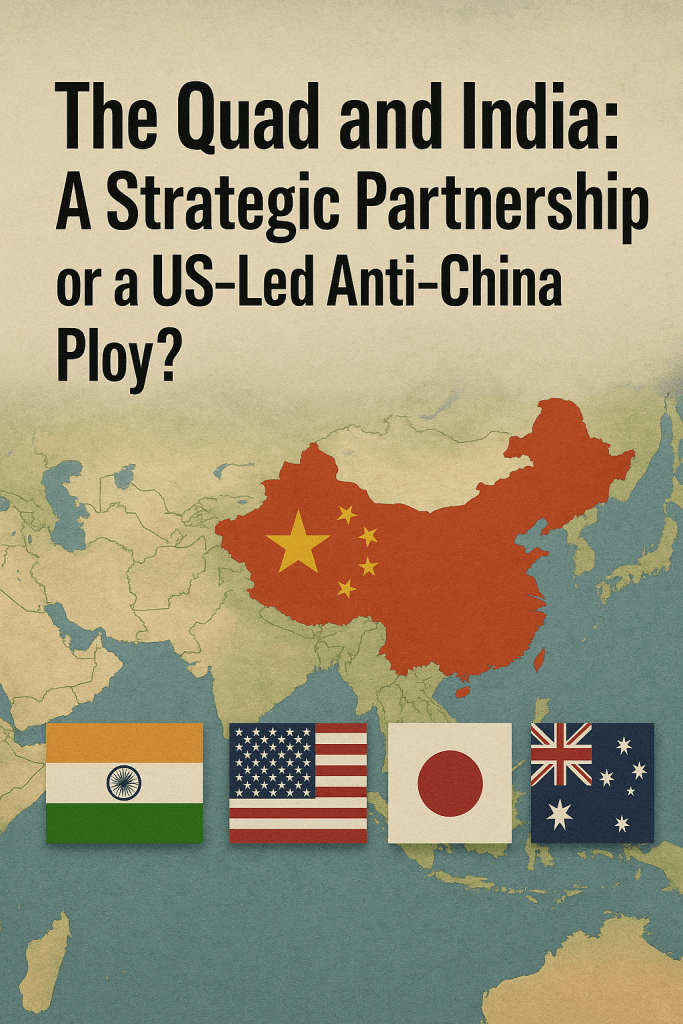





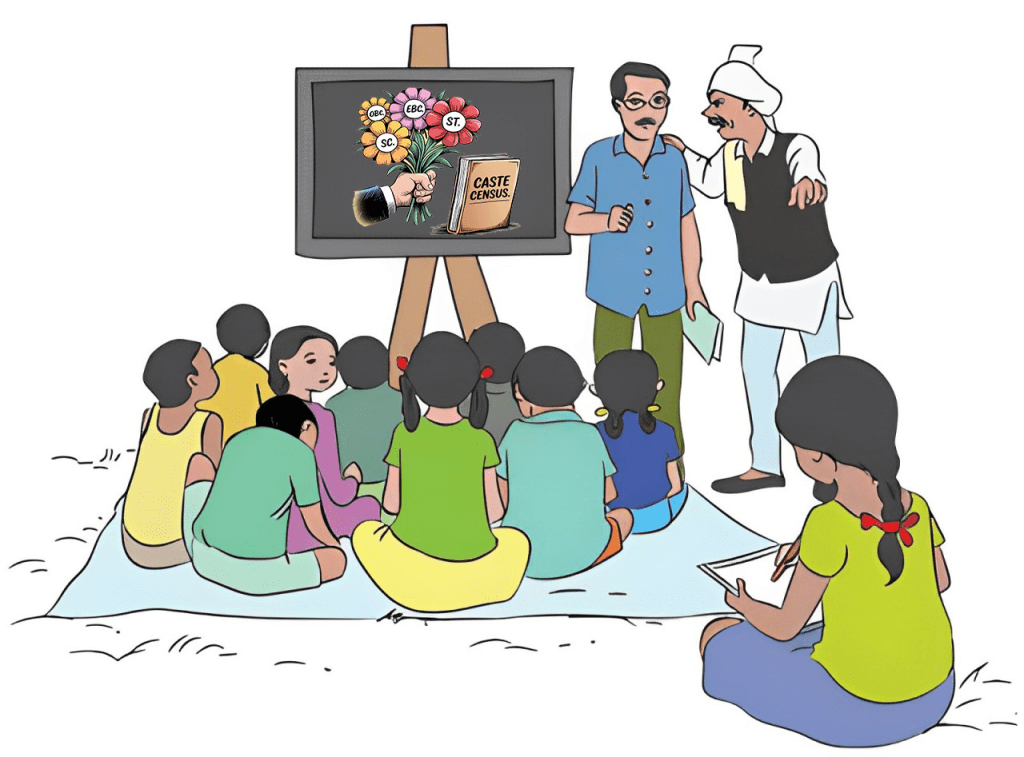

 Unmukt