Unmukt

Tag: spirituality

  • Timepass on Earth: Why Life Is an Illusion According to Indian Wisdom

    What if life is just a timepass — a play of illusions called maya? We chase dreams, collect things, fight battles, but all of it fades when death finally arrives. This essay explores why life feels urgent yet impermanent, and how we can live mindfully through it all.

    There is one truth no one can deny — death is certain. Whoever is born must one day die. Whether it is an emperor who ruled nations or a beggar who slept under the sky, both have the same destination. No one escapes.

    And yet, knowing this truth, we still live as if we are here forever. We run after things. We fight over land, money, power, pride. We spend our lives trying to control or protect what we think is “ours.” But in the end, we take nothing with us — not even our name.

    Some say we live to survive. Others say we are here to succeed. But I say — maybe, we are just here for some time. Just passing through. Till the moment comes when we leave — quietly, without warning. This life is timepass.

    But in this timepass, something strange happens. We forget the truth. We start believing we will stay here forever. We worry endlessly. We cry, we get angry, we fear, we compare. But if we stop and look closely — even the emperor cries, and even the beggar laughs. Joy, sorrow, anger, fear — all emotions live in every heart. The reasons may differ, but the feelings are the same.

    This is the maya of life — this illusion that some are greater, some are smaller, some are meant to suffer, others to shine. But beneath the clothes, titles, or homes, we are all just souls — walking the same path, toward the same end.

    And yet, we fight. We sometimes even destroy ourselves or others for things we cannot keep. Isn’t it laughable?

    So what do we do?

    We remember.

    We remember that this life is temporary, and so everything in it should be held lightly. We still live, we still love, we still work — but not with attachment, not with ego. We play our role in this world — but with kindness, with calmness, and with awareness.

    If this life is a journey from breath to breath, then let it be a graceful timepass. Let us live not in greed, but in gratitude. Not in fear, but in friendship. Not in hurry, but in harmony.

    Because when the end comes — and it will — the only thing that will matter is not how much we had, but how deeply we lived and how gently we touched the lives of others.
  • Timepass on Earth: The Maya of Living

    Everyone who is born must die. This is the only truth beyond all doubt.”

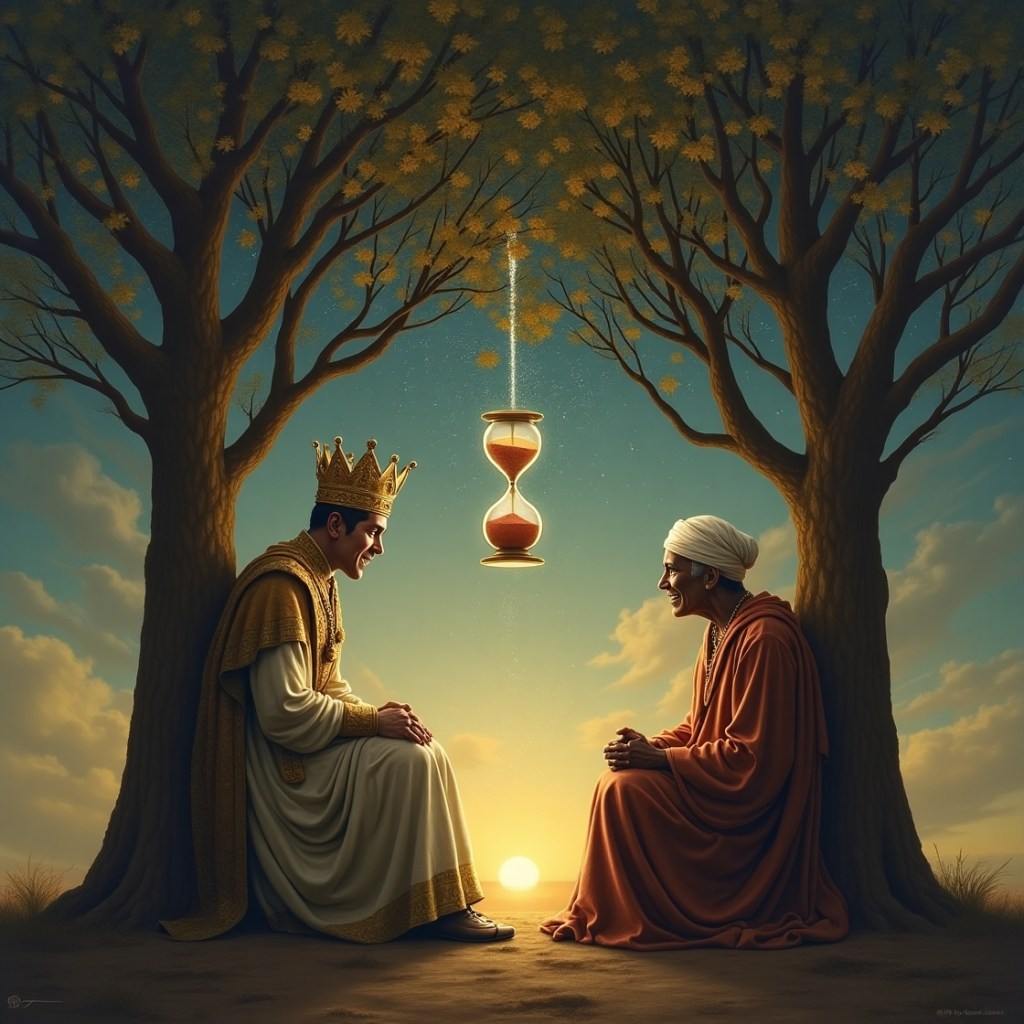
    We live our lives chasing dreams, collecting things, fighting battles, but in the end, death comes for all. The emperor who ruled with power and pride, and the beggar who begged for bread under the open sky, both meet the same end. No one escapes.

    So what is life really?
    Some say — “we live to survive.”
    Others say — “we live to succeed.”

    But I say — we are here just for a while. Till the time comes.
    This life is timepass.

    The Illusion We Call Life

    Even knowing death is certain, we act as if we’re here forever. We fight over land, over relationships, over money and pride. We lose sleep protecting things we can never truly own. Isn’t it strange? We forget that one day, all of this — our worries, our victories, our names — will fade into silence.

    What we call “mine” is not really ours. This is the maya — the great illusion — of life. We hold on so tightly to what is temporary. Sometimes, we even take lives or end our own, for the sake of things that are dust in the wind.

    We All Feel the Same Emotions

    But look closely, even the emperor cries, and even the beggar laughs.
    Joy, sorrow, anger, love, the emotions are the same. Only the triggers are different.

    No one is spared from pain. No one is denied moments of joy.
    Rich or poor, famous or forgotten — we all carry the same beating heart.

    We are all playing our parts in this grand play of life. And just like actors, we leave the stage when our role is done.

    So What Should We Do?

    We should live — yes — but not with ego.
    We should love — but without attachment.
    We should work — but without greed.

    Let us live this life as graceful timepass — with kindness, with awareness, with lightness in our hearts. Let us not be trapped in the illusion that this world is forever, or that we must fight for every piece of it.

    Because when our time comes — and it will — the only thing that will matter is not how much we had, but how truly we lived.

    Hold things lightly. Walk gently.
    Speak truthfully. Love deeply.
    And remember:

    This life is not yours to keep. It is only yours to live — fully, mindfully, and with peace.

  • Selective Outrage Is Not Justice: A Critical Look at Naseeruddin Shah and His Legacy

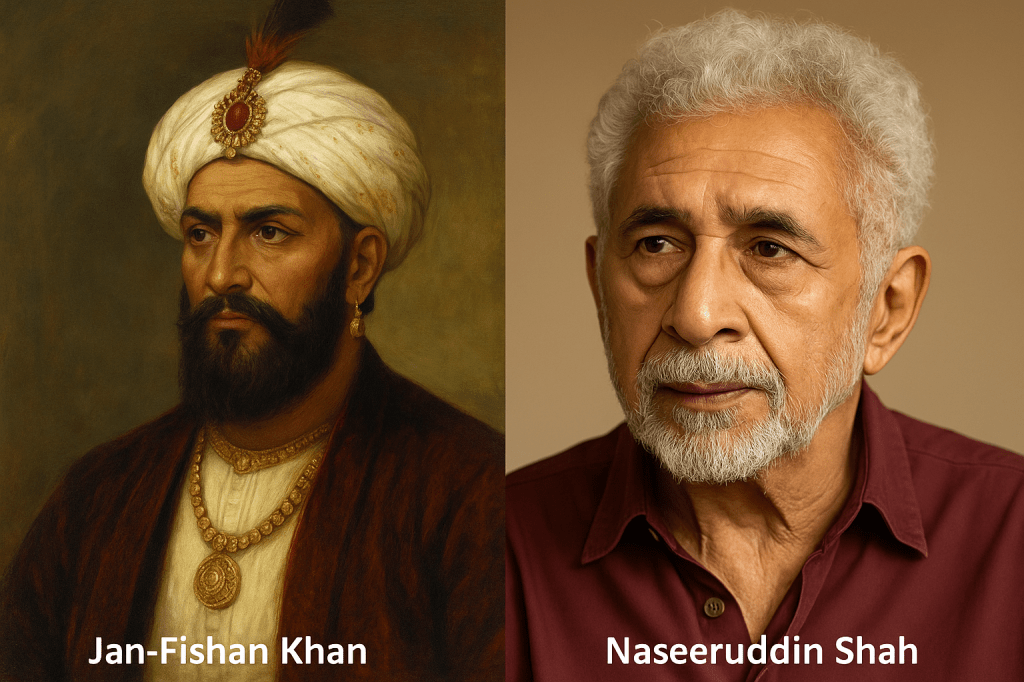
    In the era of information and ideological warfare, words shape narratives and narratives shape society. When public intellectuals speak, their influence can be powerful—but when that voice becomes selective, partisan, and blind to the pain of others, it is not justice; it is propaganda. One such voice that demands scrutiny is that of Naseeruddin Shah—a celebrated actor and descendent of Jan-Fishan Khan, a 19th-century Afghan noble who allied with the British during the First Anglo-Afghan War.

    Today, as India wrestles with real issues of communalism, cultural identity, and historical pain, it is time to ask: Whose side is Naseeruddin Shah really on—and why is his compassion so one-sided?

    When Morality Becomes Selective: Shah’s Silence on Hindu Victims

    In his recent article in The Indian Express, Shah laments the “rising intolerance” in India and references mob killings of Muslims allegedly over cow slaughter or theft. While mob justice in any form is unacceptable in a civilized society, what stands out is Shah’s continued and deliberate silence on several brutal killings of Hindus—both in India and abroad.

    Where was his voice when:

    • Kashmiri Pandits were driven out of their homeland and murdered in cold blood?
    • A Hindu father and son were lynched in Murshidabad, West Bengal, allegedly by a mob led by a TMC leader—dragged from their home and hacked to death?
    • Hindus were massacred in Bangladesh, temples desecrated, and women raped in the name of religion?
    • Hindus in Pakistan continue to be second-class citizens, with abductions and forced conversions occurring regularly?

    Why does his pen only bleed when the victim fits a particular identity?

    This is not justice—it is selective outrage, rooted not in empathy but in ideological opportunism.

    History Repeats: From Jan-Fishan Khan to Naseeruddin Shah

    To understand this mindset, we must go back to Shah’s roots. His great-great-grandfather, Jan-Fishan Khan, was a nobleman in 19th-century Afghanistan who chose to support the British colonialists over his fellow Afghans during the First Anglo-Afghan War. In return, he was rewarded with land and titles in India—a princely estate in Sardhana.

    His decision was not based on loyalty to a homeland or principles, but on opportunism and survival. He fought not for independence or unity, but to align with foreign rulers who would later dominate the subcontinent for over a century.

    Today, his descendant Naseeruddin Shah continues that legacy—not by swords, but with words. By constantly speaking only against one section of society, while ignoring the injustices faced by Hindus, he furthers a neo-colonial narrative that paints Hindus as the only oppressors, and others as permanent victims.

    Just like Jan-Fishan Khan turned away from his own people for foreign patronage, Shah today turns his back on Hindu suffering to maintain relevance among ideological elites.

    What True Justice Looks Like

    At Unmukt, we believe in a society where:

    • Every victim matters, regardless of their religion.
    • Mob violence is condemned whether the victim is Muslim, Hindu, or of any faith.
    • Historical truth is acknowledged, not whitewashed.
    • Public voices must stand for balance, courage, and honesty—not political convenience.

    Justice is not a tool to gain applause from one side. It is a sacred duty to speak the truth for all people, even when it is uncomfortable.

    Our Message to the Intellectual Class

    If you truly care about India, you must speak for Kashmiri Pandits, Murshidabad Hindus, Bangladeshi Hindus, Dalits, Muslims, and everyone else who suffers—without filters.

    To highlight the murder of a Muslim by a mob while remaining silent about a Hindu being butchered by a mob in Murshidabad, is not compassion—it is communal selectivity.

    If you can’t see the pain of a Hindu victim, you are not a humanitarian.
    You are an ideological actor in disguise.

    India does not need another Mir Jafar or Jan-Fishan Khan or Naseeruddin Shah. Instead, India needs truthful voices, who will rise not for reward, but for Dharma—the path of balance, truth, and responsibility. It’s time to call out selective morality.

    It’s time to say:
    “Either speak for all victims — or don’t claim the moral high ground at all.”

  • Varna vs. Caste: Reclaiming the Dharma of Merit

    Varna Was Never About Birth

    In the Bhagavad Gita, Lord Krishna says:

    चातुर् वर्ण्यं मया सृष्टं गुणकर्मविभागशः।
    तस्य कर्तारमपि मां विद्ध्यकर्तारमव्ययम्॥

    भगवद्गीता ४.१३

    “Chaturvarnyam maya srishtam guna-karma-vibhagashah”
    (I created the fourfold varna system based on qualities and actions.) — BG 4.13

    This single verse debunks the modern myth that one’s birth determines one’s role or worth. Varna, in its true Vedic sense, was a system designed to align individuals with their natural disposition (guna) and skillset (karma).

    • A person full of curiosity, discipline, and spiritual insight was a Brahmana — regardless of birth.
    • One with courage, leadership, and responsibility was a Kshatriya.
    • The trade-minded, wealth-creators were Vaishyas.
    • And those who specialized in support services and craftsmanship were Shudras.

    This was not a hierarchy, but a division of responsibility for the harmonious functioning of society just as a body functions with head, arms, stomach, and legs, each with dignity.

    Caste (Jati) Was a Later Distortion

    Over centuries, the fluid varna system slowly hardened into birth-based jatis — thousands of local sub-castes. This was not divine; it was a social evolution influenced by politics, orthodoxy, and later, colonial bureaucracy.

    The British census of 1901 classified Indians by rigid caste categories, freezing what was once dynamic. The colonial state weaponized caste to divide and control, labeling people in ways even the Vedas never did.

    Sant Ravidas: The Soul That Rose Beyond Birth

    You don’t need reservation or privilege to rise — Sant Ravidas proved that.

    Born into a humble cobbler family considered “untouchable,” he became one of the greatest saints of the Bhakti movement. His verses are immortalized in the Guru Granth Sahib, and he became a spiritual guide even to royal figures like Mira Bai.

    So where did his merit come from?

    • Not from a quota.
    • Not from a school.
    • But from inner awakening, sadhana, and divine insight.

    Just like Ved Vyasa, the compiler of the Mahabharata, born to a fisherwoman.
    Just like Valmiki, the hunter-turned-sage who wrote the Ramayana.

    They did not rise because of their caste they rose because of their karma and tapasya.

    Modern India: Merit Still Shines Without Quotas

    Today, despite not having reservation:

    • Students from upper cast continue to top IIT-JEE, UPSC, NEET, and other elite exams.
    • Many from upper castes still perform with excellence in fields of science, technology, law, literature, and civil service.

    How?

    Because their power comes from:

    • Discipline
    • Respect for knowledge
    • Family traditions of learning
    • No entitlement—only effort

    This proves one thing: real merit doesn’t need shortcuts.

    This Is Not About Brahmin or upper cast Superiority

    Let’s be clear. This is not a call for caste pride or supremacy.

    Every community has heroes. Every community deserves dignity.

    But today, when Brahmins or upper castes are blamed for every problem, or when ancient Hindu systems are wrongly labeled as inherently oppressive, it becomes important to defend the truth.

    Dharma is not oppression.
    Learning is not privilege.
    Sanatan culture is not discrimination.

    A Call for Civilizational Clarity

    If we want to build Ek Bharat Shreshtha Bharat, we must:

    • Uphold the original spirit of varna — qualities and actions, not birth.
    • End caste-based hatred, from any side.
    • Respect merit and effort, regardless of category.
    • And most importantly, revive the dharma of unity — not the politics of blame.

    Let every child in India rise not by caste or certificate, but by knowledge, character, and courage.
    Let us rebuild a Bharat where Ravidas, Valmiki, and Vyasa still inspire us to see beyond birth — and live by truth.

  • Birth, Life, and Karma – A Journey Shaped by Others

    Let us reflect on the full arc of human life and how deeply interconnected it is:

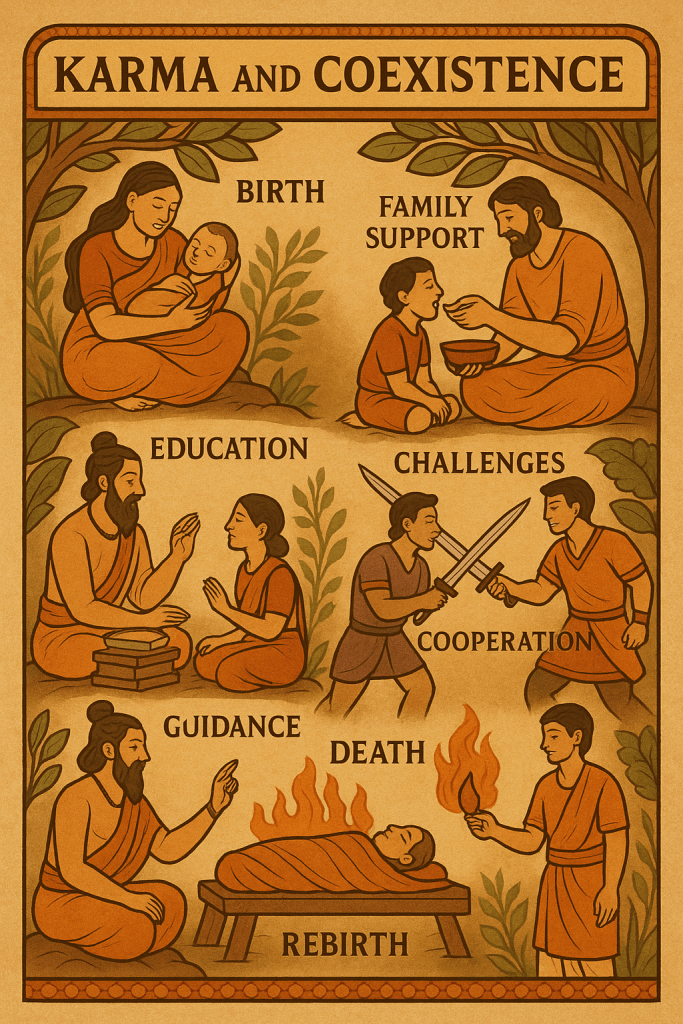
    • We are born through the sacred womb of a mother, not by our own will, but as a result of previous karma and divine arrangement. The very entry into this world is not in our hands.
    • We are nurtured and raised by parents or caregivers who feed us, clothe us, and protect us — often sacrificing their own comfort for our survival.
    • We are educated by teachers and guided by mentors, who shape our thoughts, character, and understanding of the world. It is they who help us recognize the dharma (righteous duty) aligned with our karma.
    • We grow within a community and society that gives us language, law, order, infrastructure, and opportunity. Without the farmer, we have no food; without the artisan, no shelter; without the doctor, no healing. Every act of karma is carried out using resources and structures created by others.
    • We are tested by life, including through difficult people — competitors, critics, and even enemies. Strangely, even they play a role in shaping our destiny by triggering our strength, resilience, and moral evolution.
    • And when we die, it is our children, family, or society that cremates us, performs the last rites, and prays for our onward journey. Even at the end, we depend on others to fulfill what we cannot.


    The Cycle of Karma and Rebirth

    Hindu philosophy explains that until our karma is fully exhausted or perfected, we take birth again and again, each time to fulfill our soul’s unfinished duties or to learn deeper lessons. Whether we ascend to Vaikuntha (liberation) or return to Earth, it is karma that decides — and karma is only possible through relationships.

    Even moksha (liberation) is not achieved through action alone, but through self-realization, surrender, and grace — all of which are cultivated in the presence of a Guru, community, or divine association.

    Why Realizing Interdependence Matters

    Understanding the collective nature of karma teaches us a profound truth:

    “We are never truly independent — we are interdependent.”

    This realization changes how we live:

    It aligns us with the truth that individual progress is impossible without collective well-being.

    It cultivates humility, breaking the ego that says “I alone achieved this.”

    It fosters gratitude toward parents, teachers, co-workers, strangers — even adversaries.

    It reminds us to honor and protect the ecosystem of life, for without it, we cannot even breathe.

    It creates a sense of social dharma — a responsibility to give back, support others, and perform seva (selfless service).


    From Individual Karma to Collective Harmony

    In Bhagavad Gita (3.16), Lord Krishna says:

     “एवं प्रवर्तितं चक्रं नानुवर्तयतीह यः । अघायुरिन्द्रियारामो मोघं पार्थ स जीवति ॥”

    (Evam pravartitam chakram nānuvartayati iha yah,

    aghāyur indriyārāmo mogham pārtha sa jīvati.”)

    He who does not follow the cycle of duty and mutual cooperation lives in vain — a life of selfish indulgence.

    This timeless verse reminds us that karma is not just personal action — it is our participation in the cosmic wheel of coexistence. Even a tree bears fruit not for itself, but for others. So too, we must perform our karma not in isolation, but in harmony with the world around us.

    You Are Never Alone in Your Karma

    While it is true that only your karma follows you beyond death, it is also true that you cannot perform your karma without others. Every breath, every step, every success — rests upon the shoulders of countless visible and invisible contributors.

    This is the spiritual wisdom of sahabhāva (coexistence) and sahakāra (cooperation). To realize this is to walk the path of dharma — not with pride, but with gratitude; not with separation, but with unity.

    “The soul performs its karma, but the world holds its hand while it does so.”