“They expected India to bow. Instead, India built a backbone.”
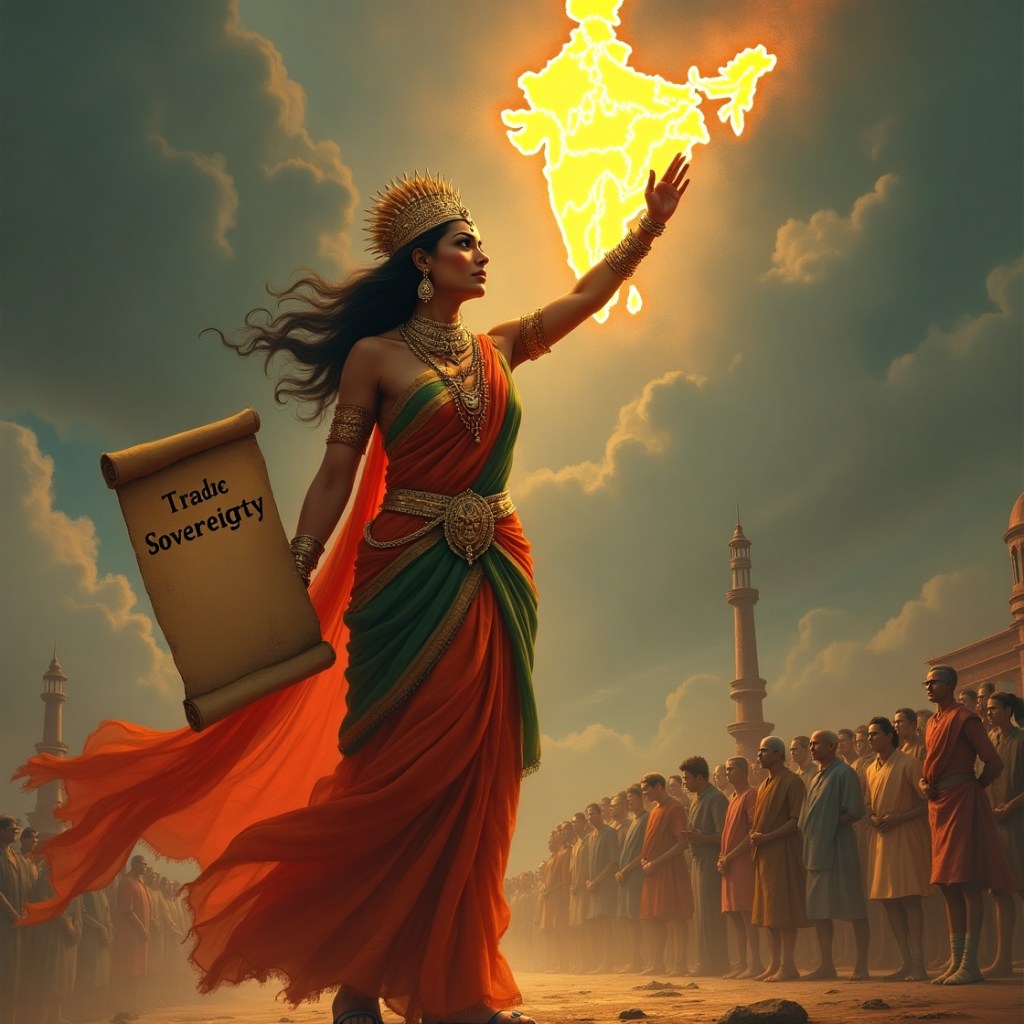
In an age where many nations retreat under U.S. pressure, India stood tall. When Donald Trump returned to the White House in 2025 and announced sweeping 25% tariffs on Indian exports, many global observers braced for panic in New Delhi.
But that panic never came.
Instead, they saw a familiar face—Narendra Modi, calm, calculated, and completely unshaken.
No Panic. No Compromise. No Deal Under Duress.
The Modi government could have taken the easy route:
Make a few trade concessions, appease Trump’s ego, beg for tariff exemptions—and spin it as diplomacy.
But this time, India chose something far more powerful: Dignity.
Despite looming tariffs, there was:
- No sudden outreach from Indian envoys.
- No last-minute offers on agriculture, dairy, or digital trade.
- No weakening of India’s strategic relationship with Russia, which lies at the center of this trade conflict.
Instead, India waited. Watched. And sent a clear message to Washington:
We don’t trade our sovereignty—not for discounts, not for praise, not for fear.
Modi in Parliament: A Defining Moment
Just day before yesterday, in a charged Parliament session, PM Modi delivered a masterstroke without raising his voice:
“No foreign leader has ever asked me to stop any internal operation in India.”
This one line, subtle but piercing, was a direct counter to Trump’s old claims that he “mediated” between India and Pakistan—a lie that had embarrassed Indian diplomacy in the past.
By affirming that no leader has dared question India’s internal affairs, Modi wasn’t just defending Kashmir or Manipur or economic autonomy—he was drawing a red line for the world.
A line that says:
This is New India. Strong, sovereign, and unafraid.
The India of 2025 Is Not the India of 1991
In the past, India bent.
- In the ’90s, India opened markets under IMF pressure.
- In the 2000s, India hesitated on nuclear autonomy until George Bush stepped in.
- Even during the first Trump term, India showed restraint, trying to “keep the relationship warm.”
But today, the tone has changed.
Modi understands that India’s market of 1.4 billion, its tech and manufacturing potential, and its civilizational strength can’t be treated like a pawn in someone else’s game.
Why Modi’s Boldness Matters
Let’s be clear: Trump’s tariffs are real. They will hurt sectors like textiles, jewelry, and some pharma exports. But short-term pain is sometimes necessary for long-term independence.
Because if India caved now, it would set a dangerous precedent:
- That Washington can dictate Indian trade partners.
- That a tariff threat can reverse our Russia strategy.
- That India must “ask permission” before doing business with the world.
But thanks to Modi, that precedent will never be set.
What the World Needs to Learn from India
China never compromises its red lines. Iran survives with zero Western sympathy. Even tiny Cuba resists American bullying.
So why should India, a rising global power, act like a junior partner?
By refusing to blink, Modi has elevated India’s position globally—from “strategic ally” to sovereign equal.
The U.S. now knows:
- India won’t trade policy for praise.
- It won’t choose between friends because someone shouted louder.
- And it won’t let elections in Washington decide its trade map.
You can debate Modi’s domestic record. You can critique his style. But on the global stage, one fact is undeniable:
He is the first Indian Prime Minister who doesn’t flinch , not before China, not before Pakistan, and now, not even before America.
As Trump throws tariffs like tantrums, India responds not with fear but with strategic silence backed by steel nerves.
That’s leadership.
That’s sovereignty.
That’s Modi.
 Unmukt