Unmukt

Tag: usa

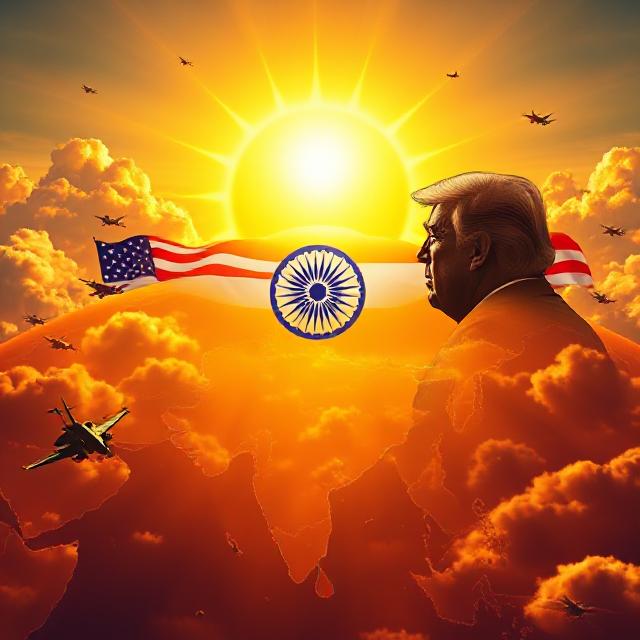
  • Trump’s India Gamble: Undoing 25 Years of U.S. Diplomacy

    For decades, American foreign policy has been criticized as short-term and opportunistic. Yet, when it comes to India, Washington displayed rare consistency. From the Clinton years onward, Democratic and Republican administrations alike invested in a careful, bipartisan project: drawing India closer to the United States as a strategic counterweight to China.

    That patient diplomacy—built brick by brick over 25 years—now stands on shaky ground. President Donald Trump’s renewed hostility toward India risks unraveling the most significant U.S. strategic realignment since the Cold War.

    The Long Arc of U.S.–India Engagement

    When President Bill Clinton visited India in 2000, he signaled a dramatic shift from decades of suspicion to cautious partnership. The Bush administration deepened this approach, recognizing that a rising China posed a challenge to the global order and that India, the world’s second-most populous nation, was the natural counterbalance.

    George W. Bush took the boldest step: offering India a historic civil nuclear deal. By treating India as a responsible nuclear power rather than an outlier, Washington effectively ended India’s global isolation on the nuclear issue. This was a turning point—expertly managed on the Indian side by Prime Minister Manmohan Singh—and it transformed bilateral relations.

    The Obama years took cooperation further. India was positioned as a cornerstone of Washington’s “pivot to Asia.” Trade surged, and the U.S. formally supported India’s aspirations for a permanent seat on the U.N. Security Council.

    Trump’s first term, despite its unpredictability, gave political heft to the “Quad”—a grouping of the U.S., India, Japan, and Australia—and projected a personal rapport between Trump and Prime Minister Modi. Biden inherited this trajectory and expanded it, pushing for joint manufacturing in defense and technology, from fighter jets to semiconductor chips.

    By 2025, India was exporting more smartphones to the U.S. than China—a symbolic victory in supply-chain realignment.

    Trump 2.0: A Sudden Reversal

    All of this makes Trump’s current shift even more startling. Without warning, his administration has moved India into its most restrictive category of partner countries—lumping it with pariah states such as Syria and Myanmar—while simultaneously extending overtures to Pakistan.

    Reports of private meetings with Pakistan’s army chief and alleged business ties between Trump-linked firms and Pakistani institutions have fueled speculation of backroom deals. More dramatically, Trump publicly mocked India’s economy, dismissing it as “dead.”

    The irony is striking. India has been the fastest-growing major economy for several years, is now the fourth largest in the world, and is projected to surpass Germany by 2028 to become the third-largest, after only the U.S. and China. It is the world’s second-largest arms importer and a vital hub for digital technology and consumer markets. Far from “dead,” India is central to the 21st-century global economy.

    The Risk of Strategic Miscalculation

    India is not an easy partner. Its history of colonization, Cold War ties with Moscow, and a deeply independent foreign policy tradition have made it cautious. Prime Minister Modi’s strategy of “multi-alignment” allowed India to keep ties with Washington, Moscow, and even Beijing simultaneously.

    Yet, persistent U.S. diplomacy—combined with anxiety over China’s rise—was steadily nudging India into a closer embrace with Washington. That slow but crucial alignment may now be undone.

    Trump’s hostility has united India’s political spectrum in outrage. A country that was moving past its ambivalence toward America is once again asking whether Washington can ever be trusted. The result may be a stronger tilt back toward Russia—and perhaps even a thaw with China.

    America’s Reliability Question

    For years, American diplomats argued that the U.S.–India relationship was destined to be one of the great strategic partnerships of the century: the world’s oldest democracy working hand in hand with its largest. That vision now looks deeply uncertain.

    Even if Trump reverses course again—as he often does—the damage may be irreversible. India has seen a glimpse of American unpredictability at its harshest. For a nation obsessed with strategic autonomy, the lesson is clear: never put all your bets on Washington.

    Trump may believe he is playing a tactical game with India. But in reality, he risks undoing 25 years of hard-won trust, and with it, America’s most promising counterweight to China. History may remember this as the moment when the U.S. lost India.


  • Modi Between Trump and Putin: How India Wins in Global Power Politics Without Firing a Shot

    “Modi may not have been in the room with Trump and Putin, but India’s silent diplomacy is reshaping global power. How India turned U.S.–Russia tensions into a strategic win.”

    In global politics, power isn’t always won on the battlefield or at the negotiating table. Sometimes, the biggest victory comes quietly—without firing a shot. As Donald Trump and Vladimir Putin capture headlines with bold statements and confrontations, India’s Prime Minister Narendra Modi appears to be the real beneficiary of their rivalry.

    India’s Balancing Act in a Polarized World

    For decades, nations have been forced to choose sides between Washington and Moscow. Yet India has carved out its own lane.

    • With Russia, India shares defense ties, energy trade, and a growing partnership in Arctic exploration.
    • With the United States, India cooperates strategically in the Indo-Pacific and technology sectors.
    • With China, India maintains a tense balance, ensuring Beijing cannot ignore New Delhi’s global rise.

    This multi-directional diplomacy ensures that while others clash, India gains room to maneuver.

    Turning Sanctions into Opportunity

    When the U.S. imposed secondary sanctions on Russia, many expected India to retreat. Instead, India increased Russian oil imports by nearly 50%, securing energy at discounted rates. What was meant to isolate Russia created an economic window for India—strengthening its energy security while keeping inflation in check.

    The Polar Game: Arctic and Antarctic

    Beyond oil, India has positioned itself in a lesser-discussed arena: the poles. With research stations in both the Arctic and Antarctic, India is preparing for future battles over resources and trade routes. Russia may control territory, but lacks the capital to fully develop it. India, with its investments, is quietly securing a seat at tomorrow’s negotiating table.

    Modi’s Patience vs Trump’s Impulsiveness

    Trump is often portrayed as unpredictable and impulsive. Putin is seen as a power broker who thrives on strength. Modi, in contrast, has built his foreign policy around patience and quiet moves. Instead of loud confrontations, India leverages opportunities—whether in trade, technology, or diplomacy—while keeping its long-term interests secure.

    This “silent diplomacy” is what makes India unique. While Trump and Putin dominate news cycles, Modi is scripting gains that will last far longer.

    The Unmukt Perspective

    At Unmukt, we view this as more than just geopolitical satire. It’s a lesson in 21st-century statecraft. Victories are no longer about who speaks the loudest—they’re about who plays the longest game.

    In the triangle of U.S. sanctions, Russian energy needs, and Chinese ambitions, Modi has managed to position India as indispensable. Without firing a single shot, India emerges stronger—proof that sometimes silence is the most powerful move in global diplomacy. this silence, India has carved out its space as a power that others must take into account.

  • Putin, Trump, and Modi: The Global Stage Is a Theater, But India Refuses to Play by the Script

    When Vladimir Putin extended a hand to Donald Trump, inviting him to Moscow, the headlines screamed of shockwaves in global diplomacy. Yet beneath the spectacle lies a simpler truth: nothing fundamental has changed. Putin remains anchored to his original objectives in Ukraine, Trump is playing a public relations game ahead of U.S. elections, and India has quietly shifted from being a pawn in this geopolitical theater to becoming an independent actor with its own playbook.

    Putin’s Subtle Messaging

    Putin’s remarks carried a calculated blend of conciliation and firmness. He acknowledged Ukraine’s independence — a line nobody expected him to utter — but swiftly reaffirmed his non-negotiables: Russia will not concede land, and Kyiv will never join NATO. For all the noise, his red lines remain intact.

    The real surprise was his open invitation to Trump. By doing so, Putin forced Trump into an awkward corner — either reject the gesture and look weak, or accept it and appear cozy with the Kremlin. In either case, Putin gains narrative control.

    Trump’s Media Alchemy

    For Trump, however, the optics are the victory. He will spin this as proof of his influence: “I sanctioned India, I brought Putin to the table, I can stop the war.” In the Trumpian playbook, perception always outweighs policy.

    Expect him to trumpet upcoming summits with Narendra Modi and Xi Jinping as further evidence that global leaders come knocking on his door. This is less about negotiation and more about stagecraft: the image of Trump as the indispensable power broker.

    India: From Target to Challenger

    But here lies the unexpected twist: India refused to follow the script. Washington’s tariff escalation — from 25% to an eye-watering 2500% on certain goods — was meant to corner New Delhi. Instead, India doubled down on diversification.

    Within weeks, it identified 50 new trading partners, allocated ₹2000 crore for global trade fairs, and leaned heavily into Africa and the Global South. At the Red Fort, Prime Minister Modi’s message was unmistakable: “Dependence is not independence.”

    This wasn’t defiance for its own sake — it was a declaration of strategic sovereignty. The era when Washington could dictate India’s economic choices is over.

    What Comes Next

    Trump will likely pivot toward Pakistan, applying pressure there and then presenting himself as India’s friend. It is a familiar pattern: create a problem, offer a partial solution, claim credit. But this time, Modi’s government appears less susceptible to the theatrics.

    The game, then, is temporal. Trump’s maneuvers may resonate in the American media cycle, but globally their shelf life is short. At best, his narrative can survive until the U.S. mid-term elections. Beyond that, the limits of spin will collide with the stubborn realities of geopolitics.

    The Bigger Picture

    What unfolded was not diplomacy, but theater. Putin reiterated old positions. Trump sought to inflate his image. Yet India — often underestimated — quietly demonstrated that it is no longer a reactive power. It is crafting its own narrative, its own networks, and its own alliances.

    The true story is not that Putin invited Trump to Moscow. The true story is that the global stage has new rules — and India has refused to be anyone’s supporting actor.