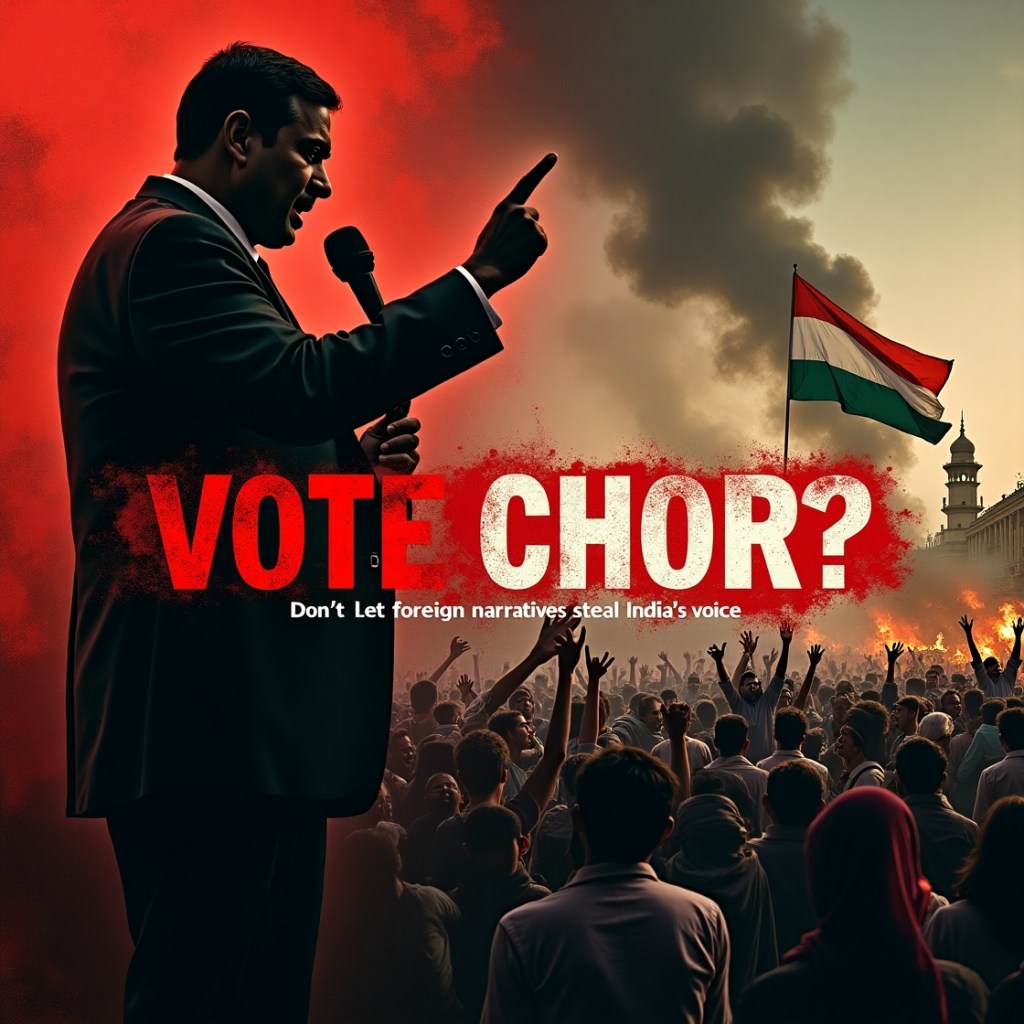
When Arun Jaitley once described Rahul Gandhi as “a repeat liar, a silent apologist in court, and a loud threat to democracy”, many thought it was just political rhetoric. But the latest falsehood being peddled by the Congress leader, the so-called “Vote Chori” narrative, reveals just how dangerous this political gamble really is.
The Manufactured Crisis
In recent weeks, Rahul Gandhi has amplified allegations that India’s 2024 general elections were manipulated, with voter rolls inflated by unverified names. The claim is rooted in a so-called “report” circulated by an NGO linked to senior advocate Prashant Bhushan, a self-proclaimed Marxist voice whose history is filled with legal activism aimed at discrediting elected governments.
This NGO’s agenda aligns with a disturbing pattern targeting India’s political credibility on the global stage while emboldening foreign interests, particularly the United States, to question India’s democratic framework.
The Bangladesh Parallel
Observers of South Asian politics will recall the events in Bangladesh earlier this decade. Opposition forces, unable to mount a strong electoral challenge, created a narrative that the ruling government was “blocking free elections” and “silencing dissent.” This claim — heavily amplified by international NGOs and Western media — resulted in months of unrest, economic instability, and eventual diplomatic isolation.
The tragic irony? While they claimed to be “saving democracy,” the opposition’s tactics effectively paralyzed the democratic process. In some cases, violence replaced ballots, and foreign meddling became normalized.
Today, Rahul Gandhi’s “vote chori” rhetoric dangerously echoes the same destabilization strategy.
Foreign Hand, Familiar Faces
Prashant Bhushan’s NGO is no stranger to controversial activism. Over the years, its funding sources and advocacy align with Marxist intellectual circles and certain Western think tanks. The formula is consistent:
- Stage 1: Question the legitimacy of elections without hard evidence.
- Stage 2: Seek international “solidarity” and coverage to pressure the government.
- Stage 3: Push for systemic changes that weaken the state’s ability to act independently of Western influence.
Rahul Gandhi’s willingness to become the political amplifier of such tactics is alarming, especially when India is experiencing record GDP growth, a stronger global presence, and a more assertive foreign policy.
The Real Threat
Critics argue that Rahul Gandhi is less interested in winning elections through people’s mandate and more interested in delegitimizing them to create chaos. This narrative directly benefits:
- Foreign powers seeking to weaken India’s global standing.
- Economic competitors who fear India’s rise as a manufacturing and geopolitical hub.
- Marxist lobbies inside and outside the country who oppose India’s market-driven growth model.
From Bangladesh to Bharat
The comparison is chilling. In Bangladesh, this narrative eroded public trust, empowered extremist elements, and paved the way for deeper foreign interference.
If Rahul Gandhi and his allies succeed in normalizing this rhetoric in India, the consequences could be far-reaching:
- Investor confidence could plummet.
- Social divisions could deepen.
- India’s image as the world’s largest democracy could be tarnished.
Conclusion: Democracy Is Not a Toy
India’s democratic framework is strong, but it is not immune to coordinated attacks from within. Political disagreements are healthy, but weaponising falsehoods to undermine electoral legitimacy is a direct assault on the very foundation of the republic.
As Arun Jaitley warned, Rahul Gandhi’s blend of courtroom meekness and public recklessness is not harmless political theatre. It is a dangerous game that India cannot afford to ignore.
 Unmukt