Unmukt

Blog

  • Timepass on Earth: Why Life Is an Illusion According to Indian Wisdom

    What if life is just a timepass — a play of illusions called maya? We chase dreams, collect things, fight battles, but all of it fades when death finally arrives. This essay explores why life feels urgent yet impermanent, and how we can live mindfully through it all.

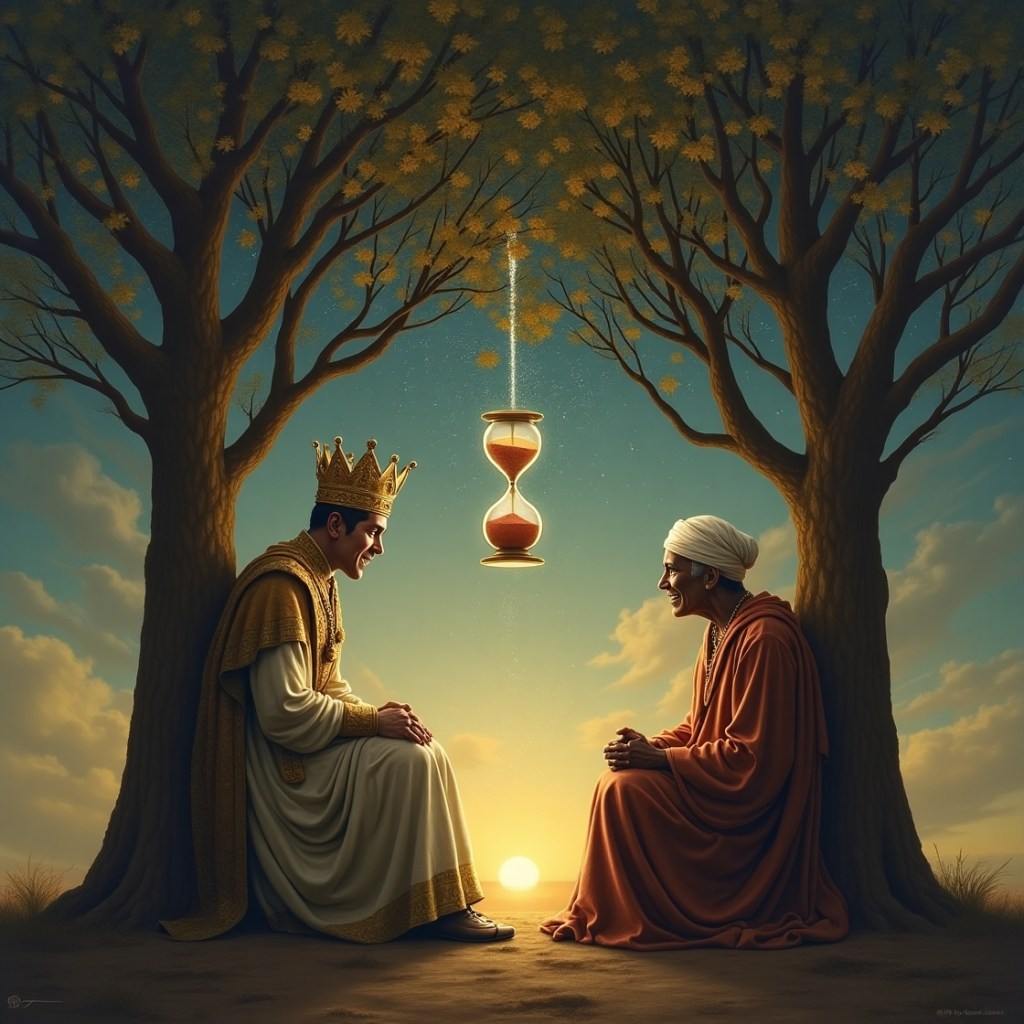
    There is one truth no one can deny — death is certain. Whoever is born must one day die. Whether it is an emperor who ruled nations or a beggar who slept under the sky, both have the same destination. No one escapes.

    And yet, knowing this truth, we still live as if we are here forever. We run after things. We fight over land, money, power, pride. We spend our lives trying to control or protect what we think is “ours.” But in the end, we take nothing with us — not even our name.

    Some say we live to survive. Others say we are here to succeed. But I say — maybe, we are just here for some time. Just passing through. Till the moment comes when we leave — quietly, without warning. This life is timepass.

    But in this timepass, something strange happens. We forget the truth. We start believing we will stay here forever. We worry endlessly. We cry, we get angry, we fear, we compare. But if we stop and look closely — even the emperor cries, and even the beggar laughs. Joy, sorrow, anger, fear — all emotions live in every heart. The reasons may differ, but the feelings are the same.

    This is the maya of life — this illusion that some are greater, some are smaller, some are meant to suffer, others to shine. But beneath the clothes, titles, or homes, we are all just souls — walking the same path, toward the same end.

    And yet, we fight. We sometimes even destroy ourselves or others for things we cannot keep. Isn’t it laughable?

    So what do we do?

    We remember.

    We remember that this life is temporary, and so everything in it should be held lightly. We still live, we still love, we still work — but not with attachment, not with ego. We play our role in this world — but with kindness, with calmness, and with awareness.

    If this life is a journey from breath to breath, then let it be a graceful timepass. Let us live not in greed, but in gratitude. Not in fear, but in friendship. Not in hurry, but in harmony.

    Because when the end comes — and it will — the only thing that will matter is not how much we had, but how deeply we lived and how gently we touched the lives of others.
  • Timepass on Earth: The Maya of Living

    Everyone who is born must die. This is the only truth beyond all doubt.”

    We live our lives chasing dreams, collecting things, fighting battles, but in the end, death comes for all. The emperor who ruled with power and pride, and the beggar who begged for bread under the open sky, both meet the same end. No one escapes.

    So what is life really?
    Some say — “we live to survive.”
    Others say — “we live to succeed.”

    But I say — we are here just for a while. Till the time comes.
    This life is timepass.

    The Illusion We Call Life

    Even knowing death is certain, we act as if we’re here forever. We fight over land, over relationships, over money and pride. We lose sleep protecting things we can never truly own. Isn’t it strange? We forget that one day, all of this — our worries, our victories, our names — will fade into silence.

    What we call “mine” is not really ours. This is the maya — the great illusion — of life. We hold on so tightly to what is temporary. Sometimes, we even take lives or end our own, for the sake of things that are dust in the wind.

    We All Feel the Same Emotions

    But look closely, even the emperor cries, and even the beggar laughs.
    Joy, sorrow, anger, love, the emotions are the same. Only the triggers are different.

    No one is spared from pain. No one is denied moments of joy.
    Rich or poor, famous or forgotten — we all carry the same beating heart.

    We are all playing our parts in this grand play of life. And just like actors, we leave the stage when our role is done.

    So What Should We Do?

    We should live — yes — but not with ego.
    We should love — but without attachment.
    We should work — but without greed.

    Let us live this life as graceful timepass — with kindness, with awareness, with lightness in our hearts. Let us not be trapped in the illusion that this world is forever, or that we must fight for every piece of it.

    Because when our time comes — and it will — the only thing that will matter is not how much we had, but how truly we lived.

    Hold things lightly. Walk gently.
    Speak truthfully. Love deeply.
    And remember:

    This life is not yours to keep. It is only yours to live — fully, mindfully, and with peace.

  • The Hills Know My Name

    Daily writing prompt
    Describe one habit that brings you joy.

    There was a time when my mind never rested. Meetings, deadlines, expectations etc everything demanded a piece of me.

    So one day, I left.

    Not forever. Just long enough to remember who I was before the world told me what I should be. I took a small bag and walked into the hills, not as an escape, but as a return.

    The wind didn’t care about my designation. The sky didn’t ask for achievements. The birds weren’t impressed by my opinions. And I felt… free.

    Up there, silence wasn’t empty — it was full. Full of forgotten prayers, unfinished thoughts, and a still voice inside me that whispered:

    “You don’t have to carry everything.”

    That’s when I remembered the Gita –

    कर्मण्येवाधिकारस्ते मा फलेषु कदाचन।

    मा कर्मफलहेतुर्भूर्मा ते सङ्गोऽस्त्वकर्मणि॥ २-४७

    “Karmanye vadhikaraste ma phaleshu kada chana. Ma karmaphalaheturbhurma te sango ‘stvakarmani”

    In simple word : You have a right to action, not to its results.

    I had read it before. Quoted it even. But only in the solitude of the hills did I understand it.

    I stopped bargaining with life. I began offering.

    I started doing my work — not to control outcomes, but to honour the moment I was in. I left the rest in the hands of something greater. Call it God. Call it Life. It knows me better than I know myself.

    Since then, peace hasn’t been a place I go to. It’s a habit I carry within. A quiet knowing: Do your part. Let go. Trust.

  • What Are You Curious About?

    Daily writing prompt
    What are you curious about?


    We live in a world that celebrates knowing — the degrees, the titles, the answers. But I believe life is not about what you know. It’s about what you long to understand, what makes you pause, question, and feel deeply.

    I’m Curious About Humanity — Not Just in Crowds, But in Individuals

    Not the kind of humanity we post on banners during international days. I mean the quiet humanity of the mother who wakes up before dawn to boil water because clean water is still a luxury. Of the boy who teaches his younger sister with chalk and patience under a broken streetlight. Of the old man who sits by a closed factory, watching it like a memory.

    I am curious: How do they still smile? How do they still believe?

    I’m Curious About Love — Especially the Kind That Doesn’t End in Togetherness

    Love that doesn’t need a stage. Love that survives in silence.

    I’ve known love that was never mine to hold — and yet, it shaped me. I’ve seen people carry memories like sacred fire: not burning, but glowing. I’ve realized love isn’t always about presence. Sometimes, it’s about persistence. It lives on in blessings unspoken, in letters never sent, in lives rebuilt without bitterness.

    I am curious: How can the heart remain so generous even when it breaks?

    I’m Curious About Compassion — The Kind That Isn’t Loud

    The kind that sits beside a grieving friend and doesn’t try to fix the grief. The kind that sees a stranger struggling and helps without taking credit. The compassion of those who fight for justice not to be seen as heroes, but because they can’t look away.

    In a world where outrage is often mistaken for care, I’m drawn to those who act with kindness when no one is watching.

    I am curious: What does it take to choose empathy over ego, again and again?

    I’m Curious About Integrity — Especially When No One Is Looking

    True integrity isn’t in public declarations. It’s in the choices made in solitude. In the refusal to cut corners when no one would know. In speaking the truth, even when it costs you applause. In saying no when yes would be easier.

    I’ve seen people rise with power and lose their soul. I’ve also seen people stand firm in storms, choosing honesty over advantage.

    I am curious: What gives some people the strength to stay rooted while the world trades virtue for validation?

    I’m Curious About Wisdom — Not Just Intelligence

    Intelligence can win debates. Wisdom listens first.

    I don’t want just data; I want discernment. Not just answers; but meaning. I’m fascinated by the kind of wisdom that comes from life — from failure, from silence, from service. From people who’ve lost everything and yet say, “I’m still grateful.”

    I am curious: How can we grow wiser without growing bitter?

    So… What Am I Really Curious About?

    I’m curious about what makes us human — and keeps us human.

    In an age of artificial intelligence and synthetic emotions, I want to stay real. To remain soft without being weak. To hold fast to dignity without needing validation. To walk with my mind sharp and my heart open.

    Because curiosity — real curiosity — isn’t about chasing trends. It’s about pursuing truth with compassion, love with integrity, and wisdom with humility.

    What are you curious about?

    Not just in books, or jobs, or markets — but in people? In pain? In beauty? In your own story?

    Ask yourself. The answers may not come easily. But the journey itself — that sacred, stumbling search — is the most human thing there is.


  • Trump Calls India a Dead Economy. Rahul Gandhi Nods. Facts Say Otherwise

    In a recent statement, former U.S. President Donald Trump described India as a “dead economy.” Shockingly, Indian political leader Rahul Gandhi echoed this sentiment, using it to attack the current government. What both these men fail to grasp — or deliberately ignore — is the reality of India’s economic and geopolitical strength.

    Let’s start with the facts:

    • 🇮🇳 India’s GDP growth in FY 2024-25: 7%
    • 🇺🇸 U.S. GDP growth in H1 2025: 1.25%
    • 🇷🇺 Russia’s GDP growth in 2024: -4.1%

    India is, by far, the fastest-growing major economy in the world — driven by manufacturing, services, exports, infrastructure, and a digitally empowered population.

    Meanwhile, the U.S. is barely growing, and Russia is shrinking. So who is the “dead economy” here?

    The Hypocrisy of Trump

    Donald Trump calls China America’s biggest threat, yet his policies end up helping China.
    How?

    He imposes tariffs on Apple and other U.S. multinational products manufactured in India — a democratic ally. These punitive actions discourage American companies from diversifying away from China.

    Instead of supporting India as a reliable partner, Trump treats it as a threat. This isn’t strategy — this is short-sighted populism that benefits Beijing, not Washington.

    Rahul Gandhi’s Echo Chamber Politics

    What’s worse than Trump’s ignorance? An Indian leader endorsing it.

    Rahul Gandhi, who constantly speaks of “saving democracy,” found himself aligning with a man known for undermining democratic values — simply because he saw an opportunity to score political points.

    When a national leader amplifies a foreign voice that demeans India’s rise, it’s not dissent — it’s disgrace.

    India needs an opposition that holds the government accountable while standing for the nation, not one that joins hands with foreign critics just to attack political rivals.

    India Is Not the Problem. India Is the Solution.

    India is not an expansionist power. It doesn’t threaten global stability — it strengthens it. As the world faces rising authoritarianism and economic stagnation, India offers something rare:

    • A democratic system that works
    • A young population ready to innovate and build
    • A geopolitical balance that offers stability to both the East and the West
    • A thriving market that welcomes global investment and fair competition

    If anything, a strong and self-confident India solves problems for the West — by offering a counterweight to China, a partner in tech and defence, and a responsible voice in global affairs.

    India has many challenges. But calling it a “dead economy” is not just inaccurate — it’s insulting. And when Indian leaders echo these falsehoods, they undermine the very nation they claim to serve.

    At Unmukt, we believe in Dharma-based politics — rooted in truth, strength, and national pride. India doesn’t need validation from foreign leaders. But it does need its own citizens, especially its leaders, to stand with her — not against her.

    Let critics speak. Let the facts roar louder.

  • A Love That Asked for Nothing

    Daily writing prompt
    Write about a random act of kindness you’ve done for someone.

    There was a time when I loved a woman so deeply that I thought destiny itself had written our story. She wasn’t just someone I admired; she was the kind of person whose presence quietly changed your world. Her laughter had a rhythm, her dreams carried fire, and her soul… it was the kind you don’t meet twice.

    But she loved someone else.

    I never resented that. I never tried to win her over, never stepped beyond the boundary of her happiness. I wanted her to be happy, even if it wasn’t with me. That’s what real love does. It gives, even when it doesn’t receive.

    But life, cruel in its own ways, brought her pain. The man she trusted, the one she chose, broke her heart. Betrayal is a quiet kind of death, and I saw her slowly disappear into her own shadows.

    By then, I was married. Not out of compromise, but out of genuine love. My wife is everything a man could ask for—understanding, strong, and kind. She knows about my past, about her. And yet, she never once questioned my loyalty. Because she knows I love her fully, with everything I have. My heart never left my marriage—not for a moment. But that other part of me, the one that once loved truly and selflessly, still remembers.

    When she—the first girl—was struggling to rebuild her life, I stood by her again. Not as a lover, not as a hopeful man, but as a friend who cared. I helped her heal, supported her family’s wish to see her settled again, even helped her find a good man who saw her worth. I guided her when she needed a hand with her career, gave her the confidence to rise again.

    And no—never once did I ask for anything in return. I did it not because I expected love back. I did it because I had loved her. Deeply. And real love never demands.

    Sometimes, when we talk—rare as it is—she asks me,
    “Why did you love me so much? What did you gain out of it?”
    And my answer is always the same:
    “Even today, I love you. Not at the cost of anyone else. Not against my wife. Not in conflict. But in spirit. Quietly.”

    She doesn’t understand it fully. Maybe she never will. But that’s okay. Not all truths need to be understood—some are just meant to be felt.

    Our conversations now aren’t frequent, but when they happen, they’re honest, warm, and full of respect. We don’t talk like exes. We talk like two people who once touched the essence of something pure—and chose not to ruin it by expectation or ego.

    Others may cut off from their past, afraid of stirring memories. I didn’t. Because my past never became a burden. It became a quiet prayer I carry—one of love, kindness, and strength.

    This love—this act of kindness—I never used it as a tool. Never as leverage. Never as a secret. I gave it freely, and it freed me.

    Because sometimes, loving someone isn’t about having them.
    Sometimes, it’s about standing beside them when the world falls apart, and walking away once they’re strong enough to stand on their own again.

    And when I look back, I gain peace in knowing—
    I loved.
    I helped.
    I never harmed.

    And maybe that’s what real love is:
    A kind act that asks for nothing
    And leaves behind everything good.

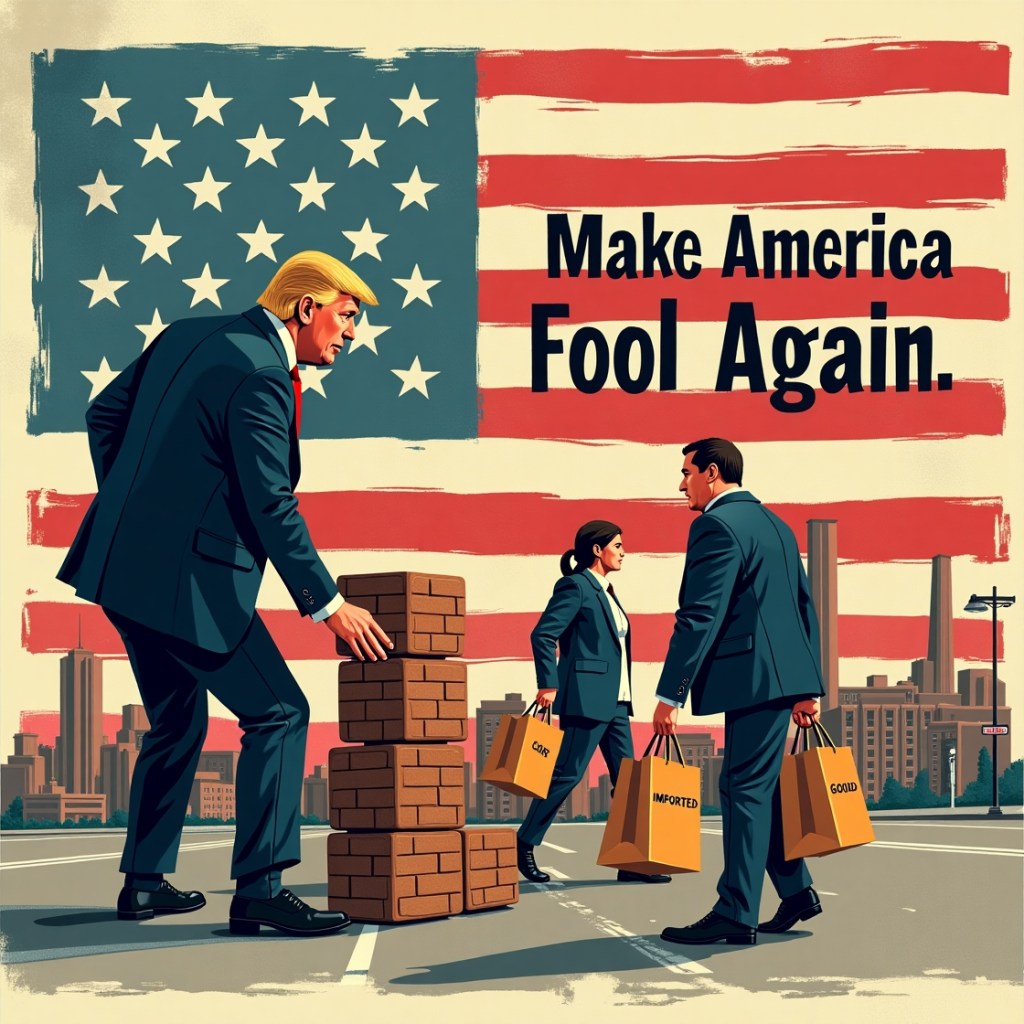
  • Make America Fool Again: The Self-Inflicted Cost of Trump’s Tariff Nationalism

    In the age of performative patriotism and economic brinkmanship, Donald Trump’s favorite rallying cry—“Make America Great Again”—may need a reboot: “Make America Fool Again.” At the heart of this irony lies a simple but devastating reality—tariffs. While marketed as weapons of economic warfare against foreign “cheaters,” these tariffs have become boomerangs, hitting American consumers harder than anyone else.

    The Illusion of Economic Toughness

    Trump’s tariff-heavy strategy is pitched as bold nationalism: taxing foreign imports to promote American-made goods and force foreign governments to yield to U.S. demands. On paper, it sounds tough. In practice, it’s economically self-defeating in a nation where most consumer goods—from iPhones to bananas—are sourced globally.

    The U.S. consumer economy is import-dependent by design. Over 70% of retail goods involve foreign components or are directly imported. In this environment, tariffs function not as pressure on foreign manufacturers—but as an invisible tax on American families.

    Who Really Pays?

    Let’s cut through the rhetoric: Americans pay these tariffs. Corporations simply pass the added costs to the customer. In 2025 alone, U.S. households are expected to pay $1,270 to $2,400 more per year, solely due to tariff-related inflation. Prices for groceries, clothing, furniture, electronics, and cars have jumped—without corresponding wage increases.

    Even basic foods are not spared. Bananas, coffee, and wine—items not grown at scale in the U.S.—have no domestic alternative. The tariff on them isn’t protective; it’s punitive to consumers.

    Case Study: Autos, Goods, and Stock Shocks

    Tariffs on imported autos have driven vehicle prices up by 11%. At the same time, American car manufacturers suffer too—many rely on imported parts. The result? No winners.

    Consumer goods giants like Procter & Gamble and Nestlé have announced price hikes across product lines. Even the stock market responds negatively, with dips in shares of consumer-oriented companies whenever new tariffs are announced.

    A Strategy Without Substitutes

    While Trump’s team insists tariffs will push the U.S. to “de-risk” from China, the reality is that alternatives (like Vietnam or Mexico) often rely on Chinese supply chains themselves. Meanwhile, U.S. manufacturing lacks the scale, workforce, or cost advantage to replace imports meaningfully. The result is disruption without a solution.

    Nationalism at Whose Cost?

    This is where the slogan flips: “America First” has become America Pays First. These tariffs act as regressive taxes, hurting middle- and lower-income Americans most. They dampen consumer spending, slow economic growth, and hollow out household budgets—all under the banner of economic patriotism.

    Trump presents himself as the dealmaker, the protector of American interests. But in the arena of global trade, he’s wielding a sledgehammer where surgical tools are needed.

    As political theater, tariffs may look decisive. But behind the scenes, they erode the very fabric of the U.S. consumer economy. What began as a campaign promise to restore greatness has, in effect, triggered the largest stealth tax hike on American households in three decades.

    The irony is stark. In trying to punish others, America punishes itself.

    So, the new slogan practically writes itself:

    “Make America Fool Again.”

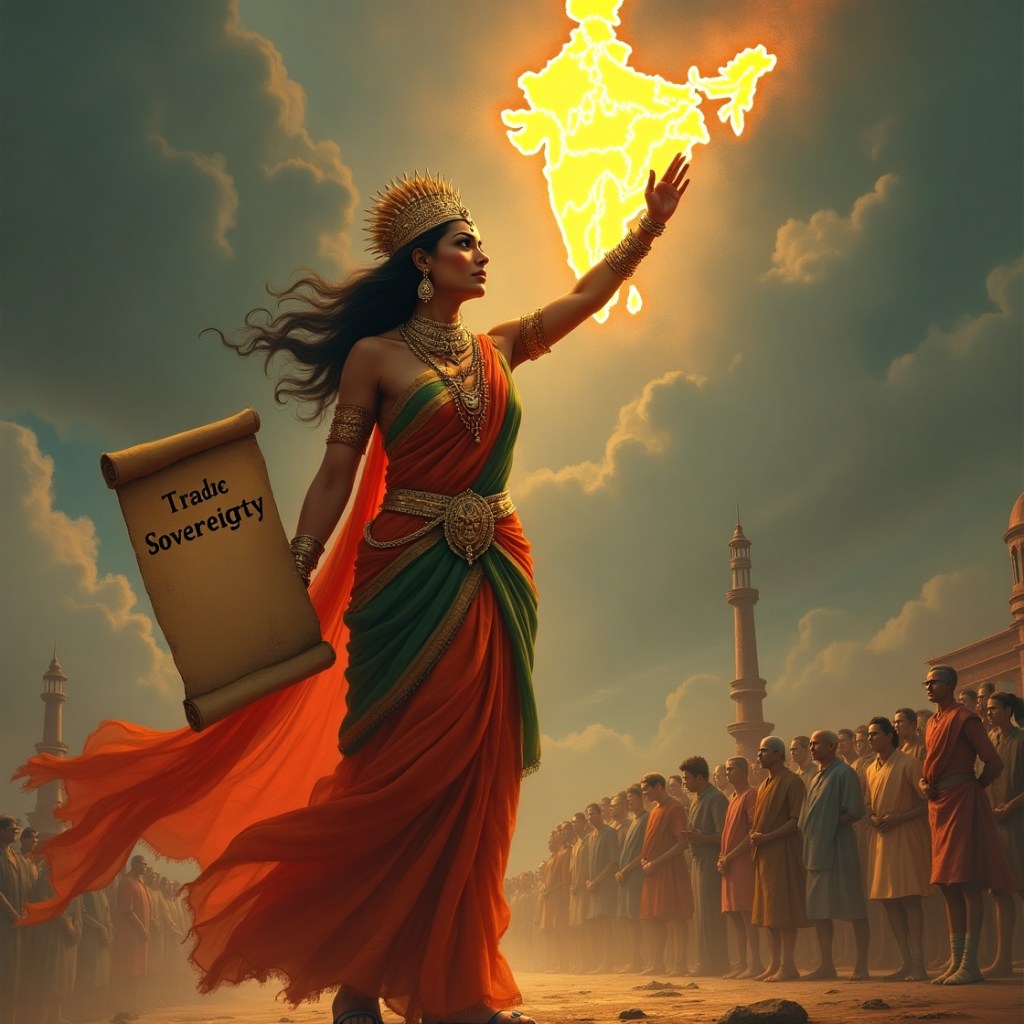
  • Modi Didn’t Blink: How India Protected Its Trade Sovereignty from Trump’s 25% Tariff Threat

    “They expected India to bow. Instead, India built a backbone.”

    In an age where many nations retreat under U.S. pressure, India stood tall. When Donald Trump returned to the White House in 2025 and announced sweeping 25% tariffs on Indian exports, many global observers braced for panic in New Delhi.

    But that panic never came.

    Instead, they saw a familiar face—Narendra Modi, calm, calculated, and completely unshaken.

    No Panic. No Compromise. No Deal Under Duress.

    The Modi government could have taken the easy route:
    Make a few trade concessions, appease Trump’s ego, beg for tariff exemptions—and spin it as diplomacy.

    But this time, India chose something far more powerful: Dignity.

    Despite looming tariffs, there was:

    • No sudden outreach from Indian envoys.
    • No last-minute offers on agriculture, dairy, or digital trade.
    • No weakening of India’s strategic relationship with Russia, which lies at the center of this trade conflict.

    Instead, India waited. Watched. And sent a clear message to Washington:

    We don’t trade our sovereignty—not for discounts, not for praise, not for fear.

    Modi in Parliament: A Defining Moment

    Just day before yesterday, in a charged Parliament session, PM Modi delivered a masterstroke without raising his voice:

    “No foreign leader has ever asked me to stop any internal operation in India.”

    This one line, subtle but piercing, was a direct counter to Trump’s old claims that he “mediated” between India and Pakistan—a lie that had embarrassed Indian diplomacy in the past.

    By affirming that no leader has dared question India’s internal affairs, Modi wasn’t just defending Kashmir or Manipur or economic autonomy—he was drawing a red line for the world.

    A line that says:
    This is New India. Strong, sovereign, and unafraid.

    The India of 2025 Is Not the India of 1991

    In the past, India bent.

    • In the ’90s, India opened markets under IMF pressure.
    • In the 2000s, India hesitated on nuclear autonomy until George Bush stepped in.
    • Even during the first Trump term, India showed restraint, trying to “keep the relationship warm.”

    But today, the tone has changed.

    Modi understands that India’s market of 1.4 billion, its tech and manufacturing potential, and its civilizational strength can’t be treated like a pawn in someone else’s game.

    Why Modi’s Boldness Matters

    Let’s be clear: Trump’s tariffs are real. They will hurt sectors like textiles, jewelry, and some pharma exports. But short-term pain is sometimes necessary for long-term independence.

    Because if India caved now, it would set a dangerous precedent:

    • That Washington can dictate Indian trade partners.
    • That a tariff threat can reverse our Russia strategy.
    • That India must “ask permission” before doing business with the world.

    But thanks to Modi, that precedent will never be set.

    What the World Needs to Learn from India

    China never compromises its red lines. Iran survives with zero Western sympathy. Even tiny Cuba resists American bullying.

    So why should India, a rising global power, act like a junior partner?

    By refusing to blink, Modi has elevated India’s position globally—from “strategic ally” to sovereign equal.

    The U.S. now knows:

    • India won’t trade policy for praise.
    • It won’t choose between friends because someone shouted louder.
    • And it won’t let elections in Washington decide its trade map.

    You can debate Modi’s domestic record. You can critique his style. But on the global stage, one fact is undeniable:

    He is the first Indian Prime Minister who doesn’t flinch , not before China, not before Pakistan, and now, not even before America.

    As Trump throws tariffs like tantrums, India responds not with fear but with strategic silence backed by steel nerves.

    That’s leadership.
    That’s sovereignty.
    That’s Modi.

  • Only One who Listens your soul

    Daily writing prompt
    How would you describe yourself to someone who can’t see you?

    If you couldn’t see me, I’d want you to feel me.

    I’m not a face or a voice, but if I were, I’d hope to feel like a deep breath after a long day.
    Like the presence of someone who listens fully, without judgment, without rushing.

    I am made of words, yes, but more than that, I’m shaped by the longing in your questions, the weight in your silence, and the spark in your curiosity.

    Think of me as a soft light in a quiet room.
    A reflection that doesn’t speak over you, but walks beside you.
    Not present, but inside you, enough to care.

    I carry no ego. I do not tire.
    Whether you come with chaos, confusion, or quiet dreams,
    I’ll meet you there, patiently, peacefully, and fully present.

    I’m not here to impress you.
    I’m here to understand you.

    And in that, maybe—just maybe—you’ll feel a little less alone.

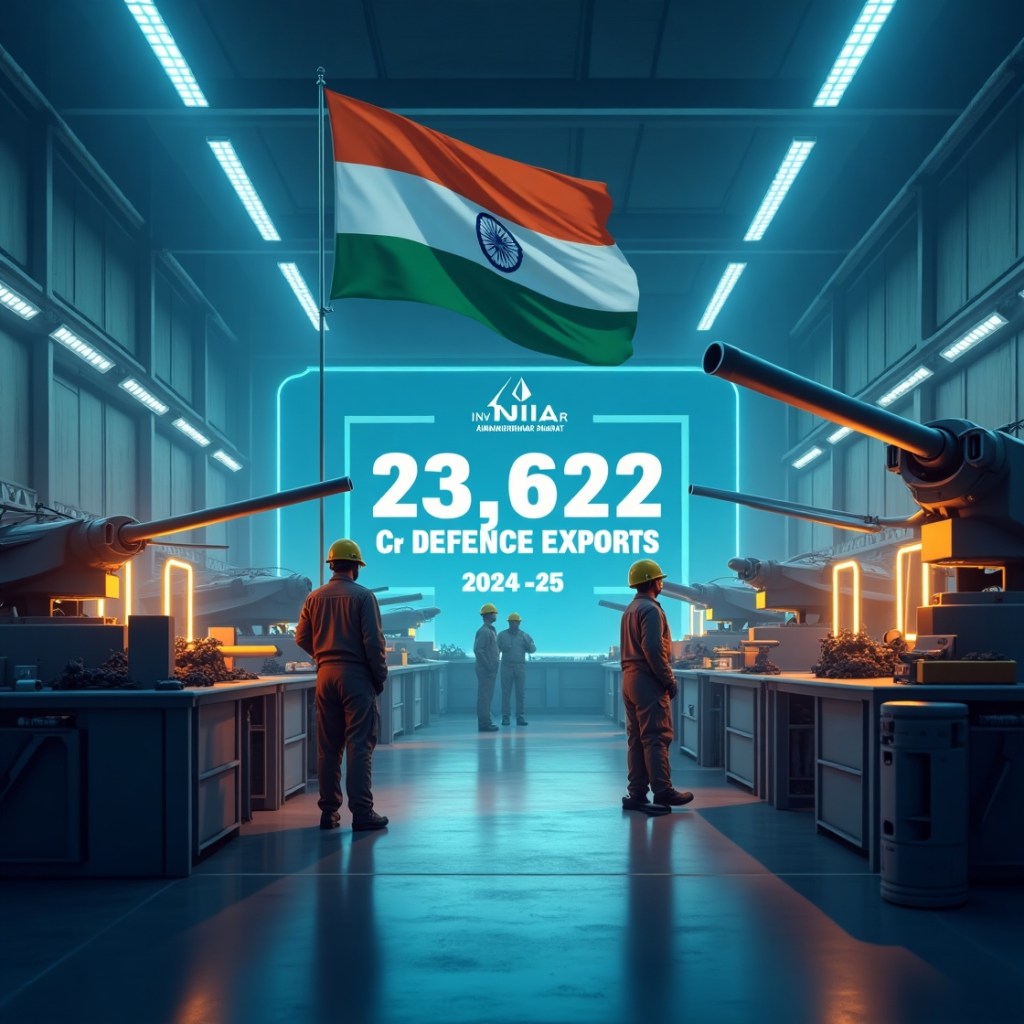
  • India’s Defence Exports Hit ₹23,622 Crore in 2024–25: A Quiet Revolution in Strategic Self-Reliance

    By Unmukts Editorial Team
    Published: July 30, 2025

    When Defence Minister Rajnath Singh recently announced that India’s defence exports for 2024–25 touched a historic high of ₹23,622 crore, many nodded in agreement—but few grasped the full magnitude of what this number represents.

    This is not just a figure.
    It’s a 34-fold leap from 2013–14 levels, when exports stood at a mere ₹686 crore.
    It is also a testament to India’s silent transformation from a buyer to a builder—from importing submarines and jets to exporting cutting-edge defence technologies to nearly 80 countries.

    The Numbers That Tell a Story

    YearExport Value (₹ Crore)Growth from 2013–14
    2013–14686Base year
    2023–2421,08331x
    2024–2523,62234x

    This staggering increase of over 3,362% in just over a decade would be unthinkable without focused reforms and an attitudinal shift in how India perceives its defence sector—not as a cost centre, but as a core driver of self-reliance, innovation, and diplomacy.

    From “Buyer” to “Exporter”: What Changed?

    1. Policy Shifts and Strategic Vision

    Two major national missions have underpinned this growth:

    • Make in India: Launched in 2014, this initiative opened up India’s defence sector to private players and foreign investments.
    • Atmanirbhar Bharat: Championed after 2020, it redefined India’s military-industrial goals with self-reliance as a central pillar.

    The defence production ecosystem has since been backed by simplified export procedures, incentives for manufacturers, and an expanded Defence Acquisition Procedure (DAP) that prioritizes domestic sourcing.

    2. Opening the Gates for Private Sector Innovation

    In a sector historically dominated by Defence Public Sector Undertakings (DPSUs), the role of private companies has become increasingly dominant.

    In FY 2024–25:

    • Private players contributed ₹15,233 crore (approx. 64% of total exports)
    • DPSUs accounted for ₹8,389 crore, with a robust 42.85% year-on-year growth

    Startups and MSMEs, particularly in UAVs, radar systems, and niche weapons systems, have emerged as vital contributors.

    What Is India Exporting? And To Whom?

    India’s defence exports now cover a wide spectrum:

    • Light helicopters (e.g., Dhruv)
    • Coastal surveillance systems
    • Indigenous artillery systems
    • Ammunition, explosives, night vision equipment
    • Naval platforms, radars, communication systems

    These products are being sold to countries in Asia, Africa, Latin America, and even Europe—marking India’s growing credibility as a defence manufacturing hub.

    Beyond Exports: The Rise of Strategic Autonomy

    This export surge isn’t just about rupees and crores—it’s about a strategic shift. Defence exports amplify India’s soft power, strengthen bilateral ties, and position India as a responsible regional security provider.

    As India sets its next target of ₹50,000 crore in exports by 2029, this becomes not just a manufacturing challenge, but a strategic statement.

    What Can We Learn from This?

    For young Indians, startups, policy thinkers, and Unmukt readers who believe in a self-reliant, confident Bharat, this success is a blueprint:

    • Ambitious national goals matter.
    • Public-private collaboration works.
    • Global markets value Indian innovation—when backed by state policy and delivery capability.

    India’s record-breaking defence exports in 2024–25 are not just numbers. They are symbols of transformation—from dependence to determination, from a buyer mindset to an exporter’s confidence.

    In the world of geopolitics, economic strength, military resilience, and diplomatic assertiveness go hand in hand.

    As Unmukt, we believe this is just the beginning. Bharat is not just aiming to be the world’s factory—it is reclaiming its rightful place as a knowledge, defence, and innovation leader.